
Credit card casino sites in the UK: the legal limit
 Available in GB
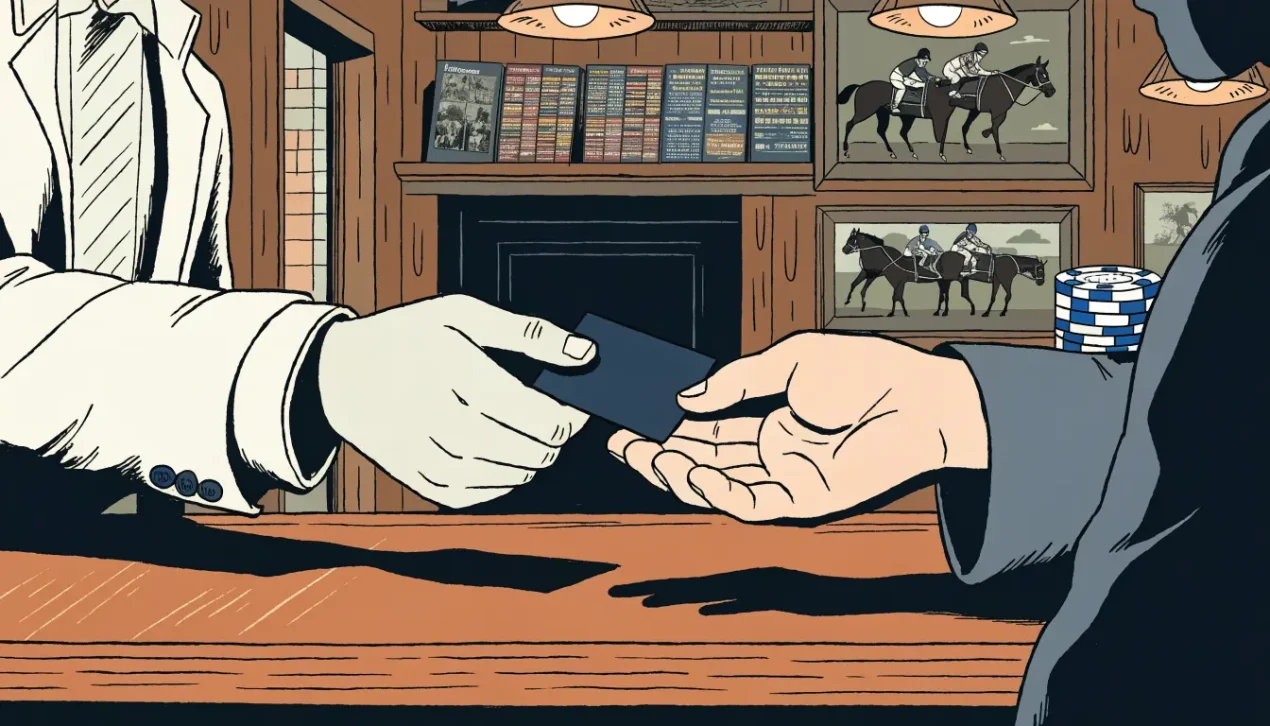
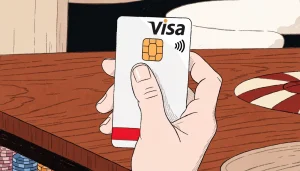
UK casinos may accept Visa or Mastercard debit cards, but brand names alone do not show whether a card can be used for gambling.
The UK Card-Casino Search Meets a Hard Limit
The phrase “casino sites that accept credit cards” sounds like a request for a cashier feature: a familiar card brand, a deposit button, perhaps a short list of places where one can be used. In Britain, that expectation meets a boundary before any such list can be meaningful. A casino licensed to serve customers in the UK cannot accept credit-card payments for gambling. There is no UK-licensed casino that is an exception to that rule.
The distinction matters because the word *card* covers two different ways of borrowing or spending. A credit card draws on credit extended by the card issuer. A debit card takes money from an account holding the customer’s own funds. UK casinos commonly accept debit cards, including Visa and Mastercard, but that does not mean they accept the credit-card versions of those brands for gambling. The logo alone does not tell the whole story.

That is where a casual reading of payment information can mislead. A page may say that Visa or Mastercard is accepted, while the relevant permission is for debit cards, not credit cards. A familiar brand name can describe more than one card product; it is not a blanket promise that every card bearing the logo can fund a gambling account. “Cards accepted” is therefore less precise than it appears.
The search for credit card casinos in the UK often treats the issue as a matter of operator preference: one casino allows the method, another does not. That framing misses the limit. For UK-licensed gambling, credit-card deposits are not simply an unpopular cashier option or a feature that a particular site has chosen to omit. The licensed market cannot offer them. A ranking of the “best” UK credit-card casino sites would imply a choice that does not exist within that market.
Nor does adding the word “slots” change the underlying distinction. A slot deposit remains a payment for gambling, whatever game is selected after the money reaches the account. A site cannot turn a credit-card gambling payment into a permitted one by describing its games differently, or by placing the payment route beside a particular category of casino games.
The word “UK” also carries more weight than a site’s appearance or the location of its web address. Remote gambling licensees selling into the British market are required to hold a Gambling Commission licence, wherever the business itself is based. A website that accepts British customers is not made part of the UK-licensed market simply by using British currency, displaying card logos or describing itself as suitable for UK players. A claim about accepting credit cards must be read alongside the status of the gambling service making it.
That is especially important where a listing advertises a casino “not on GamStop” or otherwise presents itself as outside the familiar UK system. Such wording does not create an exception for UK-licensed casinos. A business operating outside that regulatory system is not a UKGC-licensed casino, and its payment claims do not establish that credit-card gambling is permitted at a licensed British operator. The labels can blur categories; the regulatory boundary remains.
Debit-card acceptance is real, but it answers a different question. A debit card may be accepted for gambling because it uses funds in a bank account rather than credit advanced by an issuer. That does not make a debit card interchangeable with a credit card, even when both are issued under the same brand. It also does not support the claim that a casino accepts credit cards merely because its cashier lists Visa or Mastercard.
The difference is not a technical footnote. It changes what the payment represents: borrowed credit on one side, money held in an account on the other. British rules draw a line at credit-card payments for gambling, rather than banning every card-shaped means of payment. The distinction can be easy to miss in a search result, but it is central to whether the claim is accurate.
So the hard limit is narrower than “cards are not accepted” and firmer than “some casinos may allow them.” Debit cards are commonly accepted by UK casinos; credit cards cannot be used for gambling at UK-licensed casinos. Any description that merges the two turns a difference in payment product into a false promise of availability.
A search for UK casinos accepting credit-card deposits therefore cannot produce a valid list of licensed exceptions. The useful question is not which licensed casino makes an exception, but whether the card in question is a debit card or a credit card. Same logo. Different rules.
Top online casinos in the UK
- SpinFormulaBonus: 550% Up To £15,000 + 550 FS · Payout speed: 1-3 business days
- SlotoSportBonus: 500% up to £ 10 200+ 777 FS · Payout speed: 1-3 business days
- Revery PlayBonus: 100% up to€1,000+ 100 FS · Payout speed: 1-3 business days
- AmunbetBonus: Join now and get 450% up to 2,700 GBP + 450 FS · Payout speed: 1-3 business days
- BeOnBetBonus: 100% up to €500 + 100 FS · Payout speed: 1-3 business days
- JetsetspinsBonus: 200% Bonus + 100 Free Spins + Free Royal Wheel · Payout speed: 1-3 business days
- NightWinBonus: £900 + 400 free spins · Payout speed: 1-3 business days
- x3betBonus: Welcome Pack 100% Up to £1.000 + 200 Free Spins · Payout speed: 1-3 business days
- ZombillionBonus: Welcome Pack 250% up to £4000 + 200 FS · Payout speed: 1-3 business days
- BritsinoBonus: Welcome Package – Get your £2,200 + 2,000 FS · Payout speed: 1-3 business days
What “Credit Card Casino” Can Mean in Practice
The phrase “credit card casino” sounds like a description of a payment feature: a casino account funded directly from a credit card. In Britain’s regulated market, that description does not fit a UK-licensed casino. The phrase is still used loosely, though, and can point to something less specific: a casino that accepts other online payment methods, perhaps including a debit card or a digital service.
That distinction matters because “card” is not a single category. UK casinos commonly accept debit cards, including Visa and Mastercard. A debit card draws on money held in a bank account; a credit card draws on credit. The familiar logos do not make those products interchangeable, and a page that says it accepts Visa or Mastercard may be referring to debit cards rather than credit cards.
The same looseness affects searches for credit-card slots or casinos outside GamStop. A casino’s payment menu and its regulatory status are separate questions. A site describing itself as an alternative, or advertising a broad choice of payment routes, does not thereby become a UK-licensed casino. Offshore sites sit outside the UK Gambling Commission’s system; their claims about cards should not be read as evidence that credit-card payments for gambling are permitted in the British regulated market.

In practice, the useful comparison is not between one supposed credit-card casino and another. It is between the payment routes a licensed operator actually offers. Debit cards are one route. Some casinos also support Apple Pay for deposits. Open banking and bank transfers are another possibility: a specialist review reports that these can provide instant deposits and fast withdrawals at many sites, though that is not a promise about every operator or transaction.
PayPal offers a different kind of convenience, as an online payment service rather than a card. A specialist review describes it as popular for speed and ease of use, while noting that a casino may exclude PayPal deposits from bonus eligibility. The promotional terms can therefore change the practical value of a payment method; a familiar name does not guarantee that every offer applies to every route.
A prepaid voucher such as Paysafecard is narrower still: it is deposit-only. That can make it a way to put funds into an account, but not a complete route for money moving both into and out of one. Payment methods are not simply interchangeable labels. Each has its own role, and a deposit option should not be mistaken for a withdrawal option.
The point is not that every alternative is available everywhere, or that one is inherently better. A casino may present a long row of logos while offering a much smaller set of routes suitable for a particular account. The name of a method tells little about its conditions, its place in a promotion, or whether it serves deposits, withdrawals, or both. Those details belong to the operator’s actual payment arrangements, not to the broad phrase “credit card casino.”
DO
- Use debit cards (Visa or Mastercard) for deposits.
- Check the live cashier for current availability.
- Verify the account currency before transacting.
DON’T
- Use credit cards for gambling at UK-licensed sites.
- Assume a brand logo guarantees credit-card acceptance.
- Rely on outdated reviews instead of the live cashier.
So a UK search for credit-card casinos may really be seeking a familiar way to pay, a quick online transfer, or simply a casino with several payment choices. The language blurs those aims. The distinctions remain. A card logo is not a credit facility, and a menu of alternatives is not proof of credit-card acceptance.
Depositing Online: Availability Is Checked at the Cashier
A payment logo on a casino’s information page is not a promise that every card carrying that logo will work for every account. A specialist review may list Visa and Mastercard among a casino’s payment methods, but the live cashier is where current UK availability and card-product eligibility need to be confirmed. The distinction is practical: a brand name identifies a payment network, not whether a particular card can be used for a particular deposit.
For a UK-licensed casino, “card” must not be read as an invitation to use either kind indiscriminately. Debit cards are commonly accepted, including Visa and Mastercard; credit-card payments for gambling are not permitted. A list of card brands cannot override that boundary. The cashier’s options should be read according to the product actually being used, not just the familiar logo printed on the card.
The check is therefore less a matter of spotting a familiar symbol than of matching the payment route to the account. A card listed on a general information page may not be available in the UK at the time of deposit, and the card product matters. If the cashier does not make the relevant route and eligibility clear, a broad claim that a casino “accepts cards” does not settle the question.

Currency is another detail best checked before any transaction. Specialist review pages may state that GBP is supported, but the account currency still needs to be confirmed before the first payment. A payment made in a different currency can involve conversion; the displayed account currency helps establish whether that issue is in play. The point is not to assume that a UK-facing page means every account is automatically denominated in pounds.
The sequence is simple: open the account’s cashier, inspect the deposit methods actually presented, confirm that the card product is eligible, then check the account currency before proceeding. This is a compatibility check, not a recommendation to try a rejected route by another channel. A payment method should be judged by what the operator makes available for that account, rather than by a logo, an old review or a general statement about cards.
That distinction matters because payment pages can outlive the conditions they describe. A review may summarise a site’s options at the time it was written; the cashier reflects what is being offered to the account now. Neither the card network’s presence on a page nor a successful payment elsewhere establishes that the same product will be accepted here. The details belong to the transaction in front of the customer.
There is a small but revealing modern ritual in this: the familiar plastic card is no longer self-explanatory. Its network, product type, account settings and the casino’s current cashier all have to align. The logo is only the beginning.
For anyone comparing an online casino’s card deposit options in the UK, the useful evidence is consequently narrow and current: the live deposit screen, the card type it identifies, and the currency shown on the account. General payment lists can help locate a method to investigate, but they cannot replace that check. A cashier is not glamorous. It is, however, where the available route becomes specific.
Can a Credit Card Be Used for Online Gambling in Britain?
No. A credit card is not a permitted way to fund an online gambling account at a UK-licensed casino. The restriction applies to remote gambling, so moving the transaction from a betting shop to a website does not change its status. Nor does the name of the game: the relevant point is that the money is being used for gambling.
The distinction is between the purpose of a payment and the technology carrying it. A card transaction may look like an ordinary online purchase, but a gambling deposit is not treated as one simply because it passes through a familiar payment screen. Remote gambling licensees cannot accept credit-card payments for gambling, including when the card funding is routed through a money service business. The route does not make the underlying source permissible.
The same principle applies to digital wallets. A wallet cannot be used to bring credit-card funds into gambling where that wallet permits those funds to be used for gambling. An extra account or intermediary does not turn the transaction into a different kind of money. The rule follows the funds.
This answers the practical eligibility question: a person in Britain cannot use a credit card to deposit at an online casino operating under a UK Gambling Commission licence. A site’s payment page, a card-network logo or a general claim that it accepts cards cannot override that condition. “Cards” is a broad label; it does not establish that every kind of card may be used for gambling.
The rule is about the payment, not the player’s motive. Whether the intended deposit is small or large, or whether the account is used for a particular form of remote gambling, the credit-card restriction remains. A credit limit is borrowing, and the payment is still credit-card gambling when those borrowed funds are used to fund gambling. The cashier cannot make it eligible by presenting the transaction as a routine card payment.

There is a useful boundary here. The restriction does not mean that every payment card is automatically a credit card, and it does not mean that any site using the word “card” is describing a prohibited transaction. Those labels concern different products and must not be collapsed into one. But the answer to the narrower question—whether a credit card itself may fund gambling at a UK-licensed online casino—is no.
This is not merely an operator’s preference or a temporary limitation in a cashier. The regulator’s rule has not been relaxed. A payment method disappearing from a list, an issuer declining a transaction, or a casino choosing not to display a particular option may have separate explanations; none creates an exception to the prohibition. The legal boundary is not a setting that can be changed by selecting another button.
The restriction also says something about how Britain treats borrowing in gambling. Credit is not considered a neutral convenience once it is used to place money at risk. The rule interrupts that path at the point of funding, rather than leaving the decision entirely to a casino’s payment design or a card issuer’s approval. A successful authorisation would not, by itself, make a prohibited route acceptable.
So the direct answer remains uncomplicated: credit-card payments for gambling are not permitted at UK-licensed remote casinos. A card transaction cannot be made acceptable by passing it through a wallet or intermediary, and the online setting does not soften the rule. The category matters. The source matters.
When a Casino Says It Accepts Cards, Check Which Kind
A casino’s claim that it accepts cards can sound like an answer to a question about credit cards. It may only mean debit cards. Visa and Mastercard can be used as debit-card brands, and their names on a payment page do not establish that credit-card deposits are permitted. The card product matters; the logo alone settles very little.
For British customers, the distinction is not a technicality. Remote gambling licensees serving the market cannot accept credit-card payments for gambling. That includes credit-card funds routed through a money service business, and it also rules out wallet payments where the wallet allows credit-card funds to be used for gambling. A payment label cannot turn a prohibited source of funds into an acceptable one.

The same care applies to claims about non-GamStop casinos. Not being associated with GamStop does not create an exception to the rules for UK-licensed gambling. Nor does a site’s location abroad change the requirement: an operator selling remote gambling into the British market must hold the relevant UK Gambling Commission licence. Offshore casinos outside that system do not acquire a UK licence by accepting British customers or displaying familiar card brands. A card claim is not a licence.
This is where the word “accepts” becomes slippery. It can describe a brand shown among payment options, a debit card that the cashier supports, or a claim made by a site operating outside the UK regulatory system. Those are different things. For a UK-licensed casino, a credit card is not a permitted route for a gambling deposit, whatever wording appears in a promotional description.
There is a second distinction after a payment has been made: whose account and payment route are involved. When the casino account belongs to one person but the payment instrument belongs to another, basic ownership checks can create avoidable friction. Keeping account details and the payment route under the same customer’s name makes those details easier to reconcile. This is not merely tidiness; payment controls are designed to establish where funds came from and who is entitled to receive them.
The return route matters for the same reason. Returning funds to the original payment source is a common anti-fraud and anti-money-laundering control. If a payout cannot go back that way, another route may involve additional verification. The account holder may then face questions about ownership or the source of funds before the transaction can be completed. A payment option that appears simple at the deposit stage can therefore have a less simple path back.
The practical meaning of “card casino” is narrower than the phrase suggests. Card acceptance does not say whether a card is debit or credit, whether the operator is licensed for the British market, or whether the payment route matches the casino account holder. Each claim answers a separate question. The distinction is the point.
Regulatory History
Credit-card gambling was banned in the UK on 14 April 2020 and remains in force for all remote gambling licensees.
The Credit-Card Gambling Ban, in Date and Scope
The change has a precise date: 14 April 2020. On that day, the UK regulator brought in the ban on credit-card gambling. It has not since been relaxed. The date matters because it marks a regulatory boundary, not a temporary policy or a condition that individual casinos can choose to waive.
The rule belongs to the development of Britain’s regulated remote-gambling market. Remote gambling licensees serving customers in Great Britain must hold a Gambling Commission licence, wherever the operator itself is based. Within that system, payment rules are not simply a matter of what a cashier happens to display. A casino cannot make a prohibited route acceptable by listing it, nor can a customer’s willingness to use it alter the rule.
The scope extends beyond a card entered directly on a casino’s deposit page. Credit-card payments for gambling cannot be accepted when routed through a money service business, and a wallet cannot be used where it allows credit-card funds to be used for gambling. That matters because payment systems can obscure the original source of money: the route may look different, but the underlying funding can still be credit. The regulatory approach follows the funds, rather than relying on the label attached to an intermediary.
This is one reason the date is more than a historical footnote. Before the change, the question of credit-funded gambling belonged to a different regulatory landscape. Since 14 April 2020, the prohibition has been part of the operating conditions for remote gambling in Britain. It has remained in force, rather than being narrowed to particular games or withdrawn after an initial period.

The boundary is also institutional. Online gambling in the UK is legal through licensed and regulated sites; remote operators serving Great Britain consumers are required to hold the relevant Gambling Commission licence. Offshore casinos sit outside that UKGC system. Their different regulatory position does not amount to a change in the British rule or an exception to it. A casino’s location, branding or payment-page wording cannot turn the 2020 decision into a different rule for the regulated market.
There is a broader point in the way the ban is framed. Modern payments can pass through cards, wallets and intermediaries, but the regulatory question is not merely which button a customer presses. The rule addresses credit-card funding used for gambling, including routes designed to pass through another service. A change in the visible payment channel does not itself change the character of the funds.
The ban’s history is therefore unusually spare: one effective date, followed by continuity. No later relaxation has altered its place in the UK’s remote-gambling framework. The calendar moved on. The rule did not.
Deposit Amounts and Account-Level Limits
Deposit figures are easy to mistake for a promise of access. A minimum is simply the smallest amount an operator will accept through a particular route; it says nothing about whether a payment will be approved, or what the account may deposit over time.
A specialist review puts the starting deposit range at £10–£20, with the precise minimum depending on the payment method. That range is a reported guide, not a universal tariff. The amount displayed at the cashier is the relevant threshold for that transaction, and it may differ from the figure attached to another route at the same casino.
Maximums work on a broader scale. An operator may set a ceiling for a single transaction, alongside separate daily or monthly caps. These are not interchangeable: a deposit below the per-transaction maximum could still fall outside an account’s remaining allowance for the day or month. The figures can also vary according to payment method and account status, so there is no single maximum that describes every customer or route.
A specialist review reports this variation, but the practical point is structural: limits belong to both the payment channel and the account. A change in account status may affect the ceiling available, while a different payment method may carry its own cap. The cashier’s displayed terms are more useful than a headline maximum detached from those conditions.
The distinction matters when assessing a proposed deposit. A minimum answers, “What is the smallest accepted amount?” A transaction cap answers, “What is the largest single payment?” Daily and monthly limits answer how much can pass within those periods. Treating all four as one number obscures the controls built around the account.
Amounts also have no bearing on whether a particular kind of payment is permitted for gambling. A low minimum does not create an exception to the rules governing the payment instrument. The sums are one question; eligibility is another.
For a clear picture, the minimum and the applicable transaction, daily and monthly caps need to be read together, with the account’s current status in view. There is no reliable shortcut in a generic deposit figure. Small print, doing its quiet work.
Limits Before the First Deposit
Before a new customer makes a first deposit, a remote gambling licensee must prompt them to set a financial limit. The requirement places a pause at the threshold of an account: not a warning buried in small print after play has begun, but a decision presented before money enters the gambling balance.

A financial limit is a personal control over gambling expenditure, not a statement about which payment methods an account can use. That distinction matters in searches for a credit card casino in the UK. Payment eligibility and account controls answer different questions; setting a limit does not make a payment route acceptable, nor does a payment option replace the limit prompt.
The prompt is only part of the arrangement. Licensees must also make account-level limit controls accessible, so that the setting is not a one-time ritual with no continuing place in the account. The controls belong within the ordinary account experience, where a customer can find them rather than having to search through policy documents or contact support simply to locate them.
This is a small piece of interface design with a larger view of responsibility behind it. The customer is asked to decide on a boundary before the first transaction, while the operator must keep the means of managing that boundary within reach. Neither measure can guarantee how someone will behave. They can, however, make the choice visible at the moment when an account is about to become active.
The question “are credit cards allowed at UK online casinos” concerns payment rules, not this account-setting process. Here the relevant point is narrower: every new customer must be prompted to choose a financial limit before depositing, and account-level controls must remain accessible. The rule makes self-imposed restraint part of the machinery of opening an account, rather than an afterthought left entirely to the customer. A modest safeguard, built into the entrance.

The Cost of Paying: Fees, Conversion and the Route Back
A payment can look free at the cashier and still cost money elsewhere. A specialist payments review identifies several possible charges: a casino fee, a payment-provider fee, a charge from the bank or card issuer, currency conversion and network costs. Which ones apply depends on the route and the transaction; a fee shown by the casino is only one part of the calculation.
Conversion deserves particular attention. If the payment and casino account use different currencies, the exchange rate may include a spread—the difference between the rate applied and a reference rate. The same specialist review notes that this spread can outweigh a visible flat fee. A small line item is not necessarily the smaller cost.
There is no payment method that can be called cheapest in every case. The useful comparison is the total cost for the intended transaction: the casino’s charge, the provider’s fee, any bank or issuer charge, the exchange-rate spread and network costs. A route with no stated deposit fee can still be more expensive once conversion is included; a flat fee can matter more for a different amount. The cashier’s summary may not show every charge imposed by an outside provider or bank, so the terms attached to those services also matter.
The route back is part of the same calculation. Closed-loop rules and anti-money-laundering controls commonly mean funds are returned to the original payment source. Choosing a route solely for a low deposit cost can therefore be shortsighted if the withdrawal arrangements add friction or require another payment path. The cleanest approach is often to use one named account consistently for deposits and withdrawals, while checking the relevant charges on both sides.
For UK-licensed casinos, credit-card payments for gambling are not an available way around these costs: the comparison concerns permitted payment routes, not credit-card funding. A visible fee is a beginning, not the bill.
Playing Slots Does Not Change the Payment Rule
A slot game does not create a separate payment category. At a UK-licensed casino, selecting a reel game rather than another casino game cannot make credit-card payments for gambling acceptable. The restriction attaches to the gambling funds, not to the screen on which they are spent.
That distinction matters because “playing slots” can sound like a narrow activity with its own set of payment options. It has no such exemption. A credit card cannot be used to fund a gambling account for slot play, whether the deposit is described as a casino payment or routed through a payment service that passes on credit-card funds. Nor can a wallet be used for gambling where it permits credit-card money to fund the transaction.
The practical answer to whether slots can be played with a credit card at a UK-licensed casino is therefore no. A debit card is a different product, and its acceptance does not make a credit card acceptable by association. The word “card” on a cashier page can cover distinct payment types; the label alone does not settle which one is being used.
The rule has been in force since 14 April 2020 and has not been relaxed. Its effect is deliberately broader than a restriction on a particular game: a change from slots to another casino game, or back again, does not alter the permitted source of gambling funds. The game changes. The boundary does not.
This is also why claims about “slot casinos” accepting cards need careful reading. They may refer to debit cards, or to card payments in a market with different rules. They do not establish that a UK-licensed casino may take credit-card payments for gambling. In Britain’s regulated market, the slot itself is irrelevant to that decision. No special case.
Can I use a credit card at 333 Casino in Great Britain?
No. UK-licensed casinos cannot accept credit-card payments for gambling; debit cards are different and may be accepted.
What is the current minimum deposit?
Minimum deposits typically start at £10–£20, depending on the payment method.
Which method has the lowest fees?
There is no universally lowest-fee method. Compare the casino’s charges, provider or bank fees, currency-conversion spread and any network costs for the amount you plan to deposit.
Are fast casino withdrawals guaranteed?
No. Withdrawal speed depends on the casino’s approval process and whether your account is verified; even a card deposit that is instant can take several business days to pay out.
What is the fastest withdrawal method for UK casinos?
PayPal, open banking services and debit cards linked to fast payout systems are generally among the quickest options. The casino’s approval process and account verification also affect how quickly funds arrive.
Related posts

UK Casino Welcome Bonuses: How Offers Work

VPN-Friendly Casinos in the UK: How Access Works
