
UK Casino Sites That Accept Debit Cards
 Available in GB
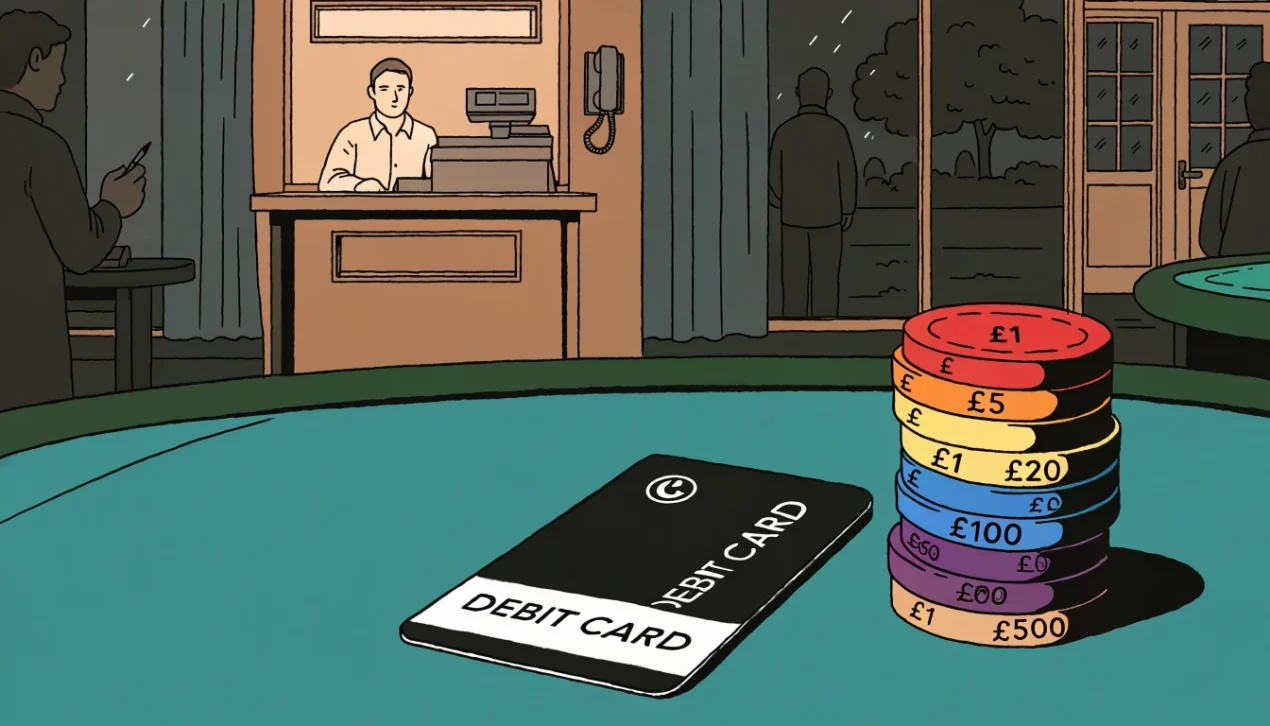
Card acceptance depends on the specific card and cashier, while withdrawals may follow a different payment route from deposits.
Debit Cards at UK Casinos: What the Cashier Actually Accepts
Visa and Mastercard are the familiar names in the UK casino cashier. Debit cards on either network are commonly accepted, which makes them a natural starting point when checking how an account can be funded. But a network logo is not a promise that every card bearing it will work at every casino. The cashier, not a general payments page or a list copied elsewhere, is where current acceptance becomes concrete.
That distinction matters because “Visa accepted” can describe a network rather than every product issued under it. A bank may provide different kinds of card, and a casino’s payment setup may not treat them all alike. The same caution applies to Mastercard. A card may carry a recognised logo and still be outside the products supported by a particular operator. The practical answer is therefore narrower than the marketing shorthand: Visa and Mastercard debit cards are commonly available, but eligibility depends on the specific card and the cashier’s current options.
A specialist casino review may list Visa and Mastercard among a site’s payment methods. That is useful as an indication of what to look for, not a guarantee that either will appear for every UK customer or accept every card product. Payment arrangements can change, and a review page cannot substitute for the live cashier. The difference is modest in appearance and important in practice.
The cashier is the operational record. Its available methods show what the casino is presenting for the account at that moment. If a card option appears there, the displayed instructions and any eligibility notes still matter; if it does not appear, an older page elsewhere should not be treated as proof that it remains available. A broad list can be true in general while failing to answer the specific question of whether a particular debit card can be used now.

This is why the search for casino sites that accept debit cards should not end with a network name. It is not enough to find a page saying “Visa” or “Mastercard” and assume the details are settled. The relevant combination is the casino’s current cashier and the actual card product. Acceptance is a relationship between those two things, not a permanent property of the logo printed on the plastic.
There is a small but telling contrast here. Payment networks are built to make transactions look standard across many places; casino cashiers reveal the local exceptions. A single word on a payment page can conceal differences in product eligibility, and those differences are easier to miss when a list is written as if every card were interchangeable. The checkout screen has less romance than a brand badge. It also has more authority.
For a careful comparison, the useful question is not simply whether a casino mentions Visa or Mastercard, but whether the current cashier offers the relevant card route for the account and whether the card itself is eligible. That check avoids treating a general statement as a personal guarantee. It also keeps the comparison focused: the issue here is card acceptance, not whether another payment route might be preferable or what happens after a deposit.
The same restraint applies to labels such as “best debit card casino sites”. A ranking cannot make an unsupported payment option usable, and a site’s inclusion in a list does not establish that every Visa or Mastercard debit product will be accepted. A sound comparison begins with verifiable availability rather than a broad badge or a superlative. In this market, the cashier is the useful evidence; the network name is only the first clue.

So the short version is clear without being absolute: UK casinos commonly accept Visa and Mastercard debit cards, but availability is not universal. The current cashier must confirm the method, and the card product must fit the operator’s rules. Logos suggest. The cashier decides.
Top online casinos in the UK
- SpinFormulaBonus: 550% Up To £15,000 + 550 FS · Payout speed: 1-3 business days
- SlotoSportBonus: 500% up to £ 10 200+ 777 FS · Payout speed: 1-3 business days
- Revery PlayBonus: 100% up to€1,000+ 100 FS · Payout speed: 1-3 business days
- AmunbetBonus: Join now and get 450% up to 2,700 GBP + 450 FS · Payout speed: 1-3 business days
- BeOnBetBonus: 100% up to €500 + 100 FS · Payout speed: 1-3 business days
- JetsetspinsBonus: 200% Bonus + 100 Free Spins + Free Royal Wheel · Payout speed: 1-3 business days
- NightWinBonus: £900 + 400 free spins · Payout speed: 1-3 business days
- x3betBonus: Welcome Pack 100% Up to £1.000 + 200 Free Spins · Payout speed: 1-3 business days
- ZombillionBonus: Welcome Pack 250% up to £4000 + 200 FS · Payout speed: 1-3 business days
- BritsinoBonus: Welcome Package – Get your £2,200 + 2,000 FS · Payout speed: 1-3 business days
A Deposit Is Not a Withdrawal
A debit-card payment can make an online casino account look funded almost as soon as the transaction is approved. The return journey is a different transaction, subject to a different set of checks. That distinction matters more than the matching card logo on the cashier page: a quick deposit does not promise an equally quick payout.
A specialist review describes card deposits as potentially instant while a withdrawal may take several business days. The contrast is not a contradiction. A deposit is an instruction to move money into the casino account; a withdrawal is a request to release it, which must be reviewed before it is sent. The casino’s own processing is part of that interval. The card has not become slow so much as the money has entered a process with another gate.
That process begins with the balance shown in the account. A withdrawal request does not necessarily send every displayed pound straight back to the card. The casino may first need to confirm that the request can be paid and that the account and transaction details have been checked. For someone opening an online casino with a debit card, the cashier’s promise of a smooth deposit therefore answers only the first half of the practical question.
The usual direction of return is set by anti-money laundering controls. UK rules generally require a payout to go back to the original payment source, rather than becoming a convenient route for sending casino funds somewhere unrelated. This is often described as a closed-loop rule: the money should travel back along the route by which it entered. It is a control against misuse, not a guarantee that a particular card will receive every withdrawal without further checks.

A Visa debit card online casino deposit may therefore be easy to make while the later return remains conditional on the casino’s procedures. The original-source principle gives the transaction a shape, but does not remove the need to establish who owns the account and where the money is going. If a card cannot receive a payment in a particular circumstance, the operator may have to consider how its rules apply; the general principle alone does not determine the handling of every case.
The first withdrawal can be the point at which these distinctions become visible. A specialist review notes that a casino may take longer to process an initial payout while verification is completed. That can involve checking the account before money is released, rather than treating the first request as an ordinary repeat transaction. A deposit can pass through the cashier without making those later checks disappear.
This is why a debit card online casino experience should be judged across the whole transaction, not only by the moment a deposit appears. The relevant sequence is deposit, balance, withdrawal request, casino review, then payment back to the original source. Each stage has its own status. “Accepted” at the deposit stage does not mean “approved” at the withdrawal stage.
There is a small piece of institutional history in the closed loop. Financial rules tend to regard money not as an abstract number but as a trail: who supplied it, who controls the account, and where it is being returned. Gambling payments sit inside that wider concern. The result is a system that may feel frictionless at entry and rather more deliberate at exit. A casino cashier is not a one-way door, but neither is it a revolving one.
The return journey
A deposit is an instruction to move money into the casino account; a withdrawal is a request to release it, which must be reviewed before it is sent. The casino’s own processing is part of that interval.
For a debit card casino online, the useful distinction is between the route and the timetable. The route is commonly back to the source under anti-money laundering expectations; the timetable depends in part on the casino’s review, with extra attention possible on a first withdrawal. A specialist review’s estimate of several business days is not a universal service promise, and it does not mean every request follows the same pattern.
The deposit is the visible moment. The withdrawal is the accounting.
When the Card Is Only One Part of the Payment Route
A casino cashier can show more than Visa or Mastercard. Open banking and bank transfers may appear alongside card payments, making the payment route a choice between ways of moving money rather than simply a choice of card. That matters because a method displayed for deposits is not automatically available for withdrawals, and a route that works in one direction may not complete the return journey in the same way.
A specialist review reports that open banking and bank transfers can support instant deposits and fast withdrawals at many sites. The qualification matters: this is not a promise that every casino offers either service, or that a particular route will be available to every account. A cashier is a live set of options, not a permanent catalogue. Its withdrawal page may show a different selection from its deposit page.
The practical distinction is between a payment method and a complete payment route. A card might fund an account, while the casino handles a later payout through another channel; an open-banking service or bank transfer might be available for both stages, or only one. The labels alone do not settle the question. Each direction has to be checked before a deposit, especially where the intended payout method matters as much as getting money into the account.
This is one reason an online casino that accepts debit cards is not necessarily a casino where every debit-card deposit can be returned directly to that same card. The cashier’s deposit options answer only half of the practical question. The withdrawal options, and any conditions attached to them, determine whether the route remains open when funds are due to leave the account.

There is a regulatory and anti-fraud logic behind that distinction. Returning funds to the original payment source is a common anti-money-laundering control. It helps make the movement of money legible: a deposit comes from an identified source, and a payout is directed back along that path where possible. It is not merely an interface preference. Payment routes are also part of the operator’s effort to establish that funds are moving between the right account and the right person.
That original-source principle can narrow the apparent freedom to switch methods midway. If the card was used to deposit, a payout may be directed back to it, subject to the cashier’s arrangements. If the original route cannot receive the funds, another route may be considered, but alternatives can trigger additional verification. The relevant issue is not just whether a bank transfer or another service is listed; it is whether the operator can use it for that transaction and whether the account has been cleared for the change.
For someone comparing online casinos that accept debit cards, the payment page therefore needs to be read in two directions. A deposit button is not evidence of withdrawal compatibility. The withdrawal section should identify which methods can receive funds, while the operator’s terms can explain how it handles a return to the original source and what may happen if that route is unavailable. A broad payment logo on a landing page cannot answer those account-specific questions.
Open banking can also look deceptively simple because it links a payment to a bank account rather than presenting itself as a conventional card transaction. Yet it remains a distinct route, with its own availability in the cashier. A bank transfer, likewise, is not interchangeable with every service that connects to a bank. Similar language on payment pages does not make separate methods identical.
The sensible comparison is not a contest between cards and every other method. It is a check that the chosen route exists at both ends, and that the casino’s stated process permits the funds to travel back through it. Convenient at entry is not the same as complete.

Other Ways to Fund an Account—and Their Limits
A debit card is not the only way to put money into a casino account. Some cashiers also show e-wallets or prepaid vouchers, each with its own conditions. The difference is not simply a matter of taste: a method may suit a deposit but not a later transaction, or may affect whether a promotion is available. The payment menu is only half the story.
PayPal is valued for speed and convenience, but a specialist casino review reports that it may be excluded from bonus eligibility. That is a specific warning, not a rule that can safely be applied to every casino. Bonus terms are set by the operator, and payment methods can be treated differently from one offer to another. A deposit made through PayPal might be accepted while the account is not eligible for a particular promotion. The terms attached to that offer matter more than the familiarity of the brand.
This is an awkward little distinction. The cashier may accept a payment without accepting it as the qualifying payment for a bonus. Someone who cares about an offer therefore has two separate questions to settle: whether the method is available, and whether using it leaves the promotion intact. A prominent logo answers only the first.
Paysafecard works differently again. It is a prepaid voucher intended for deposits only, rather than a general route for moving money both ways. That makes its role comparatively narrow: it can fund an account, but it should not be mistaken for a complete payment arrangement. The distinction matters because payment choices are often presented together in a cashier even when their functions are not interchangeable.
The voucher model also changes the relationship between the customer and the account. Instead of entering card details, a player uses prepaid value. That may appeal to people who prefer not to use a bank card for a deposit, but it does not turn Paysafecard into a withdrawal method. Its boundary is part of the product, not a temporary cashier setting.
Skrill and Neteller are available at some casino sites. A specialist casino review reports that they may be excluded from promotions, so their presence in a cashier should not be read as confirmation that every bonus applies to them. As with PayPal, the precise terms belong to the individual offer. The names of familiar e-wallets can make a cashier look uniform; the conditions behind them are not.
DO
- Check the cashier for the most current payment methods.
- Verify that the withdrawal method matches the original deposit source.
DON’T
- Assume a network logo (Visa/Mastercard) guarantees acceptance at every casino.
- Assume all payment methods are eligible for bonuses.
That is why a payment method should be judged in the context of the task it is meant to perform. A deposit-only voucher answers a different need from an e-wallet, and neither is automatically a substitute for a debit card. Where a promotion is involved, the method can become part of the eligibility test. Where it is not, the practical question may simply be whether the account supports that route.
For people looking specifically for UK debit card casinos, alternative methods are useful as context, not as proof that a card will be accepted or that a bonus will apply. The cashier and the relevant terms set those boundaries. A site may show several ways to pay, but each option comes with its own scope: one can fund an account without supporting withdrawals, while another can be available yet sit outside a promotion.
There is no single alternative that does everything. PayPal’s convenience does not settle bonus eligibility; Paysafecard is deposit-only; Skrill and Neteller may be excluded from promotions at some sites. The small print is not a footnote to the payment method. It is part of what the method is.
Comparing the Real Cost of a Card Payment
The price of a debit card deposit is not always the figure displayed beside the payment button. A specialist payment review identifies several possible layers: a charge from the casino, a payment-provider fee, a fee from the card issuer or bank, currency-conversion costs and network fees. Which of these applies depends on the transaction; none should be assumed simply because a card is accepted.
A casino may show no charge of its own while another part of the route still affects the amount taken from the account. Conversely, a visible casino fee does not tell the whole story. The meaningful comparison is between the amount debited and the value credited to the casino balance, after any charges have been applied.
Currency conversion deserves particular attention. If the account and the card transaction are handled in different currencies, the exchange rate may include a spread: a difference between the rate used and a reference rate. A specialist payment review notes that this spread can outweigh a flat fee shown upfront. The cost is less conspicuous, but less conspicuous is not the same as smaller.
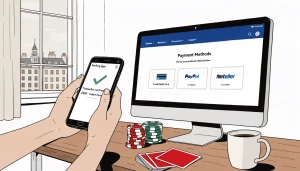
There may also be a difference between the casino’s displayed currency and the currency in which the card account is settled. In that case, the issuer or another part of the payment chain may determine the conversion, rather than the casino. The rate and any associated charge can therefore depend on the route used for that particular payment. A neat label saying “no deposit fee” cannot settle the question.
Network fees are another possible part of the total, though their relevance depends on the payment route. They should not be confused with a fee charged directly by the casino. A cost may be applied at the provider or bank end and appear in the account statement rather than in the casino cashier. The trail can be split across several places.
For a fair comparison, the same deposit amount must be considered across the full route: casino charge, provider fee, issuer or bank fee, conversion spread and any network cost. A specialist payment review cautions that there is no single payment method that is cheapest in every case; the result depends on the actual amount and charges attached to that transaction. A method with a flat fee may compare favourably for one payment and poorly for another.
The practical question is not whether a card deposit is advertised as free, but whether the total taken from the bank matches the value credited. The cashier’s terms, the provider’s fee information and the bank’s card terms each cover a different part of that answer. The small print has several custodians.
Deposit Limits Depend on the Method and the Account
A deposit limit is not a single figure attached to a casino. The cashier may set one boundary for a debit card and another for a different payment method; the account may also have its own status-dependent ceiling. That makes the displayed limit less like a house rule carved in stone and more like a set of gates, each attached to a particular route.

A specialist review gives a starting deposit range of £10–£20, with the minimum depending on the payment method selected. For someone considering an online casino that accepts debit card deposits, the useful figure is therefore the card’s minimum in that casino’s own cashier, not a general estimate carried over from another site. Even where Visa or Mastercard appears among the listed methods, the amount required to open a transaction can differ from the amount required through another route.
The minimum is only one edge of the boundary. At the other end, a payment method may have a maximum for a single transaction. Separate ceilings can apply across a day or a month. A specialist review notes that these maximum deposit limits vary with both the method and the account’s status. The cashier’s number is consequently a snapshot of a particular combination: this account, this route, at this point in its use.
That distinction matters when a deposit is divided into smaller transactions. A per-transaction ceiling does not necessarily describe what can be deposited across a day or month; those are separate measures. Nor does a displayed maximum establish that the same amount will be available through every payment method. The limits belong to the route as much as to the casino.
Account status adds another layer. A limit shown to one account need not be identical to the limit shown to another, even at the same operator. Payment systems also impose their own boundaries, while the casino’s cashier presents the options that apply to the particular account and method. A number seen in a review or on an information page can orient the comparison, but the live cashier is where the transaction’s own terms become visible.
This is why the label “best casino that accepts debit cards” cannot be settled by one headline deposit figure. A low entry point says little about the maximum for a chosen card, and a generous single-transaction ceiling says nothing by itself about a daily or monthly boundary. The top choice, if the phrase has any practical meaning, depends on whether the limits fit the intended pattern of deposits—not on a single impressive number.
The quieter detail is the unit. “Maximum” may mean per transaction, per day or per month, and those are not interchangeable descriptions. A debit-card casino that appears flexible at the first deposit may still show a different boundary for repeated payments. The cashier is not fine print. It is the actual perimeter.
Why a Fast Deposit Can Still Mean a Slow Payout
A debit-card deposit may appear in a casino account almost at once. That says little about how quickly a later withdrawal will arrive. The two movements pass through different stages, and the payment method controls only part of the journey.
A specialist casino review identifies PayPal, open banking and debit cards connected to fast payout systems among the quicker withdrawal routes. That is a description of particular services, not a promise attached to every cashier. The casino still has to approve the request, and the account must be fully verified before processing can proceed. A payment route can be quick at the banking end while waiting in the operator’s queue.
This distinction matters because “fast” can describe different things: the time taken for a casino to approve a withdrawal, or the time for the approved funds to reach a bank account. A specialist review notes that internal approval and verification can affect the overall wait. The word on the button is not a timetable.
Bank transfers add their own points of delay. A specialist payment review notes that delivery may be influenced by the bank’s cut-off times and by weekends; currency conversion can also affect the route. A transfer initiated after a processing cut-off may not move through the banking system as promptly as one started earlier. A weekend can interrupt the working-day rhythm, while conversion introduces another step between the casino’s payment and its arrival.
This is why comparisons between debit-card casinos cannot be reduced to the speed of the first deposit. A quick deposit is evidence that the incoming payment route works promptly. It is not evidence that a withdrawal will be handled with equal speed, or that the final bank posting follows immediately after approval.
The practical measure is the whole process: the casino’s review, the account’s verification status and the receiving payment route. Each can add time, even when the initial card transaction felt instantaneous.
Speed has stages.
Debit Cards Are Not Credit Cards
A debit card and a credit card may share a logo and the same familiar plastic shape, but UK gambling rules treat them differently. Debit cards are commonly accepted for deposits at online casinos, subject to the operator’s cashier and the particular card. Credit-card payments for gambling are prohibited at UK-licensed casinos.
The distinction is about where the money comes from. A debit-card payment draws on funds in the account connected to the card; a credit-card payment borrows against a line of credit. The regulator’s ban on credit-card gambling took effect on 14 April 2020 and has not been relaxed. It is not a temporary cashier setting or a preference that an operator can waive.
The rule also reaches beyond a card entered directly on a casino payment page. Remote gambling operators cannot accept credit-card payments routed through a money service business, and they cannot accept wallet payments where that wallet allows credit-card funds to be used for gambling. Changing the route does not change the character of the money.
There is a social history in this distinction. Gambling has long been treated differently from ordinary household spending when borrowed money is involved: the concern is that a loss could become a debt before it becomes visible in a bank balance. The policy draws a boundary around that risk, even though the same card-shaped object can represent either a person’s available funds or a lender’s.
For anyone asking whether a debit card can be used to deposit at an online casino, the broad answer is yes: such cards are commonly accepted. That does not mean every card product will work at every site. The cashier’s available methods and the card’s own classification determine the result. A credit card remains outside the permitted route, even if it looks almost identical.
The line is firm. Debit, not borrowed credit.
Keeping the Account and Payment Details Aligned
A debit card casino account is easier to administer when the names and ownership details point to the same person. The account holder’s details and the payment route should therefore correspond, rather than leaving the operator to work out whether two apparently different identities are connected.
This is not merely tidiness. A payment carries information about its owner; an account carries information about the person registered with the casino. When those details align, basic checks have less reason to interrupt a transaction. When they do not, the operator may need to establish who controls the account or payment route before proceeding. That can add friction even where the mismatch has an ordinary explanation.
The distinction matters when deciding which casino can be joined using a debit card. Acceptance of a card is only one part of the practical arrangement: the card and casino account should belong to the same customer. A card belonging to a relative, partner or other third party can complicate the ownership picture. A shared household does not make two people one account-holder. Bureaucracy is literal.
Consistency also makes the route easier to follow. A single named account used for deposits and withdrawals is often the cleanest arrangement, because the payment history has a clear owner and a recognisable path. Changing between accounts or using details that do not match can make that path harder to interpret, inviting questions that a straightforward setup might avoid.
This is a matter of reducing preventable uncertainty, not a promise that a matching name will remove every check. Casinos may still need to review an account for other reasons. But accurate account information and a payment method in the same customer’s name give the transaction a coherent starting point. That is a small piece of payment security with a practical consequence: fewer avoidable doubts about whose money is moving.
The Limit Set Before the First Deposit
A payment limit and a gambling limit answer different questions. The cashier’s ceiling concerns how much a particular transaction can carry; a financial limit is an account-level safeguard for spending. The distinction matters because the card can be ready to use while the account’s own controls still deserve attention.
UK Gambling Commission rules require remote gambling licensees to prompt new customers to set a financial limit before they make their first deposit. They must also make account-level limit controls accessible. The prompt is therefore part of the regulated sign-up process, not an optional note tucked beside the payment logo.
That requirement reflects a broader view of gambling: the account is not merely a container for funds, but a place where spending boundaries should be visible and adjustable. A debit card can make money arrive quickly; it cannot decide what amount remains comfortable over time. That decision belongs to the account holder, and the operator must provide a way to put it into effect.
For anyone comparing a top debit card casino, the presence of card payment options is only one part of the picture. The relevant safeguard is whether the account offers clear access to its financial-limit controls, independently of the card’s own transaction rules. Small distinction. Important one.
Why can a fast payout casino still delay my withdrawal?
A withdrawal must go through the casino’s approval process, and checks can take longer if your account has not yet been verified. A quick deposit does not mean the payout will be processed just as quickly.
Why must withdrawals return to the deposit method?
Returning funds to the original payment source is a common UK anti-money laundering and anti-fraud control. Using the same route helps keep the transaction linked to its source; another route may require additional verification.
Can I deposit in GBP?
Yes, GBP is supported. Check that your account is set to GBP before depositing to avoid currency conversion.
What is the current minimum deposit?
The minimum commonly starts at £10–£20, depending on the payment method.
Which method has the lowest fees?
There is no universally cheapest method: costs can include casino and provider charges, bank or issuer fees, currency-conversion spread, and network fees. Compare the total cost for your payment amount.
Is Skrill available?
Yes, Skrill is available at some UK-friendly casino sites and remains a common deposit option. It is often excluded from promotions.
What is the fastest withdrawal method for UK casinos?
PayPal, open banking services, and debit cards connected to fast-payout systems are generally among the quickest. Actual timing also depends on casino approval and whether your account is fully verified.
Related posts

UK Casino Welcome Bonuses: How Offers Work

VPN-Friendly Casinos in the UK: How Access Works
