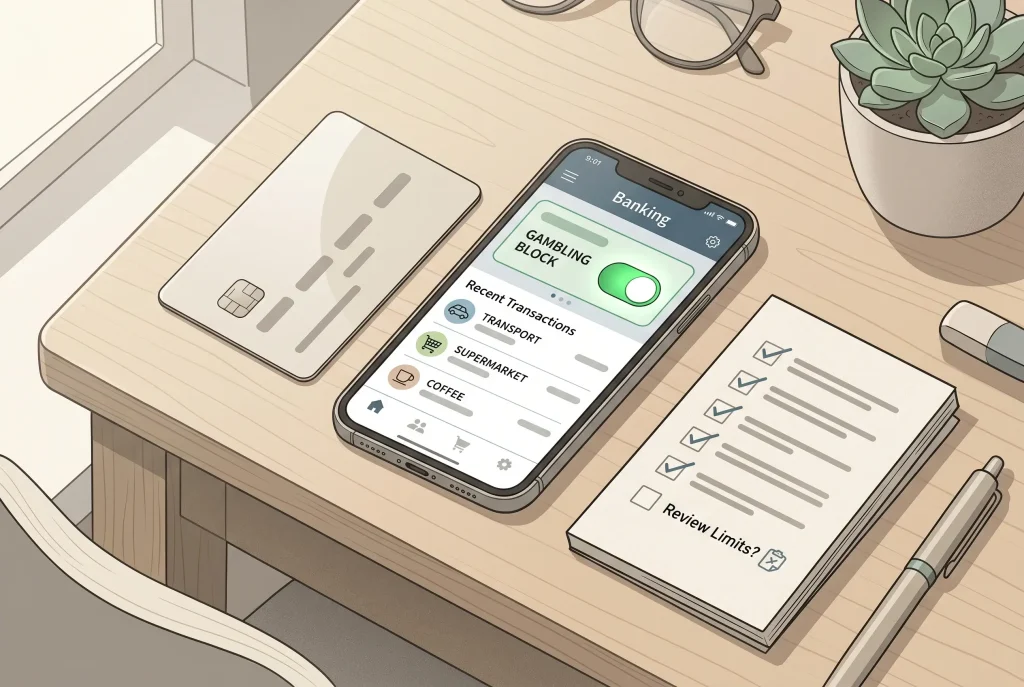
Getting help if gambling feels hard to control
 Available in GB
If you are trying to gamble despite self-exclusion, debt, panic or repeated losses, the safer next step is not another site check. Use support, add practical friction and slow the decision down.
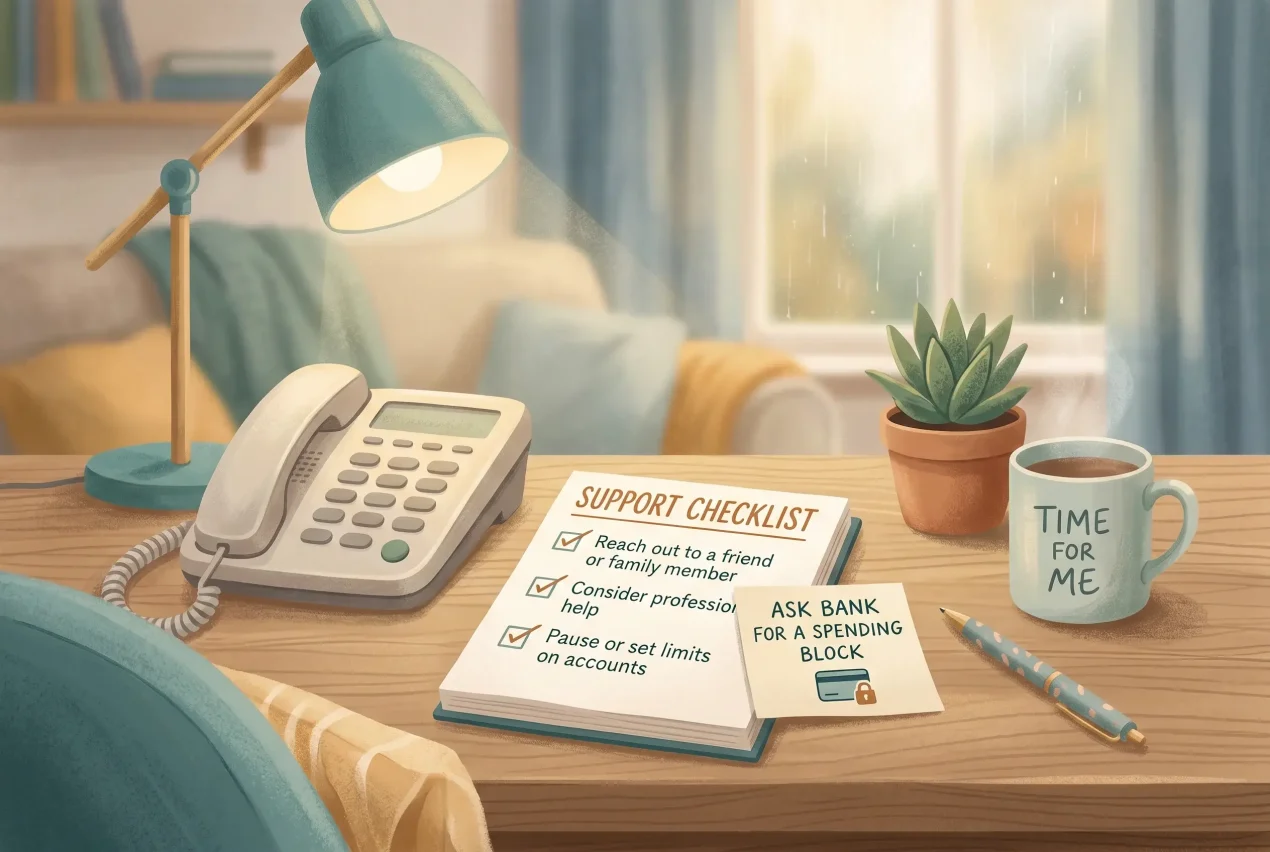
At a glance
- GamCare and the National Gambling Helpline are verified confidential support routes; the helpline number is 0808 8020 133.
- GambleAware provides a get-help page and a service finder for Great Britain residents.
- NHS information says support and treatment are available for gambling problems.
- For urgent emotional support, Samaritans can be contacted on 116 123; if there is immediate danger, call 999.
Use this first
If safety or distress is urgent, do that before paperwork
Verified help contacts
- National Gambling Helpline / GamCare: 0808 8020 133, with online support options available through GamCare.
- Samaritans: 116 123 for urgent emotional support.
- Immediate danger: call 999.
You do not need to prove that a situation is serious enough before asking for help. If gambling is linked to panic, debt, secrecy, arguments, loss-chasing or thoughts of harm, support can come before any complaint, account check or payment decision.
Useful block
Which support fits the situation?
| Situation | Safer first step | Why it helps |
|---|---|---|
| Trying to gamble while self-excluded | Pause gambling decisions and contact gambling-specific support. | The problem is the urge to continue, not the lack of another site. |
| Gambling is linked to debt | Combine gambling support with money guidance and practical payment friction. | Debt pressure can make gambling decisions faster and less careful. |
| Immediate distress or danger | Use crisis or emergency support before account or payment steps. | Safety is more urgent than any operator dispute. |
| Wants practical friction | Consider bank gambling blocks, account limits, closure or exclusion where suitable. | Friction slows access, although it should not be treated as complete protection. |
| Supporting someone else | Use help services for advice without judgement. | You can ask how to talk, set boundaries and respond calmly. |
Practical spending controls are in limits and account history.
Combine support with friction outside the gambling account
Bank gambling blocks can add useful friction, and money guidance can help when gambling is connected to debt. They should not be described as perfect protection. A determined person may still feel pressure to find another route, which is why support and friction work better together than either one alone.
1
Make spending visible. Review recent account history, deposits, withdrawals and bank transactions where available.
2
Add friction. Look at bank gambling blocks and account controls that slow future payments.
3
Use money guidance. If gambling is connected to debt, use debt guidance as well as gambling-specific support.
4
Avoid chasing losses. Do not treat gambling as a way to fix debt, stress or a previous loss.
For family and friends
You can ask for guidance even if you are not the gambler
If you are worried about someone else, a calm support route can help you decide what to say, what not to fund, and how to respond when the person is distressed or asking for money. Avoid turning the conversation into an argument about one website or one payment if the wider pattern is causing harm.
Useful first moves
- write down the immediate safety concern;
- avoid lending money to chase losses;
- use support for advice on the conversation;
- keep urgent emotional or physical safety separate from ordinary account disputes.
Where the other guides fit
Use the checking pages only when support is not the urgent need
GAMSTOP self-exclusion boundary
Use this if you need to understand what GAMSTOP covers and why looking beyond it can be risky.
Limits and activity records
Use this to review account controls and visibility over spending patterns.
Bank gambling blocks
Use this to understand payment friction and why it is not a route to work around.
If the pressure to gamble is active right now, support comes before comparing sites, offers or payment routes.
The full picture is in our safety-first guide to sites outside GAMSTOP.
Related posts
Bonus terms and customer funds: checks before taking an offer
Privacy, cookies and marketing choices