
Casinos That Accept Mastercard in the UK: Debit Rules
 Available in GB

Mastercard acceptance depends on whether the card is debit or credit, and payment routes can affect deposits, withdrawals and bonus eligibility.
Why Mastercard Acceptance Comes with a UK Caveat
Mastercard appears on the payment menus of many UK casinos, but the word “Mastercard” does not settle the important question. The distinction is between a debit card and a credit card. UK casinos commonly accept debit cards bearing the Mastercard or Visa name; credit-card payments for gambling are prohibited. A familiar logo, then, is not a blanket invitation to use every card carrying it.
That distinction can be easy to miss because the card networks are visible while the source of the money is less so. A debit card draws on money held in an account; a credit card extends borrowing. For gambling, UK rules treat that difference as decisive. The same brand can appear on both kinds of card, but only one belongs on the permitted side of the line.
The regulator introduced the credit-card gambling ban on 14 April 2020. It remains in force. Remote gambling licensees must not accept credit-card payments for gambling, including payments routed through a money service business. Nor can a wallet be used to get around the rule where it allows credit-card funds to be used for gambling. Changing the route does not change the character of the money.
This is not a small-print preference invented by individual casinos. The restriction reflects a public policy judgement: borrowing to gamble creates a different kind of exposure from spending money already available. That judgement has been built into the payment rules, rather than left to a casino’s discretion. A site may present a polished cashier and a row of recognisable card logos; it still cannot turn credit into an acceptable gambling deposit.
The distinction also explains why a search for Mastercard casinos in the UK can produce an answer that sounds simpler than it is. Mastercard debit cards are commonly accepted across UK casinos, but that does not mean every Mastercard product will work at every site. Card type and current cashier availability matter. A debit card may be eligible while a credit card bearing the same network mark is not.

The names on a payment list are only a first indication. A specialist casino review may list Visa and Mastercard, but that listing does not establish that every card product is accepted in the UK at the time of a transaction. The current cashier is the practical check for whether Mastercard is offered and whether a particular card is eligible. Payment menus can differ between operators and can change; a static mention of the network cannot answer every product-level question.
This matters particularly where the card itself is described loosely. “Mastercard” identifies a network, not whether the card is debit or credit. A card’s appearance, the logo on its front, or the fact that it works for ordinary purchases does not establish that it can be used for gambling. The relevant distinction is the product behind the logo and the rules that apply to it.
The ban also means that a credit-card payment cannot become acceptable simply because it passes through another service. UK rules reach credit-card funding routed through a money service business, and they restrict wallet payments where the wallet allows credit-card funds to be used for gambling. The route may look different in a transaction history; the underlying source still matters. There is no useful loophole in a different label.
For casinos, the result is a payment boundary rather than a branding issue. Mastercard debit is a common option; Mastercard credit is not a permitted gambling deposit method. That remains true even where a cashier’s general payment page names Mastercard without spelling out each card type. The name alone does not override the ban.
So the phrase “casinos that accept Mastercard” needs a quiet qualification. It generally points to debit-card acceptance, not permission to gamble on credit. Anyone comparing sites on the basis of the card logo alone risks confusing a payment network with a funding product. One is the sign on the door. The other determines whether the door can open.
The UK approach is deliberately categorical. It does not ask whether a particular customer can afford a credit-card balance or whether a casino considers a deposit manageable. Instead, it removes credit-card payments for gambling from the permitted routes. The rule has not been relaxed since its introduction. A familiar card brand may still be present; the form of credit is not.
That caveat is the useful starting point for understanding Mastercard acceptance. The network is widely associated with casino debit deposits, but acceptance remains subject to the cashier’s current options and the card’s eligibility. And whatever a payment page says about the network, the UK credit-card gambling ban remains the hard edge of the arrangement.
When the Card Is Not the Whole Payment Route
A Mastercard debit card is one way to fund an online casino account, but it is not the only route shown in UK-facing cashiers. Alternatives differ in a more important way than their names suggest: some can serve both sides of a transaction, while others are designed for deposits alone. A payment menu is therefore a map of possible journeys, not a promise that every method does the same work.
Open banking services and bank transfers sit close to the ordinary banking system. A specialist casino review describes these routes as capable of providing instant deposits and fast withdrawals at many sites. That is a site-dependent picture, rather than a quality belonging to every transfer: the cashier’s available options determine what can be used, and the bank remains part of the process. Still, these methods make a direct account-to-account route possible without entering card details.
Digital wallets create a different layer between the bank and the casino. PayPal is popular for speed and convenience, according to a specialist review, though that account of its appeal does not make it universally available. Skrill and Neteller also appear at some sites; a specialist casino review notes that they are often excluded from promotions. Eligibility is set by the promotion’s terms, so a wallet’s presence in a cashier should not be read as confirmation that it qualifies for every offer.

This is where payment choice acquires a small social history. Cards and bank transfers are recognisable extensions of everyday banking; wallets turn the payment into a separate account relationship, with its own balance and sign-in. The casino sees a route, the customer sees a familiar brand, and the promotion may classify that route differently. Administrative categories have their own quiet influence.
Paysafecard works differently again. It is a prepaid voucher and is deposit-only. That distinction matters at the point when money is leaving the casino, not entering it: a voucher can provide a way to add funds, but it is not a route for receiving a withdrawal. “Payment method” sounds like a single function. In practice, it can mean only one half of the transaction.
Apple Pay is another possible deposit route, as some UKGC-licensed casinos accept it for deposits. Its presence alongside cards and wallets illustrates how payment menus have expanded beyond the plastic card itself. Availability remains a feature of the individual cashier, not a blanket promise attached to the payment brand.
The same restraint applies to services that appear in a casino’s list of methods. A logo can show that a route is offered in some form, but the useful distinction is what the route can actually do: add funds, receive funds, or both. This is particularly clear with deposit-only vouchers; it is less obvious where bank services and wallets are concerned, because the cashier’s own rules and the customer’s account setup can shape the route.
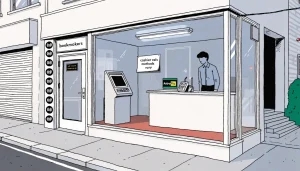
For someone comparing alternatives to Mastercard, the sensible comparison is therefore not simply card against wallet. It is card against a set of different arrangements: bank-linked services, e-wallet accounts, mobile wallet payments and prepaid vouchers. Each changes how money reaches the casino, and whether the same path remains available when funds are being returned. A method that feels quick at the deposit stage may still be unsuitable for the whole account relationship.
Promotions add another layer, but they should not be allowed to blur the basic distinction between payment function and promotional eligibility. A wallet may be accepted and still fall outside a particular offer’s terms. Skrill and Neteller are described in specialist casino coverage as often excluded, while a specialist review also flags possible PayPal exclusions. These are not universal rules; the terms attached to an offer decide the matter. A payment route and a bonus are separate arrangements, even when the cashier places them next to one another.
The alternatives are not a ladder with Mastercard at the bottom and a single superior method at the top. One route may suit a customer who prefers a bank-linked transfer; another may be familiar because it keeps funds in a wallet; a prepaid voucher may appeal precisely because it is limited to deposits. Their differences are structural, not merely cosmetic. A tidy cashier can make them look interchangeable. They are not.
Debit Deposits, Eligibility and the Small-Print Threshold
Mastercard debit cards remain a familiar way to fund a UK casino account. Debit-card deposits are commonly accepted across UK casinos, with Mastercard and Visa among the networks named by specialist casino reviews. That broad pattern is useful, but it is not a promise that every card will work at every cashier. Payment menus are operator-specific, and availability can change.
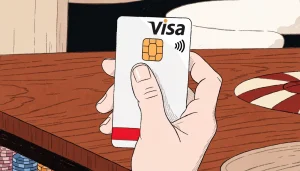
The distinction between a payment network and a particular card matters. A Mastercard logo identifies the network, not whether a specific card product is eligible for gambling transactions at a particular site. The cashier is the practical test: it shows which methods the operator currently offers and whether Mastercard debit is available for that account. A card appearing in a general list elsewhere is no substitute for that check.
That small act of checking carries more weight than the logo on the plastic. Casinos do not take deposits from an abstract network; they process a transaction presented through a particular card and payment setup. If the cashier does not offer the method, or rejects the transaction, the fact that Mastercard debit is commonly accepted across the market cannot settle the matter. There is no universal acceptance switch.
Read the cashier, not just the card
The cleanest way to assess Mastercard eligibility is to look at the deposit options while logged into the casino account, before treating the card as available. The displayed payment method should match the card being used, and the deposit screen should state the conditions that apply to it. If Mastercard is not shown there, a general claim that a casino accepts cards does not establish that this particular route is open.
A specialist review can help identify operators whose published payment information includes Visa and Mastercard. But such listings are a starting point, not a live confirmation of UK availability or of a specific card product’s eligibility. The cashier is where the current offer becomes concrete. Payment details can be revised; a review may not have been updated at the same moment.

This is less glamorous than a welcome banner. It is also more useful. A payment method matters at the point it can actually be selected, not merely where its name appears in promotional copy or a static list.
The minimum is method-specific
The amount needed to open a deposit can differ according to the selected payment method. One specialist review reports entry-level minimums in the £10–£20 range, with the threshold depending on the route chosen. That is a guide to the kind of variation reported, not a fixed Mastercard tariff for every UK casino.
The cashier’s stated minimum is therefore the relevant figure for a card deposit. A casino may set different entry points across its payment options, and the amount shown for one method should not be carried over to another. Even where Mastercard debit is accepted, that does not mean its minimum matches the one displayed for a bank transfer or another method.
A low threshold can sound like a small detail, but it shapes the transaction before play begins: an amount below the displayed minimum will not complete the deposit, while a higher minimum changes the sum needed to start. The number belongs to the operator’s current payment terms, not to Mastercard as a network.
There is a broader social habit behind this sort of fine print. Payment systems promise standardisation; gambling cashiers restore the local particulars. A recognisable card brand may travel across shops and services, but a casino deposit still depends on the operator’s own settings and the card’s eligibility. The threshold is not a market-wide rule.
For a Mastercard debit deposit, then, acceptance has two separate checks: whether the casino currently offers the card method in its cashier, and what minimum it displays for that method. Both are specific to the transaction. The logo is only the beginning.

Mobile Slots and the Cashier Check
Playing slots on a phone does not, by itself, establish that Mastercard will be available for a deposit. The game screen and the payment route are separate parts of the service: a casino may present slots on mobile while the cashier applies its own rules to cards, account details and location. The useful check is therefore not whether a game carries a Mastercard label, but whether the payment option appears for that account and transaction.
A specialist review may list Visa and Mastercard among a casino’s methods, but that is not a live confirmation of what a mobile customer can use. UK availability can change, and card-product eligibility matters. The operator’s cashier is the practical point of confirmation before a deposit is attempted. If Mastercard is absent, or the card product is not accepted, a general reference to card payments does not resolve the issue.
There is a small but important distinction between a mobile casino accepting Mastercard in principle and the payment being enabled in a particular session. The cashier may be reached through a mobile site or an app, but its available options are the ones that count. A payment badge elsewhere on the site is weaker evidence than the method actually displayed at the point of deposit. This is less glamorous than a row of slot tiles. It is also more useful.
Currency belongs in the same check. A specialist review of the supplied pages reports support for GBP, but the account currency should still be confirmed before the first transaction. If the account is set to another currency, the card payment may involve conversion rather than a straightforward sterling transaction. The slot itself does not explain that difference; the account and cashier do.
Searches for online slots that take Mastercard can also blur real-money play with free versions of games. A free-play label does not prove that the same casino accepts a Mastercard deposit for real-money play. Nor does successful card use elsewhere on a site prove that every mobile transaction will show the same payment choice. Those are separate questions, and the mobile cashier is where they meet.
This is not a claim that mobile payment is inherently less reliable. It is a reminder that a card network name is not a promise of acceptance for every card product or account. Mastercard is a payment brand, not a universal switch. The UK market’s distinction between debit cards and prohibited credit-card payments for gambling remains relevant on a phone just as it does on a desktop; the smaller screen does not alter the rule.
A sensible mobile check is brief: confirm that Mastercard is displayed in the cashier, that the specific card product is eligible, and that the account currency is correct before proceeding. The game catalogue can wait. The cashier answers the narrower question that matters here: whether this mobile transaction can be funded by that card.
Real-Money Play and Keeping the Account Trail Straight
A Mastercard deposit for real-money slots is not just a movement of funds. It creates a record linking a casino account, a payment instrument and the person named on both. When those details belong to the same customer, basic ownership checks are less likely to interrupt the transaction. The principle is plain; the paperwork can be less so.
A casino account registered in one person’s name and a card issued to someone else do not form a tidy trail. Even where the intention is harmless, the difference can prompt questions about who supplied the money and who controls the gambling account. Using another person’s card, or entering payment details that do not match the account holder, can therefore create avoidable friction.
This matters for anyone looking at Mastercard slots for real money in the UK, whether the game is a familiar online slot or one reached through a casino site. The payment route does not change the identity of the account holder. A card is not a way to borrow another person’s casino account by proxy.
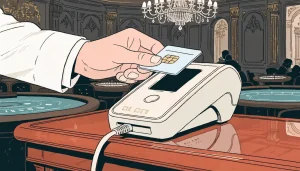
The cleaner arrangement is one named account used consistently for deposits and withdrawals. That continuity helps the operator follow the movement of funds and apply its checks to a coherent record. It also reduces the number of separate explanations that may be needed when payment and account details appear to point to different people.
There is a regulatory reason behind the routine. Returning funds to the original payment source is a common anti-fraud and anti-money-laundering control. It is not an ornamental preference for one cashier button over another; it helps establish where funds came from and where they should go. If an alternative route is involved, further verification may be required.
A change of payment method can make the trail less direct, even when every account belongs to the same customer. That does not mean an alternative is automatically unsuitable. It means the casino may need to establish that the new route is genuinely connected to the account holder. Payment names and account details are small administrative facts with a talent for becoming large practical ones.
The same logic applies when comparing casinos that accept Mastercard for slots. A review of games or payment logos cannot establish whether the registered casino account and the card details will align in a particular case. The relevant question is ownership: whether the payment instrument and account belong to the same customer, and whether the operator can trace that connection.
For real-money play, consistency is less dramatic than a promise of instant access, and more useful. One person, one account, one recognisable route. A clean trail.
A Fast Card Deposit Does Not Mean a Fast Withdrawal
A deposit via Mastercard at UK casinos may appear in the account quickly, but that says little about how a later payout will travel. A specialist casino-payment review notes that a card deposit can be instant while a withdrawal takes several business days. The two transactions follow different processes: the first adds funds to the casino balance; the second must be approved and sent through an eligible route.

UK anti-money laundering rules generally require a payout to go back to the original payment source. That can make a Mastercard deposit relevant when the casino works out where funds should be returned, but it does not mean every Mastercard debit card can receive withdrawals in the same way. The cashier’s withdrawal instructions set out the available route for that account. A card payment is not a promise of a card payout.
The wait can include more than the time taken by a bank or card network. A specialist review reports that the casino’s internal approval forms part of withdrawal processing, and that a first payout may take longer while verification is completed. KYC can involve checking identity and payment details before funds are released. If those checks are still open, the transfer cannot be judged by the speed of the original deposit.
This is why “fast withdrawal” needs careful reading when attached to a Mastercard casino. It may describe the operator’s processing stage, the payment provider’s handling, or the full time until money reaches an account; those are not necessarily the same thing. A casino can approve a request before the receiving institution has completed its part.
For a Mastercard deposit, the practical point is to read the cashier’s withdrawal rules before paying in: whether the card is an available return route, what verification is required and how the operator describes processing. A credit card is not an alternative for gambling deposits at UK-licensed casinos; the relevant card route is debit. Nor does the word “instant” on a deposit screen settle the timing of a payout.
The first withdrawal is often where the account’s paperwork catches up with its balance. Internal review, KYC and the return-to-source requirement are safeguards, but they also mean a payout can move at a different pace from a deposit. Fast in. Slower out.
Bonuses and the Payment Methods That May Miss Out
A Mastercard debit deposit and a welcome bonus are separate questions. A casino may accept the card for real-money play while attaching conditions to a promotion that depend on how the deposit was made. The logo in the cashier settles the payment question; it does not settle the bonus one.
That distinction matters because promotional terms often define eligible payment methods rather than treating every deposit alike. A bonus may require a qualifying deposit through an approved route, and a method omitted from that list may leave the account ineligible even when the transaction itself succeeds. The relevant wording is in the promotion’s terms, not in the general list of cards accepted by the casino.
A specialist review reports that PayPal can be excluded from bonus eligibility, despite its appeal as a quick and convenient payment method. Specialist reviews also describe Skrill and Neteller as methods that are often left out of promotions at sites where they are available. These are not fixed rules for every operator: eligibility can differ between casinos and between promotions. The useful point is narrower. A familiar payment brand does not automatically qualify a deposit for an offer.
For anyone comparing Mastercard casinos with a welcome bonus, the terms should be read alongside the cashier options. The offer may specify which deposit methods count, whether a payment must be made before opting in, and what happens if a deposit is made by an excluded route. No general promise can replace those operator-specific conditions. A bonus headline is the invitation; the terms decide who is admitted.
The same distinction applies to slots promotions, including offers described as a no-deposit bonus or advertised with a bonus code. The label says little about payment eligibility by itself. A code may need to be entered as directed, while a promotion may still have separate rules about deposits and payment methods. No particular offer should be assumed to exist or to be available merely because a casino accepts Mastercard.
This is less glamorous than the bonus banner. It is also where the practical difference lies: payment acceptance concerns whether funds can be deposited; promotion eligibility concerns whether that deposit qualifies under a particular set of conditions. Before claiming an offer, the payment method and its stated exclusions belong in the same check. Small print has a long memory.

Deposit Limits Before the First Spin
The cashier sets the practical floor for a Mastercard deposit. A specialist casino review puts common minimums across payment methods in the £10–£20 range, but that is not a universal Mastercard tariff: the figure can depend on the casino and the option selected. A £5 deposit should not be assumed possible simply because a card is accepted. The payment screen is where the current minimum appears.
Maximums are less uniform still. A specialist review notes that a casino may set different ceilings for a single transaction, a day or a month, with the permitted amount also affected by payment method and account status. A card’s acceptance therefore says little about how much it can fund. Account conditions can matter as much as the plastic.
These figures are distinct from a financial limit. UK Gambling Commission rules require remote gambling licensees to prompt new customers to set one before the first deposit, and to make account-level limit controls accessible. The prompt is part of the account’s opening routine, not a Mastercard-specific condition. It applies before money enters the gambling account.
That distinction is easy to miss because both kinds of limit appear around the cashier. The casino’s deposit ceiling determines what its systems will accept; a customer’s financial limit is a control over how much can be deposited. The first may vary with method and account status. The second is set through the account controls and should remain visible there.
The small print has two authors: the operator’s payment rules and the regulator’s account safeguards. Neither makes the other redundant. Separate controls.

Comparing Alternatives by Their Actual Cost
There is no universally cheapest alternative to Mastercard. A payment can look free at the cashier and still cost money elsewhere: the casino may charge a fee, the payment provider may add one, or the bank or card issuer may apply its own charge. A specialist payment guide also identifies exchange-rate spreads and network fees as possible parts of the total. The price on the screen is not always the whole price.
Currency conversion deserves particular attention. If the casino account and the payment route use different currencies, the exchange rate applied can matter more than a visible flat fee, according to a specialist payments review. The spread is less conspicuous than a fixed charge, but it still changes how much reaches the account. A clean comparison therefore uses the same amount and currency throughout, and includes any charge shown by the casino, provider, bank or network.
Bank transfers introduce a different trade-off. A specialist review notes that delivery can be affected by the bank’s cut-off times, weekends and currency conversion. That makes a transfer’s practical cost partly a matter of timing: funds may not move on the same schedule as a card payment, even if the quoted fee is low. Open banking and bank transfers are among the routes that can support quick transactions at some sites, but availability and processing remain operator-specific.
The comparison is not simply Mastercard against a single “best” substitute. Visa, e-wallets and bank-based routes each have their own terms, and a payment option’s presence does not establish that it is available for every transaction type. The relevant question is what the selected casino and provider charge for the actual route, in the account’s currency, after conversion and network costs are included.
Mastercard remains an active payment method in the UK, but a cheaper-looking alternative is not necessarily cheaper in use. The small print does the accounting.
Mastercard and Casinos Outside Gamstop: The Licensing Question
A casino’s willingness to take Mastercard does not establish whether it is licensed in the UK, or what safeguards apply to its accounts. The payment logo answers a narrow question about a cashier. “Outside Gamstop” describes a different relationship: it says nothing, by itself, about the operator’s permission to serve customers in Britain.
For remote gambling offered to customers in Great Britain, the legal test is the operator’s UK Gambling Commission licence, not its choice of card network or its connection to a self-exclusion scheme. Offshore casinos sit outside that regulatory system. A site may accept Mastercard and still lack the UKGC licence required to serve the British market. These are separate facts, not interchangeable assurances.
The distinction matters because UK regulation attaches protections to the licensed operator, rather than to the payment method. Remote operators must prompt new customers to set a financial limit before their first deposit, and must make account-level limit controls accessible. Mastercard cannot supply those controls; nor can its presence certify that an operator provides them. A card is not a licence.
There is another boundary in the cashier. The regulator’s ban on credit-card payments for gambling took effect on 14 April 2020 and has not been relaxed. Mastercard acceptance in a UK-licensed casino therefore means an eligible debit-card route, not permission to gamble with a credit card. A payment label cannot override that rule.
“Casinos outside Gamstop that accept Mastercard” can sound like one category, but it joins two questions that need separate answers: whether the operator is licensed to serve the market, and whether its cashier accepts an eligible card. The first concerns legal status and safeguards; the second concerns payment availability. Treating the latter as proof of the former gives a familiar brand mark far too much authority.
For a UK-licensed operator, the licence can be checked on the Gambling Commission’s public register. That check is about the operator, not Mastercard. The distinction is unglamorous, but important.
What is the fastest withdrawal method for UK casinos?
PayPal, open banking and debit cards linked to fast payout systems are generally among the quickest options. The casino’s approval process and whether your account is verified also affect how soon you receive the money.
Do UK casino withdrawals require verification?
Verification may be required, and first withdrawals can take longer while it is completed. Casinos commonly return funds to the original payment source as part of anti-fraud and anti-money-laundering checks.
Which payment methods are accepted in Great Britain?
UK casino cashiers commonly offer Visa and Mastercard debit cards, bank transfers or open banking, and e-wallets such as PayPal, Skrill and Neteller. Paysafecard is a deposit-only option, and some UKGC-licensed casinos accept Apple Pay for deposits; check the cashier for current availability.
Can I use a credit card at 333 Casino in Great Britain?
No. UK gambling rules prohibit casinos from accepting credit-card payments for gambling, including payments routed through a money service business or a wallet that uses credit-card funds.
Top online casinos in the UK
- SpinFormulaBonus: 550% Up To £15,000 + 550 FS · Payout speed: 1-3 business days
- SlotoSportBonus: 500% up to £ 10 200+ 777 FS · Payout speed: 1-3 business days
- Revery PlayBonus: 100% up to€1,000+ 100 FS · Payout speed: 1-3 business days
- AmunbetBonus: Join now and get 450% up to 2,700 GBP + 450 FS · Payout speed: 1-3 business days
- BeOnBetBonus: 100% up to €500 + 100 FS · Payout speed: 1-3 business days
- JetsetspinsBonus: 200% Bonus + 100 Free Spins + Free Royal Wheel · Payout speed: 1-3 business days
- NightWinBonus: £900 + 400 free spins · Payout speed: 1-3 business days
- x3betBonus: Welcome Pack 100% Up to £1.000 + 200 Free Spins · Payout speed: 1-3 business days
- ZombillionBonus: Welcome Pack 250% up to £4000 + 200 FS · Payout speed: 1-3 business days
- BritsinoBonus: Welcome Package – Get your £2,200 + 2,000 FS · Payout speed: 1-3 business days
Related posts

UK Casino Welcome Bonuses: How Offers Work

VPN-Friendly Casinos in the UK: How Access Works
