
Casinos That Accept E-Checks in the UK
 Available in GB
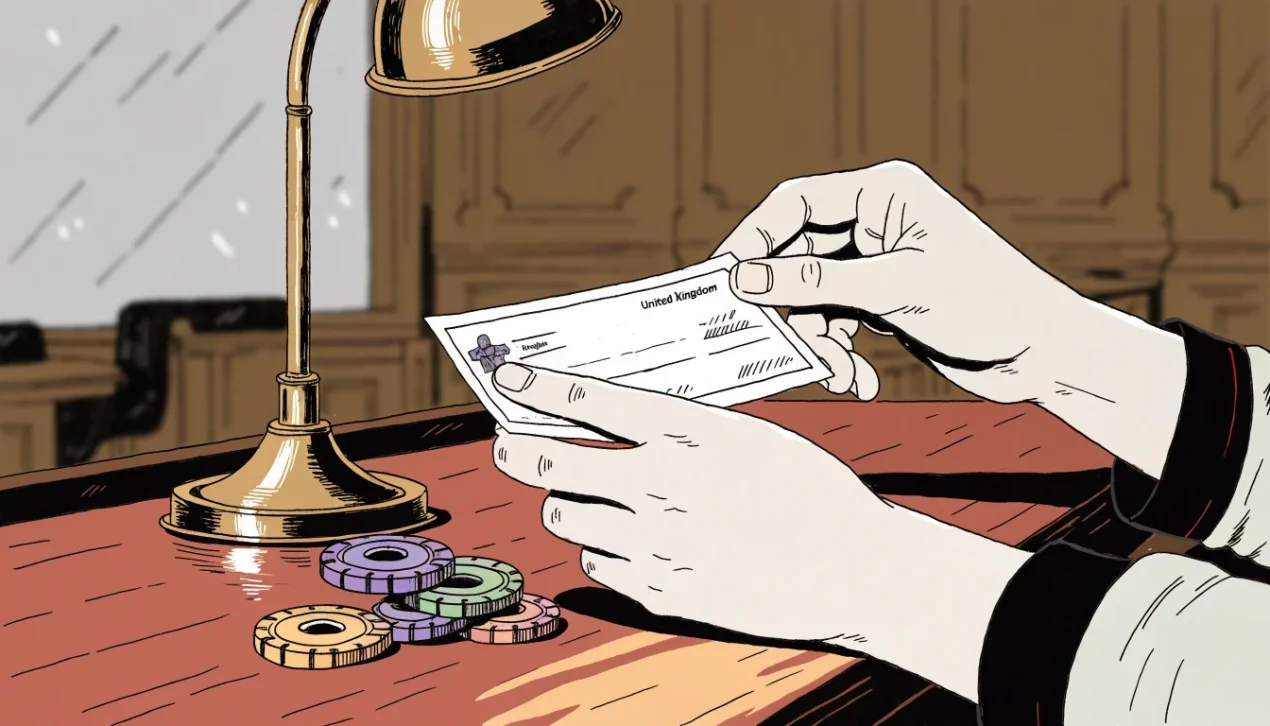
E-check labels may appear in general casino information without being available to a UK account, so the signed-in cashier is the practical check.
The E-Check Question Starts in the Cashier
A casino page can mention e-checks without making one available to a UK customer. The distinction is easy to miss: a payment method may appear in a review, an old help page or a general list of logos, while the cashier for a particular account offers no corresponding route at all. For anyone looking for casinos that accept e-checks in the UK in 2026, the cashier is the practical test, not the wording used elsewhere.
“E-check” is not a self-explanatory button. The term generally describes an electronic cheque payment, but a casino may use it for a particular banking service or payment arrangement. That does not mean every service described this way works with UK bank accounts, or that a UK account will see it as an option. A label alone cannot settle either point.
The cashier gives a more concrete picture. Its deposit screen should show the payment methods currently presented to the signed-in account, along with any instructions for using them. If an e-check route is genuinely offered, its name and the steps needed to start a deposit should be visible there. A page that merely includes the term, without an available route in the cashier, is not evidence that the method can be used.
There is a second distinction: a method can be listed but unavailable for a particular account or transaction. Payment menus may depend on the account’s settings and the currency selected for it. Before relying on a listed option, the relevant questions are whether it appears in that account’s cashier and whether the deposit screen accepts the intended currency. A general statement that a casino supports a currency does not, by itself, show that every payment method works with it.
The currency detail matters because a payment can be technically offered yet unsuitable for a straightforward deposit if the account is set to another currency. A specialist payment review may report that GBP is supported, but the account currency still needs to be confirmed before the first transaction. Otherwise, conversion may enter the process where it was not expected. Small print tends to acquire importance just after a button has been pressed.

Payment-method lists deserve similar care. A specialist review may list Visa and Mastercard for a casino, but that does not confirm that a particular UK customer can use a particular card product there now. The cashier is where current UK availability and card eligibility need to be checked. A logo can describe a broad category; it cannot establish what the account is permitted to do.
This is why “casinos accepting e-check deposits” and casinos that merely discuss e-checks are not interchangeable descriptions. The first implies a working deposit route; the second may refer only to information about payment methods. A page can remain visible after its details have changed, or summarise a casino’s wider offering rather than the options available in its UK cashier. Neither circumstance proves that an e-check deposit can be made.
A useful check is therefore a sequence, not a search for a reassuring badge: open the casino’s cashier, look for an explicitly named e-check option, and read the instructions shown beside it. Then confirm that the option remains selectable when the account’s currency is taken into consideration. If the route is absent, or its instructions do not identify a usable UK payment process, the casino should not be treated as an e-check option on the strength of a separate list.
That standard is deliberately narrow. It does not suggest that a casino is unreliable whenever a method is absent, nor that an e-check is a necessary feature of a UK casino. It only separates a real, visible deposit choice from a label that may describe something else or may no longer apply. Payment menus are operational details, not promises carved into stone.
The same caution applies to “best” lists. A ranking cannot make a method available, and a casino cannot be assessed as an e-check choice simply because a third-party page groups it under that heading. The decisive evidence is the casino’s own current cashier, where the account-specific options are presented at the point of deposit. Until an e-check route appears there with workable instructions, its availability remains unconfirmed.
In the end, the question is less whether a casino has ever been associated with e-checks than whether the route is actually offered to the account making the deposit. That small shift in emphasis prevents a broad payment claim from being mistaken for a usable option. The cashier is the evidence.
Top online casinos in the UK
- SpinFormulaBonus: 550% Up To £15,000 + 550 FS · Payout speed: 1-3 business days
- SlotoSportBonus: 500% up to £ 10 200+ 777 FS · Payout speed: 1-3 business days
- Revery PlayBonus: 100% up to€1,000+ 100 FS · Payout speed: 1-3 business days
- AmunbetBonus: Join now and get 450% up to 2,700 GBP + 450 FS · Payout speed: 1-3 business days
- BeOnBetBonus: 100% up to €500 + 100 FS · Payout speed: 1-3 business days
- JetsetspinsBonus: 200% Bonus + 100 Free Spins + Free Royal Wheel · Payout speed: 1-3 business days
- NightWinBonus: £900 + 400 free spins · Payout speed: 1-3 business days
- x3betBonus: Welcome Pack 100% Up to £1.000 + 200 Free Spins · Payout speed: 1-3 business days
- ZombillionBonus: Welcome Pack 250% up to £4000 + 200 FS · Payout speed: 1-3 business days
- BritsinoBonus: Welcome Package – Get your £2,200 + 2,000 FS · Payout speed: 1-3 business days
The Payment Routes UK Casinos Commonly Show
The phrase “e-check” can make a payment search sound more settled than the cashier itself. It belongs to a different vocabulary from the names most often encountered in UK casino payment menus. Those menus may show bank cards, bank-transfer routes, digital wallets or prepaid vouchers; none becomes an e-check simply because it moves money electronically. The distinction matters. A familiar alternative may serve the same practical purpose for a player, but it is not evidence that a casino accepts e-checks.
Debit cards remain a recognisable route. UK casinos commonly accept debit cards bearing the Visa or Mastercard name, although the cashier is where current availability becomes concrete. A logo on a general payment page is not quite the same thing as an option offered for a particular transaction. The card route is familiar partly because it sits inside ordinary banking life: the casino payment is made through a product already used for everyday purchases. Familiarity, however, is not a promise about every card or every account.

Bank transfer and open banking sit closer to the idea of paying directly from a bank account, but they should still be described by their own names. A specialist review reports that these routes can provide instant deposits and fast withdrawals at many sites. That is a report about a changing field, not a property to assume of every casino or every transfer. The practical point is that a bank-linked route may appear alongside cards without being an e-check. The cashier’s labels matter more than the broad resemblance between payment methods.
Digital wallets form another part of the landscape. PayPal is described in specialist reviews as valued for speed and convenience, though those same kinds of reviews note that it may not qualify for a casino promotion. Skrill and Neteller appear at some sites; specialist reviews also report that promotions may exclude them. These conditions are not permanent features of the brands. They belong to individual casino terms and can change, so a wallet’s presence in a payment menu says nothing by itself about promotional eligibility.
Prepaid vouchers offer a different arrangement. Paysafecard is a prepaid product used for deposits only. That makes it unlike a bank card or a route that may support movement in both directions. The distinction is structural, not cosmetic: a deposit method does not automatically provide a way to receive casino funds. A payment menu can therefore contain options that serve different roles, even when they are displayed in one compact row of logos.
Debit Cards
UK casinos commonly accept Visa or Mastercard products used for everyday purchases.
Bank Transfers
Direct routes like open banking that provide instant deposits and fast withdrawals.
Digital Wallets
Services such as PayPal, Skrill, or Neteller used for speed and convenience.
Prepaid Vouchers
Products like Paysafecard that are used for deposits only.
This wider range helps explain why an e-check search can produce a confusing result. People may be looking for a bank-based way to fund an account, while casino pages use a separate vocabulary for cards, bank transfers and wallets. Similar purpose is not identical method. Nor does a casino’s general support for electronic payments establish that it accepts a particular e-check service. Names should not be translated into one another for convenience.
The word “best” is also an awkward fit when the underlying route has not been confirmed. A payment method can be judged only in relation to what it actually does at a particular site: whether it is listed, whether it is available for the intended transaction, and whether it is deposit-only or supports more. Those are practical differences, not a league table. A prepaid voucher and a bank-linked transfer are not competing versions of the same instrument.
There is a social history in these distinctions. Cards draw on established banking infrastructure; wallets package payment behind a separate account; prepaid vouchers let money enter a system without being a bank transfer. Casinos present them together because each offers a different doorway into the cashier. The user sees a row of choices; behind it sit different institutions and different rules. One neat row. Several systems.

For anyone comparing UK casinos that appear to accept e-checks, the useful contrast is therefore not “e-check versus every other electronic method”. It is between the requested service and the alternatives the casino actually names. Visa and Mastercard debit cards, bank transfers, open banking, PayPal, Skrill, Neteller and Paysafecard are distinct routes, with different roles and conditions. Their appearance can provide context, but it cannot verify e-check acceptance. Only the named option in the casino’s own payment area can do that.
A Payment Method Is Only Useful If It Fits the Account
A payment option can appear in a casino’s cashier and still be a poor fit for the account using it. The important question is not merely whether a route is displayed, but whether the account details and the payment route point to the same customer. When they do, basic ownership checks are less likely to create avoidable friction around a transaction.
That distinction matters to anyone looking for an e-check casino in the UK. A label on a website does not, by itself, establish that a particular account can use the method. Nor does it establish that the payment route is compatible with the account details already held by the casino. The cashier presents a choice; the account supplies the context in which that choice may work.
There is a plain administrative logic to this. A casino account is registered to a person, while a payment route also has an owner. If those records appear to describe different people, the mismatch may prompt questions before the transaction can proceed smoothly. Consistent ownership details do not make a method available where it is not offered, but they can remove one ordinary source of uncertainty.
Do
- Verify the e-check option in the signed-in cashier
- Ensure the deposit currency matches the account currency
- Match the payment route owner to the casino account holder
Don’t
- Rely on general logos or review lists as proof of availability
- Assume a deposit method works with all currencies
- Use different people’s details for deposits and withdrawals
The same principle applies whether the method is described as an e-check or by another payment name. A method’s label says little about the relationship between its owner and the casino account. What matters here is the fit: the account information and the payment route should belong to the same customer. It is a modest standard, but payment systems are built from modest standards. Names must meet names; records must agree with records.
An account created under one person’s details and a payment route associated with someone else may therefore be harder to reconcile than a consistent set of details. That is not a claim that every discrepancy will lead to a failed transaction. It is simply that mismatched ownership can turn a routine payment into something requiring clarification. Administrative friction rarely announces itself as a grand principle. It arrives as a transaction that needs attention.
The neatest arrangement is often one named account used consistently for both depositing and withdrawing. This keeps the payment history legible: the casino account and the chosen route remain associated with the same customer rather than presenting a changing cast of owners. It is not a guarantee of acceptance, and it does not override the casino’s own payment options. It is a way of avoiding an unnecessary complication.
That consistency is particularly useful when comparing e-check casino sites in the UK. Two casinos may use similar payment labels, yet the relevant question for an individual account is still whether its details match the selected route. A general description of a method cannot settle that account-level question. Nor can a list of sites substitute for the cashier’s actual options once an account is in use.

The wider point is that payment compatibility is relational. It is not a quality belonging to the payment method alone, like a name printed on a button. It depends on the connection between the customer’s account and the route chosen for the transaction. This makes a “best” e-check option an incomplete idea if it is considered without that connection. A route that suits one account may not fit another in the same way.
There is a quiet human history behind such checks. Financial systems were designed to make ownership visible and transactions traceable; casinos, operating in a tightly controlled environment, inherit that habit. The result can feel impersonal, but the underlying question is remarkably small: do these details belong together? When the answer is clear, fewer basic obstacles stand between the account and its chosen payment route.
For a casino deposit, then, availability and compatibility are separate matters. A payment method may be listed, while its suitability depends on who owns the account and the payment route. Keeping those details aligned is a simple way to reduce avoidable friction, whether the cashier calls the option an e-check or something else. The machinery is not sentimental. It does, however, appreciate consistency.
The Cost of Moving Money Is More Than a Flat Fee
A payment can look free at the point of deposit and still cost money along the way. The cashier may show no charge, while a payment provider, card issuer or bank applies its own fee. If the transaction crosses currencies, the exchange rate can take a further share; some payment networks also impose costs. A specialist review of casino payment charges identifies these as separate possible sources, not one standard tariff. The total depends on the route used and the terms attached to it.
That distinction matters when comparing an e-check deposit with another way of funding a casino account. The label alone does not reveal what the transaction will cost. Nor does a fee-free message from the casino establish that every organisation involved in moving the money will charge nothing. The visible price is only one part of the journey.
The charge that does not look like a charge
Currency conversion is an easy cost to overlook because it may not appear as a separate line item. If the casino account is not held in pounds, a deposit may be converted before it reaches the balance, or funds may be converted elsewhere in the payment chain. The rate applied can include a spread: the difference between a reference exchange rate and the rate actually used for the transaction.
A specialist review notes that this spread can outweigh a stated flat fee. That is not a claim that it always does; it is a reminder that a small, clearly labelled charge can be less expensive than a less visible exchange-rate adjustment. A transaction with no named fee is not necessarily a transaction without cost.
The same issue can arise when money leaves the account as well as when it enters. Looking only at the casino’s deposit screen can therefore give an incomplete picture of the cost of using a payment route. The relevant comparison is the amount ultimately deducted from the source account against the amount credited to the casino balance, with any conversion terms included.

Costs sit in different places
A casino may set its own transaction charge. A payment provider may have a separate fee schedule. A bank or card issuer can apply charges of its own, while currency conversion and network costs may sit elsewhere in the process. These possibilities should not be added together as though they all apply to every transaction; they are distinct places where a charge may arise.
That is why a method cannot be ranked as the cheapest in every case. A specialist review of payment costs recommends comparing the casino’s charge, provider and bank fees, any exchange-rate difference, and network costs for the specific amount being moved. The amount matters because a flat fee and a percentage-based cost behave differently as a transaction changes in size. The route matters because not every provider or network applies the same terms.
For a person searching for an e-check casino, the practical question is not simply whether an e-check is advertised as free. It is whether the complete transaction has a charge, where that charge is applied, and whether the account currency creates a conversion cost. The same test applies to other methods. A familiar brand or an instant-looking button says little about the final amount received.
A comparison worth making
A careful comparison begins with the terms shown by the casino and the payment provider, then checks whether the bank or issuer may add anything. If currencies differ, the exchange rate and conversion method deserve attention alongside any explicit fee. The figures to compare are the actual cost of making the intended transaction and the value credited after it has been processed—not a headline claim detached from the route.
This is less tidy than choosing the method with the smallest printed charge. It is also more useful. A route with a visible fee may still cost less than one whose conversion spread is wider; another route may have no casino fee but carry a provider or bank charge. No single payment method wins that comparison across all casinos, providers and amounts.
The cashier is a starting point, not a complete receipt. A small line of print can matter more than a large button.
Real-Money Deposits Have Limits Before They Have Momentum
A deposit limit is not a single figure. The smallest amount a cashier will accept and the largest it will process answer different questions, and neither necessarily applies to every payment route on the same site. An e-check option, where one is offered, should not be assumed to share the thresholds shown for a debit card or another method.

A specialist casino review places the starting minimum for deposits in the £10–£20 range, with the precise threshold depending on the selected payment method. That is a reported range, not a promise that every casino, account or cashier will use those figures. The payment screen is the practical reference: it can show the minimum attached to the route selected, rather than a generic minimum printed elsewhere on the site.
The maximum can be less visible until a method is chosen. A casino may set one ceiling for an individual transaction and separate limits over a day or month. Those restrictions can vary by payment method and account status, so a figure that applies to one route should not be carried across to another. Nor does a large general deposit limit establish that a particular e-check transaction will be accepted at that amount.
That distinction matters when a deposit is planned as a single transfer. If the amount exceeds a route’s transaction ceiling, the cashier may reject it or require a different arrangement; if it falls below the route’s minimum, the same problem arises at the other end. The displayed limits are not decorative. They define the portion of a balance the payment system is prepared to move at once.
Account status is another part of the calculation. The limits visible to an established account may not match those presented to a new or otherwise restricted account. A maximum shown on an information page can therefore be less useful than the limit attached to the logged-in cashier and chosen method. Small print has a way of becoming large when money is involved.
Deposit Limits
Minimum and maximum thresholds can vary by payment method and account status. Always check the specific limits presented in the cashier after selecting your chosen route.
For searches about real-money e-check deposits, the relevant question is not simply whether a casino names the method. It is whether the cashier presents it for that account and states workable minimum and maximum amounts. A claim that an e-check deposit is instant says nothing about how much can be sent; speed and capacity are separate properties. The first may be attractive, the second decisive.
Before confirming a deposit, the amount shown should be compared with the route’s minimum and maximum, including any stated daily or monthly ceiling. If the cashier does not present an e-check option or its limits, a figure from another payment method cannot fill the gap. No universal e-check limit follows from the general deposit ranges reported by casino reviews. The cashier decides.
A Deposit Can Be Instant; the Money Coming Back May Not Be
A card payment can appear in a casino balance as soon as it is made, while a payout to the same player may take several business days. The two movements travel through different processes; the speed of the first says little about the arrival time of the second. A specialist review describes this contrast, though the timing attached to a particular account depends on the route used.
That distinction matters when comparing an e-check deposit with the money coming back. A deposit option is not a timetable for withdrawals. Even when a casino displays a method in its cashier, the deposit and payout stages may not move at the same pace. An apparently immediate balance can create an expectation of equally immediate access to winnings. Payments do not observe that symmetry.
Bank transfers have their own calendar. A specialist review notes that delivery may be affected by the time a transfer is submitted relative to the bank’s cut-off, by weekends, and by currency conversion. A request made outside processing hours may not begin moving when the casino screen changes; a weekend can interrupt the ordinary working rhythm, while a currency exchange adds another step between the casino’s balance and the account receiving the funds.
The visible status of a transaction is therefore only one part of its timing. “Processed” and “received” describe different points in the journey, and the interval between them can depend on the bank route and when it is initiated. That is particularly relevant when the casino balance and receiving account do not use the same currency: conversion is not merely a display change but part of the transfer path.
The practical measure is not how quickly money enters the account, but how long the full return journey takes under the selected method. An instant deposit is no promise of an instant payout. A small distinction, until it is not.
Why Casino Payouts Often Return to Their Starting Point
A payout returning to the account that funded a casino balance can look like an administrative quirk. It is better understood as a control on the movement of money. UK anti-money laundering rules generally require winnings and returned funds to go back to the original payment source, rather than allowing a casino account to become a convenient bridge between unrelated accounts.
That restriction also helps address fraud. If a deposit came from one person’s payment account but a withdrawal is directed elsewhere, the mismatch raises an ownership question. Returning the money to its starting point makes it harder to use a gambling account to move funds between people or disguise where they came from. The rule is less about the drama of a win than the paper trail around it.
This is why an e-check deposit, where offered, should not be treated as a promise that the same route will be available for every payout. The casino’s closed-loop rules and the payment provider’s arrangements shape what can happen next. A request to send money by another route may prompt additional checks, particularly where the alternative does not clearly belong to the account holder.
Those checks are not necessarily evidence that anything is wrong. They are a way to establish that the person receiving the funds is entitled to them and that the requested destination is consistent with the original transaction. Account details and payment ownership therefore matter beyond the moment of deposit.
The underlying principle is deliberately unglamorous: money should return along a traceable path. A different destination may still be possible, but it can bring another layer of verification before the casino releases funds. Convenience has a boundary.
Withdrawal Speed Depends on More Than the Payment Button
A withdrawal has two clocks: the casino’s decision and the movement of money after approval. The cashier may show a payout method, but that button does not reveal how long the operator will take to review a request or whether the account is ready to receive funds.

A specialist review identifies PayPal, open banking services and debit cards connected to fast payout systems as methods associated with quicker withdrawals. That is a comparison, not a promise: availability and processing depend on the casino and the account. An e-check withdrawal cannot be assumed to be quick merely because the method appears in a payment list; the operator’s cashier and withdrawal terms determine whether it is offered and how it is handled.
The casino’s internal approval stage comes first. It may include checks on the request and the account, so the transfer itself is only part of the wait. The distinction is easily lost in payment tables, where a method name sits beside a neat speed label. The label is not the whole journey.
First withdrawals may take longer while KYC is completed. An account that has not yet cleared verification can therefore face a delay before the payment provider has any funds to move. Later requests may avoid that initial verification work, but approval remains the operator’s step, not the bank’s.
This is why “fast withdrawal” can describe a payment rail without describing the full payout. PayPal, open banking and eligible debit-card systems may shorten the onward transfer, while the casino’s review still sets the earliest point at which that transfer can begin. A useful comparison separates those stages rather than treating the cashier’s estimate as a single, guaranteed arrival time.
The payment button is only the visible part. The queue behind it matters.
Casino Apps Do Not Make Every Payment Option Mobile
A casino that works well on a phone has not necessarily made every payment route available there. The app is a doorway to the games and account; the cashier still decides which deposit methods can be selected. A search for an e-check casino app in the UK does not establish that an e-check option is offered, or that it can be used through the mobile cashier. The displayed choices are the practical evidence.
Apple Pay shows how mobile payments can fit into this picture. Some UKGC-licensed casinos accept it for deposits, but that does not make it a universal feature of casino apps. Its presence at one operator says little about another. Nor does a payment logo on a general information page prove that the method is available for a particular transaction.
The same caution applies to familiar card names. A specialist review may list Visa and Mastercard among a casino’s methods, but current UK availability and the eligibility of a particular card product need to be checked in the cashier. A card brand is not a promise that every card carrying it will work. Payment arrangements have their own boundaries, and mobile screens do not dissolve them.
There is a useful distinction between an app supporting a payment service and the casino offering that service. The first concerns the software; the second concerns the operator’s cashier and the options it makes available. On a small screen, those can blur together, especially when a button or logo is treated as a complete answer. It is not.
For an e-check or any other method, the relevant detail is whether it appears among the available deposit choices in the account’s cashier. Apple Pay is an example of a mobile-friendly option accepted at some licensed casinos, not evidence that every app supports every named method. The phone is only the interface. The cashier is the decision.
UK Rules Set the Boundaries Around Casino Payments
An electronic cheque is a payment route, not an exception to the rules governing gambling in Britain. Remote operators serving customers in England, Scotland and Wales must hold a UK Gambling Commission licence. That framework shapes what a casino can accept and what it must do before an account is funded.
The clearest boundary is the credit-card ban. The regulator introduced it on 14 April 2020, and it remains in force: UK-licensed casinos cannot accept credit-card payments for gambling. The restriction also covers credit-card funds routed through a money service business. A digital wallet is not a loophole if it allows credit-card money to be used for gambling; operators cannot accept those wallet payments either. Payment labels do not alter the source of the funds.
There is also a required pause before a new customer makes a first deposit. Remote operators must prompt the customer to set a financial limit at that stage, and account-level controls for limits must remain accessible. The rule makes a limit part of opening the account for play, rather than a buried setting that appears only after money has moved. It is a small piece of interface design with a public purpose: deciding how much gambling money is available should not be left entirely to the momentum of the cashier.
These controls do not establish that a particular casino accepts e-checks. They establish the legal conditions around payment and account use. A method described as an e-check still has to be offered by the operator and handled within the applicable rules; its name cannot override the credit-card restrictions or the required limit prompt.
Britain’s system treats payment as part of gambling regulation, not as a private arrangement between a bank and a customer. The cashier is where that policy becomes visible: some routes are barred, and the first deposit comes with a required financial decision. Not optional.
Why must withdrawals return to the deposit method?
Returning funds to the original payment source is a common anti-fraud and anti-money-laundering control. An alternative payout route may require additional verification.
What is the fastest withdrawal method for UK casinos?
PayPal, open banking and debit cards linked to fast payout systems are generally among the quickest. The casino’s approval process and whether your account is verified also affect the timing.
Can I deposit in GBP?
Yes, GBP is supported, but check that your account is set to GBP before depositing to avoid currency conversion.
What is the current minimum deposit?
Minimum deposits usually start at £10–£20, depending on the payment method.
Which method has the lowest fees?
There is no universal lowest-fee method. Compare casino and provider charges, currency conversion costs and any network fees for the amount you plan to deposit.
Are Visa and Mastercard deposits definitely debit cards?
UK gambling operators are prohibited from accepting credit-card gambling payments, so card deposits must use an eligible debit card. Check the cashier to confirm that your particular card product is accepted.
Related posts

UK Casino Welcome Bonuses: How Offers Work

VPN-Friendly Casinos in the UK: How Access Works
