
E-Cheque Casinos in the UK: What Can Be Confirmed
 Available in GB
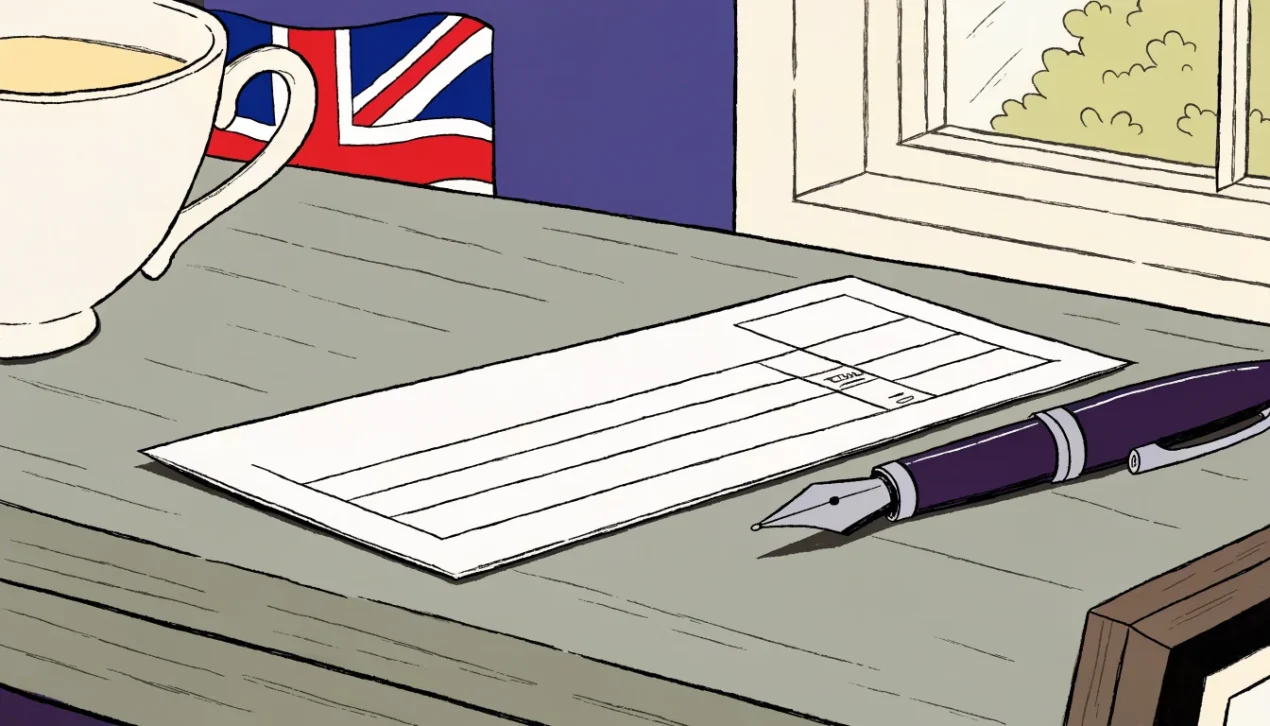
E-cheque labels may refer to other markets or different payment processes, and deposit availability does not confirm withdrawal support.
What an E-cheque Claim Needs to Prove
A casino described as accepting e-cheques is making a specific claim about how money can enter an account. The phrase alone does not establish that the method is available to UK customers, or that it is accepted by a particular operator. At present, no UK casino can be identified as a confirmed e-cheque option. An affirmative list would imply more certainty than can be supported.
That distinction matters because payment labels are easy to repeat and harder to pin down. A reference to e-cheques might describe a service available in another country, a former option, or a payment route that depends on an account or provider not available to every customer. It might also be used loosely for an electronic bank payment, although the name does not prove that the underlying process is the same. Similar wording is not the same transaction.
A useful claim must connect the method to the actual casino and its UK-facing service. It should make clear that e-cheques are accepted for customers in the United Kingdom, rather than merely appearing in a general description of payment technology. It should also distinguish a working deposit method from an option mentioned in an old article, a provider’s broad product list or an unqualified promotional statement. Without those links, “accepts e-cheques” remains a label, not a dependable description of what an account can do.
This is why lists of “e-cheque casinos” deserve particular care. A list suggests that each named operator has been checked against the same standard. If the underlying claims use different meanings, dates or geographic assumptions, the list gives an appearance of comparison without establishing the basic fact. Calling the entries the best or the top does not strengthen the evidence. It only adds a ranking to an unproven premise.
There is a quieter part of payment compatibility that is less glamorous than a new method and often more useful: the identity attached to the money. When the casino account and payment route belong to the same customer, basic ownership details are less likely to create avoidable friction. A transaction is easier to interpret when the names line up, rather than asking an operator to reconcile a casino account with a payment instrument belonging to someone else.

The same logic favours continuity. The cleanest route is often one named account used consistently for both deposit and withdrawal. A stable connection between the customer’s account and the payment route makes the movement of funds more coherent. It does not establish that a particular method is accepted, nor does it turn a claim about e-cheques into proof. Identity consistency and method availability are separate questions.
That separation is important. A customer may have a payment account in their own name, but that does not show that a casino supports e-cheques. Conversely, an operator might describe a method as available without explaining which customer accounts qualify. The first point concerns ownership; the second concerns acceptance. Treating them as interchangeable blurs the very detail a payment claim ought to settle.
The name itself can encourage false confidence. “E-cheque” sounds like a familiar paper cheque translated into digital form, with the reassuring formality of a bank transaction. Yet a familiar-sounding term cannot tell a customer who processes the payment, what account relationships are required, or whether a UK casino accepts it. The word carries an image; the transaction needs evidence.
A sound description therefore avoids turning possibility into certainty. It does not infer UK acceptance from the existence of an electronic cheque service, from a casino’s general support for bank payments, or from a list assembled for a different market. Nor does it describe an operator as an e-cheque casino merely because the term appears somewhere in its wider payment information. Each step needs to be demonstrated rather than assumed.
For anyone assessing a claim, the useful question is not whether e-cheques exist as a payment concept. It is whether the named casino accepts that precise method for UK customers, with ownership details that correspond to the customer’s account. Until that link is established, the careful description is that acceptance has not been confirmed—not that a casino accepts e-cheques because the wording sounds plausible.
Payment claims should be read literally. A method name is only the beginning.
Top online casinos in the UK
- SpinFormulaBonus: 550% Up To £15,000 + 550 FS · Payout speed: 1-3 business days
- SlotoSportBonus: 500% up to £ 10 200+ 777 FS · Payout speed: 1-3 business days
- Revery PlayBonus: 100% up to€1,000+ 100 FS · Payout speed: 1-3 business days
- AmunbetBonus: Join now and get 450% up to 2,700 GBP + 450 FS · Payout speed: 1-3 business days
- BeOnBetBonus: 100% up to €500 + 100 FS · Payout speed: 1-3 business days
- JetsetspinsBonus: 200% Bonus + 100 Free Spins + Free Royal Wheel · Payout speed: 1-3 business days
- NightWinBonus: £900 + 400 free spins · Payout speed: 1-3 business days
- x3betBonus: Welcome Pack 100% Up to £1.000 + 200 Free Spins · Payout speed: 1-3 business days
- ZombillionBonus: Welcome Pack 250% up to £4000 + 200 FS · Payout speed: 1-3 business days
- BritsinoBonus: Welcome Package – Get your £2,200 + 2,000 FS · Payout speed: 1-3 business days
Payment Methods and Cashier Compatibility
A payment method is not a permanent feature of every casino account. The options can differ between sites, and a method mentioned in a general payment summary may not appear for a particular customer when a transaction is started. The cashier is the practical point of reference: it shows which options are currently presented for that account and whether the selected payment product can be used.
That distinction matters for anyone looking for an e-cheque casino in the UK. A general label or broad claim is not proof that an e-cheque can be selected in the cashier. Acceptance should be treated as established only when the method is explicitly available for the relevant account and transaction. Without that confirmation, a casino cannot be described as an online casino that accepts e-cheques simply because it offers other ways to pay.
The same caution applies to familiar card brands. A specialist casino review lists Visa and Mastercard, but the listing does not settle whether either is currently available to a UK customer, or whether a particular card product is eligible. Those details belong to the cashier, where the available choice can be checked before a deposit is attempted. A logo on a general page is a signpost, not a working payment route.
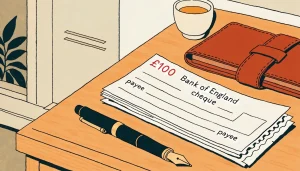
There is also a legal distinction within the word “card”. UK-licensed casinos cannot accept credit-card payments for gambling. Visa or Mastercard branding alone does not say whether the relevant product is a debit card or a prohibited credit card. The product type matters, and a casino’s payment page should not be read as permission to use every card carrying a listed brand. The cashier’s options and the card issuer’s product details need to match.
Compatibility is therefore more specific than a method name. It involves the casino, the customer’s account, the payment product and the transaction being made. An option visible on one casino’s site does not establish that another site offers it; nor does a method shown in general information guarantee that it will be selectable for every account. Payment menus are operational, not decorative.
Currency is another part of that check. A specialist review describes GBP as supported, but the account currency still needs to be confirmed before the first transaction. If the account is set to another currency, conversion may enter the process, even when the payment method itself is accepted. A familiar symbol or UK-facing page does not, by itself, establish the currency in which the account will be held.
The cashier is useful precisely because it narrows broad claims to a concrete choice. It can show whether a named method is offered at that point, while the account information can clarify the currency attached to play. If a method is absent, a list elsewhere on the site cannot make it available. If it is present, that still establishes only the option displayed for that transaction; it does not turn every product under the same brand into an eligible one.
DO
- Check the live cashier for current payment availability
- Verify if the card is a debit product rather than credit
- Confirm the account currency matches the intended payment
DON’T
- Assume a general method name means it is available for your account
- Rely on a logo or brand name as proof of a working route
- Treat deposit methods as guaranteed withdrawal methods
E-cheques require the same standard. The phrase “e-cheque accepted” is meaningful only if the casino identifies the method clearly and makes it available in the relevant cashier. A bank-related payment description, a card logo or a reference to electronic payments is not interchangeable with e-cheque support. Payment terminology can sound reassuringly broad while describing quite different mechanisms. Words are cheap; cashier options are less so.
For a search framed around the best or top e-cheque casinos, a ranked list would imply that named sites have been confirmed to offer that method. Without clear, current cashier evidence, that would create a confidence the claim has not earned. The more useful comparison is between what a casino actually presents and what the account can use, rather than between promotional descriptions that may refer to different products.
This check is deliberately narrow. It concerns whether a payment method is currently available and compatible, not how money later moves through different deposit and withdrawal routes. The presence of one choice in the cashier does not answer every question about the payment arrangement. It does, however, prevent a broad label from being mistaken for a usable option.
For a UK customer, the distinction can be stated plainly: Visa and Mastercard are names associated with card payments, but the current UK availability and eligibility of the specific card product need checking in the cashier. GBP support is also something to confirm against the account’s currency setting. An e-cheque claim deserves no looser test. Without an explicit, selectable e-cheque option, acceptance remains an assertion rather than a demonstrated compatibility.

How Deposits and Withdrawals Take Different Routes
A payment method can appear to do one job neatly and another rather less neatly. A deposit moves money into a gambling account; a withdrawal sends an approved balance back out. Those movements are related, but they are not mirror images. The cashier may offer a route for adding funds without establishing that the same route can return them, or that the two transactions will take the same time.
That distinction matters when considering e-cheque deposits at UK casinos. A payment option described in general terms is not proof that a particular casino accepts e-cheques, and the word “deposit” alone says nothing about how winnings would be paid. The practical question is the route in both directions: what can fund the account, and what can carry a payout away from it?
Debit cards remain a familiar point of comparison. UK casinos commonly accept debit cards, including Visa and Mastercard, although the available card products and current eligibility still depend on the site’s cashier. The convenience of a card at the deposit stage can create an expectation that the return journey will be just as direct. That expectation is not a timetable.
A specialist review describes card deposits as capable of arriving instantly while a payout may take several business days. This is an account of a possible difference between the two stages, not a promise about every casino or every card transaction. A deposit can be registered as soon as the payment is authorised; a withdrawal may pass through a separate operator process before it reaches the payment account. The same piece of plastic does not make those processes identical.
Open banking and bank transfers provide another route. A specialist review reports that these methods can support instant deposits and fast withdrawals at many sites. The qualification matters: “can” describes an available capability, not a uniform service across casinos. A site may support a bank-linked deposit route but handle payouts differently, or make a particular option available only to eligible accounts. The label on a payment button is therefore less informative than the actual route offered for both transactions.
The distinction between open banking and a bank transfer also deserves care in ordinary conversation. Both involve a bank account, but the named method in a cashier is what determines how the casino receives the deposit and how it processes a payout. A customer seeing a bank logo should not assume that every bank-based option follows the same route. Payment systems are not made interchangeable by their shared association with a high-street account.

There is a broader reason why the outward journey can feel less immediate than the inward one. A deposit begins with a request to add funds; a withdrawal is a request for the operator to release them through an available payment channel. Timing can therefore differ even where the casino supports both transactions. Fast entry is not evidence of fast exit. It is an unglamorous asymmetry, but a consequential one.
For someone comparing e-cheque online casinos in the UK, the useful comparison is not merely whether an e-cheque appears among deposit methods. The payment route has to make sense across the account’s full use. If an e-cheque is accepted for funding but is not offered for withdrawals, another payout route may be needed. Conversely, the presence of a bank transfer or debit card in the cashier does not prove that an e-cheque is accepted alongside it. Each method has its own status.
The same caution applies to mobile use. A payment method visible on a desktop cashier may not be shown in the same way on a mobile interface, and a convenient mobile deposit does not establish a corresponding withdrawal route. The essential distinction remains the same regardless of screen size: depositing and withdrawing are separate operations, and the payment options for each need to be understood as such.
A comparison of deposit e-cheque casinos, then, should not treat a fast deposit as a complete account of payment performance. The customer’s funds may enter by one route and leave by another, with different processing stages between them. For e-cheques specifically, no inference should be drawn from the presence of other payment methods: a card, open-banking service or bank transfer is an alternative route, not evidence of e-cheque acceptance.
This is why a payment method’s name cannot carry the whole decision. A casino may present several ways to fund an account, while the withdrawal path remains governed by the options it supports for payouts. Open banking and bank transfers are described in specialist coverage as potentially quick in both directions at many sites; card payments, in the same kind of coverage, illustrate how a prompt deposit can coexist with a slower payout. Those are useful contrasts, not a ranking.
Money enters. Money leaves differently.
Why a Withdrawal May Take Longer
A withdrawal is not simply a deposit travelling backwards. Before funds leave a casino account, the operator may need to approve the request and establish that the account and payment details satisfy its checks. That interval belongs to the casino’s process, not to the bank’s transfer speed. A method described as quick at the deposit stage therefore says little about how soon a payout will arrive.
A specialist payment review notes that processing can take longer on a first withdrawal while verification is completed. The distinction matters: a delay may arise before the casino sends the money, rather than during its journey to the customer’s account. Once a payout has been requested, the visible status can therefore remain unchanged while internal approval or KYC checks are under way.
Approval is a separate stage
A casino’s approval process can involve reviewing the withdrawal request and confirming that the account is ready for payment. If verification remains incomplete, the operator may need to resolve that before releasing funds. This is one reason an expected arrival time cannot be inferred from the speed of an earlier deposit. The first transfer into an account and the first transfer out are not mirror images.
The distinction is easy to miss because payment interfaces present both actions as entries in a transaction history. Yet a deposit is an incoming payment; a withdrawal is also an instruction subject to approval. The casino’s internal handling is part of the elapsed time, even where the chosen payment service can move money promptly after receiving it.
A first payout can make this administrative boundary especially visible. Verification is not merely a technical pause between buttons. It is the point at which an operator checks the account before releasing funds, and it can take longer when those checks have not already been completed. No single processing estimate can cover every account or operator. Procedures differ, and a stated transfer speed cannot stand in for the casino’s own review.
Why funds may return to their source
UK anti-money-laundering controls commonly require winnings and returned balances to go back through the original payment source. This closed-loop approach links the payout to the route by which the funds entered the account. It helps explain why an operator may not treat a withdrawal as an unrestricted choice of destination, even where another account would appear more convenient.
The source rule also gives the payment record a practical importance beyond the initial deposit. If a deposit was made through a named account, the payout may be directed back there under the operator’s process. The customer may experience this as a restriction; from the operator’s side, it is part of controlling the movement of funds and checking that the recipient is connected to the original transaction.
If the original source cannot receive a payout, the matter may need further handling rather than an automatic switch to another destination. Alternatives can bring additional verification. That does not mean every such request will follow the same path: the operator’s procedures and the account’s status shape what happens next. A change of destination is not simply a clerical preference.
This is also why an e-cheque label, on its own, cannot establish how a withdrawal would be handled. The relevant question is not merely whether a deposit can be made by that route, but whether the operator’s payout process can return funds through the permitted source and complete its checks. No assumption about a casino’s e-cheque support follows from the general rules governing withdrawals.
The slow part may be the review, not the transfer. A distinction worth keeping.
Comparing Payment Routes Without a False Ranking
A payment method can look inexpensive at the point of deposit and still cost more by the time the funds have moved. The visible charge is only one part of the calculation: a casino may apply a fee, while a payment provider, card issuer or bank may add another. If the transaction crosses currencies, the exchange-rate spread matters; where a network is involved, its fees may matter too. A specialist payment review identifies these as possible parts of the overall cost, rather than a single standard charge attached to every route.

That distinction makes claims about the “best” e-cheque casino difficult to substantiate. A method’s cost is not fixed simply by its name. It depends on the casino’s terms, the provider handling the transaction and the currency in which the account is held. The same route can therefore produce different totals in different circumstances. Without the charges that apply to the particular transaction, a ranking would be decoration, not comparison.
The useful comparison is between like and like: the amount sent, the amount credited, and any amount lost to fees or conversion. A flat fee is easy to spot, but it is not necessarily the largest cost. A conversion spread can reduce the value received without appearing as a separate line item, a point also made in specialist payment commentary. The ledger may look clean while the exchange rate does the work quietly.
For an e-cheque, the relevant question is consequently not whether the method is described as cheap in general, but what the casino and payment provider disclose for that transaction. If charges are stated separately, they can be added together; if the account currency differs from the payment currency, the conversion terms need to be included in the comparison. Network or bank charges may sit outside the casino’s own cashier, so a casino’s fee description alone may not capture the full cost.
There is no universal lowest-cost route to name, and an e-cheque label cannot settle the matter. The comparison has to follow the money across each party involved, rather than reward the method with the neatest headline. A small printed fee can be less important than an unfavourable rate; a route with no casino charge is not necessarily free of other costs. Totals, not labels.
Deposit Amounts and Account Limits
A deposit minimum is a threshold, not a promise that every payment method will accept the same amount. One specialist casino review puts the starting minimum in the £10–£20 range, while noting that the selected method affects the figure. That is a reported range, not a dependable rule for every operator or cashier. An e-cheque label, where it appears in a payment description, does not by itself establish either a minimum or a working deposit option.
The distinction matters because payment systems are built around different transaction rules. A casino may set one minimum for a particular route and another for a different route; the provider may also impose its own conditions. The amount displayed for one method cannot safely be carried across to another. Small print has a talent for surviving the headline.
Maximum deposits are less uniform still. Limits may apply to a single transaction, to a day, or across a month, and can vary with both the payment method and the status of the account. These are separate controls: a transaction ceiling does not necessarily describe the total permitted over a longer period. Nor does an account’s previous deposit establish that the same amount will remain available later.

Account status can affect the limits attached to deposits. That makes a general figure for a supposed e-cheque casino list particularly unreliable: even where a method is offered, its usable range may depend on the individual account and the operator’s terms. No universal maximum can be inferred from the method’s name.
For a realistic comparison, the relevant figures are the minimum and maximum shown for the chosen route, along with any separate daily or monthly ceiling. The terms should make clear whether a displayed limit applies per transaction or to a wider period. If the stated range is unclear, it should not be filled in by borrowing figures from another casino or another payment method.
A low entry point can make a site appear accessible, but it says little about the amount permitted for later deposits. Conversely, a high stated maximum is not a useful measure of flexibility if account-specific controls narrow it. The amounts belong to the operator’s current conditions and the customer’s account, not to a general ranking of payment methods.
The Cost of Moving Money by E-cheque
An e-cheque’s cost cannot be judged by looking for a single line marked “fee”. A specialist payment review describes several possible charges around a transaction: a casino charge, a payment-provider fee, a fee from the bank or issuer, currency conversion and network costs. Which of these applies depends on the route and the terms attached to it. That makes a general claim that an e-cheque is free, or cheaper than another method, difficult to substantiate.
Understanding Conversion Spreads
When paying in a different currency than your account, the exchange rate used may include a spread, which can be a significant hidden cost compared to flat fees.
The less visible expense may sit in the exchange rate. When an account balance and the payment are in different currencies, the rate used for conversion can include a spread: the difference between a reference rate and the rate actually applied. A specialist payment review cautions that this margin can outweigh a flat charge shown openly. A checkout screen can therefore look clean while the conversion itself carries a cost.
For a UK account, the practical comparison is between the amount sent and the amount credited, with the account currency and any conversion terms made clear. The same scrutiny applies when money moves back: a displayed casino fee is only one part of the total if a bank, provider or network also charges for handling or conversion. Charges may be disclosed in different places, so the cashier’s summary alone may not describe every cost.
That is the difficulty with an e-cheque casino payment in the UK: the label does not settle who handles the transaction, what currency is used, or which party’s charges apply. A sensible cost assessment needs the operator’s terms and the provider’s own fee information, not a broad description of the method. Without those details, an exact comparison would be guesswork.
Visible fees are only the beginning.
Deposit Acceptance Does Not Settle the Payout Question
A payment method shown for deposits does not, by itself, complete the picture. A casino might accept a particular route to fund an account while handling withdrawals through a different process. An e-cheque deposit claim therefore says little about whether winnings can be returned by e-cheque, or whether that method is accepted at all for payouts.

The distinction matters because money entering an account and money leaving it are not mirror transactions. UK anti-money laundering controls commonly require a payout to go back to the original payment source. This return-to-source approach also helps prevent fraud: the account receiving funds should be connected to the one that supplied them. A payment route that works at the point of deposit may consequently be part of a closed-loop arrangement, rather than a free choice for withdrawals.
Where the original source cannot receive the payout, another route may be considered, but that can bring further checks. The casino may need to establish who controls the alternative account and why the original route is unavailable. Such scrutiny is not proof that anything is wrong; it is a consequence of moving funds away from the path on which they arrived. Additional verification can make the apparent simplicity of a deposit-only option less simple.
The same principle applies to e-cheques. A cashier listing a method for deposits would not establish that withdrawals are supported through it, nor that the casino permits it as a complete deposit-and-payout solution. Those are separate questions. A payment label is not a promise of symmetry.
The practical standard is compatibility at both ends: the deposit route must be accepted, and the payout route must fit the casino’s controls and the account holder’s verified details. Otherwise, a convenient way in can leave the return journey unresolved. A narrow entrance. A narrower exit.
- Verify the method is selectable in the live cashier
- Confirm the card type is permitted (debit vs credit)
- Check that account verification is complete
- Set financial limits before the first deposit
Checking a Casino’s Payment Terms Before Depositing
A payment method mentioned in a general description is not necessarily available to every customer or on every visit. Casino terms can set conditions around payment options, while the live cashier shows what is enabled for a particular account. For anyone considering a casino said to accept e-cheques, that distinction matters: a broad claim is not confirmation that the method can be selected for a UK account.
The cashier is also where card eligibility needs checking. A specialist review lists Visa and Mastercard among the options at sites it covers, but that does not establish current UK availability or confirm that every card product will work. The operator’s own payment information and the options displayed after signing in are more relevant to the transaction in question.
Terms should be read alongside the cashier, not as a substitute for it. They may describe conditions attached to deposits, withdrawals or account verification; the cashier indicates which routes are presently offered. A method appearing in one place but not the other calls for clarification before money is moved. Small discrepancies have a habit of becoming large ones at the least convenient moment.
Verification status can also affect the timetable for a withdrawal. A specialist review reports that both the casino’s internal approval process and whether an account is fully verified influence payout speed. That is a reason to check what documents or account details remain outstanding before treating a stated processing estimate as a promise. The estimate belongs to a process, not to the payment label alone.
The useful question is therefore not simply whether a casino advertises a payment method. It is whether the method is available to the account, whether the terms explain its conditions, and whether verification is complete enough for the operator to process transactions. For e-cheques in particular, these checks prevent an unconfirmed acceptance claim from being mistaken for a working payment option.
UK Player Protections Around Casino Payments
An electronic payment method does not sit outside the rules that govern gambling. In the UK, remote gambling licensees operate within a system that treats payment controls as part of the conditions around play, rather than as a private arrangement between a casino and its customers. An e-cheque label, where encountered, does not alter that framework.
One clear boundary concerns credit cards. The regulator prohibited credit-card payments for gambling on 14 April 2020, and the ban remains in force. It is not a matter of an operator choosing whether to accept such a card: UK-licensed casinos cannot take credit-card payments for gambling. The restriction reflects a broader judgement about how gambling should be funded. Borrowed money can turn a payment convenience into a source of harm; the rule removes that particular route.
There is also a required pause before a new customer’s first deposit. Remote operators must prompt the customer to set a financial limit before that first payment is made. The prompt is not merely a notice buried among general terms. It is part of the account process, placing a decision about spending boundaries before funds enter the gambling balance.
The control does not end at registration. Licensees must make account-level limit tools accessible, so that financial limits can be managed through the account. These safeguards are distinct from the mechanics of a payment method: a transaction may be technically available, but that availability does not replace the operator’s obligations around limits.
The distinction matters when an unfamiliar payment label is presented as a special route into a casino. The method may describe how money is transferred; it cannot suspend the conditions under which licensed gambling is offered. Nor does the existence of a payment option establish that every site accepts it. Payment rails change. Regulatory duties do not.
Why must withdrawals return to the deposit method?
Returning funds to the original payment source is a common anti-fraud and anti-money-laundering control. Using an account and payment route in your own name can also reduce avoidable ownership checks.
What is the fastest withdrawal method for UK casinos?
PayPal, open banking services and debit cards linked to fast payout systems are generally among the quickest. The casino’s approval process and your verification status also affect how quickly you receive a withdrawal.
Are Visa and Mastercard deposits definitely debit cards?
No. The Visa or Mastercard logo alone does not confirm which card products are eligible; check the cashier. UK-licensed casinos cannot accept credit-card payments for gambling.
Can I use a credit card at 333 Casino in Great Britain?
No. UK-licensed casinos cannot accept credit-card payments for gambling.
Is Skrill available?
Yes, Skrill is available at some UK-friendly casino sites. Check the cashier to see whether it is offered for your account.
Why can a fast payout casino still delay my withdrawal?
A casino’s internal approval can take time, and first withdrawals may take longer while verification is completed. Your account’s verification status affects the payout speed.
Related posts

UK Casino Welcome Bonuses: How Offers Work

VPN-Friendly Casinos in the UK: How Access Works
