
Casinos That Accept Bank Cheques in the UK
 Available in GB
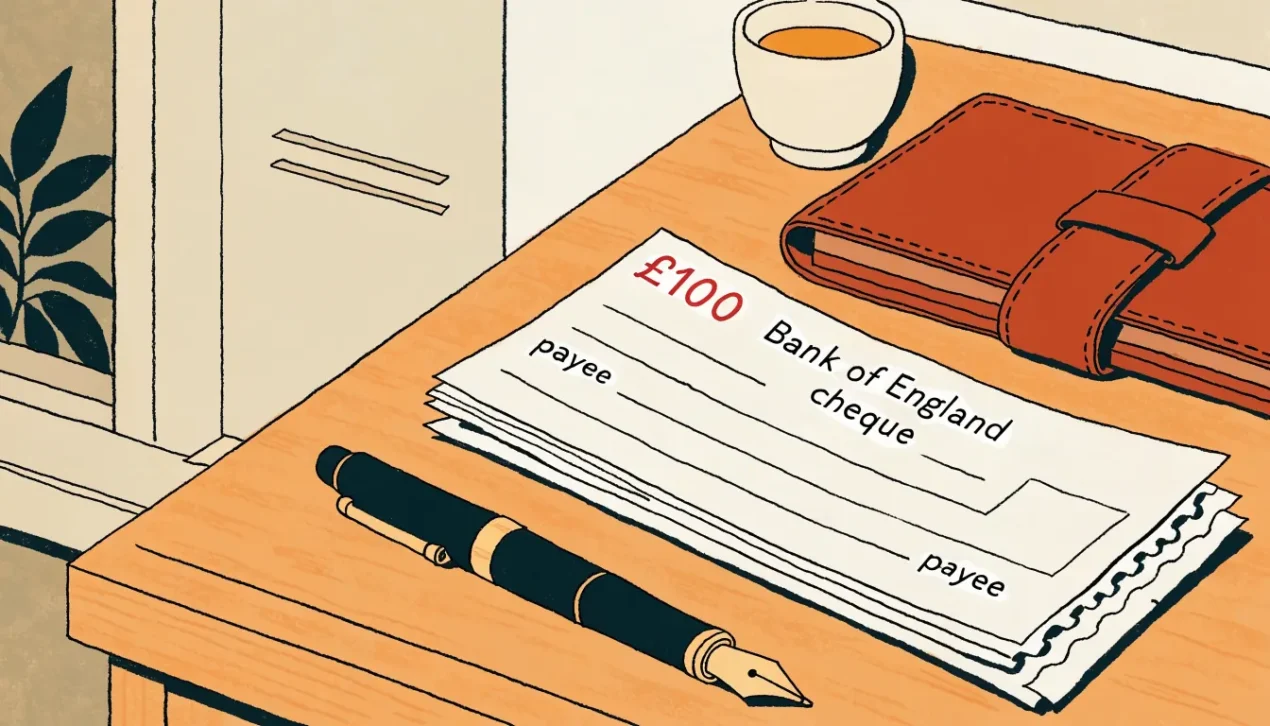
The evidence points to Pay by Phone deposits, not cheque payments, while availability and withdrawal conditions need separate checks.
The cheque question, and the payment method the evidence actually describes
A bank cheque and a Pay by Phone deposit belong to different payment worlds. One is a paper instruction connected to a bank account; the other is a mobile payment service. The distinction matters because casino payment pages and older descriptions can place unlike methods under the broad heading of “payments”, where a familiar word may seem to answer a question it does not.
For anyone looking for UK online casinos that accept bank cheques, Boku is not a synonym or a modern version of a cheque. It is the payment method associated with the small number of UKGC-licensed casinos that still accept these deposits. Calling those sites cheque casinos would blur the very point that matters: the method is Pay by Phone, not a bank cheque.
That is an easy confusion to make. Both may appear in discussions of ways to fund an account without using a conventional card payment, and both are described in the language of deposits. But the resemblance ends there. A bank cheque is not made into a mobile payment because a casino cashier lists Boku, and a Boku listing does not establish that the casino accepts cheque deposits.
The wording of a payment option is therefore more useful than a loose category. A cashier listing Boku is describing Boku. It is not making a general promise to accept every payment that might be called a cheque, nor does the presence of a casino name in a Boku list establish that a bank will process a cheque for that operator. The method has to be identified precisely.
There are still a small number of UKGC-licensed casinos accepting Boku, but the group has been shrinking since 2023. That makes the distinction more than a matter of terminology. A list of casinos that once included a mobile-payment option can become stale, while a search for cheque acceptance may lead to that list for the wrong reason. The name of the method, and its current appearance in the casino’s own cashier, carry more weight than an old label.

A specialist review describes operators moving away from Boku since 2023, with some adopting alternatives such as Fonix or Siru Mobile and others dropping Pay by Phone altogether. That is a changing commercial landscape, not a single permanent catalogue. The options on one site need not match those on another, and a payment route associated with a brand in an older description should not be assumed to remain available.
The pattern is familiar in online commerce: a payment method becomes a shorthand for an entire class of transactions, even when the underlying arrangements differ. Here, “cheque” can suggest that any non-card deposit route is close enough. It is not. Boku is specific, and its limited presence among licensed casinos should not be inflated into a claim about bank-cheque deposits.
The licence matters too. In Great Britain, remote gambling offered to consumers falls under the UK Gambling Commission’s regulatory system, regardless of where the operator’s key equipment is located. A casino serving that market must hold the relevant operating licence. Checking the operator’s current entry on the Commission’s public register is part of establishing that the site is licensed; it does not, by itself, confirm which payment methods its cashier currently accepts.
The same discipline applies to the payment label. A casino may be licensed and may accept Boku, yet neither fact turns Boku into a bank cheque. Conversely, the disappearance of Boku from a cashier does not tell anything definite about cheque acceptance. These are separate questions, and merging them produces a misleading answer to both.
So the useful distinction is plain: Boku is a Pay by Phone service, and a small, declining set of UKGC-licensed casinos still accepts it. That is not evidence of a bank-cheque option. The wording may be close on a page; the payment itself is not.
Top online casinos in the UK
- SpinFormulaBonus: 550% Up To £15,000 + 550 FS · Payout speed: 1-3 business days
- SlotoSportBonus: 500% up to £ 10 200+ 777 FS · Payout speed: 1-3 business days
- Revery PlayBonus: 100% up to€1,000+ 100 FS · Payout speed: 1-3 business days
- AmunbetBonus: Join now and get 450% up to 2,700 GBP + 450 FS · Payout speed: 1-3 business days
- BeOnBetBonus: 100% up to €500 + 100 FS · Payout speed: 1-3 business days
- JetsetspinsBonus: 200% Bonus + 100 Free Spins + Free Royal Wheel · Payout speed: 1-3 business days
- NightWinBonus: £900 + 400 free spins · Payout speed: 1-3 business days
- x3betBonus: Welcome Pack 100% Up to £1.000 + 200 Free Spins · Payout speed: 1-3 business days
- ZombillionBonus: Welcome Pack 250% up to £4000 + 200 FS · Payout speed: 1-3 business days
- BritsinoBonus: Welcome Package – Get your £2,200 + 2,000 FS · Payout speed: 1-3 business days
Why a casino payment option can disappear without a named ban
A payment method can vanish from a casino cashier without a regulator having prohibited it. Boku’s retreat illustrates the distinction: the UK Gambling Commission did not introduce a rule naming Boku as a banned method, yet individual casino operators removed it because they judged the compliance risk too high. A regulator can set the conditions under which gambling businesses operate; the decision to keep a particular way of paying available can still sit with each operator.
That distinction matters in a country where online gambling is not treated as an unregulated corner of commerce. The Gambling Commission oversees gambling activity in the United Kingdom, including online casinos. For remote gambling offered to consumers in Great Britain, its reach does not depend on where the operator’s key equipment is located. A business cannot avoid the relevant oversight simply by putting its infrastructure elsewhere.
The Commission is the central regulator for commercial gambling in Great Britain. Its licensing system covers businesses that provide gambling, as well as individuals whose roles require a personal licence. The arrangement places responsibility on both the organisation offering the service and the people carrying out regulated functions. It is a framework of permission and accountability, not a catalogue of payment brands that must be accepted or rejected.
This is where the search for bank-cheque casinos can become muddled. The existence of a regulated casino does not mean that every familiar payment route will be present in its cashier, nor does a payment option disappearing prove that a named ban has been imposed. In Boku’s case, the relevant explanation is an operator’s assessment of compliance risk, not a Commission announcement outlawing the service.
That leaves room for differences between licensed businesses. Each operator can decide that a payment arrangement no longer fits its own compliance approach, even when the regulator has not prohibited that arrangement by name. Such decisions can make the available methods look inconsistent from one casino to another. A cashier is not a public register of methods approved for universal use; it reflects the operator’s decisions within the regulatory system.

The Commission’s role is consequential precisely because it is not limited to policing the physical location of a gambling business. Remote services directed at people in Great Britain fall within its remit even when the essential equipment is based abroad. Licensing therefore follows the activity offered to the market, rather than a simple map of servers and offices. That principle explains the reach of oversight, though it does not dictate which payment button appears on a particular site.
Nor does a missing option, by itself, disclose the precise reasoning behind an operator’s decision. The available explanation for Boku’s removal is compliance risk, but that does not turn every cashier change into evidence of a new national rule. Individual businesses make operational choices under the requirements of the system; a collective pattern can emerge without a single public prohibition.
This is a less dramatic process than a ban, and often a more consequential one for the person trying to pay. A method may become harder to find because operators independently decide to stop offering it. The legal framework remains in place; the menu changes.
The distinction also helps keep the regulator’s powers in view. The Commission issues operating licences to businesses and personal licences to relevant individuals. Those licences make the regulated relationship legible: commercial gambling in Great Britain is overseen through a defined authority and licensing structure. They do not guarantee that any particular payment service will remain available at every licensed casino.
So the disappearance of Boku should not be read as proof that the Commission prohibited bank cheques, Boku, or a whole category of payment methods by name. It points instead to the space between regulation and commercial choice: operators remain accountable within the licensing system, while deciding which services they are willing to support. A rule can set the boundary. A cashier can still change before the rule does.
A phone-bill deposit is not a bank cheque
A casino cashier may offer a payment route that sounds, at first, as though it belongs in the same broad category as a bank cheque: money enters an account without a card payment being the defining step. But the resemblance ends there. Boku is Pay by Phone. It does not turn a bank cheque into an online deposit, nor does it provide a way to send a cheque to a casino.
The distinction matters because the payment method described here is tied to a mobile network. A Boku deposit is charged either to the customer’s monthly mobile bill or, for a pay-as-you-go phone, deducted from the available prepaid credit. The casino deposit is therefore connected to the phone account, not to a cheque drawn on a bank account. The language of the search may point towards cheque-accepting casino sites; the mechanism under discussion points elsewhere.
That difference is more than terminology. A bank cheque belongs to the world of bank instructions and paper instruments. Pay by Phone belongs to the world of carrier billing, where a transaction is attached to a phone number and its network account. One is not a digital version of the other. A cashier that lists Boku is not thereby accepting bank cheques, and a site accepting cheques would not, on that basis, be accepting Boku.
The process reflects that arrangement. In the casino cashier, the customer chooses Boku, enters the deposit amount and supplies a mobile number. An SMS verification code is then used to confirm the transaction. The phone is not merely a device used to reach the casino; it is part of the payment route itself. The charge is routed through the mobile account, with the casino cashier serving as the place where the deposit is initiated.

This is why wording such as “online casinos accepting cheque payments” can lead to a mismatch. It describes a particular expectation about how money reaches a gambling account. Pay by Phone offers a different path, even if both descriptions sit under the loose umbrella of “deposit methods”. Search terms often compress distinctions; payment systems do not. A phone-bill charge is not a cheque lodged online by another name.
The two mobile billing arrangements also differ from each other. On a monthly contract, the Boku charge is added to the phone bill. On a prepaid plan, it comes out of the credit already held on the phone. Either way, the transaction relies on the mobile account being used for payment. The casino does not receive a cheque from the customer, and the customer is not entering bank-cheque details in the cashier.
There is a small cultural shift in that arrangement. A phone account, once understood mainly as a record of calls and messages, can also act as a channel for charging a digital purchase. That makes the deposit feel close to the everyday phone bill, even though the purpose is gambling. The convenience is also the constraint: the payment is bound to the mobile service and its billing arrangement. No paper changes hands. No bank cheque is presented.
For anyone comparing sites described as cheque-friendly, the useful question is not whether Boku can be made to count as a cheque. It cannot. The useful distinction is whether the cashier offers Pay by Phone and whether the mobile billing arrangement suits the account holder. Those are separate matters from finding a casino that accepts cheques, and the labels should not be treated as interchangeable.
The cashier’s wording is decisive. If Boku appears, the deposit route runs through the mobile number and the phone account; if it does not, the payment cannot be inferred from a general reference to phone billing elsewhere. A payment method is not a family resemblance. It is the path by which the money moves.
Availability has become a moving target
A payment method can remain familiar in old casino guides long after it has stopped appearing in a site’s cashier. Pay by Phone is particularly prone to this mismatch: information describing Boku may reflect a previous arrangement, not the options currently offered by a particular operator. The method’s presence has become less dependable as a general feature of online casinos.

A specialist review’s account of the market describes operators moving away from Boku since 2023. Some have replaced it with Fonix or Siru Mobile; others have removed pay-by-mobile options altogether. That is a reported pattern, not a guarantee that every casino followed the same path or changed at the same time. Availability has to be understood at the level of the individual cashier.
The distinction matters because “pay by mobile” can describe a category rather than one continuing service. A site that once listed Boku may later present another provider under a similar payment heading. A site may instead show no phone-based deposit route. Treating those arrangements as interchangeable turns an old mention of Boku into a misleading promise of access.
The cashier is the practical record of what an operator currently accepts. A payment page or older review can help explain what a casino has offered, but it cannot establish that the same option remains available now. Even a site name repeated across several lists does not make the list current. Payment menus change; descriptions often travel further than the options they describe.
This is why casino payment information has a peculiar half-life. The broad label may survive while the provider changes beneath it, or the label itself may disappear. A reader looking for a familiar method can therefore encounter three different realities: Boku still listed, another Pay by Phone service in its place, or no such option at all. The shift is not merely a matter of wording. It changes which route, if any, is available.
The names Fonix and Siru Mobile mark that movement, but they should not be read as evidence that every operator has adopted a replacement. The reported account includes removal as well as substitution. A casino without Boku is not necessarily a casino with another mobile-payment service, and an operator that accepts a different service is not thereby accepting Boku. The category has edges; the brands are not synonyms.
For casino guides, the consequence is modest but important: lists of sites accepting Boku need a date and a narrow claim. A list compiled from earlier descriptions can preserve a history of availability while failing as a picture of the present cashier. The same caution applies when a site advertises Pay by Phone without naming the provider. The heading alone does not settle which service is supported.

The name on the button matters. So does its absence. A payment option is not a permanent feature of a casino simply because it once appeared in a review, and a replacement service should not be mistaken for the original. In a market where operators have shifted from Boku to Fonix or Siru Mobile, or withdrawn mobile payments, checking the current cashier is more reliable than relying on inherited descriptions.
The movement is easy to miss precisely because it is incremental. A guide keeps its old wording; a cashier changes its contents; the gap opens quietly. No grand announcement is needed for a familiar deposit route to become yesterday’s information.
Small transactions, tighter ceilings
Boku’s scale is modest, but the published limits do not settle into one consistent schedule. Specialist casino-payment reviews give conflicting accounts: one describes deposits of about £10 per transaction and a £30 daily ceiling at network level; another reports a £30 daily limit without specifying a per-transaction cap. These are not interchangeable descriptions, and neither should be mistaken for a universal rule applying to every casino and mobile network.
A separate specialist review describes £30 as the standard UK transaction limit, while noting that some casinos or network operators may permit £40 or £50. That account sits awkwardly beside the lower per-transaction figure. The discrepancy matters: the amount displayed by one cashier cannot establish what another operator, or the same network under different conditions, will accept.
The daily ceiling is also described as a network matter rather than a casino setting. One specialist review says the mobile operator enforces it. In practice, that places a limit outside the casino’s own account controls: a cashier may accept a deposit request only for the payment to be refused once the network’s allowance has been reached. The casino can offer Boku without being able to raise that allowance.
This division of control reflects the unusual position of Pay by Phone. A casino sets the options shown in its cashier, but the payment is tied to a mobile account, and the operator’s rules can determine whether a charge proceeds. The headline figure therefore tells only part of the story. A transaction ceiling and a daily ceiling govern different things, while a casino’s displayed limit may not override the network’s.
For anyone comparing Boku with a bank cheque, these ceilings describe a very different kind of payment arrangement. A cheque is not the mechanism described by these limits; they concern small charges routed through a mobile account. Nor do the reported figures support a dependable single limit for every UK casino. The available accounts disagree on per-transaction amounts, and the operator-level daily cap may be enforced beyond the casino’s control.
Small sums. Different gatekeepers.
The balance on a phone is part of the budget
With Pay by Phone, a PAYG balance is not merely a way to keep track of calls and texts. It can become the boundary of a casino deposit. A specialist review says a prepaid customer cannot put through more than the credit remaining on the phone. That makes the available balance a practical ceiling: a requested payment may be possible in principle but fail if the phone cannot cover it.
For someone on a monthly contract, the charge is added to the mobile bill instead. The distinction is between credit already held and a bill that will be settled later. Neither arrangement turns a phone into a bank account; both make the mobile provider part of the payment chain. A casino balance may look separate on screen, but the means of funding it remains tied to a household communications account.
The amount menu can impose another constraint. A specialist review describes Boku deposits as available only in multiples of ten pounds, giving £10, £20 and £30 as examples. If a cashier uses that structure, a player cannot simply choose an arbitrary amount between those steps. The usable deposit is shaped by the phone balance and by the denominations presented at the casino.
Published descriptions of Boku’s limits do not agree. One account gives a minimum of €10, a maximum of €30 and a monthly ceiling of €240. UK-focused payment descriptions instead put the standard per-transaction limit at £30, with some operators or networks allowing £40 or £50. These are not interchangeable figures: the currencies differ, and the stated limits do not describe the same range. A current cashier and the mobile provider’s own terms are more relevant than treating one account as a universal rule.
That disagreement matters especially for PAYG users. A displayed deposit option does not establish that the requested sum is available against the remaining phone credit, nor does a figure quoted in a payment guide establish the terms for every network or casino. The balance on the handset and the rules attached to the account decide what can pass.
A phone balance is therefore part of the gambling budget, not a spare source of money outside it. When the available credit is low, a deposit may be constrained before any casino limit comes into play. When the amount offered by the cashier does not fit the remaining balance, the transaction may not proceed. Small arithmetic, household consequences.
What happens at the cashier
A Boku deposit begins in the casino’s cashier, among the payment methods available to that account. Selecting it is the first practical distinction from a bank-cheque deposit: the process described here uses a mobile number and an SMS confirmation, not cheque details or a bank’s cheque-clearing process.
After choosing Boku, the player enters the intended deposit amount and a phone number. The number is central to the transaction because Boku routes the payment through the mobile phone service. The cashier then sends a verification request by text. A code received by SMS must be entered to confirm the payment.
That is the sequence: select Boku, enter the amount and number, confirm with the code. There is no paper instrument to upload, post or present to a bank. The phone becomes the point of authorisation, while the casino cashier remains the place where the deposit is initiated.
The apparent simplicity can make the two kinds of payment sound closer than they are. A search for an online casino that accepts bank-cheque deposits may lead to pages discussing Boku, but the cashier steps are not a way to pay by cheque. They describe Pay by Phone. The charge is attached to the mobile account or, for a prepaid plan, taken from available phone credit; it is not drawn from a cheque deposited into a bank account.

The sequence also explains why the phone number matters more than any bank detail. It connects the casino’s payment request to the mobile service that will process it, and the texted code supplies the final confirmation. Without that confirmation, the described Boku flow has not been completed.
A cashier may present several payment choices, but a method’s presence there is what makes this procedure relevant to a particular account. The steps do not turn Boku into a universal casino payment route, nor do they establish that a casino accepts bank cheques. They show only how a Boku transaction is initiated when that option is offered.
For anyone comparing a bank cheque with an online casino deposit, the distinction is therefore practical, not merely terminological. A cheque belongs to banking; Boku’s cashier flow belongs to Pay by Phone. One asks for a cheque to be handled through a bank. The other asks for a mobile number and an SMS code. Different machinery.
The withdrawal problem sits on the other side
A payment method can make the journey into a casino account feel simple while leaving the journey out to another system. Boku has that asymmetry built into it: it can be used to deposit, but casino funds cannot be withdrawn to it. Any winnings remain in the account until a different withdrawal route is available.
That distinction matters when comparing casinos accepting bank cheques in the UK with casinos that take Pay by Phone. The wording may point towards a way to move money, but Boku is not a bank-cheque service and does not provide a route back to a bank account. A deposit method is not automatically a cash-out method. The two sides of the cashier are separate.
Someone depositing with Boku therefore needs to register another withdrawal method, such as a debit card, an e-wallet or a bank transfer. That is not a minor administrative detail to discover after a win. It is part of deciding whether the payment arrangement works at all: a casino that accepts a chosen deposit method may still require a different one for withdrawals.
The gap also reflects how digital gambling payments are assembled. Money can arrive through a charge handled by a mobile network, while a withdrawal must follow a route the casino supports for paying funds out. The convenient-looking entrance does not imply a matching exit. A narrow doorway.

For anyone considering a casino that accepts cheques, the relevant question is not simply whether money can be put into an account by a preferred method. The withdrawal options need to be checked separately, before a deposit is made. A current UK Gambling Commission licence should also be verified on the Commission’s public register. In Britain, licensed casinos must provide regulated gambling services; the cashier’s available methods are a separate operational matter.
Boku’s deposit-only status is especially easy to overlook because the payment can be named beside other cashier options. But a label in the deposit menu says nothing about whether that same label appears in the withdrawal menu. With Boku, it will not. The practical arrangement depends on having another accepted way to receive casino funds, rather than expecting a mobile-bill payment to reverse itself.
When mobile payment meets an e-wallet
A route described in a specialist payment-method review puts Neteller between Boku and the casino. Instead of paying the casino directly through Pay by Phone, a player can use Boku to fund a Neteller account, then deposit from Neteller at a casino that accepts it. The casino sees an e-wallet deposit; the mobile payment happens one step earlier.
That distinction matters for anyone looking for a bank-cheque route into an online casino. This is not a cheque deposit, nor does it make Boku a payment option at every casino that takes Neteller. It is an indirect arrangement: Boku funds the wallet, and the wallet is then used at a separate gambling site. Each part has to be available for the route to work.
The arrangement also changes where the payment decision sits. A casino may accept Neteller without accepting Boku directly, while Boku’s role is confined to putting money into the wallet. The method therefore does not turn a casino’s cashier into a place to pay by phone. It creates a connection between two services, and that connection depends on their respective terms and availability.
There is a practical difference between a payment route being described and being offered consistently. The cited specialist review reports that Boku can be used to fund Neteller, but that is not evidence that every Neteller account, mobile operator or casino supports the same path. Nor does it establish that the route remains available wherever the names appear together. Payment arrangements change; a remembered combination is not a standing promise.
For a British player, the relevant check is whether Boku can currently fund the Neteller account and whether the chosen casino accepts Neteller deposits. The casino’s UK Gambling Commission licence should also be verified on the Commission’s public register before any deposit. An e-wallet does not alter the operator’s licensing obligations.
So the workaround is a bridge, not a bank cheque and not direct Boku acceptance. Its appeal is the separation of the phone-bill payment from the casino cashier. Its limitation is just as plain: two services must cooperate, and the casino must accept the second one. A narrow route.
Bonuses and the fine print on mobile deposits
A payment method and a promotion are separate decisions in a casino cashier. A specialist review of Boku casinos found no dedicated Boku deposit bonuses on the platforms it assessed, but that is not a promise about every operator or a lasting policy. Bonus eligibility can change, and the payment terms may matter as much as the headline offer.
Pay by Phone deposits may be excluded from welcome promotions. That makes the bonus conditions worth reading before a deposit, particularly where the offer specifies which payment methods qualify. A casino may accept a mobile deposit without counting it towards a promotion; acceptance alone does not establish eligibility.
A specialist review identified MrQ, Duelz, Mr Vegas and Videoslots as operators that accepted Pay by Phone deposits for bonus eligibility. That is a narrow, time-sensitive finding, not a general rule for other casinos or future offers. Even at those named operators, the terms attached to a particular promotion remain the controlling detail.
The distinction is easy to miss because promotions are presented as a single offer, while their conditions sit elsewhere: payment method, qualifying deposit and other restrictions can each affect whether the offer applies. A bonus should therefore be treated as conditional, not as an automatic addition to a deposit. Where the terms exclude phone payments, the fact that the cashier accepts one changes nothing.
For a Boku deposit, the sensible reading is literal: check whether that payment method qualifies under the specific offer, and whether any conditions apply. The fine print decides.
Can I deposit by phone bill without Boku?
Yes. Some casinos offer other pay-by-mobile services, including Fonix and Siru Mobile; check the casino cashier to see which options are currently available.
What are the deposit limits at pay by mobile casinos?
Boku usually allows up to £30 per transaction, although some casinos or mobile networks may permit £40 or £50. Network-level limits are typically about £10 per transaction and £30 per day, and PAYG deposits cannot exceed your remaining phone credit.
How does Boku work?
Choose Boku in the casino cashier, enter the deposit amount and your phone number, then confirm using the SMS verification code. The deposit is charged to your monthly phone bill or deducted from your PAYG balance.
Are Boku deposits eligible for casino bonuses?
Bonus eligibility varies by casino. Pay-by-phone deposits are confirmed as bonus-eligible at MrQ, Duelz, Mr Vegas and Videoslots.
Related posts

UK Casino Welcome Bonuses: How Offers Work

VPN-Friendly Casinos in the UK: How Access Works
