
UK Crypto Casinos Without KYC: Rules and Risks
 Available in GB
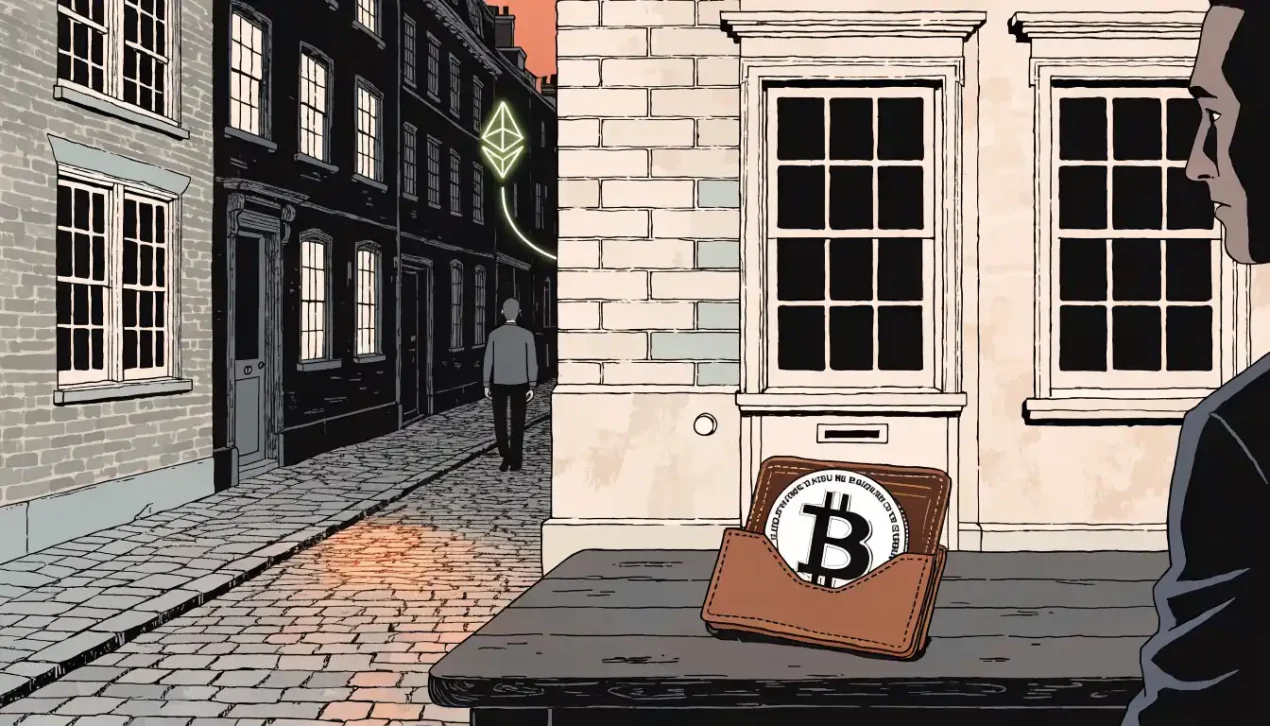
The guide separates UK licensing rules from offshore casino practices and explains how BCH payments, account checks and winnings are framed.
The UK Licence Line: Crypto Casinos and the Regulatory Gap
A casino’s willingness to accept cryptocurrency does not make it a UK-licensed casino. In Great Britain, the relevant dividing line is not the currency used at the cashier but the operator’s authority to offer gambling to people there. The UK Gambling Commission regulates commercial gambling, including online casinos, and is the sole regulator for that activity in Great Britain. It issues operating licences to gambling businesses and personal licences to individuals who perform specified roles.
Remote gambling operators selling into the British market must hold the appropriate Commission licence, wherever their key equipment is located. A business cannot move its servers offshore and thereby move its obligations with them. The rule follows the service to the customer. That is a distinctly modern arrangement: a borderless screen does not dissolve the jurisdiction on the other side of it.
There is a separate restriction on the payment method. UK-licensed operators are prohibited from accepting cryptocurrency. As a result, a crypto casino offering play to British customers is not operating under a UK Gambling Commission licence for that service. The phrase “UK crypto casino” can describe a site accessible from Britain, or one aimed at British players; it does not establish that the casino is licensed here. These are different claims, and the distinction matters.
A UK-licensed casino cannot simply add crypto to its payment options while retaining its status as a compliant British operator. Conversely, an offshore casino’s acceptance of crypto does not grant it local authority. Its payment choices and its licence status are separate questions, but in this market they point in opposite directions: cryptocurrency acceptance is not available to UK licensees, while offshore operators sit outside the British licensing system.
The Gambling Act 2005 governs gambling in England, Wales and Scotland. The Commission regulates remote gambling offered to consumers in Great Britain even where the operator’s equipment is elsewhere. Online gambling is legal in Britain when offered by an appropriately licensed operator. A licence from another jurisdiction may be meaningful under that jurisdiction’s rules, but it is not a substitute for the British permission required to serve this market. “Licensed” without saying where is an incomplete sentence.

One specialist review describing a particular group of crypto casinos says that the operators it covers hold Curacao or comparable offshore licences. That is a report about those named operators, not a reliable description of every crypto casino or a permanent map of the market. An offshore licence may tell something about the framework an operator claims to follow; it does not turn that operator into a UK licensee. The distinction is not cosmetic. The Commission’s authority does not extend to supervising an offshore casino merely because a British customer can open its website.
The legal position of the player is different from the operator’s. The UK does not criminalise individuals for gambling at an offshore casino. That does not make the service legal in Britain: online gambling is legal here only when offered by a properly licensed site, and operators selling into Great Britain are required to hold a Commission licence. The absence of criminal liability for the customer should not be mistaken for official approval of the casino. A quiet distinction, with practical weight.

Nor does an offshore licence carry the protections attached to the UKGC regulatory safety net. An offshore casino is outside the Commission’s system, so its customers do not have access to the UKGC complaints route or an approved Alternative Dispute Resolution service. It is also not part of GamStop. Those absences can matter when a dispute cannot be resolved with the operator, or when a player relies on the national self-exclusion scheme. The local routes do not travel with the customer to an offshore site.
This is why labels such as “safe crypto casinos in the UK” need careful reading. Safety is not settled by the presence of an account page, a familiar coin or a licence badge from another territory. The central regulatory question is whether the operator holds the British authority required to serve customers in Great Britain. For a casino that accepts cryptocurrency, the answer cannot be yes under the UK licensing framework, because UK-licensed operators cannot accept crypto.
UK-Licensed Casino
Regulated by the UK Gambling Commission; cannot accept cryptocurrency.
Offshore Crypto Casino
Accepts Bitcoin Cash; operates outside the UKGC regulatory and safety framework.
The resulting choice is not between two versions of a UK licence. It is between a regulated British service that cannot take cryptocurrency and an offshore service that may take it but does not sit within the UKGC system. The player is not committing a crime by using the latter, but does so without UKGC dispute resolution, approved ADR or GamStop integration. Convenience, in this case, comes with a jurisdiction attached.
Top online casinos in the UK
- SpinFormulaBonus: 550% Up To £15,000 + 550 FS · Payout speed: 1-3 business days
- SlotoSportBonus: 500% up to £ 10 200+ 777 FS · Payout speed: 1-3 business days
- Revery PlayBonus: 100% up to€1,000+ 100 FS · Payout speed: 1-3 business days
- AmunbetBonus: Join now and get 450% up to 2,700 GBP + 450 FS · Payout speed: 1-3 business days
- BeOnBetBonus: 100% up to €500 + 100 FS · Payout speed: 1-3 business days
- JetsetspinsBonus: 200% Bonus + 100 Free Spins + Free Royal Wheel · Payout speed: 1-3 business days
- NightWinBonus: £900 + 400 free spins · Payout speed: 1-3 business days
- x3betBonus: Welcome Pack 100% Up to £1.000 + 200 Free Spins · Payout speed: 1-3 business days
- ZombillionBonus: Welcome Pack 250% up to £4000 + 200 FS · Payout speed: 1-3 business days
- BritsinoBonus: Welcome Package – Get your £2,200 + 2,000 FS · Payout speed: 1-3 business days
Bitcoin Cash Deposits and Withdrawals: The On-Chain Routine
Bitcoin Cash changes the shape of a casino payment before it changes its speed. Instead of moving pounds through a card processor or bank, a player sends BCH from a crypto wallet to an address supplied by the casino. For a withdrawal, the direction is reversed: the casino sends BCH to a wallet address. The transaction passes through the Bitcoin Cash network, rather than a UK bank’s payment system.
That distinction matters in Britain. A casino holding a UK Gambling Commission licence cannot take Bitcoin Cash as a direct deposit method. A site displaying BCH alongside other payment options is therefore not offering the same route as a UK-licensed casino. The currency may cross borders with little ceremony; the operator’s regulatory status does not.
For a deposit, the casino gives the customer a BCH address, sometimes with a payment request or QR code. The sender enters that destination in a wallet and confirms the transfer. The address and the network need to match: BCH sent to the wrong destination, or through an incompatible network, may not arrive as intended. Once broadcast, the transaction is recorded on the public blockchain. It is not a card authorisation that can simply be reversed through a bank.

A specialist review reports that BCH casino deposits are credited after one on-chain confirmation, a step it places at 10 minutes. That is a reported practice, not a promise that every transfer will appear on the same schedule. Network conditions and the casino’s own process both sit between sending funds and seeing a balance update. The blockchain can record a transaction while the casino account is still waiting for its required confirmation.
The useful distinction is between the network’s part and the operator’s part. The network carries and records the transfer; the casino decides when its account balance reflects it. A delay in the displayed balance does not, by itself, show that the transaction has vanished. The transaction record can be checked using its identifier, while the casino’s payment history may show whether it has recognised the deposit.
Bitcoin Cash is designed to handle larger blocks than Bitcoin, with a 32MB block-size limit. BCH transactions are generally cheaper and faster than Bitcoin transactions in part because of that capacity. This is a comparison between two networks, not a guarantee that every casino payment will be instant or cost the same. A payment still depends on the correct address, network processing and the operator’s crediting rules.
Withdrawals begin inside the casino account, but the last leg again takes place on-chain. The player provides a BCH destination, and the casino sends the funds to it. The transaction then has to be recorded by the network before the wallet can treat it as confirmed. The casino’s approval and sending process should not be confused with blockchain confirmation: one is an operator action, the other a network event.
That is the practical rhythm of BCH gambling payments: an address, a transfer, a public record and an account update. The route avoids the familiar machinery of card payments, but it also leaves less room for a mistaken destination to be corrected. The network does not know that a payment was intended for a casino balance; it only sees a transfer between addresses. Small details matter.
An Online Account Built Around an Email Address
At an offshore Bitcoin Cash casino, the account can be organised around a wallet and a small set of login details rather than the familiar paperwork-heavy profile. A specialist review describes most offshore BCH casinos as allowing registration with an email address and password, without the traditional KYC process at sign-up. That is a reported account model, not a promise that every operator follows it.
The distinction matters because “no KYC” is a description of a particular kind of identity checking, not a declaration that an account exists outside all rules. In Britain, operators must verify a customer’s age before allowing a deposit. A streamlined registration screen does not remove that requirement for a lawful operator serving the market. Nor does an email-only opening necessarily settle what may be asked later: minimal checks at registration and the handling of an account over time are separate things.
An email address also gives an account a simple point of entry. It can be used with a password to return to the casino, while the wallet-based model connects the account to cryptocurrency activity. That arrangement is part of what draws interest to an online crypto casino: fewer conventional forms at the outset, and an account whose everyday use is oriented around digital assets. It is also a different relationship from one built around a bank card and a familiar payment profile.

There is a quiet social history in that preference. Traditional identity checks reflect a system in which financial institutions and licensed businesses ask customers to make themselves legible before money moves. Crypto’s appeal often lies in the opposite direction: fewer intermediaries, fewer forms, less ceremony. The screen may ask for little, and that can feel like a small escape from institutional scrutiny. But an account is still an account, maintained by an operator with its own rules.
For someone comparing an online crypto casino in the UK with a conventional site, the practical point is not merely how quickly a form can be completed. It is what login method is required, how access is restored if credentials are lost, and what identity checks may apply before funds can be used. These details belong to the operator’s account terms. A sparse sign-up page alone cannot answer them.
The same caution applies to labels such as “no-KYC casino” or “crypto slots”. They describe a marketing position or a product category, not a guarantee about every stage of account use. An online casino that accepts crypto may keep registration simple while still imposing conditions tied to age, account security or its own operating policies. That tension is not unusual: convenience is offered at the front door, while the rules of the house remain in the small print.
Account Registration
Many offshore BCH casinos allow registration using only an email address and password, often without a traditional KYC process at the initial sign-up stage.
Mobile access changes the shape of the experience, not the basic account relationship. A mobile crypto casino may present the same email-and-password sign-in through a smaller screen, but the account still depends on credentials and the operator’s access procedures. Games, whether slots or live tables, sit behind that account rather than replacing it. The casino may look like a collection of games; underneath, it is a system for managing identity, access and funds.
A minimal sign-up can be appealing precisely because it feels uneventful. Yet the fewer details requested at the start, the more important the distinction between a simple registration and a settled understanding of the account. An email address opens the door. It does not explain the whole house.
Offshore Web3 Casinos and the Missing UK Safety Net
An offshore Web3 casino can look like a familiar online venue: a lobby of games, an account balance and a cashier that accepts digital assets. That resemblance does not bring it inside the British system. A casino taking Bitcoin Cash without a UK Gambling Commission licence is outside the regulator’s framework, and the protections attached to licensed gambling do not follow the player onto the site.
The distinction matters most when something goes wrong. A customer of a UK-licensed casino can use the operator’s internal complaints process and, if the dispute remains unresolved, take it to an approved alternative dispute resolution service. An offshore casino does not provide access to UKGC dispute resolution or an approved UK ADR route. A complaint may still be sent to the operator, but that is not the same as having an independent route recognised by the Commission.

The missing route is not a technicality. A disagreement about a balance, a withdrawal or a decision made under a site’s terms may leave the customer dealing only with the business itself. The Commission cannot resolve a dispute with an operator it does not license, and an offshore licence does not substitute for the British complaints system. A logo in a footer is not a British remedy.
The same boundary applies to self-exclusion. A site accepting BCH without a Commission licence is not part of GAMSTOP. Someone who has excluded themselves through that scheme will not have that exclusion carried across to the offshore casino. The two systems do not share a UKGC safety net merely because the site is accessible from Britain or offers familiar games.
That gap has consequences beyond dispute handling. UKGC-licensed casinos must provide responsible-gambling tools, including self-exclusion, and new customers must be prompted to set a financial limit before making a first deposit. Those are requirements within the licensed system; they should not be assumed to apply to an offshore Web3 casino. A casino with crypto may offer its own controls, but those are not the same as UKGC-backed protections.
The legal position for the individual is different from the operator’s. Playing at an offshore casino is not, by itself, a criminal offence for the player. That does not turn the casino into a legal UK operator, nor does it make its services subject to British oversight. Access and protection are separate things: a site may be reachable while remaining beyond the routes designed to hold licensed operators to account.
This is why labels such as “best crypto casino UK” can obscure the question that matters. A polished lobby, a choice of crypto casino deposits or a catalogue of crypto slot games says little about where a complaint can go, whether GAMSTOP applies, or which regulator can intervene. A casino with crypto may serve British users in practice, but that does not put it under the Commission’s authority.
The register is the practical dividing line. UKGC-licensed operators appear on the Commission’s public register; an offshore casino without that licence is not covered by its rules or complaint framework. The absence of UKGC protection is not repaired by a separate foreign licence, a prominent customer-support button or the word “Web3”. Those may describe the site’s own arrangements. They do not create access to UKGC dispute resolution, approved ADR or GAMSTOP integration.
A player is not criminalised. The safety net is still missing.
Crypto Casino Bonuses: The Small Print Changes the Value
A crypto casino welcome bonus is often presented as a deposit match: a player funds an account and the operator adds a bonus amount linked to that deposit. Specialist reviews describe BCH casino matches in the range of 100% to 200%, with wagering requirements commonly stated as 20 to 50 times the bonus amount. Those figures describe reported offers, not a promise that a particular promotion is available or that its headline value can be withdrawn.
The multiple matters more than the match percentage. A 200% offer can look generous while attaching a heavier play-through condition; a smaller match may leave less to clear. The crucial detail is the base used in the calculation. Where terms say wagering applies to the bonus amount, the requirement is calculated against that credit, rather than treating the advertised match as cash already available for withdrawal. The terms should also be read for expiry conditions, eligible games and any cashout limit. A headline is a shop window, not the whole price.

There is a separate rule for bonuses at UK-licensed operators. A specialist review reports that, from 19 December 2025, the UK Gambling Commission capped bonus wagering requirements at 10 times. That cap belongs to the Commission’s licensed market; it should not be assumed to govern an offshore BCH promotion. Offshore sites sit outside the UKGC regulatory system, so a more attractive figure on a banner does not carry the same regulatory framework behind it.
The contrast is telling. In the licensed market, a cap puts a boundary on how much promotional play can be demanded. An offshore offer may advertise a larger match while setting conditions beyond that boundary. The arithmetic is simple; the accountability is not.
No-deposit promotions are another case where the label can overstate the practical value. A specialist review describes them as less common at BCH casinos than at traditional UK sites, and reports that those it finds can combine substantial wagering requirements with a low maximum cashout. The player may receive a credit without making a deposit, but that does not mean any resulting balance can be withdrawn freely. The conversion from promotional credit to withdrawable winnings is where conditions tend to matter.
“No wagering” deserves the same close reading as any other claim. The phrase may describe the absence of a wagering requirement, but the full promotion terms still determine what the credit can be used for and whether a withdrawal restriction applies. A bonus advertised as free or no-wagering is not automatically equivalent to unrestricted cash.
This matters especially when comparing real-money crypto casinos with UK-licensed promotions. A BCH casino may offer terms that sound unusually generous, but the promotional promise and the safeguards attached to a UKGC licence are different things. The bonus value is not just the amount credited; it is the amount that can be retained after the conditions are met.
For crypto slots, the same calculation applies: the game’s crypto payment method does not make bonus conditions disappear. A useful review separates the match, the wagering basis and any cashout ceiling, rather than treating the largest advertised percentage as the best offer. The small print is the offer.
Cashout Speed—and the Threshold That Can Slow It
A withdrawal clock has at least two hands. One belongs to the casino, which must approve and send the payment; the other belongs to the blockchain, which records it. A quick casino decision does not itself make a transaction final, and a delay before broadcast is not a blockchain delay. For a BCH cashout, those stages are easy to confuse and harder to separate from the outside.
A specialist review reported that BC.Game and Stake processed BCH cashout requests within 10 minutes, often in under five. That is a report about those operators’ handling at the time it was made, not a promise that every request will follow the same timetable. Processing may vary, and a quoted figure describes the request-to-send stage, not necessarily the moment funds are available in a wallet.
There is another clock, less welcome and often buried in terms: a management review. A specialist review described several casinos as placing withdrawals above a specified value into such a queue. The reported thresholds ran from 0.5 BCH to the equivalent of 2 BCH. These are not universal industry rules. Each casino sets its own conditions, and the threshold may be expressed in BCH or calculated by equivalent value.

The distinction matters because a review can interrupt an otherwise swift routine. A small withdrawal may pass through promptly while a larger one is held for manual attention. “Fast cashouts” therefore says little about the treatment of a request that crosses a review threshold. Nor does a short processing report tell whether a particular account or payment will be selected for additional scrutiny. The terms governing withdrawals are more revealing than a headline speed claim.
This is one of the quiet asymmetries of offshore gambling: the operator decides when its internal process is complete, while the public blockchain records only the transaction once sent. There is no UKGC timetable behind an offshore casino’s cashout promise.
That has practical consequences in Britain. A player using an offshore BCH casino has no UKGC regulatory safety net, no access to the UKGC complaints route or an approved Alternative Dispute Resolution service, and no GamStop integration. Offshore gambling by an individual is not criminalised in the UK, but that does not bring the protections attached to a UKGC-licensed operator. A fast payment report cannot substitute for them.
Cashout speed is a narrow measure: how quickly a casino acts on a request. The review threshold is the less visible qualification, and it can matter more than the best reported time. The clock has conditions.
No KYC Does Not Mean No Trace
The phrase “anonymous crypto casino” can blur two different things: how much identity information a casino asks for, and how visible a payment is once it moves across a blockchain. A low-friction account may involve fewer checks at sign-up. It does not make a Bitcoin Cash payment private.
Every BCH transaction is recorded on a public blockchain. The record can show transfers between wallet addresses, even when those addresses do not display a player’s name. That distinction matters: a visible address is not automatically a named person, but neither is it a sealed envelope. Once activity is connected to an identity, other transactions associated with the same address may become easier to follow.
Chain analysis firms can often trace casino deposits back to a known exchange. That creates a possible link between an on-chain payment and the point where cryptocurrency entered the player’s possession. It does not mean every transaction is immediately identified, or that every wallet address can be tied to a particular person. It does mean that the word “no KYC” describes an account practice, not an assurance of anonymity across the payment trail.
This is the quiet contradiction in much of the language around private gambling: the account may ask little, while the public ledger remembers each transfer. A casino’s sign-up terms cannot alter the properties of the blockchain it uses. Nor does a promise of fast payouts or attractive bonuses change what the chain records.
For anyone weighing claims about a best no-KYC crypto casino in the UK, the useful distinction is therefore between identity checks at the operator and traceability on the network. They are separate questions. A site may request limited personal information, while a deposit remains part of a public transaction history that specialist analysis can sometimes connect to an exchange.

“No KYC” is a narrow description, not a cloak. BCH offers a payment route; it does not erase the route taken.
Crypto Winnings and UK Tax: The Conversion Distinction
A gambling win and a later change in the value of the asset received are separate events. That distinction matters when winnings leave a cryptocurrency casino in Bitcoin Cash rather than pounds.
The stated UK treatment is that gambling winnings are not charged to income tax or capital gains tax. The currency used to play does not alter that treatment: a win in pounds and a win in BCH are both gambling winnings. The point at which the money is won is therefore not, on this account, a taxable event.
The disagreement begins later. One account of the rules says that converting BCH winnings into pounds may create a capital gains tax liability if the BCH has risen in value. Another says gambling winnings remain outside both income tax and capital gains tax regardless of currency, without identifying that conversion as a separate taxable event. Those positions cannot simply be blended into a confident rule. They describe different views of what happens when an asset received as a win is subsequently disposed of.
The distinction is especially relevant to anyone using an online cryptocurrency casino in the UK. A balance displayed in BCH is not a fixed pound amount: its sterling value can change between the win and conversion. If the conversion position applies, the question is not whether the original gambling win was taxable, but whether a gain arose after receiving the BCH and before exchanging it for pounds.
That uncertainty should not be disguised as a blanket promise that crypto winnings are tax-free in all circumstances, nor as a declaration that every conversion is taxable.
For a casino accepting cryptocurrency in the UK, then, the practical accounting distinction is between the win itself and what happens to its value afterwards. Keeping records of the amount received and the later conversion may help clarify the sequence if the tax question arises. Specific circumstances may need independent tax advice.
The pound arrives later. So may the question.
Wallet-Based BCH Payments: Speed, Cost and Confirmation
A crypto wallet is the point of contact between a player’s balance and the Bitcoin Cash network. At a casino that accepts BCH, the wallet sends funds to the payment address supplied for the deposit; the casino then waits for the transaction to appear on-chain. The wallet handles the transfer, but it does not decide when the casino credits the account.

A specialist review describes BCH deposits as typically requiring one on-chain confirmation, a process it places at around 10 minutes. That is a network estimate, not a promise about the time a particular casino takes to recognise a payment. The wallet may show a transaction as sent before the casino treats it as confirmed.
Cost and speed are part of BCH’s appeal. Its 32MB block-size limit is the reason BCH transactions are generally faster and cheaper than Bitcoin transactions. That comparison describes the network, not every payment experience: a wallet’s display and a casino’s account balance can update at different points in the process.
The distinction matters when considering a low-deposit crypto casino. A small transfer still travels through the same public network and depends on the casino’s payment instructions; the wallet does not make a site legitimate or provide a separate layer of protection. A crypto roulette casino is no different in this respect: the game does not alter how BCH moves.
A wallet-based payment also does not bring an offshore casino into the UK regulatory system. Anyone using an offshore BCH casino has no UKGC complaints route, no approved alternative dispute resolution and no GamStop integration. The UKGC regulatory safety net is absent, even though playing offshore is not itself a criminal offence for the individual.
A wallet can make a payment feel direct. It cannot make the casino’s status, or the limits of the transaction, disappear.
Plinko, No-KYC Claims and the Limits of Anonymity
A crypto Plinko casino may present the game as a simple choice: set a stake, watch a ball fall through pegs, and see where it lands. Claims about playing without identity checks belong to the casino’s account rules, however; they say nothing about whether the payment itself is private.
Bitcoin Cash transactions are recorded on a public blockchain. That record can be examined, and chain-analysis firms can often connect a deposit to an exchange account already associated with an identity. So a casino may ask for little information at sign-up while the route taken by BCH remains visible. “No KYC” is not another name for untraceable.
The distinction matters because a game’s appearance and a payment’s history are separate things. A Plinko interface can make chance look almost physical, as if the ball’s path were the whole story. The transaction leaves a different kind of trail: a public record that may be linked to activity elsewhere. No secrecy is created by the game.
There is also a separate question of protection. An offshore casino accepting BCH is outside the UKGC regulatory safety net. Players using one do not have access to UKGC dispute resolution, an approved ADR service or GamStop integration, even though playing at an offshore casino is not itself a criminal offence for the player. That is not a privacy feature, either. It is the consequence of using a site outside the British licensing system.
The phrase “no KYC” can describe a narrow sign-up practice. It cannot promise that a BCH deposit is invisible, or that a game’s branding changes what the blockchain records. A small distinction, with a long shadow.
Can I legally deposit Bitcoin Cash at UK casinos?
No UK-licensed casino accepts Bitcoin Cash. Offshore casinos may accept it, but they are not authorised by the UK Gambling Commission to serve Great Britain; using one is not a criminal offence for the player.
Are Bitcoin Cash casino winnings taxable in the UK?
No. Gambling winnings are not subject to UK income tax or capital gains tax, regardless of whether you played with pounds or cryptocurrency.
Is Bitcoin Cash gambling legal in the UK?
Online gambling in Great Britain is legal when offered by an appropriately UK-licensed operator, and UK-licensed casinos cannot accept cryptocurrency. Players are not criminalised for gambling at offshore casinos, but those services are outside the UK licensing system.
Can I legally gamble with Bitcoin Cash in the UK?
UK-licensed casinos cannot accept Bitcoin Cash, so a casino offering it is outside the UKGC licensing system. Gambling at an offshore casino is not a criminal offence for the player, but the service is not authorised under a UK licence.
Is a casino accepting Bitcoin Cash automatically unlicensed for British players?
It cannot be UKGC-licensed for that service: UK-licensed operators are prohibited from accepting cryptocurrency. An offshore licence does not replace the UK permission required to serve customers in Great Britain.
Do I need to verify my identity to play at a BCH casino?
Many offshore BCH casinos use minimal identity checks, and most allow account creation with just an email address and password. This is not guaranteed at every casino.
Related posts

UK Casino Welcome Bonuses: How Offers Work

VPN-Friendly Casinos in the UK: How Access Works
