
Online Casinos That Accept SMS Deposits: How It Works
 Available in GB
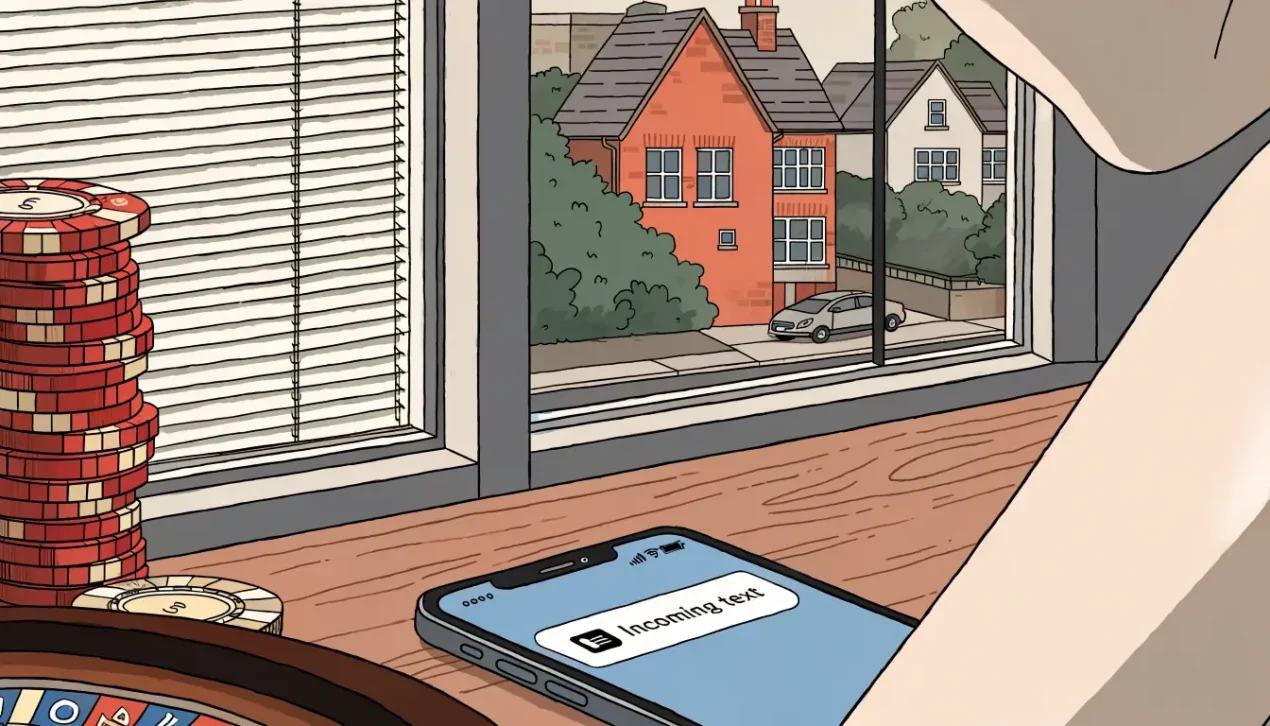
A mobile-bill payment starts in the casino cashier, uses a phone number and is confirmed with a texted code.
How a Mobile-Bill Deposit Reaches a Casino
A Boku deposit begins in the casino’s cashier, not in the phone’s messaging app. After signing in to an account, the player opens the deposit options and selects Boku if it is offered. The cashier then asks for the amount and the mobile number associated with the payment. The number matters: the transaction is routed through the mobile phone, and the next step arrives by text.
That sequence is what people generally mean by an SMS casino deposit or Pay by Phone. It is not a text message sent freely to a casino, nor a code that transfers money on its own. The casino’s cashier starts a payment request; the phone receives a verification message; and the player confirms the request by entering the code. A mobile number is therefore part of the payment path, rather than simply a contact detail attached to the account.
The process is short, but each step has a distinct job. Selecting Boku tells the cashier which payment route to use. Entering the amount tells it how much to request. Supplying the phone number identifies the mobile connection through which the request is made. The SMS code then acts as confirmation that the person initiating the deposit can receive and respond to messages on that number. When the code is entered in the cashier, the payment request can proceed.
This is why descriptions such as “casinos pay by SMS” can be misleading. The casino does not send winnings or money to the phone in the course of making a deposit. The text is a confirmation stage in a payment initiated on the casino site. The account holder moves between two interfaces—the cashier and the phone—but the transaction starts with the cashier’s form.
An accurately entered number is important to that sequence. If the code is sent to the number entered in the cashier, a mistyped digit can interrupt the confirmation step. The same practical distinction applies to the deposit amount: it must be selected in the cashier before the SMS can confirm that particular request. A verification code should be treated as approval of the displayed transaction, not as a general password for unrelated payments.

Once Boku has been chosen, the cashier presents the fields needed to start the request. The exact appearance of those fields can vary between casino sites, but the basic order remains recognisable: select the method, enter the amount and mobile number, then confirm through the code sent by SMS. A phone-based payment may feel more immediate than entering card details, yet it still depends on a chain of instructions being matched correctly.
That small chain sits inside a larger system of licensed remote gambling. In Great Britain, the Gambling Commission regulates commercial gambling, including online casinos, and requires operators serving consumers there to hold the relevant licence. The location of a casino’s key equipment does not remove that requirement. The Commission issues operating licences to gambling businesses and personal licences to individuals working in relevant roles. The cashier is a visible, everyday part of a regulated service, even if its payment interface looks like an ordinary web form.
The word “UK” is sometimes used loosely in descriptions of casino services, although gambling regulation is not identical across every part of the country. The Gambling Act 2005 governs England, Wales and Scotland, while Northern Ireland is outside that Act. For a player in Great Britain, the relevant operator licence is issued by the Gambling Commission. A payment label in a cashier does not itself establish that a casino is authorised to serve the market; the operator’s licence is a separate matter.
A mobile-number confirmation also should not be confused with account registration or age checks. These are different parts of an online casino’s relationship with its customer. The SMS step confirms the Boku payment request; it does not, by itself, prove that every other account requirement has been met. The cashier is only one doorway in a broader process.
The appeal of the method is plain enough: the payment can be started within the casino account and confirmed on the phone, without entering card details into that deposit form. Its defining feature is also its boundary. Boku relies on the mobile number and an SMS code to connect the request in the cashier with the phone receiving the message. No text, no confirmation.
Top online casinos in the UK
- SpinFormulaBonus: 550% Up To £15,000 + 550 FS · Payout speed: 1-3 business days
- SlotoSportBonus: 500% up to £ 10 200+ 777 FS · Payout speed: 1-3 business days
- Revery PlayBonus: 100% up to€1,000+ 100 FS · Payout speed: 1-3 business days
- AmunbetBonus: Join now and get 450% up to 2,700 GBP + 450 FS · Payout speed: 1-3 business days
- BeOnBetBonus: 100% up to €500 + 100 FS · Payout speed: 1-3 business days
- JetsetspinsBonus: 200% Bonus + 100 Free Spins + Free Royal Wheel · Payout speed: 1-3 business days
- NightWinBonus: £900 + 400 free spins · Payout speed: 1-3 business days
- x3betBonus: Welcome Pack 100% Up to £1.000 + 200 Free Spins · Payout speed: 1-3 business days
- ZombillionBonus: Welcome Pack 250% up to £4000 + 200 FS · Payout speed: 1-3 business days
- BritsinoBonus: Welcome Package – Get your £2,200 + 2,000 FS · Payout speed: 1-3 business days
Small Transactions, Operator-Capped
Pay by Phone deposits sit at the small end of casino payments, but the limit is not a single figure printed across every cashier. The amount available can depend on the casino’s own settings and on controls applied by the mobile network. That division matters: a deposit may be acceptable to the casino and still be refused by the operator.
Published figures do not agree. One specialist review describes a limit of £10 for each transaction and £30 across a day at network level. Other specialist reviews give a different account: one calls £30 the standard UK transaction limit, with some casinos or operators permitting £40 or £50; another gives a daily limit of £30 but specifies no separate transaction cap. These are competing descriptions, not a settled market-wide schedule. They should not be combined into a supposedly universal rule.
The disagreement is practical, not merely editorial. A player comparing a casino’s stated minimum with a network limit may find that the two figures refer to different controls. The cashier can set the amount it will accept, while the mobile operator can impose a ceiling on the amount billed through the phone. The operator’s limit is described in specialist coverage as governing daily Boku deposits, rather than being a limit chosen by the casino. The available amount can therefore be lower than the cashier’s displayed maximum.
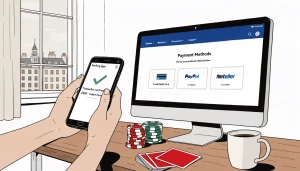
There is also a reported denomination restriction. A specialist review says Boku deposits must be divisible by ten, giving £10, £20 and £30 as permitted amounts. That should be read as a reported condition, not a guarantee that every UK casino and network offers precisely those choices. The cashier’s available amounts are the relevant ones for a particular transaction; a figure in a general guide cannot establish what a particular account will accept.
Monthly ceilings are less clear still. One account gives a monthly figure of €240, while UK-focused accounts describe limits in pounds and disagree about whether the key cap applies per transaction, per day, or both. The figures cannot be reconciled into a dependable UK monthly allowance. Treating the euro amount as a general British rule would make a precise-looking claim out of a conflict. Better not. A stated monthly cap should be understood only in the context of the casino and payment terms that actually apply.
This is one reason that a pay by SMS casino is not necessarily offering the same usable limit as another. A casino may permit a particular deposit amount, but the phone network’s controls remain separate. And where a specialist source gives a number, it may describe a particular operator, review period or arrangement rather than a permanent rule for every UK account. The mobile-payment ceiling is not a promise that each transaction will pass.
Do
- Check the casino’s specific cashier limits
- Verify your mobile operator’s daily caps
- Ensure you have sufficient prepaid credit
Don’t
- Assume a universal transaction limit applies
- Rely on general guides for exact amounts
- Treat a single limit as a guarantee for all transactions
Pay-as-you-go accounts have a more immediate boundary: a Boku deposit cannot exceed the credit remaining on the phone. If the balance is insufficient for the selected amount, the payment is declined. This restriction is distinct from a casino’s minimum or maximum. A cashier might display an amount that fits its own rules, yet the available prepaid credit can still make it impossible to complete. Monthly-billed customers do not face that balance test in the same way, although operator controls may still apply.
The arrangement reflects how a phone-bill payment works. The network is not simply carrying a message between player and casino; it is also the party billing the charge or deducting it from prepaid credit. Its exposure is consequently part of the limit structure. The casino determines what it will accept into the account, while the mobile operator’s conditions shape what can be charged through that phone. Two separate systems meet at a small deposit.
For anyone looking at an online casino that accepts Pay by Phone, the figures in a general description are best treated as indicative only where the source itself reports variation. The firmest practical distinction is between the casino’s cashier limit and the network’s own cap, with prepaid credit adding a further constraint. Exact limits are not interchangeable across casinos, operators or account types.
Small sums, several gatekeepers.
Why Boku Is Becoming Harder to Find
The disappearance of Boku from casino cashiers is not the result of a named prohibition by the UK Gambling Commission. The regulator did not single out the service for a ban. Instead, individual operators have removed it amid concerns about compliance risk. That distinction matters: a payment option can retreat from view without a rule explicitly ordering its removal.

Specialist reviews describe the number of UK-licensed casinos taking Boku as small and declining since 2023. They report a broader change in the way casinos handle phone-based payments: some have replaced Boku with another provider, while others have removed Pay by Phone altogether. The cashier may still contain a mobile-payment option, then, without accepting Boku itself. Similar purpose, different route.
This can make the payment landscape look more stable than it is. A casino’s name in an older Boku list is not proof that its current cashier still offers the method. Payment menus change, and the service shown to one account or at one time may not describe the options available across the market. The useful distinction is between Boku specifically and Pay by Phone as a general category.
Specialist reviews have previously named BoyleSports, Sun Bingo, William Hill, Sky Vegas, PlayOJO, Genting Casino, Betfred, Lottoland, bwin and 888 Casino among operators accepting Boku. That record indicates how broadly the method has appeared in casino cashiers; it should not be read as a guarantee that every named operator continues to offer it. In particular, BoyleSports was reported by a specialist review as adding Boku as a UK-based option. Such additions sit alongside the more recent pattern of removals and substitutions.
The shift is not simply from phone payments to cards or bank transfers. Fonix and Siru Mobile have appeared as alternatives in the pay-by-mobile space, while some operators have stopped offering a phone-payment route altogether. For someone looking specifically for Boku, that means a casino accepting another mobile service is not an equivalent match. It may still accept payment through a phone account, but the provider, terms and cashier process are different.
There is a small irony in this kind of retreat: the payment method can remain familiar to players while becoming less dependable as a feature of any particular casino. A remembered logo or an old review may outlast the cashier setting it describes. The payment menu, rather than the general label “mobile payment”, is what establishes whether Boku is available at the point of deposit.
The UK Gambling Commission’s role is part of the background, not a direct explanation in the form of a Boku-specific ban. It regulates remote gambling offered to consumers in Great Britain, and licensed operators make their own decisions about which payment services to support while managing compliance risk. The result is uneven availability: some operators have retained Boku, others have moved to a different service, and some offer no Pay by Phone option.
That unevenness also explains why broad claims about the “best” phone-payment casinos can age quickly. A list assembled at one moment may combine direct Boku with other services, or include operators whose cashier options have since changed. A name in a list is only useful when the payment method itself is identified and the current cashier confirms it. Less tidy than a directory. More honest.
Depositing by Phone Is Not Withdrawing by Phone
A casino deposit with SMS can make the payment feel like part of the same phone-based service from beginning to end. Boku does not work that way. It can send money into a casino account, but it cannot return winnings to the mobile bill or phone balance. The deposit route and the withdrawal route are separate.

That distinction matters before a payment is made. A casino accepting Boku for deposits does not thereby offer SMS withdrawals, and the appearance of a phone-payment option in its cashier says nothing about how winnings can be paid out. Boku is a one-way entrance.
A player using it must have another withdrawal method registered with the casino, such as a debit card, e-wallet or bank transfer. The method needs to be available under that operator’s rules and associated with the account as required. A phone number that successfully confirms a deposit is not, by itself, a route for receiving funds back.
This is the practical answer to the idea of an SMS withdrawal casino in the UK: Boku cannot provide that service. The casino may offer other withdrawal methods, but those are separate from the mobile-bill payment. The difference is easy to overlook when the same cashier displays both deposits and withdrawals, as if every method were a reversible pipe. It is not.
There is a reported alternative involving Neteller. A specialist payment-method review describes funding a Neteller account through Boku, then using Neteller to deposit at a casino that accepts it. In that arrangement, Boku is used to add funds to the e-wallet; Neteller is the method presented to the casino. It does not turn Boku itself into a withdrawal option.
The Neteller alternative
In some arrangements, a player can fund a Neteller account via Boku and then use Neteller to deposit at a casino. In this case, Neteller is the method actually presented to the casino, not Boku itself.
The distinction is more than a naming detail. A casino with SMS payment may mean that its cashier accepts a mobile-linked deposit method, not that the account can be operated entirely through a phone bill. Where Neteller is involved, the casino must accept Neteller, and the payment route must be available to the player. A description of the route is not a guarantee that every Boku account, Neteller account or casino will support it under current conditions.
Nor should an e-wallet be assumed to solve every withdrawal issue automatically. The casino’s own payment terms determine which methods it will use to pay out, and the account may need a withdrawal method registered before a deposit is made. The method used to send money in and the method used to receive money out can differ, but the casino’s rules still govern the path back.
This is why “casino deposit with SMS” and “SMS withdrawal” describe different things. The first concerns putting funds into an account through a phone-based payment service. The second would mean receiving casino funds through that service; Boku does not do this. A casino site may accept a Boku deposit while directing withdrawals elsewhere. The phone can authorise the entry. It does not collect the exit.
For anyone comparing online casinos that accept SMS deposits, the relevant cashier detail is therefore not only whether Boku appears under deposits. The available withdrawal methods matter too, as does whether one can be registered on the account. In Britain, online casinos serving customers must hold a Gambling Commission licence; the payment method does not alter that requirement or expand what Boku can do.

The alternative Neteller route can be useful where it is supported, but it should be understood as two linked payment relationships, not as a hidden Boku withdrawal feature. Boku funds Neteller; Neteller is then used at a casino that accepts it. The casino’s withdrawal process remains a separate matter.
A deposit is not a return journey.
The Few Direct Boku Options Left
The UK market for casinos taking deposits directly through Boku has contracted to a small, identifiable niche. A specialist review identifies Jackpot Mobile Casino and Peachy Games among the remaining options. These names point to a narrow payment category, not a broad field of casinos with interchangeable services.
That distinction matters because “SMS casino” can suggest more than one thing. In this context, it means a casino account funded through Boku itself, rather than any site that happens to offer a phone-based payment route. A casino using a different Pay by Phone provider belongs to a different category, even if the deposit also involves a mobile number.
Jackpot Mobile Casino and Peachy Games are useful starting points for understanding how direct Boku availability survives: as a small pocket within a larger online gambling market. Their appearance in specialist coverage is not a promise that the cashier will offer Boku to every account or at every moment. Payment menus can change, and an option visible in one place may not be present in another.
There is no meaningful ranking implied by the small group. Calling one of these operators a top choice would turn a payment feature into a judgement about the whole casino. Direct Boku is simply the defining trait here. It may suit someone who wants to fund a gambling account through a mobile bill or prepaid balance, but it should not be confused with the casino’s other services or with the ability to receive winnings by the same route.
The phrase “online casino that accepts SMS deposits” can therefore be read more precisely as a casino accepting direct Boku deposits. That wording keeps the focus on the payment rail, rather than suggesting that SMS itself is a separate class of casino. The remaining options are few enough to be named, but not enough to justify a sprawling directory.
A small niche, plainly put.
What Appears on the Phone Bill
A Boku casino deposit does not arrive as a card payment or a bank transfer. Its cost is attached to the mobile phone account: for a customer on a monthly plan, the deposit is added to the bill from the network; for a Pay As You Go customer, it is taken from the prepaid credit already on the phone. The casino receives the payment, while the mobile account is where the charge is collected.
That distinction matters because the same button in a cashier can lead to different consequences outside the casino. A monthly-bill customer may see the gambling payment alongside other mobile charges when the bill is issued. A PAYG customer sees the available balance reduced instead. In both cases, the phone account is doing more than identifying the player; it is also the route through which the money is paid.

For prepaid users, a specialist payment review describes the available balance as a hard ceiling: a Boku deposit cannot exceed the credit remaining on the phone. If the balance is insufficient, the payment cannot be covered from that account. That is a practical constraint of the billing arrangement, not a separate casino balance or a promise that the network will lend the difference.
The label “SMS billing” can make the transaction sound as though a text message itself is the bill. It is not. SMS is used to handle confirmation, while the charge is placed on the monthly mobile account or deducted from prepaid credit. The casino cashier records the deposit; the network account carries its cost.
This can make Pay by Phone feel removed from ordinary online banking. No card details need to be entered for the Boku charge, but the payment is not detached from household spending: it appears within the same mobile account used for calls, data or other services. On a monthly plan, that may make the cost less visible at the moment of play; on PAYG, the reduced credit is immediate. Different routes, same charge.
Mobile Networks and Casino Cashiers
A phone-based casino deposit depends on two separate points of compatibility: the mobile network must support the payment service, and the casino cashier must offer that service. In the UK, Pay by Phone and Fonix are supported by EE, O2, Vodafone and Three. That shared network support does not mean every casino offers either option; the available methods are shown in the individual cashier.
Boku Deposit Process
- 1
Selection
Select Boku from the options available in the casino’s cashier.
- 2
Details
Enter the desired deposit amount and the associated mobile number.
- 3
Confirmation
Receive a verification code via SMS and enter it into the cashier to authorise the payment.
Boku follows a recognisable sequence. It is selected from the cashier’s deposit methods, after which the player enters an amount and a mobile number. A verification code arrives by SMS and must be confirmed to authorise the payment. The phone is not merely a screen for an online transaction: the number connects the deposit to the mobile-billing route.
That distinction matters when a payment option is described loosely as an SMS deposit. The message is part of confirming the transaction; it is not, by itself, the casino’s payment service. Nor does a phone’s ability to receive an SMS establish that Boku or another Pay by Phone method will appear in the cashier. The casino’s own payment menu determines what can be used.
There is a small social history in this arrangement. The mobile network, once chiefly the carrier of calls and messages, becomes an intermediary in spending at a gambling site. The cashier presents the method; the network supports the billing service; the text message supplies the confirmation step. Each part has a different role, though the process may look like one simple tap on a phone.
For someone considering a mobile casino deposit by SMS in the UK, the useful check is therefore specific: whether the chosen cashier lists Boku, Fonix or another named Pay by Phone method, and whether the mobile network supports it. A familiar network name alone is not a promise of acceptance. The cashier has the final word.

SMS Slots and the Payment Question
“SMS slots” can sound like a category of games played by sending text messages. In this context, it is better understood as a payment description: a phone-based deposit used to put money into a casino account, from which slots may then be played. The text message belongs to the transaction, not to the game.
That distinction matters because the phrase “SMS deposit slots” can blur two different things. A deposit method concerns how funds reach an account; a slot is one kind of casino game. Boku is a way to fund an account, not a special format of slot or a separate kind of play. Calling a site an SMS casino site therefore says something about its payment options, not necessarily about what games it offers.
The practical point is narrower than the wording suggests. A Boku payment can be used for a deposit, but it does not provide a route for withdrawing casino funds. The payment method and the games sit on different sides of the account: one supplies funds, while the other is where those funds may be used. A search for SMS slots UK may therefore lead to information about deposits rather than a distinct collection of games.
This distinction also keeps expectations in proportion. “SMS slot UK” does not mean that a slot is operated through SMS, nor does “SMS online casino” identify a special style of casino. It describes, at most, a phone-payment feature associated with an account. The word “SMS” can make the product sound more novel than it is. The underlying activity remains ordinary casino play.
For anyone comparing slot sites, the useful question is whether the cashier offers a suitable way to deposit, not whether the games themselves are labelled as SMS slots. A phone-based deposit may help fund an account, but it does not change the nature of the slot or turn the phone into a withdrawal channel. The distinction is plain, if easily lost in a short phrase: payment is not play.
When the Casino Uses Another Mobile-Payment Service
A casino that offers Pay by Phone does not necessarily use Boku. Fonix and Siru Mobile are separate payment services, so a cashier listing one of them is not evidence that Boku is available under another name. The distinction is practical: a familiar phone-based payment route can remain while the provider behind it changes.
A specialist review reports that, since 2023, some operators have replaced Boku with Fonix or Siru Mobile, while others have removed phone payments altogether. That is a description of a changing market, not a promise that a particular option will still appear in every cashier. Payment menus can differ between operators and change over time.
The same kind of review identifies MrQ and Duelz as accepting Fonix, and Mr Vegas and Videoslots as accepting Siru Mobile. These are examples of alternative rails for casino SMS payments, not direct Boku options. The provider’s name matters: choosing a casino because it accepts one service does not establish that it supports another.
The wider UK network context is shared. Pay by Phone and Fonix are supported by EE, O2, Vodafone and Three, but network support alone does not mean that every casino offers Fonix, or that a particular account can use it. Availability depends on the payment choices presented by the operator.

This is a small but telling shift in the language of convenience. The phone remains in the transaction, yet the service carrying the payment may be different; the category stays visible while its names multiply. A search for an SMS casino payment can therefore lead to a cashier with no Boku at all. The label is not the rail.
Bonuses and the Fine Print on Phone Deposits
A Pay by Phone deposit does not automatically qualify for a casino promotion. Each operator sets its own terms, and phone-funded payments may be excluded from welcome offers even when the cashier accepts them. The distinction is easy to miss: a payment method can work perfectly well for adding money while remaining outside the rules for claiming a bonus.
A specialist review records MrQ, Duelz, Mr Vegas and Videoslots as operators where Pay by Phone deposits can count towards bonus eligibility. That is a specific finding, not a permanent guarantee. Promotions and their conditions can change, so the offer’s own terms are the useful reference before a deposit is made.
Those terms may set out which payment methods qualify, how much must be wagered before bonus funds can be withdrawn, and when the promotion expires. A specialist review describes a welcome offer matching a deposit pound for pound, capped at £100, with a wagering requirement of 35 times the bonus. That is one reported offer structure, not a standard that every UK casino follows. The arithmetic can make a generous headline look rather less generous.
The same care applies to bonus spins and other rewards: their conditions may differ from those attached to cash bonuses. A phone deposit should not be assumed to trigger an offer merely because the promotion appears on the casino’s site.
There is a separate threshold before any promotion matters. UK players should verify the casino’s current UK Gambling Commission licence on the Commission’s public register before depositing. A bonus is an inducement; the licence is the more consequential detail.
How do I deposit with Boku at an online casino?
Select Boku in the casino cashier, enter the deposit amount and your mobile number, then confirm the request using the SMS verification code.
Can I deposit by phone bill without Boku?
Yes. Some casinos offer other pay-by-mobile options, including Fonix or Siru Mobile; availability varies by casino.
What is the best alternative to Boku for casino deposits?
Fonix and Siru Mobile are alternatives used by some casinos. For example, MrQ and Duelz accept Fonix, while Mr Vegas and Videoslots accept Siru Mobile.
Why are UK casinos dropping Boku?
Casino operators have moved away from Boku because of compliance risk. The UK Gambling Commission did not introduce a ban on Boku by name.
Why might a Boku deposit be declined?
It may exceed the casino’s or mobile network’s limit, or a PAYG account may not have enough remaining credit. Boku deposits also need to be in amounts divisible by ten, and the phone number and SMS confirmation must match the request.
Can a casino deny issuing a promotion if I deposit with Boku?
Yes. Bonus eligibility for pay-by-phone deposits varies by operator, so check the casino’s promotion terms before depositing.
Related posts

UK Casino Welcome Bonuses: How Offers Work

VPN-Friendly Casinos in the UK: How Access Works
