
Casinos That Accept E-Wallets in the UK: Payment Guide
 Available in GB
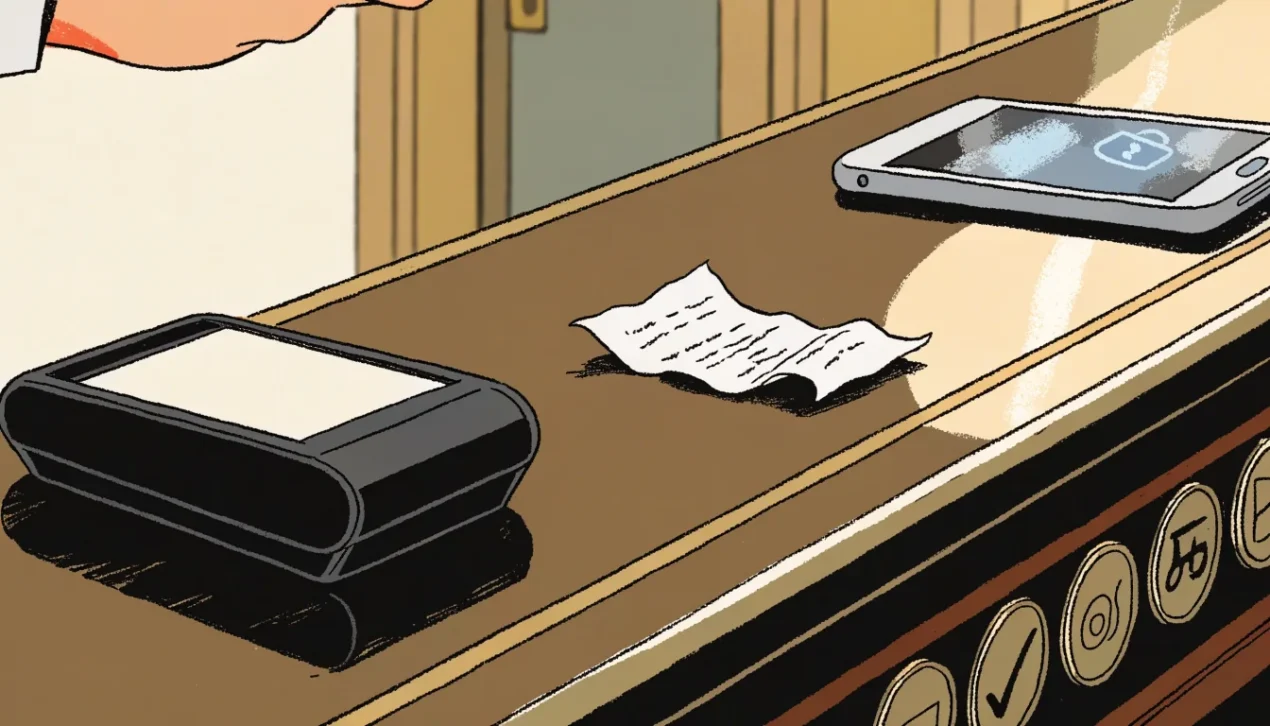
Wallet availability varies by cashier, and deposit support does not guarantee that the same method can receive withdrawals.
Which E-Wallets Appear at UK Casino Cashiers
The e-wallet row in a UK casino cashier is not a fixed part of the furniture. Skrill may be prominent at one site and absent at another; PayPal can appear as a familiar alternative, while Neteller, Payz and Jeton occupy narrower territory. The names form a recognisable payment landscape, but not a standard package. A casino’s cashier is where that particular landscape becomes visible.
Skrill has the broadest presence among the wallets named here. Specialist casino reviews covering UK-facing sites describe it as one of the more common ways to fund an account in 2026. Its familiarity has made it a regular feature of casino payment menus, though that does not mean every site offers it. The distinction matters: a method can be widespread without being universal, and a list of possible wallets is not a promise that each will appear at every cashier.
There is a small cultural history in that persistence. E-wallets sit between the bank account and the merchant, offering a separate account through which money can be managed. In online gambling, that intermediary has become part of the routine vocabulary of payment. Skrill’s frequency reflects that settled position; it is less an exotic alternative than a recognisable name in the UK casino environment.
PayPal has a different kind of visibility. It is widely known beyond gambling, and specialist casino reviews point to its appeal as a quick, convenient way to pay. That broad familiarity can make it seem like the obvious wallet to find. Yet casino availability is not the same as universal acceptance, and PayPal’s appearance at a cashier should not be assumed.
Promotions add another wrinkle. A specialist casino review has reported that PayPal may be excluded from bonus eligibility. That is a specific warning, not a rule that should be projected onto every operator or offer. The terms attached to a promotion determine whether a particular payment method qualifies; the wallet’s name alone does not settle the matter. A payment option and a promotional offer can belong to separate parts of the casino’s policy.

Neteller shares some ground with Skrill: specialist casino reviews report that both are available at certain sites and that either may be excluded from promotions. Neteller is therefore part of the UK-facing wallet mix, but its presence is selective rather than assured. A cashier that lists one of these related services need not list the other. The two names often appear in the same conversation, not necessarily in the same menu.
Payz has a more recent naming history. It was called EcoPayz before the company rebranded in 2022, so older references to EcoPayz may point to the service now known as Payz. The change is useful to know when comparing casino payment information across pages of different ages: a familiar name may have changed, even when the underlying reference is to the same wallet brand. Payz belongs in the wider picture, though it is not as consistently visible as Skrill.

Jeton sits further out on the edge of the map. Specialist casino reviews describe it as available at only a handful of UK online casinos in 2026. That makes it a recognisable possibility, but a distinctly selective one. Its presence is not a reason to expect it at most cashiers; rather, it illustrates how a payment service can remain available while occupying a limited corner of the market.
Taken together, these wallets show a hierarchy of familiarity rather than a single standard. Skrill is the name most often encountered in specialist coverage of UK-friendly casino sites; PayPal is prominent for its wider reputation and reported convenience; Neteller appears at some operators; Payz carries its former EcoPayz identity; and Jeton is confined to a small number of sites. The arrangement is uneven by design, shaped by the choices each casino makes about which payment brands to display.
That variety also explains why broad labels such as “e-wallet casino” can hide as much as they reveal. The phrase describes a category, not a guaranteed collection of services. Two UK casino cashiers may both offer e-wallet payments yet show different names, and the wallet that attracts the most attention in general coverage may not be present in a particular cashier. The category is broad. The menus are not.
Availability Is Not the Same as Compatibility
A payment logo on a casino page is evidence of a possible route, not a promise that the route will appear for every UK account. Payment menus are operator-specific, and a method named in a general list may not be available in the cashier at the moment a customer checks. The practical distinction is between a method the casino says it supports and one the particular account can actually select.
This matters with cards as well as e-wallets. A specialist review listing Visa and Mastercard describes the methods reported for the sites it covers; it cannot establish current UK availability or confirm that every product carrying those card brands is eligible. Those details need to be checked in the casino’s cashier. A brand is not a complete description of the card in a customer’s wallet.
The cashier is therefore more than a payment doorway. It is the point at which a broad statement about acceptance meets the operator’s current configuration and the account in question. A payment method may be familiar across the industry yet absent from a particular casino’s menu. Another casino may display it, while the account’s particular payment product remains ineligible. The difference can be frustrating, but it is not a contradiction: the first statement concerns a method in general; the second concerns whether it works in a specific setting.

The same caution applies to e-wallet online casino sites. A page describing an e-wallet as accepted does not necessarily settle whether the option is available to a UK customer on that site today. The cashier is the relevant place to establish what is offered for the UK account, rather than relying on an old list, a general payment page or a logo displayed without qualification. Payment menus are operational details, not permanent features of a casino’s identity.
Apple Pay illustrates how a method can be present in the market without being universal. Some UKGC-licensed casinos accept it for deposits. That is a limited, useful fact: it does not mean every licensed casino offers Apple Pay, nor that its presence at one casino establishes anything about another. An e-wallet casino list for UK players can help identify candidates, but each entry still needs checking against the operator’s own current cashier.
Availability also has more than one meaning. A method may be supported by a casino in principle; it may appear in the payment menu for a UK account; and a particular card or payment product may or may not meet the operator’s eligibility requirements. Treating these as interchangeable creates the familiar gap between a neat list and a usable option. In financial services, a name can look like a door while the small print keeps the handle.
That is why broad rankings of the best e-wallet online casinos in the UK should be read as starting points, not as confirmation of present compatibility. The word “best” cannot settle whether a method is available to an individual account. Nor can a top list guarantee that a payment option shown when the page was prepared remains visible in the cashier. A general comparison may be useful for orientation; it is not a live record of each operator’s payment menu.
Do
- Check the casino’s current cashier for specific availability
- Ensure the payment account name matches the casino profile
- Verify the specific withdrawal route and its delivery time
Don’t
- Assume a wallet seen on one site is available at all casinos
- Use a credit card to fund an e-wallet for gambling
- Rely solely on general lists instead of checking the live cashier
The sensible comparison is consequently specific rather than sweeping: does the casino’s current UK cashier display the intended method, and does it identify the relevant card product as eligible? Those are separate checks. A visible Visa or Mastercard label answers only part of the question; the payment product itself still matters. Likewise, seeing Apple Pay at one UKGC-licensed casino confirms that the method is accepted there for deposits, not that the same arrangement exists elsewhere.
This narrow distinction saves a great deal of misplaced certainty. Payment acceptance is not a single industry-wide setting that every casino inherits. Each operator presents its own available choices, and the cashier is where a general list becomes an account-specific answer. A name on a page is a lead. The cashier is the check.
From Deposit to Withdrawal: The Route Matters
A deposit and a withdrawal are not simply the same transaction travelling in opposite directions. A wallet may appear as a way to add funds, while a payout follows a different route or waits for the casino to complete checks. The cashier’s list therefore describes only part of the journey. What matters is not just how money enters an account, but what happens when it leaves.
A deposit can feel almost immediate because the payment provider confirms the transfer quickly. That confirmation does not mean the casino has approved a later withdrawal. Before releasing funds, the casino may need to review the account, confirm the payment history and complete KYC. The speed of the first step says little about the length of the second.

This difference is especially noticeable on a first withdrawal. A specialist review describes initial payouts as potentially taking longer while verification is completed. The casino’s internal approval is part of the wait, separate from the time a bank or wallet takes to deliver a payment after it has been released. A fast provider cannot hurry a decision that has not yet been made.
Two clocks, then. One belongs to the casino; the other to the payment service.
Approval comes before delivery
The withdrawal process can be understood as a sequence. The customer requests a payout; the casino checks the request and the account; once approved, the payment is sent through an available route. Each stage has its own conditions. If KYC is incomplete, the request may remain under review before any payment provider is involved.
That distinction makes advertised or reported withdrawal speeds difficult to compare in isolation. A claim about a payment method may describe only the delivery stage, not the time spent waiting for the casino’s approval. A fully verified account and a provider with a quick payout system can shorten different parts of the process, but neither erases the other.
Specialist reviews identify PayPal, open banking services and debit cards connected to fast payout systems among the quicker withdrawal routes. That is a description of payment delivery, not a guarantee that every casino offers those routes or that every payout will be released promptly. The operator’s checks remain a separate gate.
The same caution applies to e-wallet deposits. A wallet can be convenient for funding an account without making it the route for every later payment. UK anti-money laundering rules generally require winnings to return to the original payment source. In practice, that can make the withdrawal path depend on how the account was funded, rather than on which method appears fastest in a general comparison.
A cashier is not a promise of symmetry.
For anyone comparing online casinos that accept e-wallet deposits in the UK, the useful distinction is between deposit support and withdrawal support. A wallet’s presence in the deposit menu does not, by itself, establish how a payout will be handled. The casino may direct funds back through the original source, or its available methods may differ between paying in and cashing out. The specific arrangements belong to the operator and the account, not to the wallet’s name alone.
This is why a quick deposit is a poor predictor of a quick withdrawal. The deposit may be authorised by the provider almost at once, while a payout waits for account checks, casino approval and then the provider’s own processing. Each stage can add time, and the first payout can expose checks that were not visible during the initial deposit.
The route has gates. The provider’s speed is only one of them.
Payment Routes, Cut-Offs and the Wait for Funds
A payment can look finished on the casino screen before the money has completed its journey. Deposits and withdrawals travel in different directions through different steps, so the time taken to send funds in is a poor guide to how long a payout will take to arrive.
A specialist review describes a card deposit as potentially instant, while a payout to a card can take several business days. That difference is not a contradiction: a deposit may be confirmed to the casino quickly, whereas a withdrawal still has to move back through the payment route. The cashier’s “successful” message marks a point in that journey, not necessarily its end.

This distinction matters when comparing casino payment methods. An e-wallet deposit may appear promptly in the account, but that alone says little about the time required for a later withdrawal. The relevant detail is the stated delivery time for the specific withdrawal route, not the speed of the initial deposit or the general reputation of the wallet. A quick entrance and a quick exit are separate claims.
Bank transfers follow the clock
Bank transfers have their own timetable. A specialist review notes that delivery can be affected by the bank’s cut-off times, weekends and currency conversion. A transfer initiated after a processing cut-off may not move onward in the same way as one sent earlier; a weekend can interrupt the working-day sequence. If the casino account and receiving bank account use different currencies, conversion is another part of the route.
These factors make a quoted time less like a stopwatch and more like a schedule with dependencies. The casino may mark a transfer as sent, but the receiving bank’s processing window still matters. Where a payment crosses currencies, the funds may also need to be converted before the final amount appears in the account. The path is not one uninterrupted electronic blink.
For a UK account, the account currency deserves attention before a first transaction. A transfer involving conversion can take a different practical course from one that stays in the same currency, and the displayed amount may not tell the whole story of when the funds become available. Timing and conversion belong to the route itself; they are not merely details on a casino’s cashier page.
Read the route, not the headline
Payment descriptions often compress several stages into a single label such as “instant” or “fast”. Those words can describe a deposit reaching the casino, rather than a withdrawal reaching the customer’s bank or wallet. A useful comparison separates the two directions and looks for the stated delivery window for each.
The same care applies when a site offers multiple e-wallet payment routes. A wallet’s familiar name does not establish that the casino uses it in the same way for both transactions, nor does it settle how quickly a payout will arrive. The cashier’s current information is more relevant than a broad claim about payment speed.
There is a quiet asymmetry here. Moving money into a gambling account can be designed to feel immediate; getting it back depends on a route with its own working hours, hand-offs and currency treatment. The screen may be instant. The journey is not.
The Price of Moving Money
A payment can look free at the cashier and still have a cost elsewhere. A specialist payment review identifies several possible points where charges can arise: the casino, the payment provider, a card issuer or bank, currency conversion, and the network carrying the transaction. Not every route attracts every charge, and a fee shown at one stage is not a complete account of the total.
The distinction matters when comparing UK casinos that accept e-wallets. A cashier may display no casino charge, while the wallet provider or the bank applies its own terms. Those costs may be set outside the casino’s control, so a simple “free deposits” label says little about what happens across the whole payment chain. The same is true of a withdrawal: the relevant cost may depend on the provider’s rules or the receiving account, not only on the casino’s cashier.
Currency can complicate the comparison. Specialist reviews of casino payment terms report that GBP is supported, but the account currency still needs confirmation before the first transaction. If the casino balance, wallet, or bank account uses a different currency, conversion may enter the calculation. The exchange rate can contain a spread: the difference between the rate used for the transaction and a reference market rate. A specialist payment review notes that this spread can cost more than a visible flat fee. The smaller charge is not always the cheaper route.
That makes the displayed fee only one line in a larger ledger. A fixed charge is easy to spot; a less obvious exchange-rate margin may be harder to recognise, particularly when the amount reaching the account is presented in another currency. Network or issuer charges can add further layers. The total depends on the actual amount being moved and on the terms applied by each party, rather than on a method’s label alone.
This is why there is no single e-wallet or other payment option that can be called the lowest-cost choice for every UK casino transaction. A specialist payment review recommends comparing casino charges, provider fees, currency spread and network costs against the amount involved. The same method may produce a different total under different account currencies or provider terms. A fee-free deposit, by itself, is not proof of a fee-free transaction.
The comparison is practical rather than glamorous: check the cashier’s stated charges, then the provider’s terms, and note the currency in which the casino account is held. A cost that does not appear on the casino’s page may still be part of the journey. The arithmetic is less visible than the button.
A UK Account and a Payment Method That Belong Together
A payment account is not merely a place where money waits. It carries a name, account details and a history of use. When those details belong to the same person as the casino account, the basic question of ownership is less likely to interrupt a transaction. In e-wallet casinos for UK players, that ordinary consistency can matter more than the number of payment logos displayed at the cashier.
The principle is simple: one person’s casino account, one person’s payment account. A wallet registered under a different name, or details that do not correspond with the casino profile, can make an otherwise straightforward transaction harder to resolve. That does not mean every small discrepancy will cause a problem; it means mismatched ownership creates an avoidable point of doubt.
There is a quiet administrative logic behind this. Remote gambling depends on records: the operator holds one account record, while the payment provider holds another. When both point to the same customer, the records tell a coherent story. When they do not, someone may have to establish why. Paperwork has never been improved by an unnecessary mystery.

For that reason, the cleanest arrangement is often a single named account used consistently for both deposits and withdrawals. Consistency makes the relationship between the casino profile and the payment method easier to follow. Switching between accounts belonging to different people, or treating a friend’s wallet as interchangeable with a personal one, can introduce ownership questions that were not part of the original plan.
This is not a claim that every casino handles mismatches in the same way. Procedures differ, and the presence of an e-wallet option does not itself establish whose account may be used. The point is narrower: keeping the account details and payment route in the same customer’s name reduces the chance that basic ownership information becomes a source of friction.
In a country where remote gambling is organised through licensed operators and recorded accounts, identity is part of the machinery, not a decorative field in a profile. A payment route with a matching owner gives that machinery less to untangle. One name, carried through consistently.
Deposit Minimums, Maximums and Account Limits
A deposit ceiling and a financial limit may look similar on a cashier screen, but they do different jobs. The first is a boundary set by the operator or payment method; the second is a control over how much a customer chooses to put at risk. Confusing them turns a practical setting into a false promise of protection.
Deposit Minimums
Often ranging from £10–£20 depending on the selected method.
Transaction Maximums
Caps may apply to individual transactions, daily activity, or monthly totals.
Personal Limits
Account-level controls set by the customer to manage gambling expenditure.
A specialist review puts the starting minimum deposit at £10–£20, with the precise entry point depending on the selected method. That is a reported range, not a universal tariff: a wallet, card or other route can present a different threshold, and the amount shown in the cashier is the operative one. This matters when comparing casino sites that take e-wallet deposits. A low advertised minimum says little about what the chosen wallet will permit on that account.
Maximums are less uniform still. A specialist review notes that caps may apply to each transaction, to a day’s activity or to a month, and can change with the payment method and the account’s status. A cashier may therefore show a ceiling that is not shared by every route or every customer. The limit is an administrative boundary, not evidence that a deposit of that size is appropriate or affordable.
Britain places a separate obligation on remote gambling operators. Before a new customer makes a first deposit, the operator must prompt them to set a financial limit; account-level controls must also remain accessible. The distinction is deliberate: a payment provider’s maximum restricts what can pass through its channel, while an account control lets a customer constrain gambling deposits across the account. One is imposed by the route. The other belongs to the customer’s chosen safeguards.
That requirement changes the shape of the cashier. It is not merely a row of logos followed by an amount box; it is also a point where the operator has to make a financial control available before money enters play. Limits may be revisited through account tools, while method-specific caps still govern individual deposits. Neither replaces the other.

The figures and controls are not interchangeable. A minimum answers how little a selected route will accept; a maximum answers how much it will allow under its current conditions; a financial limit sets a personal boundary within the account. Three different questions, and a sensible cashier keeps them apart.
Paysafecard Is a Deposit Route, Not a Payout Route
Paysafecard occupies a narrower place at a casino cashier than the word “payment method” might suggest. It is a prepaid voucher for adding funds to an account, not a route for taking money back out. The distinction is simple, but easy to miss when a cashier presents several logos in one row.
A voucher changes the direction of travel. It can fund a deposit; it cannot receive a withdrawal. That makes Paysafecard different from a payment account that may be used on both sides of a transaction. A casino listing it among its payment choices is not, by itself, saying that it can handle every stage of play.
The practical consequence is that a Paysafecard deposit does not establish Paysafecard as the route for a later payout. Withdrawal arrangements have to be considered separately. Treating the two functions as interchangeable can leave a player with a payment method for putting money in, but no corresponding way to receive funds through that same method.
This is why the cashier’s labels matter more than a broad category such as “e-wallet casino”. A prepaid voucher has a particular job. It is useful for depositing, but deposit-only is the defining limit, not a minor technical footnote.
The distinction also reflects a broader habit of digital payments: a method that accepts value is not necessarily built to return it. A voucher is closer to a token presented at the point of purchase than to a bank account with two-way movement. At the casino, that difference remains visible in the direction the payment can go.
Paysafecard functionality
Unlike standard e-wallets, Paysafecard functions as a prepaid voucher intended for deposits only and cannot be used as a withdrawal route.
Paysafecard therefore belongs on the deposit side of the cashier. Its presence does not make it a payout option, and it should not be read as one. A small label, with a large consequence.
Wallet Payments and the UK Credit-Card Boundary
E-wallets can be used for online casino payments in the UK, but the wallet does not make every funding source acceptable. The important distinction is where the money came from. A balance funded from a bank account or debit card is not the same as credit-card funds passed through a digital wallet.
The UK ban on credit-card gambling took effect on 14 April 2020 and has not been relaxed. It applies to payments routed through a money service business as well as direct card payments. A wallet therefore cannot be used as a detour for credit-card gambling: remote gambling licensees must not accept wallet payments where the wallet permits credit-card funds to be used for gambling.
That boundary is about the source of the funds, not the wallet’s name or appearance. A payment screen may show an e-wallet as an available route, yet the underlying funding arrangement still matters. The presence of a wallet option is not permission to transfer credit into gambling by an indirect path.
For an eligible wallet payment, the funds must not be credit-card funds being channelled towards gambling. This is why e-wallet use is possible under UK rules, but not without qualification. The method and its funding source have to fit the same rule; changing the number of steps between card and casino does not change the nature of the money.
The restriction reflects a broader regulatory judgement: a payment instrument should not turn borrowed credit into a gambling stake merely by passing through an intermediary. The interface may make the route look ordinary. The rule follows the funds.

Top online casinos in the UK
- SpinFormulaBonus: 550% Up To £15,000 + 550 FS · Payout speed: 1-3 business days
- SlotoSportBonus: 500% up to £ 10 200+ 777 FS · Payout speed: 1-3 business days
- Revery PlayBonus: 100% up to€1,000+ 100 FS · Payout speed: 1-3 business days
- AmunbetBonus: Join now and get 450% up to 2,700 GBP + 450 FS · Payout speed: 1-3 business days
- BeOnBetBonus: 100% up to €500 + 100 FS · Payout speed: 1-3 business days
- JetsetspinsBonus: 200% Bonus + 100 Free Spins + Free Royal Wheel · Payout speed: 1-3 business days
- NightWinBonus: £900 + 400 free spins · Payout speed: 1-3 business days
- x3betBonus: Welcome Pack 100% Up to £1.000 + 200 Free Spins · Payout speed: 1-3 business days
- ZombillionBonus: Welcome Pack 250% up to £4000 + 200 FS · Payout speed: 1-3 business days
- BritsinoBonus: Welcome Package – Get your £2,200 + 2,000 FS · Payout speed: 1-3 business days
Why Returning Funds to the Original Source Matters
A payout returning to the account or wallet that funded play can look like a piece of administrative tidiness. It serves a more serious purpose: linking the movement of money to the person who made the deposit. Returning funds to their starting point is a common anti-fraud and anti-money-laundering control, not merely a preference for one payment button over another.
That closed loop makes it harder for a gambling account to become a route for moving money between unrelated people or accounts. It also gives the operator a clearer line to follow when checking a transaction. The rule may feel inflexible, especially where someone has changed payment arrangements, but the alternative is not automatically a harmless convenience. A different destination can make it less clear who controls the funds.
This matters with online casino e-wallets in the UK as much as with cards or bank payments. A wallet displayed in a cashier is not, by itself, proof that every later payout can be sent wherever its holder chooses. Where a casino cannot return funds by the original route, it may ask for additional verification before using an alternative. That can mean more checks and a longer pause while the operator establishes the connection between the account holder and the proposed destination.
The same principle explains why consistent account details matter across a transaction. A mismatch need not indicate wrongdoing, but it can leave the operator with a question that must be resolved before money moves. Security controls are designed around the suspicious case, not the ordinary one. Sometimes the ordinary case waits. Dry, but deliberate.
For a player, the practical point is that a preferred payout route may not override the original funding route. Keeping records of which account or wallet was used can help make the transaction easier to trace if a query arises. The safeguard is not a promise of instant payment; it is a check on where the money came from and where it goes.
Why must withdrawals return to the deposit method?
Returning funds to the original payment source is a common anti-fraud and anti-money-laundering control. Using another route may require additional verification.
What is the fastest withdrawal method for UK casinos?
PayPal, open banking services and debit cards connected to fast payout systems are generally among the quickest options. The casino’s approval process and whether your account is verified also affect how quickly funds arrive.
What is the current minimum deposit?
Minimum deposits usually start at £10–£20, depending on the payment method.
Are fast casino withdrawals guaranteed?
No. Withdrawal speed depends on the casino’s approval process and whether your account is fully verified.
Which payment methods are accepted in Great Britain?
UK casinos commonly accept debit cards such as Visa and Mastercard, while some also offer e-wallets, bank transfers or open banking. Paysafecard is for deposits only; check the cashier to see which options are available for your account.
Are Visa and Mastercard deposits definitely debit cards?
No. The card brand alone does not confirm that a particular card product is eligible, so check the casino cashier. Credit card gambling has been banned in the UK since 14 April 2020.
Related posts

UK Casino Welcome Bonuses: How Offers Work

VPN-Friendly Casinos in the UK: How Access Works
