
Casinos That Accept Giropay in the UK: What to Check
 Available in GB

A casino’s cashier is the practical test of whether Giropay is offered to a UK account, since listings may not reflect current availability.
Giropay’s Place in the UK Casino Cashier
A page headed “casinos that accept Giropay UK 2026” makes a promise in miniature. It suggests that a payment route has been identified, that it is usable by customers in Britain, and that the information is current. Those are separate claims. A title alone confirms none of them.
For a particular casino, the practical test is its own cashier: does Giropay appear there as an available method for a UK account, under the conditions that apply to that account? A payment logo elsewhere on a site, or a general list of methods in a review, is not the same evidence. Payment arrangements change, and a method may be listed without being available to every customer or in every market.
That distinction matters especially when a page gathers casinos under a broad label. The label can travel farther than the payment option. A site may have a payment-method page, an older promotional page or a third-party description that names a method; none necessarily establishes that a British customer can select it now. The cashier is where the operator presents the transaction choices actually offered for that account. A listing is a clue, not a completed transaction.
There is a second distinction between a method being named and its UK eligibility being established. A casino’s general payment information may describe services across several countries. It can therefore be accurate in one setting and irrelevant in another. The words “available” or “accepted” need a setting attached to them: available to whom, in which country, and for what type of transaction? Without that context, a list can appear more conclusive than it is.
The same caution applies to payment information about familiar card brands. A specialist review’s list of Visa and Mastercard does not establish that every card product is eligible, or that either is currently available to every UK customer at a particular site. Current availability and card-product eligibility need to be checked in the cashier. Familiarity is not confirmation.

That is a small but important difference in how payment information should be read. A method can be recognised internationally, appear on a casino’s general information page and still fail to answer the local question. The British cashier is not merely a display of brand names; it is the point at which the operator’s available options meet the customer’s account and location.
The legal setting gives the question its consequence. Remote gambling licensees selling into the British market must hold a Gambling Commission licence, wherever they are based. A legal online casino serving British players operates under that system. The licence is about permission to offer gambling in the market; it does not, by itself, prove that any particular payment method appears in the cashier. Regulation and payment availability are related only in the sense that both require checking against the actual operator. One does not certify the other.
Nor does the wording of a casino’s page resolve the issue. A description may remain online after arrangements have changed, or may present a method as part of a wider international service. The relevant evidence is narrower: the casino’s current cashier, showing the method as an option for the UK account in question. If it is not there, the heading cannot make it appear.
This is why claims about all Giropay casinos in the UK, or the best UK sites using it, should be treated carefully. A ranking can only be as reliable as its underlying confirmation. If it names casinos without showing that Giropay is available to UK customers, it answers a different question: which sites have been associated with the name, not which cashiers currently offer it. The distinction is less glamorous than a ranking. It is also more useful.
The same principle holds when a site is described as new, mobile-friendly or suitable for games. Those labels concern other features; they do not establish a payment route. A casino can be accessible on a phone while its cashier offers a different set of methods, and a catalogue of games says nothing about whether Giropay is accepted. One label cannot do the work of another.
So the phrase “Giropay casino” should be read as a claim to verify, not as a settled category. For a UK customer, the meaningful point is whether the method is shown in that casino’s cashier as an available option. Anything broader may describe a past listing, a general service or another market. The page title is not the cashier.
Top online casinos in the UK
- SpinFormulaBonus: 550% Up To £15,000 + 550 FS · Payout speed: 1-3 business days
- SlotoSportBonus: 500% up to £ 10 200+ 777 FS · Payout speed: 1-3 business days
- Revery PlayBonus: 100% up to€1,000+ 100 FS · Payout speed: 1-3 business days
- AmunbetBonus: Join now and get 450% up to 2,700 GBP + 450 FS · Payout speed: 1-3 business days
- BeOnBetBonus: 100% up to €500 + 100 FS · Payout speed: 1-3 business days
- JetsetspinsBonus: 200% Bonus + 100 Free Spins + Free Royal Wheel · Payout speed: 1-3 business days
- NightWinBonus: £900 + 400 free spins · Payout speed: 1-3 business days
- x3betBonus: Welcome Pack 100% Up to £1.000 + 200 Free Spins · Payout speed: 1-3 business days
- ZombillionBonus: Welcome Pack 250% up to £4000 + 200 FS · Payout speed: 1-3 business days
- BritsinoBonus: Welcome Package – Get your £2,200 + 2,000 FS · Payout speed: 1-3 business days
When the Giropay Button Is Missing
A missing Giropay option does not leave a cashier without alternatives, but it does change the practical question. The useful comparison is between the payment routes actually displayed by a casino and the way each one handles a deposit. A method appearing on a general payment page is not proof that it is available to every UK customer; the cashier, account and payment provider all matter.
Bank transfers and open banking are one possible route. A specialist review reports that these can support instant deposits and fast withdrawals at many sites. That is a description of some operators, not a promise about every cashier or every account. A bank transfer may appear as a direct transfer option, while open banking can connect a payment to a bank account through a service shown by the operator. The labels and steps differ, so the option needs to be present in the casino’s own cashier before it can be treated as available.
Banking carries an older social idea into a newer screen: money should move through an identifiable institution, with a record at each end. It can suit someone who prefers not to create a separate wallet, but convenience depends on the route the casino offers. A transfer listed on a website may not be usable for a particular account, and a deposit option should not be assumed to work for withdrawals as well. The direction of payment matters.
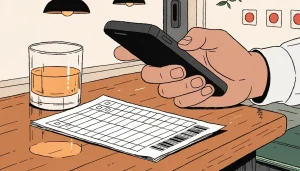
Prepaid vouchers offer a different arrangement. Paysafecard is a voucher for deposits only, making it distinct from a bank account or e-wallet that might be offered for more than one kind of transaction. A voucher can provide a way to fund an account without entering card details in the casino cashier, but its deposit-only status is decisive: it should not be treated as a route for receiving a payout. The distinction is simple, though payment menus do not always make it prominent.
E-wallets are another possible substitute, but the category is not a guarantee of availability. Skrill and Neteller are offered by some sites; their presence should be checked at the individual cashier. A specialist review describes Skrill as one of the more common deposit methods at UK-friendly casino sites in 2026, while also reporting Neteller at some sites. Those observations describe a changing market, not a fixed list of casinos or a promise that either wallet will appear for every player.
Jeton has a narrower footprint. A specialist review reports that it remains available at a handful of UK online casinos in 2026. That makes it a possible alternative to check, not a reliable substitute to build a plan around. A payment brand can be familiar and still be absent from a particular operator’s list.
The same caution applies to debit cards. Visa and Mastercard debit cards are commonly accepted by UK casinos, but the payment product and its eligibility still need to be confirmed in the cashier. A credit card is not an alternative for gambling deposits at UK-licensed casinos: the prohibition remains in force. A card carrying a familiar network name does not settle whether that particular card can be used.
DO
- Check the casino’s own cashier for current availability
- Verify if the specific card product is eligible
- Confirm if the method works for both deposits and withdrawals
DON’T
- Assume a method is available based on a general list
- Use credit cards for gambling deposits
- Treat a deposit option as a guaranteed withdrawal method
There is no universal ranking of these routes. A bank transfer may be useful where open banking is offered; Paysafecard is relevant when a deposit-only voucher fits the purpose; an e-wallet may be available where a casino supports that provider; a debit card may be listed but still require an eligible product. The method that looks most like Giropay is not necessarily the one that works best in practice.
For any substitute, availability has two layers: the casino must support it, and the player’s own payment account must be eligible. The cashier is the point where those layers meet. A logo elsewhere on the site is not enough, and a method used at one operator says little about another.
The modest discipline is to compare the options shown at the point of deposit, then keep the selected route consistent with the account holder’s own details. Payment systems are built around identity as much as speed. A clean match can prevent avoidable friction; a familiar name alone cannot.
Deposits, Minimums and the Small Print
A deposit minimum is a threshold, not a promise that every payment route will accept the same amount. A specialist casino review puts the usual starting range at £10–£20, while noting that the selected method can change the figure. That range is a practical guide, not a universal tariff: the cashier’s stated minimum for the chosen method is the amount that governs a transaction.
The distinction matters when an account is being funded through a named service such as Giropay. A casino’s general deposit information cannot establish that Giropay is available to a UK customer, nor that it has the same minimum as a debit card or another route. The method must appear in the cashier, and its own displayed terms should be read before an amount is entered. A payment button can have its own rules.
Minimums also shape what “no minimum deposit” can mean in practice. A promotion or a casino description may use broad language, while the payment route imposes a threshold at the point of deposit. The cashier is where the two meet: an advertised minimum, if one is stated, still has to be compatible with the method selected and the customer’s account. Without that match, the wording is less useful than it looks.
The upper boundary is less visible but just as relevant. Maximum deposits may be set per transaction, per day or per month; a specialist casino review notes that these caps vary with both payment method and account status. One route may therefore permit a different amount from another, and a limit applying to a single transaction need not be the same as a broader account ceiling. These are separate controls, not interchangeable descriptions of one limit.
Account status can affect the practical room available for a deposit. A payment option may be present while an account-specific cap still governs how much can be transferred. The amount entered, the method selected and the account’s current standing all belong to the same calculation. A declined transaction does not necessarily mean the casino has stopped accepting that method; it may reflect a limit attached to the transaction or account.
This is why deposit terms deserve a closer reading than the headline number. The minimum answers how little can be placed in one transaction. The maximum answers how much the cashier will permit under its relevant cap. Neither figure, by itself, describes whether a particular service is available, whether an account is eligible to use it, or how much room remains under a daily or monthly ceiling.
For a Giropay deposit, the useful check is therefore specific: whether the method is shown for the account, what minimum and maximum the cashier displays for it, and whether an account-level restriction changes those figures. A casino’s general payment page may describe the methods it supports without resolving every customer’s eligibility or limit. The live cashier supplies the operative detail.
Keeping these distinctions separate prevents a small but consequential confusion. A low minimum is not evidence of unrestricted deposits; a high maximum does not make every payment route available. And a method’s appearance on a general list is not a substitute for its terms in the customer’s own cashier. The figures are conditional.
Mobile Slots and the Payment Question
A slot game and the route used to fund an account answer different questions. A game may be available on a phone or computer without the casino’s cashier offering Giropay. The catalogue describes what can be played; the cashier shows which payment methods the operator currently makes available to that account. Neither list proves the other.

That distinction matters for searches about mobile slots paid for with Giropay. A mobile-friendly casino is not, by that fact alone, a Giropay casino. Nor does finding a particular slot on a site establish that Giropay can be used to deposit for it. Payment acceptance is set at the casino-account level, not by an individual game.
The wording “online slots” can also make the two parts seem more closely connected than they are. A slot is software offered within a casino; Giropay, where offered, would be a payment route in the cashier. The game does not process the deposit, and its presence cannot confirm what the cashier will display. A casino’s general payment page may be useful, but the actual options shown during the transaction are the practical check.
There is a separate question of what makes a real-money casino lawful in Britain. Remote gambling licensees serving British customers must hold the relevant UK Gambling Commission licence. That status concerns the operator and its gambling service; it does not establish that a named payment method is supported. Legitimacy and compatibility are not interchangeable.
Mobile access changes the size of the screen, not the underlying distinction. A cashier may be reached through the same site or service as the games, but its available methods still need to be confirmed independently. A slot loading successfully on a phone is evidence of access to that game, not evidence about Giropay. A payment logo elsewhere on a page is not the same as a method appearing as an available option for the customer’s account.
The rules also shape the experience of slots themselves. In Britain, online slot spins must last at least two and a half seconds, and autoplay is banned. Those requirements govern play, not payment acceptance. They do not turn a mobile slot into a Giropay-compatible one.
For anyone comparing real-money and free-to-play versions, the same separation applies: a free game does not test a casino cashier, while a real-money game’s availability does not reveal the deposit routes. The label describes the play mode, not the payment method.
A neat distinction, then: games are not cashiers.
Real-Money Play, With Limits in View
A search for slots played with Giropay for real money combines two separate questions: how an account is funded, and what conditions apply once money is at stake. A payment method, even if it appears in a cashier, does not set the terms of play. Nor does the phrase “no deposit” remove the financial safeguards attached to a real-money gambling account.
For new customers, UKGC rules require remote gambling operators to prompt them to set a financial limit before the first deposit. The operator must also make account-level limit controls accessible. These are not optional extras tucked away for a later visit; the first-deposit prompt is part of the route into paid play.
The point is not that a limit makes gambling harmless. It gives the account a boundary that can be set before funds enter it, when the decision is less entangled with the momentum of a session. Account-level controls matter for the same reason: a boundary that cannot be found when needed is largely decorative. Regulation, here, is concerned not only with the cashier’s mechanics but with the point at which a person’s money becomes available for gambling.

Searches for free slots alongside real-money payment terms can blur that distinction. Free play and real-money play are not interchangeable descriptions. A payment brand does not turn a free game into a paid one, and a game’s presence on a site does not establish that the same site accepts a particular payment method. The cashier addresses the route for funds; limit controls address the scale of financial exposure. Different questions, with different answers.
That separation is especially useful when a page or promotional phrase makes the payment method sound like the defining feature of the experience. The practical conditions of real-money play sit at account level: the initial financial-limit prompt and the controls available after registration. A Giropay reference cannot replace those protections, and it cannot confirm that an individual site’s cashier offers Giropay to UK customers.
The UKGC’s approach treats the first deposit as a consequential threshold rather than a purely technical step. Before it, the customer is asked to set a financial limit; after it, controls remain available through the account. The arrangement does not dictate what limit a person should choose, and the existence of controls does not promise a particular outcome. It does establish that licensed remote operators must build a moment of reflection into the process.
The machinery is modest. The principle is not. Real-money play begins with a payment, but it should not be reduced to one.
Real-Money Protections
UKGC rules require operators to prompt customers to set a financial limit before their first deposit. Account-level controls must also be easily accessible to manage exposure.
Deposits Are Not Withdrawals
A payment method shown beside a casino’s deposit options does not automatically work in reverse. Deposits and payouts are separate stages, and the cashier’s list for one should not be read as confirmation of the other. That distinction matters when a search for Giropay leads to a page describing deposits: it does not establish that Giropay is available to UK customers, or that it can receive a withdrawal.
Debit cards remain a familiar route into UK casino accounts. Casinos commonly accept Visa and Mastercard debit cards, but the card type matters. Credit-card payments for gambling have been prohibited since 14 April 2020, and the rule has not been relaxed. A credit card does not become an acceptable gambling payment simply because it is entered through a different-looking checkout. The ban is about the source of the funds, not the neatness of the button.
Nor does a quick deposit promise a quick payout. A card payment may reach an account instantly, while a withdrawal can take several business days to arrive. A specialist review describes that difference in timing; it should not be mistaken for a fixed timetable applying to every casino or transaction. Deposit speed concerns the casino receiving funds. Withdrawal speed concerns approval and delivery back to the player. Different queues, different clocks.
The same caution applies to requests for a direct Giropay withdrawal or a fast payout to a debit card. A deposit listing alone cannot settle either question. The cashier’s withdrawal options and the casino’s payment terms are the relevant checks, and the route offered may depend on the account. A payment logo on a deposit page is not a promise of two-way service.
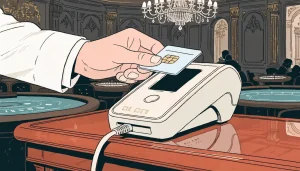
For UK players, the familiar card distinction is therefore more useful than a broad label such as “instant banking”. Visa and Mastercard debit cards are commonly accepted for deposits; credit cards are not permitted for gambling payments. Neither fact establishes that a named service can be used for a payout. An account funded by one route may show different withdrawal choices, so the two directions should be assessed separately rather than treated as mirror images.
The quiet complication is time. Money can leave a bank account and appear in a casino balance quickly, yet the return journey may take longer. A deposit is an arrival; a withdrawal is a request, a review and then a transfer. The cashier is not a reversible door.
Bonuses and the Payment Method Clause
A bonus is not simply attached to a casino account once a deposit has been made. Its terms may distinguish between payment routes, so the method used to fund an account can affect whether a promotion applies. The cashier and the offer’s own conditions are separate parts of the transaction; a bonus advertised alongside a Giropay-related page title does not, by itself, establish that Giropay deposits qualify.
A specialist review describes PayPal as valued for speed and convenience, while noting that it may be excluded from bonus eligibility. The same kind of review reports that Skrill and Neteller are offered at some sites and are often left out of promotions. These are not universal rules: a payment option’s presence, and its treatment under a particular offer, can vary between casinos and promotions.
That distinction matters most when a welcome offer is involved. The headline may describe a bonus in broad terms, while the conditions specify which deposits count, whether a qualifying payment method must be used, or whether certain e-wallets are excluded. The exact clause governs. A method appearing in the cashier is not proof that it will qualify for the offer, just as an advertised promotion does not confirm that every deposit route can be used to claim it.
The same care applies to a slots bonus or a code-based promotion. A code may have its own eligibility conditions, and a bonus attached to slots does not settle the question of which payment method can trigger it. Nor does the label “no deposit” remove the need to read the terms: the offer’s conditions, rather than its short description, define who can claim it and how.
For a Giropay deposit, the sensible distinction is therefore between payment availability and promotional eligibility. Each is a separate condition to confirm in the relevant cashier and bonus terms. If a payment method is excluded, changing the deposit route merely to obtain a promotion can also change the transaction’s practical details; the offer is not a substitute for checking what the chosen method entails.
Promotions have clauses. That is the point. A welcome bonus may look like a single invitation, but its payment rules can narrow who qualifies. Where PayPal, Skrill or Neteller is being considered, the offer terms should be read for that method by name, rather than inferred from the casino’s general list of accepted payments.

Small Deposits and Mobile Payments
A small deposit is not defined by the payment button’s appearance on a phone screen. The minimum is set by the casino and can differ between payment methods, so a low threshold shown for one route says nothing about another. A specialist casino review puts the starting deposit range at £10–£20, depending on the method selected; that is a reported guide, not a universal cashier rule.
This matters when looking for a Giropay deposit at a particular amount. A casino page mentioning Giropay would not, by itself, establish either that the method is currently available to UK customers or that it accepts a deposit at the requested level. The cashier is where those details meet: the method must be offered for the account, and its stated minimum must fit the intended deposit. Search wording cannot settle either point.
Mobile adds a second meaning to the question. It may describe making a deposit on a handset, rather than paying through a mobile-specific service. Those are not the same thing. A payment route visible on a desktop may or may not appear in a mobile cashier, while a mobile-friendly cashier does not prove that it supports Giropay. The practical question remains the same on either screen: what minimum is displayed beside the available method?
There is a modest social history in this distinction. Digital payments are often presented as frictionless, as if moving money were merely a matter of tapping a screen. But the cashier still sorts transactions by method, account and threshold. Convenience has not abolished the rules; it has moved them into smaller print.
For a low-value deposit, the advertised general range is a starting point for expectation, not a promise about Giropay. The precise floor can only be read in the relevant cashier before a transaction is made. Small sums still have conditions.
Casino Fees
Charges applied directly by the operator for processing the transaction.
Provider & Bank Fees
Fees from the payment service provider or the user’s bank/card issuer.
Conversion Costs
Costs related to currency exchange-rate spreads when funding in a different currency.
Comparing Alternatives by Their Actual Cost
A payment route can look inexpensive because its fee is displayed as zero. That figure may describe only one part of the transaction. A specialist casino-payment review identifies several possible charges: a casino fee, a payment-provider fee, a fee from the bank or card issuer, currency conversion and network costs. Which of these applies depends on the route and the transaction; a method cannot be ranked by its headline charge alone.
Currency conversion is particularly easy to overlook. A specialist payment review warns that the exchange-rate spread can cost more than a stated flat fee. The difference may be folded into the rate rather than shown as a separate charge, so the absence of a visible fee does not settle the question of what a deposit costs. The account currency and the currency used by the payment provider both matter to that comparison.

For someone weighing Giropay deposit alternatives, the useful comparison is therefore between complete transaction costs, not payment names. A bank transfer, card or e-wallet may each involve a different combination of casino, provider and bank charges. Network costs can also apply to some routes. The relevant total is the amount ultimately taken from the funding source for the amount credited to the casino account.
There is no single payment method that is always the lowest-cost choice. A specialist casino-payment review makes that point in practical terms: fees, conversion spread and network costs need to be checked against the actual amount being moved. A route that appears cheaper for one transaction may not remain so when the amount or currency changes.
The same discipline applies when considering an alternative to Giropay or asking whether Giropay remains active in a particular cashier. A payment label does not reveal the full price, and a listed method does not establish its current availability for a UK account. Before choosing, the cashier’s displayed charges and the provider’s terms need to be read together, with any bank or issuer charge and currency conversion included in the calculation.

A tidy fee table is not the whole bill.
GamStop Status Does Not Confirm a Payment Route
A casino’s relationship with GamStop and its cashier’s payment options are separate matters. Exclusion status does not tell whether Giropay appears among the deposit methods, whether the method is available to customers in the UK, or whether a transaction would be accepted. A label such as “not on GamStop” cannot answer those questions.
The phrase can also blur an important distinction. It describes a connection to an exclusion scheme; it does not establish that a site is authorised to serve people in Britain. Remote gambling licensees offering gambling to British customers must hold the relevant UK Gambling Commission licence. A payment logo or a claim about exclusion status is no substitute for checking that authorisation on the Commission’s public register.
Nor does a site’s absence from GamStop prove that Giropay works there. Payment methods can depend on the customer’s location, account details and the options displayed in the cashier. Even where a page mentions Giropay, that mention alone does not confirm current UK eligibility. The cashier is the practical point of comparison, not the site’s marketing label.
The distinction matters especially around self-exclusion. A payment search should not be used to sidestep a decision to stop gambling or a restriction already in place. UK-licensed casinos must provide responsible-gambling tools, including self-exclusion, and remote operators must make account-level limit controls accessible. Those protections concern the conditions of play; they do not certify any particular payment route.
For anyone assessing a casino, the questions therefore remain distinct: is the operator licensed to serve the British market, and does its cashier actually offer Giropay for the account in question? Neither answer can be inferred from a “not on GamStop” description. No shortcut there.
What is the fastest withdrawal method for UK casinos?
PayPal, open banking services and debit cards linked to fast payout systems are generally among the quickest. The casino’s approval process and whether your account is verified also affect how soon you receive the money.
Which method has the lowest fees?
There is no single method that is always cheapest. Compare the casino’s and provider’s charges, any bank or issuer fees, currency-conversion spread and network costs for the amount you plan to transfer.
Are Visa and Mastercard deposits definitely debit cards?
No. The card brand alone does not establish that a particular card product is eligible; check the casino cashier for current UK availability and your card’s eligibility. Credit-card gambling is banned in the UK.
Related posts

UK Casino Welcome Bonuses: How Offers Work

VPN-Friendly Casinos in the UK: How Access Works
