
Casinos That Accept Solana in the UK: Licensing
 Available in GB

A Solana payment option is separate from authorisation: remote casinos serving Great Britain must meet the UK licensing requirement.
Solana Casinos and the UK Licensing Question
The first question about a casino accepting Solana in Britain is not whether the cashier recognises a digital asset. It is whether the business offering real-money gambling is authorised to serve the market. A payment option can attract attention; it cannot replace the licence that makes an online casino lawful for British customers.
The UK Gambling Commission regulates gambling in the United Kingdom, including online casinos. For remote gambling offered to consumers in Great Britain, the operator’s location and the location of its key equipment do not remove the licensing requirement. A company does not become exempt merely by placing its servers elsewhere. The rule follows the gambling service into the market it serves.
That arrangement reflects a particular view of responsibility. Commercial gambling is not treated simply as a private exchange between a website and a customer. The business offering it must answer to a domestic regulator. The Commission is the sole regulator for commercial gambling in Great Britain, issuing operating licences to businesses and personal licences to individuals working in regulated roles. Different licences attach to different responsibilities; a business licence is not a decorative badge shared with every person involved.
For a casino, the operating licence is the central distinction. A site may present itself as British-facing, display familiar currency or mention British customers, but those details do not establish authorisation. The relevant question is whether the operator holds the licence required to offer remote gambling in Great Britain. In a market where a website can be operated from another country, the law makes the location of the customer-facing service matter more than the geography of the equipment.
Solana belongs to a separate part of the picture: it is a proposed way to move funds, not a form of gambling permission. A cashier might list a payment method, but that listing by itself says nothing about whether the casino is licensed to serve Britain. Conversely, a licence does not establish that a particular payment method is accepted. These are different claims, and combining them into one can make a promotional payment label sound like a regulatory fact.
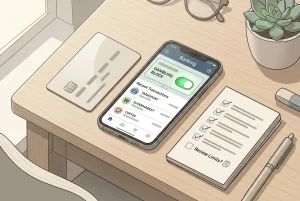
For the specific prospect of a UK casino accepting Solana, no UK-licensed operator can be identified as offering that combination. That is a narrower statement than saying that no casino anywhere takes Solana. It concerns the British licensing question, not every website a person might encounter online. The distinction matters because an offshore site and a UK-licensed casino do not occupy the same regulatory position, even if their home pages look equally polished.
The legal framework is territorial in a way that can be easy to miss. The Gambling Act 2005 governs gambling in England, Wales and Scotland, but not Northern Ireland. The Commission’s role as sole regulator for commercial gambling applies to Great Britain; it should not be casually stretched into a claim about every part of the United Kingdom. In Great Britain, however, remote operators serving consumers must hold the relevant Commission licence, wherever the business or its equipment happens to be based.
This is why a list of “best” Solana casinos for Britain would require more than a set of websites that mention the currency. To be meaningful in this market, the list would need to connect a named operator, its acceptance of Solana and its authority to provide gambling to British customers. Without that connection, the list would blur payment availability with legal status. It would look useful while answering the wrong question.
The Commission also distinguishes business authorisation from individual accountability by issuing personal licences to people in relevant operating roles. That structure says something about the market’s underlying bargain: gambling may be offered commercially, but responsibility is distributed across the organisation rather than left to a logo on a screen. The customer sees a cashier; the regulator sees an operator, its permissions and the people accountable for running it.
A Solana symbol, if encountered on a site, should therefore be read only as a claim about payment acceptance. It is not proof of a British operating licence, nor does the word “UK” in a casino’s branding settle the matter. In Great Britain, the licence question comes first. The payment question follows. Dry, but consequential.
Top online casinos in the UK
- SpinFormulaBonus: 550% Up To £15,000 + 550 FS · Payout speed: 1-3 business days
- SlotoSportBonus: 500% up to £ 10 200+ 777 FS · Payout speed: 1-3 business days
- Revery PlayBonus: 100% up to€1,000+ 100 FS · Payout speed: 1-3 business days
- AmunbetBonus: Join now and get 450% up to 2,700 GBP + 450 FS · Payout speed: 1-3 business days
- BeOnBetBonus: 100% up to €500 + 100 FS · Payout speed: 1-3 business days
- JetsetspinsBonus: 200% Bonus + 100 Free Spins + Free Royal Wheel · Payout speed: 1-3 business days
- NightWinBonus: £900 + 400 free spins · Payout speed: 1-3 business days
- x3betBonus: Welcome Pack 100% Up to £1.000 + 200 Free Spins · Payout speed: 1-3 business days
- ZombillionBonus: Welcome Pack 250% up to £4000 + 200 FS · Payout speed: 1-3 business days
- BritsinoBonus: Welcome Package – Get your £2,200 + 2,000 FS · Payout speed: 1-3 business days
When a Casino Offers Another Route to the Cashier
A payment option can disappear from a casino cashier without the underlying habit disappearing with it. Pay by Phone remains a recognisable way to move money from a mobile account into a gambling account, but the services behind that label are not interchangeable. Boku, Fonix and Siru Mobile are separate routes, and a casino offering one does not thereby offer the others.
A specialist review describes operators as having moved away from Boku since 2023, with some switching to Fonix or Siru Mobile and others removing pay-by-mobile payments altogether. That is a reported shift, not a permanent map of every cashier. Payment menus change, and the name displayed at the point of deposit matters more than a general label such as mobile payment.
The pattern is visible in named examples from that same kind of review: MrQ and Duelz are listed with Fonix, while Mr Vegas and Videoslots are listed with Siru Mobile. These are alternatives within the pay-by-phone family, not evidence that Boku remains available at those operators. Nor does the presence of one service tell anything about whether another is accepted. A cashier is particular in the way a railway platform is particular: the general direction is not the train.
This distinction matters when a casino’s payment page uses broad language. “Pay by Phone” can describe a category, while the actual provider determines how the payment is routed and whether a particular mobile network supports it. EE, O2, Vodafone and Three support Pay by Phone and Fonix, but the list of networks alone does not establish that a chosen casino offers either service. The operator’s cashier is the practical point of confirmation.
Solana belongs to a different payment conversation. A person considering alternatives to Solana at online casinos may encounter these mobile routes, but Boku, Fonix and Siru Mobile are not crypto assets or ways to send Solana. Their connection is simply that they can serve as payment options at some casinos. A change from one phone-billed service to another is not a conversion from cryptocurrency to mobile payment; it is a change of rail.
There is also a less direct route reported by a specialist review: Boku can be used to fund a Neteller account, after which that balance can be deposited at a casino accepting Neteller. The distinction between the stages is important. The casino receives a Neteller deposit; Boku is used earlier to add funds to the e-wallet. That chain does not make Boku a casino cashier option at the destination, and it does not make Neteller a Solana wallet.
The appeal of an indirect route is easy to understand. A payment service may be available where another is not, and an e-wallet can provide a bridge between the funding method and the casino’s accepted methods. But every bridge has two ends. Boku must be available for the account being funded, and the casino must accept Neteller. A casino that accepts Neteller is not thereby shown to accept Boku directly; a casino that lists Boku is not thereby shown to accept Neteller.
Payment names can suggest more continuity than exists. A player may recognise the phone-billed character of Boku in a newer service and assume the cashier will behave in the same way. The provider, terms and route still differ. Fonix and Siru Mobile may occupy a similar place in a payment menu, but they remain distinct services, with availability dependent on both casino and network arrangements.
That leaves a small but useful distinction between an alternative and an equivalent. Fonix and Siru Mobile are alternatives to Boku in the pay-by-phone category. Neteller can be part of an indirect funding route involving Boku. None of those descriptions establishes a Solana deposit option. The route can change; the currency does not follow automatically.
A casino cashier is less a universal door than a collection of separate entrances, each maintained by an operator and a payment provider. What appears there can shift, and an old description may outlast the option itself. The sensible reading of any named payment route is therefore narrow: it identifies a possible method, not a promise that every other method—or a crypto deposit—will be accepted.
The distinction is prosaic. It is also the whole point.
What a Pay-by-Phone Deposit Actually Does
A Pay by Phone deposit is a charge to a mobile account, not a payment made with a cryptocurrency or debit card. With Boku, the casino cashier starts the process: the player selects Boku, enters a deposit amount and supplies a mobile number. Boku then sends an SMS verification code. Entering that code confirms the transaction, and the deposit is charged to the player’s phone bill.
The phone is therefore part of the payment route, not merely a device used to open the casino. The charge runs through the mobile account. That distinguishes this method from paying with a bank card and from transferring Solana: the payment is tied to the phone number and the mobile billing arrangement.

The steps are simple enough, but each has a purpose. Selecting Boku tells the cashier which payment route to use. The amount states how much is to be charged; the phone number identifies the mobile account involved. The SMS code acts as confirmation, linking the request to access to that phone. Without the confirmation step, the described Boku process is not complete.
This is a practical description of Boku, not a shortcut for interpreting every payment label in a casino cashier. A casino displaying a Pay by Phone option is not thereby shown to accept Solana, and the Boku process does not describe a Solana deposit. Nor does a card-related label establish that a debit card can be used to fund a crypto payment there. Those are distinct arrangements, even when all appear near one another in a cashier menu.
The distinction matters because payment terms can be assembled from familiar words that suggest more than they establish. “Solana,” “card” and “casino deposit” may appear together in a search or on a page, but that combination alone does not show that a UK casino accepts Solana, that a debit card can be used to buy it, or that a cashier supports a Solana transfer. Boku’s actual route is more specific: choose it, enter the amount and number, then confirm by SMS.
Boku Payment Process
- 1
Select Boku as the payment method in the casino cashier.
- 2
Enter the desired deposit amount and your mobile number.
- 3
Enter the SMS verification code received on your phone to confirm the transaction.
There is also a reported restriction on the amount format. A specialist review describes Boku deposits as available only in amounts divisible by ten, giving £10, £20 and £30 as examples. That is a statement from a review, not a timeless rule for every operator or mobile network; payment arrangements can change. The useful point is the format reported, rather than an assumption that every cashier will display the same choices.
In practical terms, the amount cannot necessarily be typed as any arbitrary figure. The cashier’s available options matter, and a displayed Boku amount should be read as a charge through the mobile account. It is not evidence of a minimum Solana deposit, a no-deposit offer, free spins, or a bonus with no wagering requirement. Those are separate claims about casino promotions or crypto support, not consequences of confirming a Boku payment.
That is the whole mechanism at this level: a selected cashier option, a mobile number, a sum, and an SMS code. It is a phone-billing transaction. Solana is another matter.
Slot Searches Without Verified Solana Games
Solana-linked slot searches bring together two different ideas: a slot game associated with Solana, and a casino that accepts SOL as a way to pay. One does not establish the other. A game could use a crypto-themed name or image without taking cryptocurrency at all; a payment option, if offered, would describe the cashier rather than the game.
That distinction matters because “Solana slots” can sound like a category of games when it may simply be shorthand for a payment preference. A slot’s title, graphics or provider do not demonstrate that SOL can be used to fund play. Nor does the appearance of a cryptocurrency logo establish which transaction method a casino supports. The cashier and the game are separate parts of the service.

The same care applies to searches for online slot machines associated with Solana. A conventional online slot is a casino game; “Solana” in a description might refer to a blockchain connection, a payment route, or merely an informal label. Without a named game and clear operator information tying it to a particular function, those meanings remain easy to confuse. The phrase alone is not a product specification.
In Britain, the setting also matters. Real-money online gambling offered to people in Great Britain falls under the UK Gambling Commission’s licensing system, regardless of where an operator’s equipment is located. A casino serving that market must hold the relevant licence. A claim about a crypto-linked slot therefore needs more than a game title: it needs to be considered in the context of the operator offering it and the terms under which it is available.
Searches for free Solana-themed slots raise a different ambiguity. “Free” may describe a game played without a cash stake, while Solana may be used as a label rather than a payment instruction. Neither word tells whether a real-money casino accepts SOL, and neither confirms that a particular game exists as described. A free-play reference cannot settle a question about a casino cashier.
The most useful distinction is between the game and the transaction. Game information should identify the title and how it is offered; payment information should state whether Solana is accepted by the operator. Combining both in a single phrase does not supply either detail. A clear claim would need to connect a specific game, a specific casino and an explicit payment arrangement, rather than relying on crypto imagery or broad labels.
That is less dazzling than a catalogue of supposed Solana slots. It is also more precise. Without a confirmed title and operator arrangement, naming games would turn a search phrase into an unsupported recommendation. The terminology can be separated; the claimed catalogue cannot.

Real-Money Slot Play and the Missing Solana Evidence
The idea of playing a slot for real money through a Solana app blends three things that need to be kept distinct: the game, the software used to reach it, and the payment method. A phone app might provide access to casino games, but its presence on a device would not establish that it is a lawful gambling service for people in Great Britain. Nor would a Solana logo, wallet connection or payment option establish that a particular slot can be played for cash.
That distinction matters because a machine and an app are not interchangeable. A physical slot machine is part of a premises-based gambling arrangement; an online slot is offered remotely through a gambling operator. A service described as a “Solana slots machine” may be using the word loosely, while a supposed real-money app needs to be considered as a gambling service, not merely as software. The label does not settle the matter.
For remote gambling offered to customers in Great Britain, the operator must hold the relevant UK Gambling Commission licence, wherever its key equipment is located. The Commission issues operating licences to businesses, and its public register is the place to check whether an operator has one. A payment token or app store listing is not a substitute for that status. British rules are attached to the activity and the operator, not to the vocabulary in a product description.
The same caution applies to offers of free Solana spins that promise a route to cash winnings. “Free” can describe a promotion, a demonstration mode or a game with no cash-out at all; the phrase alone does not say which. If real-money gambling is involved, it remains subject to the rules governing the operator. A promotion’s wording cannot turn an unlicensed service into a licensed one.
There is also a cultural difference between a slot machine and a crypto wallet that promotional language tends to flatten. Slots belong to a tightly defined gambling activity; digital tokens belong to a payment environment whose existence says nothing by itself about the game, its operator or the terms of play. Putting the two together in an app name may sound like a complete product. It is not proof of one.
So a Solana app should not be treated as evidence that real-money slots are available through it in Britain. The practical question is whether an identifiable operator offers the game under a current UKGC licence, and whether the claimed Solana function is actually part of that operator’s cashier. Without both, the phrase “play slots for money with Solana” remains a description, not a dependable account of a service. A neat name is not a licence.
Limits, Withdrawals and the Pay-by-Mobile Trade-off
A deposit method is not automatically a route back out. Boku illustrates the distinction plainly: it can put money into a casino account, but it cannot carry winnings out. Anyone depositing through it needs a separate withdrawal method, such as a debit card, an e-wallet or a bank transfer. The cashier may therefore involve two systems, with different rules and separate checks.
That matters when comparing payment options. Searches for Solana casinos often combine deposits with expectations of direct or fast withdrawals, but those are separate features. A casino’s acceptance of a deposit method would not, by itself, establish that it pays winnings through the same method. With Boku, the answer is definite: deposits only. The phone bill can fund play; it cannot receive a casino payout.
One specialist review describes a £30 per-transaction limit, while noting that some casinos or mobile networks may permit £40 or £50. Another payment guide instead describes a £30 daily limit and gives no per-transaction cap.
There is a further distinction about who controls a daily ceiling. A specialist review attributes Boku’s daily deposit limits to the mobile operator rather than the casino. That places the constraint partly outside the gambling account: the casino cashier may offer a payment option, but the phone network can still govern how much passes through it.
This is the practical trade-off behind pay-by-mobile deposits. The payment is linked to the mobile account, while withdrawals require another channel and limits may depend on the network as well as the casino’s own arrangements. A displayed deposit option is not a complete picture of the payment path.
Solana searches can blur those stages, especially when deposit, direct withdrawal and rapid payout are treated as one promise. They are not. The Boku example shows why the cashier’s deposit menu and its withdrawal options need to be understood separately. Small distinction. Large consequence.
Bonuses Are a Separate Set of Terms
A casino bonus is not simply an extra attached to a deposit. The offer has its own rules, and the payment method can determine whether a deposit qualifies. That distinction matters for pay-by-phone payments: eligibility varies between operators, so a bonus advertised at the cashier may not apply to every way of funding an account.
A specialist review identifies MrQ, Duelz, Mr Vegas and Videoslots as accepting pay-by-phone deposits for bonus eligibility. That is a limited, time-sensitive account, not a standing promise across their offers. Each promotion can carry separate conditions, and the operator’s terms are the place where those conditions are set out. A Solana deposit likewise cannot be assumed to qualify for a welcome offer; no Solana-specific bonus or code is confirmed.

The figures often used to describe a UK welcome offer need similar care. One specialist review gives an example of a 100% deposit match capped at £100, with a 35x wagering requirement. Those are figures from that review, not a reliable template for every casino or promotion. A large headline match says little on its own about how much must be wagered, which games count, or whether the payment route is eligible.
Time limits can matter just as much. The same kind of review says bonus funds expire within 30 days and bonus spins within 72 hours. Such deadlines should be treated as offer-specific, rather than as universal terms. Once a promotion is accepted, its expiry and wagering rules can shape whether the bonus has any practical value.
Pay-by-phone deposits may be excluded from welcome offers, so the distinction between a payment being accepted and a payment qualifying for a promotion is important. A cashier can permit a deposit while the bonus terms exclude that method. Neither an advertised offer nor a successful transaction settles the question by itself.
The sensible order is plain: read the promotion’s payment-method rules before depositing, then check its wagering and expiry conditions. Bonus language is designed to make an offer look immediate. The conditions are where it becomes specific.

Small Deposits, Phone Balances and Monthly Caps
A small deposit is a question of payment method as much as casino policy. Boku, where it is offered, can charge a deposit to a monthly phone bill or deduct it from prepaid, or PAYG, credit. That makes the available balance on a prepaid phone part of the spending limit: a specialist payment review says a PAYG deposit cannot exceed the credit remaining on the account. A phone balance is not an open-ended wallet.
Published figures for Boku limits conflict. One account gives a minimum of €10, a maximum of €30 and a monthly ceiling of €240. Other UK-focused reporting instead describes a £30 transaction limit, with some operators allowing £40 or £50. These are not interchangeable descriptions, and the euro figures should not be treated as settled UK terms. The discrepancy matters most when a planned deposit sits near a stated cap: the cashier and the mobile network may not apply the same limits, and the terms can vary.
The smaller-deposit question also arises around Solana, including searches for a £5 starting point or phone-based funding. Those labels do not establish that a casino accepts Solana, or that a particular minimum applies. Boku’s limits belong to Boku; they cannot be carried across to a cryptocurrency payment method by analogy. Names in a cashier can be less transferable than the money itself.
There is a practical distinction between a casino’s displayed minimum and what a payment route can process. A monthly-billed Boku deposit is charged through the mobile operator, while PAYG funding draws on existing credit. If the balance is short, it cannot cover a larger charge. A monthly cap, meanwhile, sets a ceiling across a period rather than a minimum for one transaction. The figures reported for Boku differ enough that a headline limit alone is a poor guide to an individual cashier.
Small amounts, then, do not make the payment question simpler. The phone account, the operator’s cashier and the stated terms all shape what can be deposited; none turns Boku into evidence of Solana acceptance.
- Pay-by-mobile
-
A payment method that charges transaction amounts directly to a user’s mobile phone bill via services like Boku, Fonix, or Siru Mobile.
Alternatives to Solana: Only What the Evidence Supports
A payment alternative is useful only when it appears in the casino’s cashier and can actually be used for the intended transaction. In the UK, the named alternatives to consider are pay-by-mobile services, including Boku and Fonix. That is a different payment route from Solana, not evidence that a casino accepts Solana or that one method can stand in for the other.
Pay by mobile and Fonix are supported by EE, O2, Vodafone and Three. That identifies the networks associated with these services; it does not mean that every casino supports either option, or that network support guarantees a particular payment will be available. The cashier is where an operator’s current options are shown.
A specialist payment review reported BoyleSports as having added Boku as a UK-based cashier option. Another specialist review described the remaining direct-Boku sites as a small, identifiable group, naming Jackpot Mobile Casino and Peachy Games. These are reports about Boku availability, not a ranked assessment of the best Solana alternative. Payment options can change, so names from a review should not be treated as a permanent inventory.
That distinction matters because “alternative” can mean several things: another way to pay a casino, another way to move money into a payment account, or a cryptocurrency accepted directly at checkout. The named mobile services cover the first category. They do not establish support for Solana, nor do they identify Solana-linked slots or a Solana-compatible casino site. A route involving one payment service should not be recast as cryptocurrency support.
The clearest comparison is therefore practical rather than promotional: Boku and Fonix are named UK pay-by-mobile options, and the listed mobile networks support those services. Solana belongs in a separate category unless an operator explicitly lists it as a cashier method. A familiar payment alternative is not a substitute by implication.
Solana, GamStop and the Limits of the Available Facts
“Outside GamStop” and “accepts Solana” describe different things. The first concerns a casino’s relationship to a self-exclusion scheme; the second concerns a payment option. Neither label proves the other. A site described as outside GamStop is not thereby shown to accept Solana, and a Solana payment claim says nothing by itself about GamStop status.
The distinction matters because search results can make the two descriptions appear to belong to a single, established category: UK casinos offering Solana deposits while remaining outside GamStop. That wording is not proof of a particular operator’s status or cashier options. Without reliable, operator-specific confirmation, the combination remains a claim to examine, not a dependable description of a casino.
GamStop status also does not settle the question of UK licensing. Remote gambling operators offering services to consumers in Great Britain must hold the relevant UK Gambling Commission licence, wherever their key equipment is located. A payment method cannot replace that licence, and a claim about self-exclusion does not establish that an operator is authorised to serve the British market. A casino’s own wording should not be mistaken for regulatory status.
The wider framework places responsibility on licensed operators to provide self-exclusion tools and to verify a customer’s age before allowing deposits. Those obligations concern how gambling is controlled; they do not confirm which cryptocurrencies a cashier accepts. Solana and GamStop therefore should not be treated as a paired feature, like two parts of one product.
For a UK reader, the useful distinction is between a casino’s licensing position, its self-exclusion arrangements and its payment methods. Each requires its own confirmation. Online gambling is legal in the UK at licensed and regulated sites for adults aged eighteen or over; being described as “not on GamStop” does not alter that condition. Nor does the word “Solana” make a site’s regulatory position clearer.
The labels may travel together online. They do not verify one another.
What are the deposit limits at pay by mobile casinos?
Boku deposits are usually limited to £30 per transaction, although some casinos or networks may allow £40 or £50. Network limits are typically around £10 per transaction and £30 per day; your mobile operator enforces the daily limit, and PAYG deposits cannot exceed your remaining phone balance.
Are Boku casinos still available in the UK in 2026?
Yes. A small number of UK-licensed casinos still accept Boku, although operators have increasingly replaced it with Fonix or Siru Mobile, or removed pay-by-mobile deposits.
Are there any Boku casinos left in the UK?
Yes. Jackpot Mobile Casino and Peachy Games are among the remaining direct-Boku sites; other named operators accepting Boku include BoyleSports, Sun Bingo, William Hill, Sky Vegas, PlayOJO, Genting Casino, Betfred, Lottoland, bwin and 888 Casino.
Why are UK casinos dropping Boku?
Operators have dropped Boku because of compliance risk. Some have switched to Fonix or Siru Mobile, while others have removed pay-by-mobile deposits altogether.
Can a casino deny issuing a promotion if I deposit with Boku?
Yes. Bonus eligibility varies by operator, and Boku deposits generally do not come with specific bonuses. Check the casino’s promotion terms before depositing.
Related posts

UK Casino Welcome Bonuses: How Offers Work

VPN-Friendly Casinos in the UK: How Access Works
