
Casinos That Accept Klarna in the UK: Payment Checks
 Available in GB
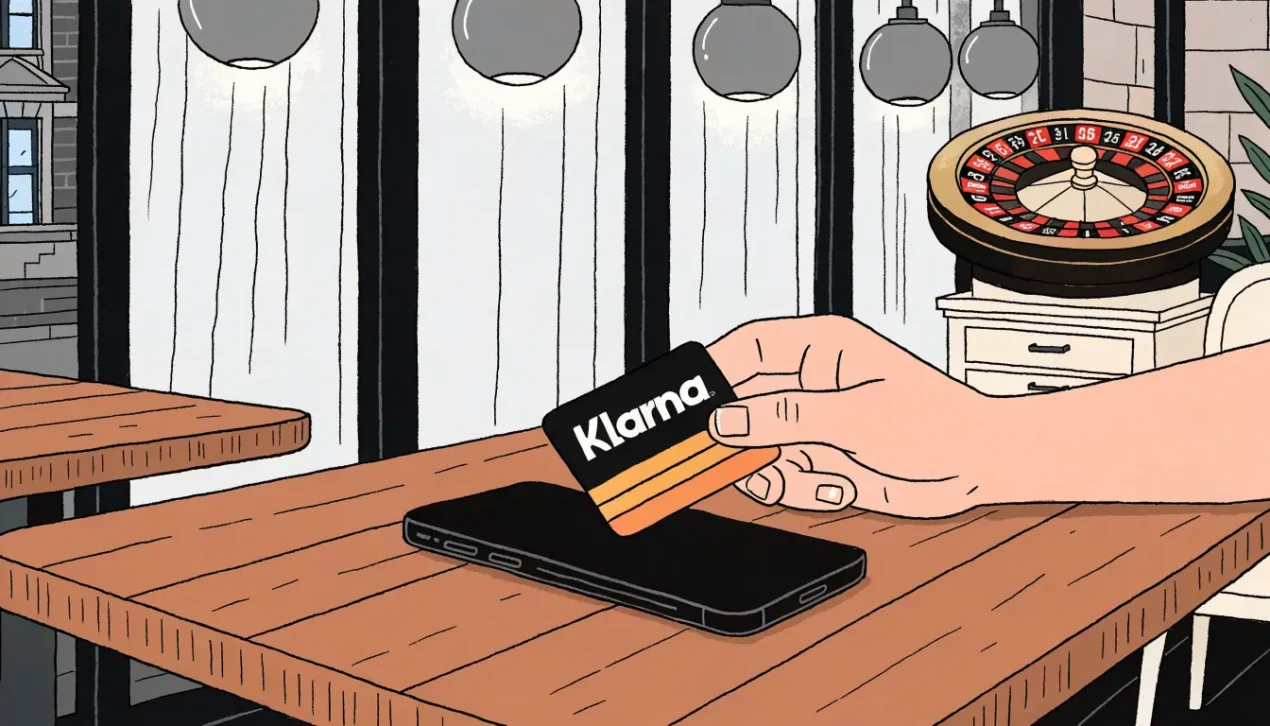
A casino-related page may mention Klarna without making it an available deposit method for a UK account.
Klarna’s Place in the UK Casino Cashier
A payment brand can be easy to find in a casino-related search and still be absent from the payment screen where it would have to work. That distinction matters with Klarna. A page associating the service with a casino is not, by itself, evidence that a UK customer can select Klarna to fund an account. The practical test is narrower: whether the casino’s own cashier currently shows it as an available method for that account.
The wording of a page may conceal several different things. Klarna might appear in an article discussing payment options, in a comparison that has not been updated, or alongside a casino for reasons that do not mean it is accepted for deposits. Even a current-looking claim cannot establish that the method is enabled in every country, for every customer, or for every payment product. A name on a page is a lead, not a working transaction.
That leaves a more modest answer to the question of which UK casinos accept Klarna: availability should not be assumed from a list or label alone. The cashier is where an operator presents the methods available at the point of payment. If Klarna does not appear there, a general mention elsewhere cannot turn it into an option. If it does appear, the displayed terms still matter; a brand name does not settle what kind of payment is being offered or whether it can be used in the particular circumstances.
This is not needless caution around a minor technicality. Payment names carry meanings that are not always interchangeable. A service can be associated with more than one product or payment arrangement, while gambling rules attach consequences to the actual route used. In Britain, the prohibition concerns credit-card payments for gambling. The regulator introduced that ban on 14 April 2020, and it remains in force. A payment cannot become acceptable for gambling simply because it is presented through another name or interface if it is, in substance, a prohibited credit-card payment.

At the same time, the rule should not be stretched into a claim that every appearance of Klarna necessarily represents a credit card. The name alone does not establish the funding source or structure of a proposed transaction. That is why neither a blanket claim that Klarna is accepted nor a blanket claim that it is always prohibited can be drawn from a search result. The relevant details are the method actually displayed, the payment terms, and the operator’s current acceptance rules. The cashier, not the branding, has the decisive role.
Some specialist casino reviews list Visa and Mastercard among payment options. That information can describe what a review reports, but it does not confirm that either card is currently available to every UK customer at every casino it discusses. Nor does a card logo prove that a particular card product will be eligible. Current availability and card-product eligibility need to be checked in the casino cashier. A familiar logo is not a universal permission slip.

The same distinction applies to any claim that a site accepts Klarna. The operator’s payment page may change, and a method’s presence can depend on the market or account. A static page may preserve yesterday’s position after the cashier has moved on. This is one reason a neat list of “all” casinos accepting a named service is difficult to treat as definitive: the list can only reflect the information it was built from, while the actual payment decision belongs to the live operator interface.
There is also a difference between a casino accepting a payment method and that method being suitable for a particular transaction. The first is a statement about the operator’s offering; the second depends on the payment route and the applicable rules. The credit-card ban makes that distinction especially important in the UK. Any claim about Klarna needs to be read for what it actually establishes, rather than what the name might suggest.
So, for UK availability in 2026, a casino should not be described as accepting Klarna solely because the service appears in a page title, a comparison table, or a broad payment list. The cashier is the place to confirm whether it is offered, and the payment description must be clear enough to distinguish the route from credit-card payments for gambling. That is less satisfying than a definitive directory. It is also more honest.
The British rule is exacting about the funding route, not the glamour of the label. Since 2020, remote gambling operators have been barred from accepting credit-card payments for gambling, and the restriction has not been relaxed. A name can travel widely online. Permission does not travel with it.
Top online casinos in the UK
- SpinFormulaBonus: 550% Up To £15,000 + 550 FS · Payout speed: 1-3 business days
- SlotoSportBonus: 500% up to £ 10 200+ 777 FS · Payout speed: 1-3 business days
- Revery PlayBonus: 100% up to€1,000+ 100 FS · Payout speed: 1-3 business days
- AmunbetBonus: Join now and get 450% up to 2,700 GBP + 450 FS · Payout speed: 1-3 business days
- BeOnBetBonus: 100% up to €500 + 100 FS · Payout speed: 1-3 business days
- JetsetspinsBonus: 200% Bonus + 100 Free Spins + Free Royal Wheel · Payout speed: 1-3 business days
- NightWinBonus: £900 + 400 free spins · Payout speed: 1-3 business days
- x3betBonus: Welcome Pack 100% Up to £1.000 + 200 Free Spins · Payout speed: 1-3 business days
- ZombillionBonus: Welcome Pack 250% up to £4000 + 200 FS · Payout speed: 1-3 business days
- BritsinoBonus: Welcome Package – Get your £2,200 + 2,000 FS · Payout speed: 1-3 business days
When Klarna Is Unavailable: Other Ways to Pay
When a payment option is absent, the useful comparison is not between brands promising the same thing. It is between different routes for moving money: a debit card, a bank-linked payment, an e-wallet or a prepaid voucher. Each has its own limits, and a method’s familiar name does not mean it will be available at every casino.
Debit cards are the most straightforward alternative. UK casinos commonly accept Visa and Mastercard debit cards, though acceptance of a card brand does not establish that every card product will work at every cashier. A debit card draws on money held in a bank account rather than providing a line of credit. That distinction matters in Britain: credit-card payments for gambling are prohibited, including when credit-card funds are routed through a money service business. The rule is not a technical quirk to be worked around.
Bank transfers and open banking offer another route. They move money through a bank account rather than through a card network, although the exact process depends on what the casino presents. A specialist review describes open banking and bank transfers as capable of providing instant deposits and fast withdrawals at many sites. That is a description of possible performance, not a promise for every operator or account. Bank-linked payments can be useful when a card is not the preferred route, but the cashier’s available methods still determine what can actually be selected.

E-wallets sit between a bank account and a casino balance. Skrill and Neteller are available at some sites, rather than across the market as a whole. A specialist review also reports that they are often excluded from promotions; the offer terms therefore matter if an e-wallet is being considered alongside a bonus. The wallet itself does not turn an otherwise restricted funding source into an acceptable gambling payment. UK rules prohibit remote operators from accepting wallet payments where the wallet allows credit-card funds to be used for gambling.
Paysafecard works differently. It is a prepaid voucher and is deposit-only, so it does not serve as a route for receiving casino funds back. That makes it a limited substitute rather than an all-purpose payment account. Its role is narrow: it can be used to put funds into an account where the casino accepts it, but the same voucher is not a withdrawal destination.
These options also differ in how much they depend on a particular account or provider. A card payment is tied to the card and its issuer; a bank-linked route depends on the bank service being offered; an e-wallet requires that wallet to be accepted; and a prepaid voucher does not provide a return route. Those are practical distinctions, not a ranking. A method that suits one person’s arrangements may be unavailable or unsuitable for another.
Debit Cards
UK casinos commonly accept Visa and Mastercard debit cards, which draw on money held in a bank account.
Bank Transfers
Open banking and bank transfers move money through a bank account rather than through a card network.
E-wallets
Skrill and Neteller are available at some sites, though they may be excluded from certain promotions.
Prepaid Vouchers
Paysafecard is a deposit-only prepaid voucher and does not serve as a route for receiving casino funds back.
The word “alternative” can make payment methods sound interchangeable. They are not. Some routes can support money both into and out of a casino, while Paysafecard is explicitly deposit-only. Even where a payment type is capable of serving both purposes, that does not prove a particular casino supports both functions for it. The distinction becomes important once a balance is no longer simply being funded.
The payment menu is also not a catalogue of every service used in the country. A name may be well known and still be absent from a particular cashier. Conversely, the presence of a familiar brand does not settle which account or product is eligible. The practical comparison begins with the route actually displayed, then asks what it can do and what restrictions accompany it.
For a player who wants to avoid borrowing, a debit card or a bank-linked method may be the clearest place to look. For someone using an e-wallet already, Skrill or Neteller may be available at a particular site, subject to its terms and funding rules. A prepaid voucher may suit a deposit, but its deposit-only nature rules it out as a complete payment loop. None of these observations makes a method universally preferable.

Payment systems have their own quiet geography: a card network, a bank, a wallet provider, and a casino each control a different part of the journey. The names on a cashier screen can suggest a simple choice, while the underlying route is less simple. The sensible alternative is therefore the one that is both offered and permitted for the intended transaction—not a substitute assumed to work merely because it is familiar.
Depositing: A Method Must Fit the Account
A payment name appearing in a search result does not establish that it can fund a particular casino account. The relevant check happens during the deposit process: whether the cashier displays the method for that account, and whether the payment details meet the operator’s requirements. A method may be familiar in everyday shopping and still not be available for gambling transactions.
That distinction matters for Klarna-related searches. A reference to a Klarna card or payment option elsewhere does not show that a casino currently accepts it from UK customers. Availability can depend on the operator, the account and the specific payment product. The cashier is the practical test, not the label attached to a casino in a list.

Even when a method appears, the account details must fit. A deposit is less likely to encounter basic ownership friction when the casino account and the payment route belong to the same customer. Names or other ownership information that do not match can prompt questions or stop a transaction from proceeding smoothly. This is not a special rule for Klarna; it is a straightforward check on who is moving the money.
The distinction between a debit card and a credit card is particularly important in the UK. Remote gambling licensees cannot accept credit-card payments for gambling, including payments routed through a money service business. The restriction has applied since 14 April 2020 and remains in force. A card’s branding alone may not make its eligibility clear, so the card product and the cashier’s terms matter. A payment route that disguises credit-card funding does not make it permissible.
Account setup is also part of deposit compatibility. Operators must establish a customer’s age before allowing a deposit, and remote operators must ask new customers to set a financial limit before the first deposit. Account-level limit controls must remain accessible afterwards. These steps sit alongside the payment check: a visible method does not bypass the conditions attached to opening and funding a gambling account.
Do
- Confirm the method is offered in the casino cashier.
- Ensure the payment route is distinct from credit-card payments.
- Check that ownership details match the casino account.
Don’t
- Assume Klarna is accepted based on a page title or comparison table.
- Treat all payment methods as interchangeable.
- Assume a deposit method is also a withdrawal method.
There is a small but revealing social history in such controls. Payments are often treated as neutral plumbing, a quiet passage between a bank and a game. In regulated gambling, they are also a point where identity, age and financial boundaries meet. The cashier is not merely a menu. It is where an operator has to reconcile the convenience of a transaction with the responsibility of accepting it.
A sensible deposit check is therefore specific rather than speculative: confirm that the method is offered to the account, that the selected card or service is eligible for gambling payments, and that its ownership details correspond with the casino account. If any of those conditions is unclear, an apparently available option is not yet a usable one.
Nor does a successful deposit prove that every later transaction will follow the same path. Payment compatibility is a question about funding the account at that moment; it does not promise a particular promotion, payout route or processing time. Those are separate terms, and treating them as interchangeable is how a simple payment screen acquires an unnecessarily large mythology.
The useful distinction is plain. A method may exist, a cashier may display it, and an account may still fail the relevant checks. Only the last combination makes the deposit fit.
Mobile Slots and the Payment Screen
A casino that fits neatly on a phone is not necessarily a casino that accepts every payment service visible in a browser search. The mobile site or app is the playing surface; the cashier is where the operator presents the methods available to that account. A Klarna logo elsewhere, or a page describing slots that can be paid for with Klarna, does not establish that the option appears at the point of deposit.

This distinction matters because the screen can change with the operator, the account and the payment route. A method may be advertised generally but not offered in a particular cashier. Even where a button is displayed, its presence does not by itself establish that a particular Klarna product is eligible or that a transaction will be accepted. The payment details and any conditions shown at checkout are more relevant than the promise implied by a search result.
The same principle applies to online slots played on a mobile device. The game catalogue and the deposit menu are separate parts of the service. A slot being available to play does not tell anything about how the account can be funded. Nor does the word “free” settle the question: a free-play mode and a real-money deposit are different arrangements, and a payment label attached to one does not prove that it can be used for the other.
The phone itself does not create a special Klarna route. Some UKGC-licensed casinos accept Apple Pay for deposits, which shows that mobile-friendly payment options can appear in a casino cashier; it does not imply that Klarna is also available there. The list has to be checked method by method. A familiar mobile wallet and a buy-now-pay-later brand are not interchangeable simply because both can appear during online checkout.
There is also a difference between a payment page that looks convincing and a properly authorised gambling service. In Great Britain, remote gambling licensees serving customers must hold the relevant UK Gambling Commission licence. A payment logo cannot establish that status. The licence should be checked on the Commission’s public register, rather than inferred from an app-store listing, a polished mobile design or a payment screen.
Mobile screens compress detail. Terms, declined-method notices and eligibility conditions may sit behind expandable panels or appear only after an account is opened. That makes the cashier a more useful source than a general claim about “Klarna slots”: it shows what the operator is actually offering in that session. If Klarna is absent, the mobile layout has not hidden a guarantee; the method simply has not been presented as an available choice there.
A small screen changes the view, not the payment rules.
Real-Money Slots and Getting Funds Back
Playing slots for real money creates a second part to the transaction: the route by which any payout is returned. A payment button that appears to accept a deposit does not, by itself, explain how a casino will handle a later withdrawal. The two stages are connected, but they are not identical.
UK anti-money laundering rules generally require a payout to go back to the original payment source. This closed-loop approach helps prevent gambling accounts from becoming a way to move money between unrelated people or accounts. In practice, the method used to fund play can therefore shape the available route for receiving funds back. If a payment service is involved, its role in the return transaction should be understood before it is used; a branded option on a casino page is not proof that every part of the payment journey works the same way.
That distinction matters to searches for real-money slots paid for with Klarna. The phrase may suggest a simple path from a payment choice to a payout, but the cashier’s deposit options do not settle the withdrawal question. Where a casino permits a particular funding method, its terms and cashier information still need to explain what happens when money is returned. No assumption should be made that a payout can be sent to a different account merely because that account is convenient.
Verification can add another stage. A specialist casino review notes that a first withdrawal may take longer while the casino completes account checks. Withdrawal processing includes the operator’s own approval, so the time shown by a payment provider is not the whole journey. A casino may have finished its part while the payment is still being processed, or it may not yet have approved the request. Administrative time has a way of making a single button look more decisive than it is.
The checks are also relevant to the original-source rule. If the account or payment details cannot be matched, a return may need additional attention before it proceeds. That is not the same as a failed slot session, nor does it mean that a particular payment brand guarantees a particular withdrawal result. The precise route depends on what the casino accepts and how it applies its payment procedures.
Real-money play is thus less a one-way purchase than a transaction with an expected return path. The deposit may be the visible moment; the payout reveals the structure beneath it. A method’s appearance on a payment screen is only one piece of that structure. The less glamorous part is the one that matters later.
Deposits Are Not Withdrawals
A payment can reach a casino account quickly without making the route back equally quick. A card deposit may be credited instantly, while a payout can take several business days, according to a specialist review. The two movements have different stages: the deposit is sent to the casino, whereas a withdrawal may wait for the casino’s approval before it is released.
That distinction matters when a payment brand appears to promise an uninterrupted path. Searching for a Klarna deposit, instant banking or a direct withdrawal does not establish that one account can handle both sides of a casino transaction. Nor does a fast deposit prove that winnings can be returned through the same service. The cashier and the casino’s withdrawal rules determine what is possible for that account.
A consistent name matters as much as a familiar logo. Using one named account for both deposit and withdrawal can reduce avoidable friction because the casino can compare the payment details with the account holder’s details. A change of route may mean extra checks, particularly where the casino needs to establish that funds are being returned to the person who supplied them. This is not a promise of faster processing; it is a way to avoid adding a basic mismatch to the process.
The practical sequence is less glamorous than the language of instant payments. Funds arrive, play takes place, a withdrawal is requested, and the casino processes it. Each step has its own status. “Instant” can describe a deposit without describing the approval, release or delivery of a later payout. A pending withdrawal is therefore not necessarily evidence that the original payment failed.
Klarna’s involvement, if it appears in a payment journey, should not be treated as proof that it is also the casino’s withdrawal destination. A Klarna-branded deposit and a casino payout are separate claims, and the payment route shown for one does not settle the other. The same caution applies to searches about debit-card fast withdrawals or instant banking: the label alone says little about how a particular account will be paid.
For a straightforward transaction trail, the least complicated arrangement is often one account, held in the same name, used consistently. That leaves fewer loose ends for the cashier to explain. Speed is only one half of the journey.
Bonuses and the Payment-Method Small Print
A payment option appearing in a casino cashier does not, by itself, make a deposit eligible for a welcome bonus. The cashier answers whether a transaction can be made; the promotion’s terms decide whether that transaction qualifies. Those are separate gates, and an offer can close one while leaving the other open.
That distinction matters when a bonus is advertised alongside real-money slots. A welcome offer may have conditions attached to the method used to fund the account, while a no-deposit promotion may have its own eligibility rules. A bonus code does not override those terms. Nor does a payment method’s name on a deposit screen establish that it can be used without affecting an offer.
Klarna-specific claims need the same care. A casino described as accepting Klarna would not thereby promise a Klarna welcome bonus, a slots bonus, or eligibility for a particular code. The relevant promotion wording must say whether the chosen payment route qualifies. If it does not, the method’s availability settles only the payment question.
There are also examples of established payment brands being treated differently by bonus rules. One specialist casino review reports that PayPal can be excluded from promotions despite its appeal for speed and convenience. The same kind of review reports that Skrill and Neteller, where offered, are often left out of bonus eligibility. These are reported conditions, not a rule applying to every casino or every offer. Terms change; promotional fine print remains stubbornly local.
The useful distinction is between “accepted” and “eligible”. The first concerns the cashier. The second concerns the offer. Before a bonus is claimed, its terms can be checked for excluded payment methods, whether a code is required, and any conditions that apply to the promotion itself. A slot-site offer and its payment rules belong to the same account, but they need not share the same permissions.
When a method is excluded, the offer may not attach to a deposit made with it. That is not evidence that the payment failed, or that the casino refuses the method altogether. It means the promotion and the transaction have different rules. Small print, doing the work of a gatekeeper.
Minimum Deposits and Account Limits
A minimum deposit is the cashier’s entry price, not a promise that every payment method starts at the same amount. A specialist casino review puts common minimums in the £10–£20 range, with the method affecting where a particular site sets its floor. That is a broad guide, not a fixed tariff: the amount shown beside a payment option is the one that applies to that account.

A search for a £5 Klarna deposit does not establish that a casino accepts Klarna, or that it would permit a deposit of that size. Nor is there a single Klarna minimum that can be carried from one cashier to another. The operator’s displayed terms and available methods determine what can be deposited. Payment branding may travel widely; cashier settings do not.
Maximums are less uniform still. A casino may set separate ceilings for an individual transaction, a day or a month, and those ceilings can depend on both the payment route and the account’s status. A figure listed for one method should not be assumed to apply to another. Account-level controls matter too: a transaction can be within a payment method’s maximum and still fall outside a limit set on the gambling account.
That distinction reflects a broader change in how gambling is governed in Britain. The deposit screen is not treated simply as a till. Remote gambling licensees must invite new customers to set a financial limit before their first deposit, and keep account controls available so limits can be managed. A payment cap and a personal financial limit are different things: one is set around the transaction or method, the other around the account.
A minimum is therefore only one part of the amount displayed before a deposit. The cashier’s current floor, any method-specific ceiling and the account’s own controls all shape the permitted amount. For Klarna in particular, none of those figures should be presumed from a promotional label or a result elsewhere; the live cashier is where an available option and its limits would be shown. Fixed amounts are convenient. Payment systems rarely oblige.
Is Klarna always accepted in the UK?
No, availability should not be assumed from a list or label alone; the cashier is where an operator presents the actual available methods.
Can I use a credit card for gambling in the UK?
No, remote gambling operators have been barred from accepting credit-card payments for gambling since 14 April 2020.
Is every payment method eligible for bonuses?
Not necessarily; some methods, such as certain e-wallets, may be excluded from promotional offers.
Comparing Payment Routes Without a “Best” List
A search for a Klarna-compatible slot site can make the payment brand sound like a feature of the game. It is not. A slot title and a casino’s cashier are separate things, and a payment name appearing in a comparison does not establish that a particular operator currently accepts it. Nor does a familiar alternative become suitable simply by being familiar.
There is no dependable “best” Klarna alternative for every account. The options shown can differ between casinos and may change over time; the relevant comparison is between the methods actually displayed by the chosen operator, not an evergreen ranking. Visa and Mastercard, bank transfers and e-wallets appear among the payment services named on casino information pages, alongside several cryptocurrencies. That presence should not be read as a promise that every method is available to every UK customer.
Some names have changed, too. EcoPayz became Payz in 2022, so older references may use a label no longer current. Skrill remains prominent in specialist casino reviews of UK-facing sites, while those reviews describe Jeton at a handful of UK online casinos in 2026. These are market observations, not a guarantee of partnership with any named operator. Neteller, PayPal, Apple Pay and Trustly are also payment-service names encountered in the sector; their appearance in a list does not confirm availability at a particular cashier.
The same distinction applies to Klarna’s wider UK presence. A service may remain active in consumer finance without being offered for gambling deposits. A brand mention, a search result or a casino page that has not been recently checked cannot settle that question. The cashier is the specific record of what an account can use.
A sensible comparison therefore starts with confirmed availability, then considers the method’s conditions and whether it fits the account’s intended use. There is no universal winner hiding behind a tidy list. Payment labels travel easily; actual acceptance does not.

Klarna Searches and Non-GamStop Claims
A claim that a casino accepts Klarna and a claim that it is not connected to GamStop describe different things. A payment label says nothing, by itself, about an operator’s regulatory status or its relationship with a self-exclusion scheme. The two claims should not be treated as evidence for one another.
For customers in Great Britain, remote gambling licensees serving the market must hold the relevant UK Gambling Commission licence. A casino’s position on GamStop does not replace that requirement, nor does it establish whether an operator is licensed. The UKGC public register is the place to check an operator’s licence before depositing; wording on a payment page cannot do that work.
The distinction matters because searches for casinos outside GamStop can blur two separate questions: whether an operator participates in a particular exclusion scheme, and whether it is authorised to serve the British market. A payment method does not answer either question. Nor does a casino’s claim about its scheme status establish that a particular deposit method is available to a UK account.
Licensed operators also have account safeguards that are independent of payment branding. Before a new customer makes a first deposit, the operator must prompt them to set a financial limit, and the account must provide accessible controls for managing limits. These are part of the regulated account environment, not a special feature of Klarna or a sign of connection to GamStop.
Credit-card payments for gambling remain prohibited: the regulator introduced the ban on 14 April 2020, and it has not since been lifted. A payment route described as Klarna does not create an exception to that rule or make credit-card-funded gambling deposits permissible. Payment names do not repeal regulation.
The sensible distinction is therefore plain: scheme participation, licensing and cashier availability are separate matters. Each needs to be established on its own terms; none can be inferred from the others.
What is the fastest withdrawal method for UK casinos?
PayPal, open banking services and debit cards linked to fast payout systems are generally among the quickest options. The casino’s approval process and whether your account is verified also affect how soon you receive the money.
Are fast casino withdrawals guaranteed?
No. Withdrawal speed depends on the casino’s approval process and whether your account is fully verified.
What is the current minimum deposit?
The minimum deposit usually starts at £10–£20, depending on the payment method.
Which payment methods are accepted in Great Britain?
UK casinos commonly accept Visa and Mastercard debit cards; other options include bank transfers, open banking and, at some sites, PayPal, Skrill, Neteller or Apple Pay. Paysafecard is for deposits only, and availability varies by casino, so check its cashier.
Related posts

UK Casino Welcome Bonuses: How Offers Work

VPN-Friendly Casinos in the UK: How Access Works
