
Casinos That Accept Wire Transfers in the UK
 Available in GB
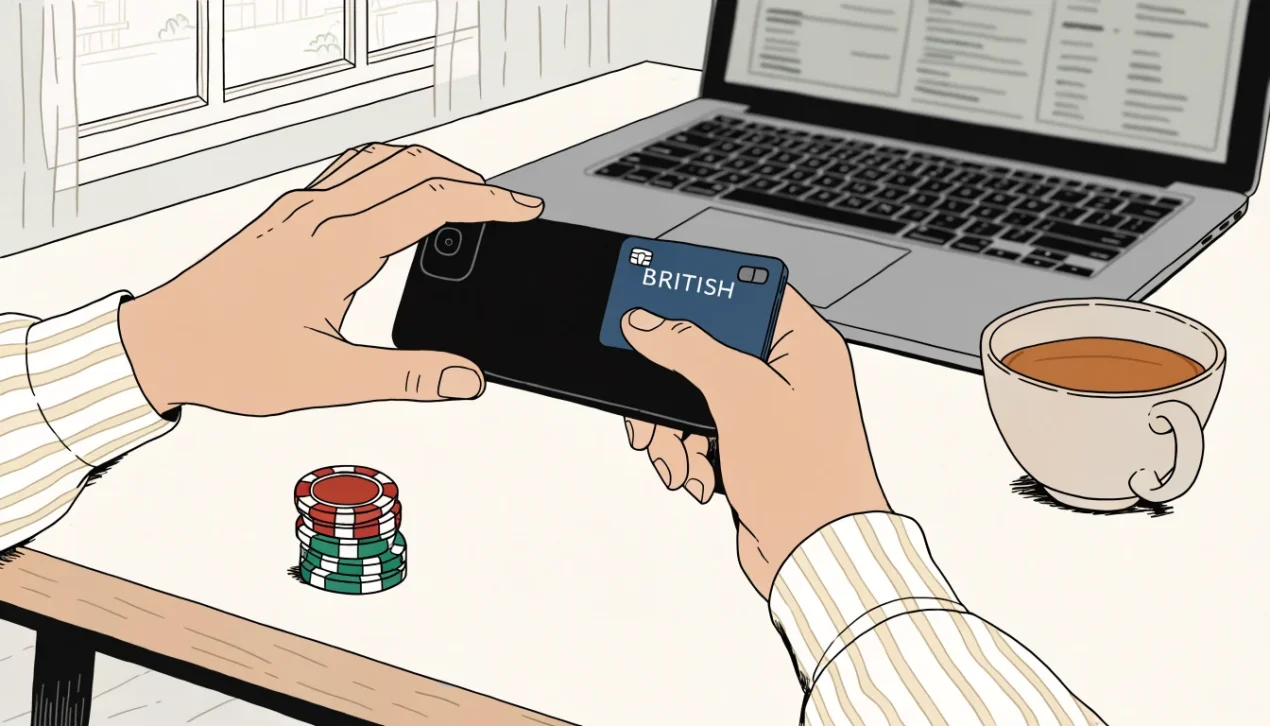
Bank-transfer labels can describe different payment routes, so deposits, fees, account details and returning withdrawals may not work alike.
What a bank transfer can—and cannot—promise
“Bank transfer” sounds like a single, settled route: money leaves a bank account and arrives at a casino account. In a cashier, however, the label can cover different ways of connecting those two ends. A traditional transfer and an open-banking payment may both involve a bank, but that does not make them interchangeable. The distinction matters because the name alone says little about what the payment will feel like in practice.
A conventional bank transfer is the broad, familiar idea of sending money from one account to another. “Wire transfer” is often used as a general label for this kind of payment, though it can suggest a more formal or international banking route than a local customer has in mind. Casino descriptions do not always use these terms with the precision a bank would. A site described as accepting bank transfers may mean a direct transfer, an option presented through a payment provider, or a service that asks the customer to authorise a payment through online banking.
Open banking is a different layer in that picture. It can connect a payment flow to a bank account without making the casino’s payment option equivalent to a manual transfer. The bank remains involved, but the customer may encounter a service designed to initiate a payment rather than a request to arrange one separately through the bank. The practical boundary can be blurred by cashier labels; the underlying route is not necessarily the same.
That distinction prevents a familiar category error. “Bank” describes where the money is held or which institution authorises the movement. It does not, by itself, identify the payment mechanism, its interface, or its expected performance. A method may draw on a bank account while being presented as an open-banking service. Another may be listed as a bank transfer without telling much about the specific process until the cashier is opened. The shared starting point is not a guarantee of shared behaviour.

There is a reason the language keeps expanding. Payment systems are commonly named from the viewpoint of the institution, the technology, or the customer’s action, and those viewpoints do not neatly coincide. A bank sees an account and a payment instruction; a casino sees a method in its cashier; a player sees a route for moving funds. One label can therefore carry several meanings, none of which should be mistaken for a promise about every stage of a transaction.
Specialist reviews have reported that open banking and bank transfers can support instant deposits and fast withdrawals at many sites. That is a useful indication of what some services may offer, not a universal property of every transfer bearing a bank-related name. “Can” matters here. It leaves room for differences between providers, operators and the particular route offered. A broad description cannot establish that a specific casino’s bank option will behave in the same way.
The claim is also not that every bank transfer is slow, or that open banking is automatically quick. Such oppositions make the labels do more work than they can. A transfer’s name may suggest a familiar banking process, while an open-banking option may be built around a more direct payment flow; neither label, on its own, settles the outcome. The useful distinction is between the general payment family and the particular service being offered.

For people searching for UK casinos that accept wire transfers, the phrase is understandable shorthand. It points towards a preference for using a bank account rather than a card or e-wallet. But shorthand can conceal the question that actually matters: what does the casino mean by “transfer”? If a cashier presents an open-banking provider, that is not necessarily the same thing as entering bank details and arranging a conventional transfer. Conversely, a bank-related label does not prove that the route is open banking.
This is why sweeping claims about bank wire transfer casinos can mislead even when they sound precise. A casino may offer a bank-linked method, yet the words “bank transfer” alone do not reveal whether the service is direct, mediated, or described in broader terms. Nor does the phrase promise that the same payment route will be available or work identically for every account. The wording names a category, not a contract for a particular experience.
The distinction is modest, but useful: bank transfer describes a broad way of moving money between accounts; open banking describes a service category that can enable payments through bank connections. They may overlap in a casino cashier, but they are not synonyms. A specialist review’s report of instant deposits and fast withdrawals at many sites should therefore be read as a possibility associated with some offerings, rather than a characteristic guaranteed by the words “wire transfer”.
Names travel more easily than payments.
Availability is a cashier question
A casino’s payment page can make a bank transfer look like a settled feature: a logo, a short description, perhaps a promise that the method is supported. The cashier is more revealing. It shows which payment routes are actually presented for the account at that moment, and whether a bank transfer is available for the intended transaction. A general list is a signpost, not a working payment option.
That distinction matters when looking for an online casino that accepts bank transfer. “Bank transfer” may describe more than one route, and a site’s broad payment description does not establish that every route is available to every customer. The useful evidence is the cashier’s own list of methods, read alongside its terms for deposits. A transfer option that cannot be selected there is not made usable by appearing on a promotional page.

The same caution applies to cards. A specialist payment-method review lists Visa and Mastercard among the methods named by casino sites, while noting that UK availability and eligibility depend on the card product and must be checked in the cashier. A card logo is not a universal acceptance decision. The particular payment product matters, as does what the live cashier permits. A logo is not a verdict.
Cashiers also make distinctions that broad descriptions tend to flatten. A site may name several payment brands, but that does not mean every brand is available for both adding and taking out funds, or that a bank-transfer route will appear for every account. The words beside an option matter: they identify the function the operator makes available, rather than merely the payment family it recognises. This is especially relevant when a search for bank wire transfer online casinos produces a long list of sites. A directory can identify places to investigate; only the individual cashier confirms the current selection.
The limits attached to a method are another reason to check there rather than infer from a site-wide statement. Maximum deposits may be set per transaction, per day or per month, and the applicable ceiling can differ by payment method and account status. A general claim that a casino accepts bank transfer says nothing about the amount that can be placed through that route. Nor does one customer’s experience establish the limit for another account.
DO
- Check the live cashier for available methods
- Review the specific terms for deposits and withdrawals
- Verify the maximum limits for your account
DON’T
- Assume a promotional list represents all available routes
- Rely on a single logo as a verdict on acceptance
- Assume all payment methods have the same availability
This is not merely a technical distinction. Payment menus are part of the operator’s practical relationship with its customers: they turn a broad promise of access into a set of choices, each bounded by the account and the selected route. The boundaries may not be identical across methods. A cashier is therefore less like a static brochure and more like a tailored register of what the operator will process for that account. The fine print has a face.
For anyone comparing UKGC-licensed bank transfer casinos, the licence and the payment menu answer different questions. A licence concerns whether the operator is authorised to serve the market; the cashier shows which payment methods it offers for the transaction in question. Neither can stand in for the other. A general site description may be useful at the outset, but it cannot settle whether a bank transfer is selectable, whether a card product qualifies, or which maximum applies.
The sensible comparison is therefore not a ranking of names that claim to accept wire transfers. No single label establishes that a route is present and usable across accounts. The comparison has to be made at the level of the actual cashier: identify the bank-transfer option, check the conditions attached to it, and note the displayed limits. The same scrutiny applies when a site lists Visa or Mastercard, since the product behind the card can affect eligibility.

A method menu can also change, so old descriptions have a limited life. A payment route mentioned in an earlier review may not be offered in the cashier now; a site’s broad wording may leave room for account-specific conditions. This is why “online casino sites that accept bank transfer” is best treated as a starting category, not a guarantee that every named casino offers the same route on the same terms. Availability is specific.
That approach avoids a common category error: treating acceptance as a single yes-or-no property of the casino. In practice, acceptance belongs to a particular method, transaction and account. The cashier connects those parts. It is where a bank transfer becomes a selectable option rather than a phrase in a site description, and where the applicable maximum can be checked without assuming that another payment method or another account follows the same rule.
The quiet mechanics of a bank deposit
A bank transfer has a timetable, even when the casino cashier makes the instruction look simple. The payment leaves one account, passes through banking systems and must be matched to the casino account before it can be treated as a deposit. Each stage depends on conditions that are easy to overlook when attention is fixed on the button that starts the payment.
A specialist payment guide identifies cut-off times, weekends and currency conversion as factors that can affect delivery. These are not cosmetic details. A transfer sent near a bank’s processing cut-off may enter the system’s next processing cycle rather than the one currently under way. The exact point at which a bank treats a payment as received for processing depends on its own arrangements, so the moment the payer confirms a transfer need not be the moment the casino receives it.
Factors affecting delivery
Banking cycles, weekends, and currency conversion can all influence how quickly a deposit is recognised by the casino.
- Processing cut-offs: A transfer sent near a bank’s cut-off may enter the next cycle.
- Weekends: Transfers made outside working days may face pauses in processing.
- Currency conversion: Converting between different currencies can add an extra step to the process.
Weekends add another pause in the ordinary rhythm of banking. A transfer made outside working days may wait for processing to resume, rather than moving continuously from account to account. That distinction matters because a casino deposit depends on the money arriving and being recognised, not merely on a payment instruction having been submitted. A pending transfer is still pending.
The chain is less visible than a card payment. With a transfer, the player may leave the casino cashier and complete the payment through a bank, then wait for the receiving side to identify it. The confirmation shown by a bank and the deposit status shown by a casino are therefore separate records of the same event. Neither screen alone necessarily describes the entire journey.
Currency conversion can introduce another step. If the bank account and the casino account use different currencies, the payment may need to be converted along the way. That conversion can affect when the receiving amount is settled and how it appears in the account. The practical point here is timing: a transfer involving conversion is not identical to one travelling between accounts in the same currency. The rate and any charges are a separate consideration.
This is one reason the phrase “online casino wire transfer” can suggest more certainty than the process offers. A cashier can display bank transfer as an option, but the route still sits within banking hours, bank processing rules and the receiving casino’s ability to match the payment. A casino may not be able to mark a deposit complete simply because the sending bank has accepted an instruction.

For anyone considering a wire transfer to an online casino, the useful distinction is between initiation and delivery. Initiation is the point at which the payment is authorised; delivery is the point at which it reaches the destination and is credited. The gap between them is shaped by the transfer’s timing and route. A payment sent before a cut-off may not behave like one sent after it, and a weekend can interrupt a journey that began promptly.
That makes bank transfers a poor fit for assumptions borrowed from instant payment experiences. The cashier’s presence does not make the banking system continuous, and a successful submission is not the same as a completed deposit. Where timing matters, the relevant information is the bank’s processing schedule and the casino’s own account of when an incoming transfer is recognised. No universal clock.
Deposit thresholds and the cost of moving money
A minimum deposit is a small rule with a visible effect: it decides how much must leave an account before a casino balance can be funded. A specialist review puts the starting point for many casino deposits at £10–£20, while noting that the figure depends on the payment method. That range is a guide, not a promise that every bank transfer will be accepted at either end of it. The amount shown for a particular route is the one that matters.
For a casino wire transfer deposit, the threshold is only one part of the sum to consider. A payment can pass through several hands, and each may have its own terms. A casino may charge for a transaction; a payment provider may apply a fee; a bank or card issuer may have charges of its own. Where funds move through a network, that network can add a cost too. None of these charges is automatic, but their possible sources are worth separating rather than treating “free” as a complete description.
The advertised minimum and the amount ultimately deducted are different measures. A deposit could meet the casino’s threshold while still costing more to send than the cashier’s figure suggests. Conversely, a payment route with a visible flat fee is not necessarily the costliest one. The total depends on the charges that apply to the particular transaction, not simply the label attached to the method.
Currency conversion can complicate that arithmetic. A specialist review notes that the exchange-rate spread—the difference between the rate used for the transaction and a reference rate—can outweigh a stated flat charge. It may be less conspicuous because it is folded into the rate rather than itemised as a separate fee. A payment can therefore appear to have no obvious charge while delivering less value than the headline amount implies. Quiet arithmetic.
This matters when comparing a wire transfer with another way to fund a casino account. There is no payment method that can be declared the cheapest in every case: casino charges, provider fees, bank or issuer costs, conversion spread and network expenses all need to be considered against the amount being moved. A comparison based on one fee alone can miss the larger cost elsewhere in the chain.

Nor does a lower threshold necessarily make a route better value. It describes the smallest permitted deposit, not the total expense of sending money or the amount credited after any applicable charges. A higher minimum may coincide with fewer charges, or it may not; the minimum itself does not answer that question. For anyone weighing a wire transfer casino deposit against another method, the useful comparison is the actual minimum alongside the total cost for the intended transaction.
A casino cashier may display its own fee and minimum, while a bank or payment provider sets separate terms. Reading those as distinct parts of the same payment gives a clearer picture than relying on a single “no fee” claim. The apparent price and the final cost are not always twins.
One name on both sides of the transaction
A bank transfer has a quiet dependence on names. The person shown on the casino account and the person attached to the bank account should be the same customer. That match may seem like clerical tidiness, but it helps prevent a straightforward payment from becoming a question about who owns the money.
The same principle applies to the payment route. If a deposit comes from an account in the customer’s own name, the casino has a clearer basis for connecting the funds with that customer. A mismatch can leave basic facts unresolved: whether the account holder authorised the transaction, whether the money belongs to the player, and whether the payment is being made on someone else’s behalf. Even where there is an innocent explanation, uncertainty can bring extra checks.
That is why a casino accepting wire transfer deposits is not simply offering a way to move money into a gambling account. The payment also forms part of the record of who funded it. A consistent set of names across the casino profile and the bank account reduces the chance that routine ownership checks will interrupt the transaction. It does not remove every possible question, but it avoids creating one unnecessarily.
There is a social history folded into this sort of routine. Gambling has long attracted rules designed to keep financial flows legible, because money can otherwise move through borrowed accounts, concealed identities or arrangements that obscure who ultimately benefits. In the online casino, the old concern has acquired a digital interface: a name entered into a profile, a bank account attached to a transfer, and records that can be compared. It is mundane administration, carrying a larger suspicion.
The clearest arrangement is often a single account, registered to the customer, used consistently for both putting money in and requesting it back. Changing between accounts or using another person’s bank details can make the ownership trail harder to follow. A different route may still be considered, but it can bring further identity or payment checks before the casino is satisfied that the funds belong where they appear to belong.

Returning money to the source that supplied it is also a familiar safeguard against fraud and money laundering. If that route cannot be used, or a different destination is requested, the operator may ask for more evidence before proceeding. The point is not that every variation signals wrongdoing. It is that a casino has reason to establish a reliable link between the customer, the original payment and the account receiving the money.
For a casino that accepts bank wire transfer payments, consistency is therefore more than a matter of neat records. It helps make the transaction intelligible to the people and systems responsible for checking it. One name, one trail.
Top online casinos in the UK
- SpinFormulaBonus: 550% Up To £15,000 + 550 FS · Payout speed: 1-3 business days
- SlotoSportBonus: 500% up to £ 10 200+ 777 FS · Payout speed: 1-3 business days
- Revery PlayBonus: 100% up to€1,000+ 100 FS · Payout speed: 1-3 business days
- AmunbetBonus: Join now and get 450% up to 2,700 GBP + 450 FS · Payout speed: 1-3 business days
- BeOnBetBonus: 100% up to €500 + 100 FS · Payout speed: 1-3 business days
- JetsetspinsBonus: 200% Bonus + 100 Free Spins + Free Royal Wheel · Payout speed: 1-3 business days
- NightWinBonus: £900 + 400 free spins · Payout speed: 1-3 business days
- x3betBonus: Welcome Pack 100% Up to £1.000 + 200 Free Spins · Payout speed: 1-3 business days
- ZombillionBonus: Welcome Pack 250% up to £4000 + 200 FS · Payout speed: 1-3 business days
- BritsinoBonus: Welcome Package – Get your £2,200 + 2,000 FS · Payout speed: 1-3 business days
When winnings have to find their way back
A bank transfer deposit can make the route home seem obvious: winnings go back to the same bank account. In practice, a casino payout is subject to the operator’s payment controls, and the original source matters. UK anti-money laundering rules generally require funds to be returned to the payment method from which they came. This is known as a closed-loop approach: money is not treated as freely movable between unrelated accounts simply because it appears as a balance in a casino account.
For casino winnings by wire transfer, that can mean the casino returns funds to the bank account used for the deposit, rather than sending them to a newly nominated account. The point is not a preference for one payment rail over another. It is a way to keep the movement of money legible and reduce the risk that gambling accounts are used to obscure where funds came from or where they are going.
The rule can become less straightforward when a deposit has been made through more than one method. An operator may need to consider which source should receive a payout and whether the account details match its records. If the original route cannot be used, an alternative may involve further checks. That does not mean every casino handles such cases identically; the available options depend on its own payment arrangements and controls.
Approval is a separate stage from choosing the destination. A casino must review a withdrawal before it is released, and verification may form part of that review. Specialist casino reviews report that the operator’s internal approval process is included in withdrawal processing, with an initial payout sometimes taking longer while account verification is completed. That is a report about the process, not a promise of a standard timetable.
This distinction matters because a pending withdrawal is not necessarily a bank transfer that has already begun. The casino may still be checking the request or confirming that the payment can be sent through the permitted route. Only after the operator approves it can the transfer proceed beyond the casino’s own systems. A displayed withdrawal status, therefore, may describe an internal step rather than movement between banks.

A wire transfer casino arrangement is best understood as a chain of permissions: the source is identified, the payout is checked, and the destination is matched to the payment rules. The same account details used consistently can make that chain easier to follow, while a mismatch may require clarification. None of this changes who owns the winnings; it describes the controls around releasing them.
The return route is not an afterthought. It is part of how a regulated casino accounts for money entering and leaving its system. A transfer can be requested, but the operator still has to establish that it is sending the funds to an acceptable destination. A necessary paper trail.
Withdrawal speed is not the same as deposit speed
A deposit can appear in a casino balance almost at once, while money moving back out follows a separate path. A specialist casino review describes card deposits as potentially instant even when a withdrawal takes several business days. The two transactions may use the same broad payment route, but they are not mirror images: a credit to the gambling account and a payout from it involve different checks and processing stages.
That difference matters when judging a bank transfer casino withdrawal. The method alone cannot determine when funds will arrive. The casino’s internal approval process is part of the elapsed time, and a player’s verification status can affect it too. Until the operator has completed its review and released a payment, the bank’s handling of an incoming transfer is only one part of the journey.
Why is my withdrawal taking time?
Withdrawal speed depends on the casino’s internal approval process and your account verification status, not just the banking system.
Does a bank transfer guarantee instant deposits?
No, while some services are fast, a transfer still depends on banking hours, processing schedules, and the casino’s ability to match the payment.
There is no single clock for every payout. An account that has already been verified may face a different approval path from one still awaiting checks; the eventual transfer also depends on the payment method selected. A withdrawal displayed as requested is not necessarily a withdrawal already moving through the banking system. Administrative time and delivery time are distinct, even if a cashier presents them as one status.
Specialist casino reviews identify PayPal, open-banking services and debit cards connected to fast payout systems among the methods associated with quicker withdrawals. That is a comparison of payment routes, not a guarantee for any particular casino or account. The operator’s approval process still matters, as does verification. A method described as fast cannot bypass those stages.
A conventional wire transfer may therefore be a poor fit when the main priority is speed, even if it suits the way an account is funded. The useful comparison is not simply “instant deposit” against “bank transfer”; it is the casino’s stated withdrawal process, the route available for the payout and the account’s readiness for approval. Deposit speed is the more visible half of the transaction. The return journey has its own queue.
The payment method is part of the bargain
A payment route is not merely a way to move a balance into a casino account. It can shape what that balance is eligible for afterwards. A bank transfer, a debit card and a digital wallet may all fund play, yet a promotion’s terms can treat them differently. The cashier’s deposit options and the bonus terms therefore belong to the same decision, even if they appear on separate screens.

Debit cards are a familiar alternative in the UK market: casinos commonly accept Visa and Mastercard debit cards. That familiarity does not make every card product interchangeable, nor does it settle whether a particular deposit qualifies for an offer. A promotion can impose its own payment conditions. The method itself is part of the small print.
PayPal illustrates the distinction. A specialist casino review reports that PayPal may be excluded from bonus eligibility. That is a reported condition, not a rule that applies to every casino or every offer; the relevant promotion’s terms determine the position. Speed and convenience, where available, do not answer the separate question of whether a deposit counts towards a bonus.
Paysafecard is different in a more basic way. It is a prepaid voucher for deposits only, so it should not be treated as a complete route for moving money in and out. Its role is narrower than a bank transfer or debit card that a casino offers for both sides of the account. Deposit-only means just that.
These distinctions matter because a payment method can look attractive at the point of funding while carrying a limitation that appears only when a bonus or withdrawal is considered. The comparison is not simply between familiar brands. It is between the functions each method serves and the conditions attached to them.
A wire transfer casino payment may suit someone who wants to use a bank route, while a card or wallet may offer a different balance of access and promotional eligibility. None is automatically the better bargain. The offer’s terms decide whether the deposit qualifies; the method’s stated function decides what it can do. A tidy separation of duties, on paper.
UK rules behind the cashier
A bank transfer does not sit outside gambling regulation simply because the money travels through a bank. In Great Britain, remote gambling licensees must hold the relevant UK Gambling Commission licence, and the payment route does not alter that requirement. A UKGC casino accepting bank transfers remains responsible for the rules attached to the gambling account, not merely for displaying a method in its cashier.
One such rule concerns limits. Before a new customer makes a first deposit, the operator must prompt them to set a financial limit. Account-level controls must also remain accessible, so limits are not a one-off registration form that disappears once the cashier has been used. The arrangement places a pause at the point money enters play and keeps the means of setting limits within reach afterwards. It is a modest piece of interface design with a regulatory purpose: making financial boundaries part of the account, rather than an afterthought.
The other important boundary is older and more absolute. On 14 April 2020, the regulator’s ban on credit-card payments for gambling took effect; it has not been relaxed. UK-licensed casinos cannot accept credit-card payments for gambling, including when credit-card funds are routed through a money service business. A bank transfer is not a workaround for credit-card funding: the relevant distinction is how the money is funded, not the label attached to the final payment step.
That is why a bank wire transfer at a casino in the UK should be understood as one permitted payment route within a regulated service, not as a separate category with looser safeguards. The cashier may show the method, but the account still falls under the operator’s obligations. Nor does the presence of a bank logo or transfer option, by itself, establish that a site is licensed to serve the British market. Regulation belongs to the operator and the gambling service.

The cashier is only the visible surface. Behind it sit rules about who may offer gambling and how customers are prompted to set financial boundaries. A transfer can move money; it cannot change those rules.
The distinction matters.
A suitable transfer starts with the account currency
A bank account held in pounds does not, by itself, establish that a casino account is also denominated in pounds. The account currency is a separate setting, and it matters before a transfer is made: if the payment and the casino balance use different currencies, conversion can change the amount that ultimately appears in the account.
A specialist review reports that GBP is supported, but that is not a substitute for checking the currency shown for the individual casino account. The relevant detail is the denomination attached to the balance, not simply the currency in which a site displays its prices or describes its services. A pound sign on a page can be reassuring; it is not quite the same thing as a pound-denominated account.
This is one reason a search for the best UK casino for wire transfers cannot be answered by naming a universal winner. A transfer route may suit one account and be less suitable for another if their currencies differ. The meaningful comparison begins with whether the account can be held in GBP and whether that is the currency intended for the payment. Without that check, a method that looks straightforward may carry an unplanned conversion between the bank and the casino balance.
The account currency should therefore be confirmed before the first transaction, while the payment is still only a choice on a screen. That small distinction separates the transfer itself from the value credited to the account. Pounds in, pounds recorded: the cleanest arrangement.
What is the fastest withdrawal method for UK casinos?
PayPal, open banking services and debit cards connected to fast payout systems are generally among the quickest options. The casino’s approval process and whether your account is verified also affect the time.
Why can a fast payout casino still delay my withdrawal?
The casino must approve the withdrawal, and first withdrawals may take longer while verification is completed. Payout speed also depends on whether your account is fully verified.
Is Skrill available?
Yes, Skrill is available at some UK-friendly casino sites and is a common deposit method. It may be excluded from promotions.
What is the current minimum deposit?
The minimum deposit usually starts at £10–£20, depending on the payment method.
Related posts

UK Casino Welcome Bonuses: How Offers Work

VPN-Friendly Casinos in the UK: How Access Works
