
No-Minimum-Deposit Casinos in the UK: £1 Limits
 Available in GB
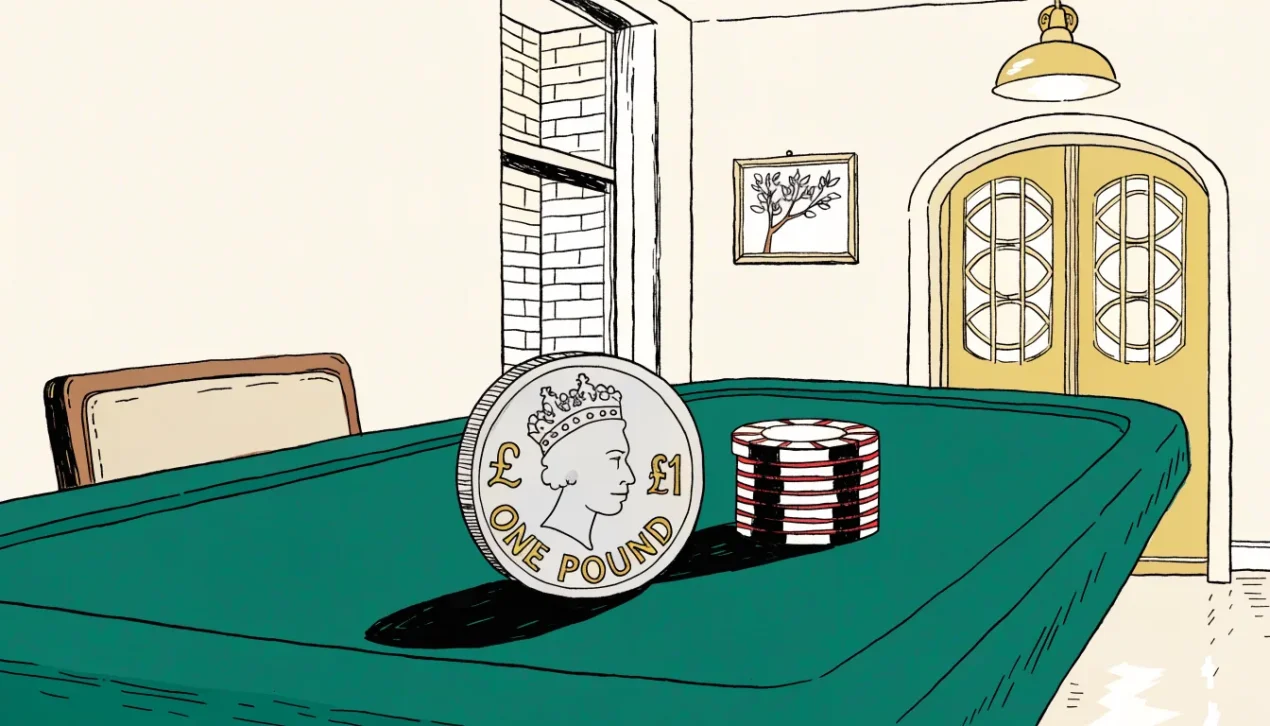
A low cashier threshold can fund real-money play, but bonuses, payment routes and withdrawal minimums follow separate rules.
What a £1 Minimum Deposit Actually Buys
“No minimum deposit” is an appealing phrase, but it rarely means that a casino account can be funded with nothing. In practice, a cashier sets a smallest permitted payment. At some UK casinos that threshold is £1, so a small payment can place money in a real-money account. The distinction is modest in wording and substantial in consequence: an account may be easy to fund without every promotion being available on the same terms.
The cashier minimum answers one narrow question: what is the least that can be deposited through the option being used? It does not describe the value of an account, the terms of a welcome offer or what a player can withdraw later. Those are separate conditions, and the payment screen is only one part of the operator’s rules. A site described as a no-minimum-deposit casino may, on inspection, mean that one particular payment route has a low threshold, not that every route accepts the same amount.
A specialist review reported six UK Gambling Commission-licensed casinos accepting genuine deposits at the £1 level, while identifying NetBet as the only UKGC-listed casino in its reviewed group with a £1 cashier minimum. That is a snapshot from a review, not a permanent roll-call: cashier settings and payment arrangements can change. The useful point is narrower. A £1 minimum is possible, but it is not a general feature of UK casino accounts.
The word “genuine” matters. A promotional banner can make a small deposit sound like a key that opens an offer, when the cashier and promotion may operate by different rules. One threshold governs whether money can enter the account; another governs whether a deal is activated. The first can be met while the second is not. Neither should be inferred from the other.
There is something revealing in the way these thresholds are presented. The deposit box makes the transaction look simple, almost neutral: enter an amount, press a button, move on. Yet the amount is a choice made inside a regulated gambling service, not a token that turns play into something costless. British operators serving customers in Great Britain must hold the relevant UK Gambling Commission licence, and legal online gambling is for adults aged 18 and over. The smallness of a payment changes its scale, not its character.
That is why the phrase “no minimum” can mislead even when the underlying offer is legitimate. It suggests an absence of limits, whereas the practical meaning is generally a low minimum on a particular transaction. A casino cannot be funded without a payment method, and the operator’s cashier still has rules. A £1 entry point is a defined threshold, not an absence of one.
A careful account of the offer begins with two separate pieces of information: the cashier minimum and the promotional terms. The first says what amount the payment screen will accept. The second says whether a promotion applies and what conditions attach to it. A headline about a small deposit cannot replace either. Nor does the phrase “online casinos with no minimum deposit” establish that a site accepts a zero-value payment; it is often a loose way of describing a low entry amount.
This distinction has a practical effect before any game is opened. A small deposit may be enough to fund an account where that cashier threshold is offered, but the promotional side remains governed by its own wording. Treating the two as one promise is how an ordinary payment gets mistaken for a deal. The cashier is literal. Advertising is less so.
The surrounding safeguards are part of the same picture. UK-licensed operators must verify a customer’s age before allowing a deposit, and new customers must be prompted to set a financial limit before their first deposit. These are not decorative steps attached to the payment screen; they mark the boundary between a convenient transaction and a gambling account with controls. A low entry amount does not make those controls less relevant.
A £1 cashier minimum therefore buys access to the account’s funding process at that amount, where the operator and payment route permit it. It does not buy a guarantee of promotional eligibility, nor does the label “no minimum deposit” mean that there is no threshold at all. The difference is easy to miss because both claims sit beside the same deposit button. Small sum. Separate rules.
Bitcoin Casinos and the Limits of What Can Be Verified
Bitcoin can make a casino’s payment page look more definite than it is. A site may describe itself as a Bitcoin casino, advertise a cryptocurrency cashier or appear in a list of casinos with no minimum deposit. None of those labels, by itself, establishes that a particular operator accepts Bitcoin from people in the UK, or what minimum would apply to that payment route.
That distinction matters because “no minimum deposit” is not a single, universal feature. It may describe a headline, a specific cashier option, or a promotion rather than every way of funding an account. The relevant figure, where one is shown, belongs to the operator and payment method together. At a given UK casino, the threshold is generally shared across its payment options; some operators, however, set a higher floor for bank transfers than for cards or e-wallets. A claim about one route cannot safely be carried across to another.
Bitcoin searches often flatten these details into a simple promise: a cryptocurrency casino with no minimum. The phrase sounds as though the absence of a threshold is an inherent quality of the payment method. It is not. A cashier’s terms are set at operator level, and the options presented may vary. Without current, operator-specific confirmation, a general claim about Bitcoin deposits is not a verified claim about an individual UK casino.
The UK’s licensing framework gives the question a second layer. Operators offering remote gambling to customers in Great Britain must hold the relevant UK Gambling Commission licence, wherever the business is based. A foreign address or a cryptocurrency option does not replace that requirement. Offshore casinos operate outside the UKGC system; they should not be confused with licensed services simply because a page uses British currency, UK wording or a familiar brand style.
That is a matter of status, not a verdict on every cryptocurrency payment arrangement. Naming an operator on that basis would turn uncertainty into an apparent recommendation. The sensible boundary is narrower: confirm the operator’s current UK licence and consult its own payment information before treating a Bitcoin claim as applicable to a UK account.
The detail worth checking is not just whether Bitcoin appears somewhere on a site. It is whether the payment option is explicitly available to the relevant customer, what the cashier says about its minimum, and whether those terms belong to the casino itself rather than a third-party directory. Payment pages can describe services for different markets; search results and comparison pages can preserve old wording after a cashier has changed. A claim may be accurate in one context and misleading in another.
There is a small but revealing difference between “the casino accepts Bitcoin” and “this UK account can use Bitcoin on these terms”. The first is broad enough to travel through advertisements and listings. The second is specific enough to guide a decision. A deposit threshold is meaningful only when tied to the route actually offered and the operator’s current conditions. That is why a general promise of a no-minimum Bitcoin casino in the UK cannot substitute for checking the cashier.
Do
- Confirm the operator’s current UK licence
- Consult the operator’s own payment information
Don’t
- Assume a Bitcoin claim applies to all UK accounts
- Treat a general cryptocurrency promise as a verified claim
The same caution applies to claims about an online casino with no minimum deposit, even where Bitcoin is not mentioned. A low threshold may apply to one payment method but not another. The operator’s arrangement is the deciding factor, not the wording of a category label. In particular, a higher minimum for a bank transfer does not prove that cards or e-wallets have the same threshold; nor does a low card threshold establish anything about Bitcoin.
There is no need to treat the search for a cryptocurrency option as evidence of wrongdoing, or to assume that every Bitcoin-labelled casino is available to UK customers. The useful distinction is between a verifiable payment term and a broad promotional description. For a UK-facing service, licensing and the operator’s own current cashier information are the relevant checks. Anything more specific requires evidence tied to that operator and that payment method.
Bitcoin may be the headline. The cashier is the detail.
Top online casinos in the UK
- SpinFormulaBonus: 550% Up To £15,000 + 550 FS · Payout speed: 1-3 business days
- SlotoSportBonus: 500% up to £ 10 200+ 777 FS · Payout speed: 1-3 business days
- Revery PlayBonus: 100% up to€1,000+ 100 FS · Payout speed: 1-3 business days
- AmunbetBonus: Join now and get 450% up to 2,700 GBP + 450 FS · Payout speed: 1-3 business days
- BeOnBetBonus: 100% up to €500 + 100 FS · Payout speed: 1-3 business days
- JetsetspinsBonus: 200% Bonus + 100 Free Spins + Free Royal Wheel · Payout speed: 1-3 business days
- NightWinBonus: £900 + 400 free spins · Payout speed: 1-3 business days
- x3betBonus: Welcome Pack 100% Up to £1.000 + 200 Free Spins · Payout speed: 1-3 business days
- ZombillionBonus: Welcome Pack 250% up to £4000 + 200 FS · Payout speed: 1-3 business days
- BritsinoBonus: Welcome Package – Get your £2,200 + 2,000 FS · Payout speed: 1-3 business days
A Small Deposit Is Still Real-Money Gambling
A small deposit is not a sample balance or a token that sits outside the game. Once credited to a casino account, it is money placed at risk in real-money gambling. Its size does not change the nature of the transaction: a win may add to the balance, while a loss reduces it. The cashier’s minimum describes what the operator will accept as a deposit. It does not, by itself, describe what the casino will add as a promotion.
That distinction matters because a welcome offer is a separate arrangement with its own conditions. A casino may accept a deposit without attaching anything extra to it. The cash can be available for play even when the promotion is not. Put plainly, an account can be funded without being bonus-qualified.
A specialist review reports welcome-offer qualifying deposits in the £5 to £10 range, and says that a £1 deposit does not activate those promotional deals. That is a reported finding, not a universal rule for every operator: offers change, and their terms determine what counts. Still, it captures the practical difference between “the cashier accepted the money” and “the offer has been triggered”. Those statements are not interchangeable.
The threshold can also be higher for the promotion than for the cashier. A specialist review describes offers that require a qualifying deposit of £10 even where the platform accepts deposits of £5. In that situation, the smaller payment may enter the account but fall short of the offer’s entry condition. The promotion is not an automatic consequence of making any deposit; it is conditional on meeting the terms attached to it.
This is why the phrase “no minimum deposit” can mislead when it is treated as a promise of unrestricted access. In ordinary use, it may point to a low cashier minimum, or to the absence of a deposit requirement for a particular promotion. Those are different propositions. A real-money account still needs funding if the intention is to gamble with cash, while a promotional offer may demand a particular qualifying payment—or may not apply to a small deposit at all.
The separation also affects how a balance should be understood. Deposit money is the player’s own funds placed into the account for gambling. Promotional credit, where offered, comes with conditions set out by the operator. The appearance of an offer on a site does not mean every account holder qualifies for it, nor that every accepted payment activates it. The amount, eligibility rules and other terms have to line up.
There is a familiar commercial logic behind this division. The cashier handles transactions; the promotion is designed to encourage a particular kind of deposit or play. That does not make either term mysterious, but it does mean the headline number can tell only part of the story. A low entry point may be useful to someone who wants to risk a small amount, yet it should not be read as evidence that a welcome bonus comes with it. The offer has its own gate.
The same caution applies to searches for a no-minimum-deposit online casino for real-money play. The phrase can blur three separate questions: whether an account can be opened, what the cashier will accept, and what a promotional offer requires. Only the cashier minimum answers the second question. A welcome offer’s terms answer the third. Confusing them can turn a modest cash deposit into an expectation of extra value that the operator never promised.
In Britain, real-money online gambling is legal at sites holding a UK Gambling Commission licence, and operators must verify a customer’s age before allowing a deposit. New customers must also be prompted to set a financial limit before their first deposit. These protections sit alongside the commercial terms; they do not convert a deposit into a bonus or make an offer apply where its qualifying conditions have not been met.

A small payment can therefore be exactly what it appears to be: a small amount of the player’s money in a real-money account. Whether it also qualifies for a promotion is a separate question, answered by the offer’s wording rather than by the cashier accepting the payment. Cash in. No promise attached.
Free Spins, Cashier Minimums and the Fine Print
A free-spin offer can be attached to a small deposit without making the casino itself deposit-free. The cashier minimum determines what must be paid in to open or fund the account; the promotion has its own qualifying conditions. A site may accept a £1 deposit yet award spins only when that deposit meets the offer’s stated requirements. The two thresholds belong to different parts of the arrangement.
The size of the offer is not a reliable guide to its value. A specialist review has reported promotions tied to a £1 deposit ranging from 10 to 100 spins, but the count alone says little about what can be kept. The terms can restrict eligible games, define how winnings are credited and impose wagering conditions before those winnings become withdrawable. A large number of spins can therefore carry a small practical benefit.
Expiry adds another constraint. The same kind of specialist review has described spin deadlines ranging from 24 hours to 14 days. That is a broad reported span, not a promise about any offer currently available. Once a promotion is accepted, its own terms determine when the spins must be used; an unused reward can lapse even though the deposited cash remains in the account. The clock matters.
Wagering requirements
Since 19 January 2026, UK rules cap wagering requirements on gambling incentives at 10x the bonus funds.
The rules on wagering require particular care in 2026. Older specialist reviews have described requirements of 30x to 65x on winnings from free spins. Since 19 January 2026, however, UK rules cap wagering requirements on gambling incentives at 10x the bonus funds. A historical figure in a review should not be mistaken for a current permissible term. The wording of a live promotion must be read in the light of the current cap.
There is also a distinction between the value won from spins and the cash used to qualify. Promotional terms may set conditions on the winnings, while the deposit remains a separate payment. A stated spin reward does not, by itself, establish that every resulting win can be withdrawn immediately. Restrictions on which games count, how winnings are credited and when a promotion expires can all shape the result.
This is why “free” is an awkward label. The spins may be granted without a separate charge, but access can depend on a qualifying deposit, and the prize can remain subject to conditions. In a market where the cashier minimum and the promotional threshold need not match, the headline offer is only one line of the bargain. The smaller print does the accounting.
From £1 to £20: The Minimum-Deposit Tiers
A cashier minimum is not a single market-wide figure. Some UK casinos accept a deposit of £1, while the direct-banking thresholds described in a specialist review cluster around a different set of amounts: £5, £10 and £20. The review identifies £10 as the typical minimum for this route, with some operators setting a lower or higher threshold. These figures describe reported arrangements, not a rule binding every casino.

The tiers matter because a deposit page can make a single number look more universal than it is. A £5 threshold may be available at one operator, while another requires £10 for direct banking; a third may ask for £20. The difference is not a ladder of quality. It is a cashier condition, and the number says what that operator will accept through the relevant route.
The £1 tier sits at the narrow end of the range. It is a real option at some casinos, but it should not be treated as the default price of entry. At the other end, a £20 minimum is still a modest cashier threshold in absolute terms, yet it changes the practical meaning of “small deposit” for anyone seeking to start below that amount. The term *minimum deposit casino* therefore describes a feature that needs to be checked at the operator level, rather than a stable category with one shared threshold.
Why the payment route can change the figure
At a given operator, the cashier minimum is generally consistent across payment methods. There are exceptions: some casinos set a higher threshold for bank transfers than for cards or e-wallets. So a headline amount may not tell the whole story if it is detached from the route used to fund the account.
Tier 1
£1 minimum deposit
Tier 2
£5 to £10 thresholds
Tier 3
£20 direct-banking minimums
Direct banking illustrates the distinction. Its reported typical threshold is £10, but an operator may place it at £5 or £20 instead. Where a bank transfer carries a higher minimum than a card or e-wallet, that difference belongs to the operator’s payment conditions, not to a general rule that all bank transfers require more. The cashier is more particular than the label.
This also explains why comparisons based only on a casino’s lowest advertised figure can be misleading. A low amount may apply to one route while another route has a higher threshold; at another operator, the same minimum may apply across methods. The useful comparison is therefore between the amount shown for the intended payment route and the amount the operator accepts overall.
The familiar £1, £5, £10 and £20 figures mark distinct entry points, not promises that every payment option will share them. A lower threshold can widen access to a small starting balance; a higher one sets a firmer boundary before play begins. In a market where the cashier rules are set operator by operator, the minimum is less a national tariff than a line drawn on an individual account.
Getting Money Back Out: Withdrawal Minimums
A cashier minimum and a withdrawal minimum answer different questions. The first sets how much must be paid in to open or fund an account; the second sets the smallest balance that can be requested for cash-out. A casino may accept a small deposit without allowing that same amount to leave immediately. The figures on the two sides of the cashier need not match.
A specialist review reported withdrawal thresholds of £10 to £20 at many UK casinos. That is a snapshot, not a standing rule for every operator: the threshold can differ between accounts and payment routes, and terms can change. Another specialist review described a lower range, from £1 to £5, for minimum withdrawals, while noting that debit cards and some e-wallets can handle £1 transactions. Those reports should not be mistaken for a universal promise. The operator’s own cashier and withdrawal terms are the decisive place to establish the current amount.
This is why a £1 starting balance does not, by itself, mean a £1 cash-out is possible. The account may be able to receive that sum, while its withdrawal rule sets a higher floor. If the available balance sits below that floor, the request may not be available yet. A displayed balance is not the same thing as a withdrawable amount.
The word “withdrawable” can also describe whether funds are eligible to leave, rather than how quickly they arrive. A low minimum does not establish that a payment is instant, and a quick processing claim does not remove a minimum threshold. These are separate conditions, each governed by the operator’s terms and the chosen payment route. Speed is not the threshold.
Before treating a small balance as cash ready to leave, the relevant details are the minimum withdrawal, any limits tied to the selected route, and the method the casino will use to return funds. The same payment method may not necessarily be available for both directions. Where a threshold is higher than the balance, the practical outcome is simple: the funds remain in the account until the stated conditions for a withdrawal are met.
The small print does the arithmetic.
Cards, PayPal and Phone Billing at the £1 Level
A low cashier minimum does not mean every way of paying will reach it. Visa and Mastercard debit cards are accepted by almost all UK casinos and can support small deposits, but the cashier may set different limits for different routes. The amount shown beside a card option matters more than the casino’s headline minimum.
PayPal appears in searches for casinos with no minimum deposit, but its presence does not establish that a £1 payment is available. Where an e-wallet is offered, it must be funded in a way permitted for gambling: UK-licensed casinos cannot accept credit-card payments, including credit-card funds routed through a wallet. A debit-funded wallet is a different matter. The cashier’s stated minimum still applies.
Mobile billing can be more closely associated with the very lowest deposit tier. A specialist review describes £1 deposits as rare and typically tied to particular routes, including Boku or Payforit phone billing. In this arrangement, the payment is charged through a mobile account rather than taken directly from a debit card. Availability and limits depend on the route presented at the cashier; “pay by phone” is not a promise that every operator accepts a £1 transaction.
Small payments are especially exposed to flat charges. One specialist review reports that some payment providers charge transaction fees of £1 to £3. On a deposit of the same size, a fee can consume the entire payment or exceed it; the displayed cashier amount alone may therefore not show the full cost. The provider’s terms and any charge shown before confirmation deserve attention.
The UK’s payment rules also narrow the field. Gambling deposits cannot be made by credit card. Permitted routes include debit cards, bank accounts and e-wallets funded by debit, subject to the operator’s arrangements. A payment label is not enough: the source of the funds matters.
Before depositing, new customers must be prompted to set a financial limit, and account-level controls must remain accessible. That requirement sits alongside the payment choice, not beneath it. A £1 option may make the first transaction smaller; it does not make the method, any fee or the account limit irrelevant.
Low-Cost Slot Spins, Without the Illusion of Free Play
A modest stake changes how quickly a balance is used, not what a spin means. Many slots accept bets of 10p to 20p per spin. At those stakes, a £1 balance could cover five to ten spins if each one loses and the stake stays unchanged. That is a simple calculation, not a promise about how long a session will last: a win may alter the balance, and a larger stake uses it faster.
The distinction matters because “low cost” can sound like “free”. It is not. Each spin puts real money at risk, and the outcome can be a loss. A small starting balance limits the amount available to play, but it does not remove uncertainty or make repeated losses harmless.
The economics of a slot are unusually visible in the stake button. A player can see the price of the next spin before committing to it. Yet a small figure beside that button may encourage the impression that the cost barely counts. Repetition gives the arithmetic its weight: several modest stakes are still several deductions from the balance.
For anyone comparing slots with no minimum deposit, the practical point is to separate the amount needed to open an account from the cost of play once money is in it. A casino may allow a small deposit, but that says nothing by itself about the stake required by a particular game. Nor does a low stake make a game a no-deposit option; it remains paid play.
The useful comparison is therefore not between “cheap” and “expensive” in the abstract, but between the displayed stake and the balance it consumes. At 10p, a pound lasts longer than at 20p, assuming the same sequence of losses. The balance is still finite. Small stakes make it go further, not disappear as a cost.
No free play.
PayPal, Bonus Eligibility and the 2026 Wagering Cap
PayPal can be a way to fund a casino account, but the payment route does not, by itself, decide whether a welcome bonus applies. At UK-licensed casinos, direct banking deposits can qualify on the same basis as card and e-wallet deposits. Where an offer is available, its terms do not change simply because one of those methods was used.
The decisive detail is the offer’s own eligibility wording: whether it is active for the account and what qualifying deposit it requires. A small payment may add cash to the balance without meeting that condition. A payment method is not a bonus in disguise.
The rules attached to an offer concern the bonus, not the route by which the deposit arrived. Wagering requirements, eligible games and any maximum withdrawal cap apply to the bonus amount. That distinction matters: a familiar payment brand cannot remove conditions, and choosing another route cannot make them stricter or more lenient.
The wagering context changed in 2026. Since 19 January, gambling incentives in Great Britain cannot require wagering above ten times the bonus funds. Older descriptions of offers may quote higher multiples; they should not be treated as the current ceiling. The cap does not mean every bonus has identical terms, nor does it make a bonus automatically worthwhile. Game restrictions and withdrawal limits can still shape what the offer means in practice.
A comparison of PayPal casinos, then, is less about finding a special payment-based bonus than reading two separate things clearly: whether the offer accepts the account’s qualifying deposit, and what conditions attach to its bonus funds. Payment is the route. The terms are the terms.
Low Deposits, GamStop and Safer Gambling Controls
A small cashier minimum can make gambling appear financially slight. It does not make the activity less real, and it does not alter the safeguards that belong around an account. In Britain, online gambling is legal only through operators holding a current UK Gambling Commission licence. Players must be at least 18, and an operator must verify age before allowing a deposit.
Interest in casinos described as operating outside GamStop should be treated with care, not as a route around self-exclusion. Such casinos sit outside the UKGC system; a site serving British customers for real-money gambling is required to hold the relevant British licence. A label or promise on a website is not a substitute for that status, and an unverified list would offer little protection.
The more immediate safeguard is set before play begins. Remote operators must prompt new customers to set a financial limit before their first deposit and make account-level limit controls accessible. That requirement is not a bonus condition or a payment restriction. It is part of the framework for keeping gambling expenditure within a boundary chosen in advance, rather than leaving the boundary to a passing mood.
GamStop belongs to the wider landscape of safer gambling controls, not to the arithmetic of a minimum deposit. Where self-exclusion is relevant, seeking a way around it reverses the purpose of the measure. A low entry price cannot turn that reversal into a safety feature.
Small sums are still sums. And safeguards matter.
How should players choose a low-deposit casino in the UK?
Check the cashier minimum for your chosen payment method separately from the welcome-offer terms, and review withdrawal limits and any fees. Use a UKGC-licensed operator; UK players must be at least 18.
Do direct banking deposits qualify for welcome bonuses at UK-licensed casinos?
Yes. Direct banking deposits qualify on the same basis as card or e-wallet deposits, with the same bonus terms regardless of payment method.
What is the current minimum deposit?
The lowest deposit tier is £1, but it is rare and may be limited to particular payment methods. The minimum can be higher for bank transfers than for cards or e-wallets.
What is the smallest deposit I can make at these casinos?
The smallest stated deposit is £1 at some UK casinos, although that threshold may be restricted to specific payment methods.
Related posts

UK Casino Welcome Bonuses: How Offers Work

VPN-Friendly Casinos in the UK: How Access Works
