
£2 Minimum Deposit Casinos in the UK: What to Know
 Available in GB
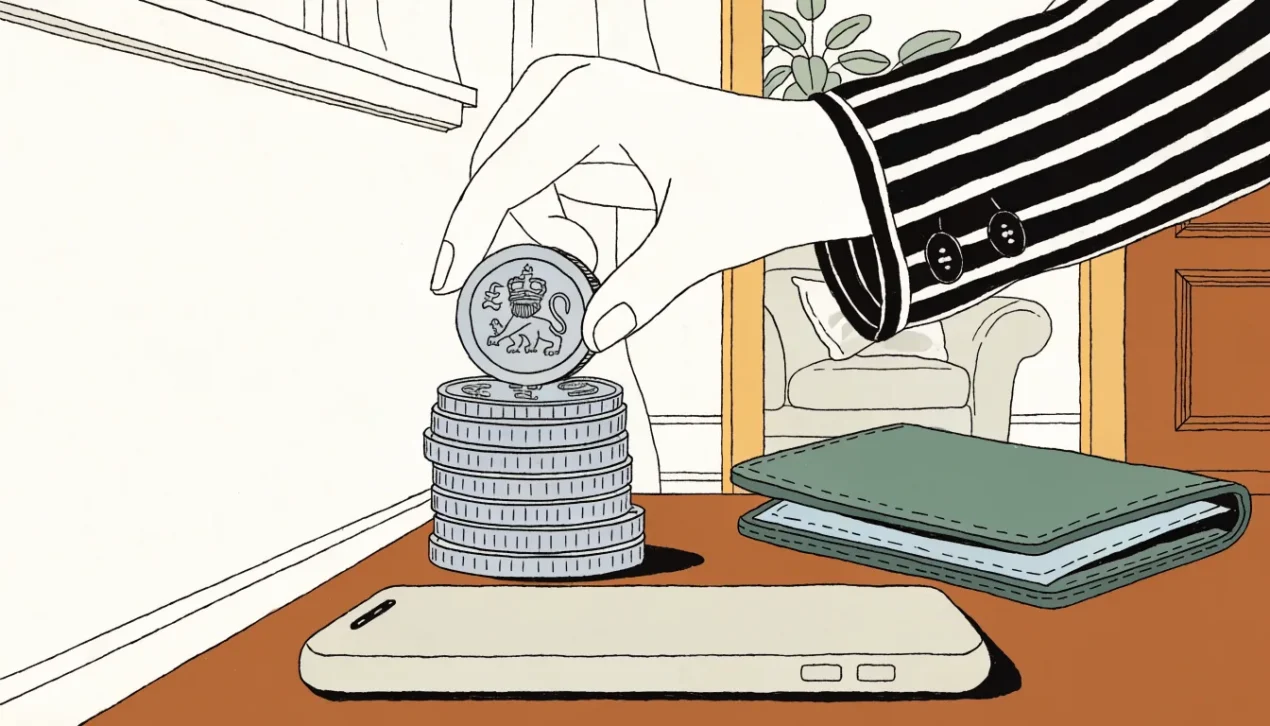
A small opening balance can face different deposit, withdrawal, promotion and payment conditions, so the cashier minimum is only one part of the decision.
What a £2 Deposit Actually Buys
A £2 deposit is an entry price, not a promise about what can later be withdrawn. It puts money into an account if the cashier accepts that amount; it does not settle the rules governing winnings, promotions or cashing out. Those are separate parts of the arrangement, and a small figure at the front of the process can make them easy to overlook.
The distinction matters because some UK casinos accept deposits below £2. A specialist review reported six UKGC-licensed casinos with genuine £1 cashier minimums, while identifying NetBet as the only UKGC-listed casino on its list with that threshold. That is a report of a particular review, not a permanent census of the market. Cashier terms can change, and the figure says nothing by itself about whether a particular site suits a player or what its later conditions permit.
Nor does a low cashier minimum imply that every other part of the account operates at the same scale. A specialist review placed minimum withdrawal thresholds at many UK casinos between £10 and £20. That range belongs to the review’s snapshot, not to a universal rule. It nevertheless illustrates the basic mismatch: an account may accept a modest deposit while setting a higher floor for withdrawals. Depositing is one transaction; withdrawing is another, with its own conditions.
This gap can alter the meaning of a small balance. If a player deposits £2 and later has winnings, the amount shown in the account is not necessarily ready to leave as cash. A withdrawal threshold may mean the balance has to reach a stated level first. Whether that can happen depends on play and the operator’s terms; the initial deposit does not guarantee it. A low minimum is therefore a low barrier to starting, not a measure of how accessible the exit will be.
Promotions add another layer. A deposit can be accepted without qualifying for a welcome offer, and a bonus can bring rules that apply to the bonus or its winnings. UK gambling incentives are now subject to a maximum wagering requirement of 10 times the bonus funds, following the change that took effect on 19 January 2026. That cap does not turn every promotion into cash immediately available for withdrawal: eligibility, game restrictions and other offer terms still matter. The headline deposit amount and the promotional balance are not interchangeable.
The language of casino offers often makes money appear to move in one smooth line: deposit, bonus, play, withdrawal. In practice, each stage has a gate. The cashier decides whether a deposit amount is accepted; promotion terms determine whether it counts towards an offer; play rules govern the use of any bonus; and withdrawal conditions determine when funds can leave. A £2 minimum describes only the first gate.
There is also a difference between an account balance and spendable money in the ordinary sense. Funds may be available for play while remaining subject to the site’s conditions. The same applies to winnings linked to a promotion. Until the relevant rules have been met, the number displayed in an account should not be mistaken for an amount that can necessarily be withdrawn on demand. A small deposit does not simplify those rules; it merely makes the opening transaction smaller.
In Britain, real-money online casinos serving customers must hold a current UK Gambling Commission licence. The minimum age for online gambling is 18, and operators must verify a customer’s age before allowing a deposit. New customers must also be prompted to set a financial limit before their first deposit, with account-level controls available. These safeguards sit alongside the cashier terms rather than replacing them. Regulation sets obligations for operators; it does not make every low-deposit offer identical.
A £2 deposit can therefore buy access to a gambling account and, where permitted, a small balance for play. It cannot by itself buy a particular bonus, remove a withdrawal threshold or establish that winnings are ready to cash out. The figure is real, but its meaning is narrow. The rest is in the terms.
Top online casinos in the UK
- SpinFormulaBonus: 550% Up To £15,000 + 550 FS · Payout speed: 1-3 business days
- SlotoSportBonus: 500% up to £ 10 200+ 777 FS · Payout speed: 1-3 business days
- Revery PlayBonus: 100% up to€1,000+ 100 FS · Payout speed: 1-3 business days
- AmunbetBonus: Join now and get 450% up to 2,700 GBP + 450 FS · Payout speed: 1-3 business days
- BeOnBetBonus: 100% up to €500 + 100 FS · Payout speed: 1-3 business days
- JetsetspinsBonus: 200% Bonus + 100 Free Spins + Free Royal Wheel · Payout speed: 1-3 business days
- NightWinBonus: £900 + 400 free spins · Payout speed: 1-3 business days
- x3betBonus: Welcome Pack 100% Up to £1.000 + 200 Free Spins · Payout speed: 1-3 business days
- ZombillionBonus: Welcome Pack 250% up to £4000 + 200 FS · Payout speed: 1-3 business days
- BritsinoBonus: Welcome Package – Get your £2,200 + 2,000 FS · Payout speed: 1-3 business days
Finding a Suitable Casino Without a False ‘Best’ List
A “best” label can make a small-deposit casino sound like a settled choice, as if one cashier minimum answers every practical question. It does not. A £2 minimum deposit may suit someone seeking a modest starting balance, but suitability also depends on what the operator permits that deposit to do: whether it qualifies for an offer, which account controls are available and how the site is regulated.
A useful comparison begins with the cashier, not a headline. The minimum shown in promotional copy may describe an entry point rather than the conditions attached to a welcome offer. A specialist casino review has reported that some operators exclude their lowest deposit bracket from welcome promotions. In a separate account of offer terms, deposits qualifying for welcome deals were reported at £5 to £10. These are reported conditions, not a promise that every casino follows the same rule. The offer’s own terms determine whether a particular deposit counts.
That distinction matters where the phrase “casino bonus with a £2 minimum deposit” seems to combine two separate promises. One figure may refer to the smallest amount accepted by the cashier; another may be the qualifying amount for a promotion. If the two differ, the money can reach the account without triggering the bonus. A “no deposit” label is a different kind of offer again, and should not be treated as evidence that a £2 payment is required or that the offer is available to every new account.

The comparison is therefore less about collecting attractive figures than reading the conditions beside them. Check whether the offer applies to the selected deposit amount, whether it is restricted to particular payment methods, and whether the terms set conditions on bonus funds or winnings. A reported range for wagering requirements in older reviews is not a substitute for current terms: from 19 January 2026, bonus wagering conditions cannot exceed ten times the bonus funds. The operator’s current wording still matters for other restrictions and for the way an offer is applied.
A “legit” or “safe” casino is not made so by a low cashier minimum, a familiar logo or a confident ranking. For real-money gambling offered to customers in Great Britain, the operator must hold the relevant UK Gambling Commission licence. The licence is the meaningful regulatory test; the small entry amount is not. Online gambling is legal in the UK for adults aged eighteen or over when it takes place with a UKGC-licensed operator. Age must be verified before a customer can deposit.
Do
- Verify the operator holds a valid UK Gambling Commission licence.
- Check if the deposit amount qualifies for the specific welcome offer.
- Set a financial limit before making your first deposit.
Don’t
- Assume a low deposit minimum implies low withdrawal thresholds.
- Treat a “best” list as a settled recommendation.
- Mistake a promotional balance for cash available for withdrawal.
Account controls belong in the comparison before any money is added. New customers must be prompted to set a financial limit before their first deposit, and account-level limit controls must remain accessible. This is not an optional flourish for a site that presents itself as responsible. It is part of the framework governing licensed remote gambling. A low starting amount can feel contained, but a deposit size is not itself a spending plan. The limit should be decided first.
There are other signs of an accountable operator beyond the welcome page. UKGC licensees must provide an internal complaints process and access to an approved Alternative Dispute Resolution service. Those routes do not guarantee that every disagreement will end in the customer’s favour; they establish where a complaint can go. The less glamorous details often say more than the front-page offer.
A sensible comparison can be kept to a few questions:
- Does the operator hold a current UK Gambling Commission licence for the service?
- Is the advertised cashier minimum distinct from the minimum that qualifies for a welcome offer?
- Do the terms clearly explain bonus restrictions and the treatment of winnings?
- Can a financial limit be set before depositing, and are account controls accessible afterwards?
- Are the operator’s complaint and dispute routes stated?
These checks do not produce a universal winner. A casino that accepts a small deposit but excludes it from an offer may still suit someone who wants to play without promotional funds; another person may care more about the offer terms or account controls. The comparison has to reflect the purpose of the deposit, not a ranking’s appetite for the word “best”.
A low entry point is a narrow fact. It says what may go into an account, not whether a promotion will attach, whether the site is properly licensed or whether its controls fit the account holder. Read in that order, the phrase “£2 minimum deposit casino” becomes a starting condition rather than a recommendation. That is less exciting. It is also more useful.
The Deposit Tiers Behind the £2 Search
A £2 minimum deposit sounds like a precise offer: put two pounds into an account, and the cashier accepts it. But a search phrase is not a cashier rule. It does not establish that a particular UK casino has a £2 floor, nor that every way of paying there shares one. The amount has to appear in the operator’s own deposit terms or in the live cashier before it can be treated as an actual threshold.
The surrounding tiers help explain why the figure can seem plausible. Some UK casinos accept deposits from £1, while a specialist review of direct-banking casinos describes £10 as the typical minimum in that category, with some operators setting £5 or £20 instead. Those are different entry points, not steps in a universal ladder. A £2 floor may sit between familiar amounts in a search phrase without being a standard setting in the market.
The £1 tier is the clearest reminder that minimums are not fixed across the country. It exists, but it is rare compared with higher starting amounts. A casino that accepts £1 does not thereby imply that another accepts £2, or that a £2 deposit is a standard compromise between the lowest and more common thresholds. Operators choose their own entry conditions; the arithmetic does not choose for them.
The £5 level matters because it appears in the reported range for direct banking, alongside £10 and £20. A specialist review describes £10 as the typical minimum for casinos in that category, but also notes operators at both £5 and £20. This is a useful map, not a promise about any particular account. A figure that describes a broad pattern cannot substitute for the terms of an individual operator.
Nor does a single casino necessarily present one neat number in every part of its account. The stated minimum is generally shared across payment methods, though some operators set a higher threshold for bank transfers than for cards or e-wallets. That distinction belongs to the cashier’s rules, not to the meaning of a £2 search itself. A headline amount, where one is advertised, still needs to be checked against the actual option being used.
£1 Tier
Extremely rare entry point associated with specific services like Boku or Payforit.
£5 to £10 Tier
Commonly reported qualifying amounts for welcome promotions and direct banking.
£10 to £20 Tier
Typical minimum withdrawal thresholds at many UK casinos.
The £10 tier has a second significance: it can be the point at which an offer becomes available, even where the cashier accepts a smaller deposit. A specialist review notes that some bonuses set £10 as the qualifying deposit despite a platform allowing deposits of £5. So a lower entry price and eligibility for a promotion are separate conditions. The amount accepted into an account is not automatically the amount that qualifies for every advertised feature.
That distinction makes a £2 threshold especially easy to misunderstand. If an operator’s cashier accepts £2, it establishes only that the deposit can be made at that level. It says nothing by itself about the terms attached to promotions, and it does not turn a lower threshold into an entitlement to an offer. The cashier minimum is one boundary; promotional eligibility is another.
The £20 figure, meanwhile, shows why “minimum” is a property of an operator rather than a universal measure of what counts as a small deposit. A specialist review of direct-banking casinos records some operators setting their floor there, even while others in the same broad category accept less. From the perspective of a player comparing entry points, £20 and £2 represent very different commitments. From the operator’s perspective, both are simply possible settings.
This variation also explains why the phrase “minimum deposit” needs careful reading. It may refer to the smallest amount accepted by the account, a threshold attached to a particular deposit route, or the amount needed to meet a condition elsewhere in the terms. Those meanings can overlap, but they are not interchangeable. A page that mentions a low minimum without specifying what the amount applies to leaves an important distinction blurred.
The most reliable comparison is therefore between stated amounts attached to actual terms. If one account lists £1, another £5 and another £10, those are identifiable entry thresholds. If a page says “£2 minimum deposit” without making clear whether the cashier accepts that exact sum, the wording is not enough to establish the practical rule. A number can be attractive and still be only a label.
There is nothing inherently suspicious about a casino setting a floor above £2, or about another accepting less. The point is that the lower figure should not be inferred from a nearby tier. A £1 minimum shows that very small deposits exist in the UK market; the £5, £10 and £20 levels show how much higher other operators may set their entry point. None proves that a specific cashier accepts exactly £2.
In short, £2 is best treated as a threshold to verify, not a category that every casino recognises. The distance between a search phrase and an operator’s terms is only a few words, but it is where expectation becomes fact. The cashier decides.
How Online Cashiers Set Their Minimums
A cashier minimum is an operator’s rule about the smallest deposit it will accept, not a promise made by a card network, bank or wallet. That distinction matters when looking for an online casino with a £2 minimum deposit in the UK. A payment method may be capable of handling a small transaction while the casino’s own cashier refuses it; the reverse can also be true if the operator’s terms allow a small deposit but a particular route has a higher threshold.
At many UK operators, the cashier minimum is shared across the available payment methods. The figure shown beside a card, e-wallet or direct banking option may therefore be the same. Some casinos make an exception for direct banking, setting its minimum above the one for cards or e-wallets. In practice, there is no single rule that can be inferred from the operator’s general advertised minimum: the relevant detail is the amount attached to each method in that cashier.
This is why the deposit screen matters more than a headline. A site may describe itself as accepting small deposits, yet the options presented after login can have different conditions. The cashier is where the operator applies its own threshold to the chosen route. A £2 entry point is meaningful only if the method selected at checkout accepts that amount; a low figure displayed elsewhere does not settle the question.
The difference between a site-wide minimum and a method-specific minimum is easy to miss because both can be described simply as the minimum deposit. But they answer different questions. The first tells how little the operator accepts in general. The second tells how little it accepts through a particular payment route. Where direct banking carries a higher minimum, a small-deposit option may remain available by card or e-wallet, while the banking route begins above it. The cashier’s labels and terms have to be read together.

Direct banking can also be treated differently from cards and e-wallets in descriptions of bonuses, though not in the underlying eligibility rule at UK-licensed casinos. A deposit made through direct banking can qualify for a welcome offer on the same basis as one made by card or e-wallet. The bonus terms do not change according to which of those methods supplied the deposit. That does not mean every deposit qualifies: the offer’s own conditions still determine whether the amount deposited is sufficient.
Once a bonus is accepted, its restrictions attach to the bonus rather than to the payment route. Wagering requirements, game restrictions and maximum withdrawal caps are terms governing bonus funds. They do not become looser or stricter because the initial deposit came through direct banking rather than a card or e-wallet. Payment method and promotion are separate parts of the transaction, even when the cashier presents them in the same sequence.
That separation is useful when a cashier seems to offer a small deposit but the promotional panel does not appear to match it. The operator may accept the money at the displayed amount while an offer has a distinct qualifying condition. In that case, the deposit has not failed; it simply has not met the offer’s terms. A cashier minimum describes access to the account, not automatic access to every promotion attached to it.
The same care applies when moving between methods. A player may see one threshold for a card and assume that it governs direct banking too, or assume that a single site-wide figure applies to every route. Neither assumption is reliable where the operator sets a higher minimum for bank transfers. The chosen method must be checked in the cashier itself, rather than inferred from another method’s limit or from a general banner.
There is a small institutional story in this arrangement. Payment networks and banks set the boundaries of their own services; gambling operators decide what their cashier will accept within those boundaries. The customer sees one deposit button, but behind it sit separate rules. The operator’s minimum is not a technical law of money. It is a commercial setting.
For a £2 deposit, then, the decisive question is not simply whether the casino advertises a low minimum. It is whether the selected cashier route accepts £2, and whether any bonus is being judged by a separate qualifying condition. Direct banking may have a higher threshold than cards or e-wallets, while bonus terms remain independent of the method used. Those are different rules, not contradictions.
Real-Money Play on a Small Balance
A £2 balance is real money, but it is a narrow margin for play. The distinction matters: a casino account can accept a small sum and allow it to be staked, while the rules for turning any remaining balance or winnings back into withdrawable money may be quite different. The amount on screen is not necessarily an amount that can be cashed out at once.
Many slots accept stakes between £0.10 and £0.20 per spin. At those levels, a small balance can support several rounds, but each stake reduces it, and a run of losing spins can use it quickly. Lower stakes change the pace at which money is risked; they do not make the balance durable. Nor does a win necessarily restore the original deposit. The result depends on the game, the stake and what happens on each spin.

The threshold at the other end of the account can be more consequential. A specialist casino review reported minimum withdrawal requirements of £10 to £20 at many UK casinos. That range is not a guarantee about any particular operator, and terms can change, but it shows why a low entry balance and an accessible cash-out are separate questions. If the balance remains below an operator’s withdrawal threshold, a player may need to continue playing before a withdrawal can be requested. Continuing is not a reliable way to reach it: further play can reduce the balance instead.
Other published casino information gives a different picture, reporting withdrawal minimums from £1 to £5. Those figures belong to a separate specialist review, not a universal rule. The gap between the two reported ranges is a reminder that a small-deposit claim alone says little about what happens when a player tries to leave with a balance. The withdrawal terms attached to the account matter.
This is particularly easy to overlook when attention settles on the size of a spin. A low stake can make a small balance last longer than a larger one would, but it cannot override a withdrawal threshold or turn winnings into cash without conditions. The distinction between money available for play and money eligible for withdrawal is practical, not merely technical.
Account Balance vs. Withdrawals
An account balance is not necessarily spendable money. While a £2 deposit allows for play, reaching the minimum withdrawal threshold (often between £10 and £20) is a separate requirement.
A real-money account therefore has two different measures of size: what can be staked, and what can be withdrawn. With a £2 deposit, the first may be immediately visible in the game interface; the second may only become clear in the operator’s withdrawal terms. Small balance. Separate rules.
‘Not on GamStop’ Is a Separate Claim
A casino described as “not on GamStop” is being identified by its relationship to a responsible-gambling service, not by its cashier minimum. The phrase does not establish that a site accepts a £2 deposit, and a £2 minimum deposit slot site is not necessarily outside GamStop. These are separate details that require separate checks.
More importantly, the label says nothing by itself about whether a casino is suitable for people in Great Britain. Remote operators serving customers there must hold the relevant licence from the UK Gambling Commission. A site operating outside that system does not become a legitimate UK option simply because it is accessible or advertises a small deposit. Accessibility is not approval.
The distinction matters because promotional language can make “not on GamStop” sound like a payment feature or a mark of convenience. It is neither. It should not be read as confirmation of a low cashier minimum, an available slot catalogue or terms that permit winnings to be withdrawn. Nor does the phrase prove a particular casino’s status: that depends on the site itself, not on a broad label applied in a description.
A search for a £2 minimum deposit casino not on GamStop combines two claims, but the wording does not verify either one. The cashier’s terms would need to establish the deposit threshold; the operator’s regulatory status is a separate matter. In Great Britain, the legal boundary is clear: online casino gambling is legal only at sites holding a UK Gambling Commission licence. Offshore sites outside that system are not licensed UK casinos, even where a player can reach them.

The service’s name can also be mistaken for a shortcut around personal limits. It is a responsible-gambling service, not a certificate of a casino’s quality or payment rules. A label cannot make those questions disappear.
Age remains a separate condition: UK players must be at least 18. A low entry figure and a claim about GamStop do not replace that requirement—or the need to distinguish a licensed operator from one outside the UK regulatory system. A small number is not a licence.
PayPal and Other E-Wallet Questions
A PayPal logo in a casino’s payment menu does not establish that the cashier will accept a £2 deposit. The minimum can depend on the operator’s terms, and availability of a wallet says nothing by itself about the amount allowed through it. A £2 minimum deposit casino using PayPal is therefore a specific cashier condition, not something that follows from PayPal being offered.
The payment boundary is clearer than the cashier detail. Since the UK’s credit-card gambling ban took effect in 2020, gambling deposits must come from permitted non-credit sources: debit cards, bank accounts or e-wallets funded by debit. A wallet cannot be used as a detour for credit-card gambling. If its balance includes credit-card funds that could be used for a gambling payment, operators must not accept that wallet payment.
This distinction can be easy to miss because a wallet is presented as a single payment method, while its balance may have several sources. For a UK-licensed casino, the relevant question is not only whether PayPal appears at checkout, but whether the transaction complies with the rule against credit-funded gambling. The logo is not the whole story.
A cautious reading of the cashier is more useful than assuming that every PayPal casino accepts the same amount. The deposit screen and the operator’s payment terms determine whether £2 is accepted for that account and transaction. E-wallet availability is not a promise of a particular minimum. Nor does the use of a wallet change the source-of-funds restriction. It is a payment route, not an exception.
Why a £2 Deposit May Cost More Than £2
A small deposit can look exact on the casino’s screen while costing more at the point of payment. A specialist review reports that some payment providers charge a flat transaction fee of £1 to £3. Against a £2 deposit, that charge is not a footnote: it can add a substantial cost, or reduce the sum that reaches the gambling account if it is taken from the payment itself.
The distinction is between the amount requested and the amount paid overall. If a fee is added separately, the account may receive £2 while the bank or wallet is charged more. If the fee comes out of the transaction, less than the intended amount may arrive. Which applies depends on the provider’s terms, so the cashier’s displayed deposit figure alone may not describe the full cost.
Flat charges are particularly awkward at the low end because they do not shrink with the deposit. A fee that would barely register beside a larger payment can consume a considerable share of a small one. The transaction may therefore be technically successful while delivering less value than its headline amount suggests.

This is separate from whether a casino accepts a £2 deposit: acceptance does not establish that the payment is fee-free. Before confirming, the relevant comparison is the amount debited and the amount credited, alongside any stated charge. If those figures are unclear, the apparent bargain has no dependable price. Small sums leave little room for ambiguity.
Mobile Billing: Small Deposits, Narrow Options
Paying through a mobile phone can look like a natural route to a £2 casino deposit: the charge appears on a phone bill or comes out of prepaid credit, rather than passing through a card checkout. But phone billing belongs to a narrow corner of the UK market, not a general-purpose answer for anyone seeking a small deposit.
A specialist review describes the rare £1 minimum-deposit tier as being associated with particular services, including Boku and Payforit. That places mobile billing at the very lowest entry point; it does not establish that a casino accepting phone payments will accept exactly £2, or that SMS payment is broadly available at that level. A provider’s name is not a cashier promise.
The distinction matters because a mobile-billed transaction is shaped by both the casino’s cashier and the billing service. Availability of a payment route does not, on its own, settle the minimum the operator will accept. Nor does the word “SMS” turn every phone charge into a casino deposit option. The checkout has the final say. Narrow territory.
In Britain, phone billing is not a way around the rules on gambling payments. The permitted funding routes include debit cards, bank accounts and e-wallets funded by debit; credit-card funds cannot be used for gambling, including when routed through a money service business or a wallet. Operators must also verify age before allowing a deposit, and a new customer must be prompted to set a financial limit before the first one.
So a £2 mobile casino deposit is a specific cashier condition, not an automatic feature of paying by phone. The rare £1 tier gives useful context, but not a guarantee about SMS, Boku or Payforit at a particular operator.
What is the current minimum deposit?
£1 is the lowest deposit available at some UK casinos, but it is rare and may be limited to certain payment methods. Direct banking deposits typically start at £10.
Is a £1 deposit casino worth it?
It can be useful for starting with a small balance, but a £1 deposit usually will not qualify for a welcome offer. Check the casino’s withdrawal minimum too, as many are £10 to £20.
Can I use a £1 deposit to claim all welcome bonuses?
No. Welcome offers typically require a £5 to £10 deposit, and some casinos exclude their lowest deposit tier; check the qualifying amount in each offer’s terms.
Related posts

UK Casino Welcome Bonuses: How Offers Work

VPN-Friendly Casinos in the UK: How Access Works
