
Crazy Time Live Casino Game Show in the UK
 Available in GB
A guide to operator licensing, live-show rules, demo play and the conditions surrounding deposits and bonuses.
Crazy Time Casinos and the Rules Behind the Licence
A casino can have a polished website, a familiar name and a catalogue of live titles, but none of those things gives it permission to offer gambling to people in Great Britain. The essential matter is the operator behind the service: a business serving customers there through remote gambling must hold the relevant licence from the Gambling Commission. That requirement applies whether the operator is based nearby or has placed its key equipment elsewhere. Moving the machinery does not move the responsibility.
This is the point at which Crazy Time casinos become part of a larger British arrangement. The UK Gambling Commission regulates gambling activity across the United Kingdom, including online casinos. In Great Britain, it is the sole regulator for commercial gambling. Its authority is not simply a badge that an operator can display beside a logo; it is the framework within which a business is permitted to provide gambling and expected to conduct itself.
The distinction between a product and a business matters. A game’s availability on a site does not establish that the site is entitled to offer it to British customers. The operator’s licence is what places the activity inside the British regulatory system. For a customer, that means the legal status of an online casino depends on the company providing the service, not on the game’s title, its presentation or the place where a studio or server happens to be located.
Licensing also has more than one layer. The Commission grants operating licences to businesses and personal licences to individuals working in relevant roles in Great Britain. The arrangement recognises that a gambling service is not run by a website alone: people and organisations make decisions about how it is operated. Responsibility can therefore reach beyond the corporate name on a home page. It attaches to the business and, where required, to the individuals entrusted with certain functions.

The licence is the threshold, not the whole job. A UK-licensed casino must have arrangements that protect customers and support lawful operation. Before allowing a customer to deposit, the operator must verify that the customer is old enough to gamble. New customers must also be prompted to set a financial limit before their first deposit, and account-level controls must remain accessible. These requirements put a boundary around the transaction before it becomes a habit. The operator cannot treat age and spending controls as decorative settings buried in an account menu.
There are further constraints on how money can enter a gambling account. UK-licensed casinos cannot accept credit cards for gambling, including credit-card funding routed through a money service business. A wallet cannot be used for gambling where it allows credit-card funds to be used for that purpose. These rules concern the route of payment, not merely the label attached to the payment method. In a business built around deposits, that distinction is practical rather than academic.
Operators must also provide responsible gambling tools, including self-exclusion. They must offer an internal complaints process and access to an approved Alternative Dispute Resolution service if a complaint is not resolved through that process. These obligations give customers routes to pause or challenge what is happening, rather than leaving the operator as the only party able to define the dispute. Licensed operators also contribute to the Research, Education and Treatment levy, which supports work connected to gambling harm.
This collection of duties says something about the model Britain has chosen. Commercial gambling is permitted, but permission comes with conditions imposed on the business that offers it. The state does not rely on the operator’s own promise to behave responsibly; it sets standards, issues licences and regulates the activity. The arrangement is not an endorsement of gambling as harmless. It is an attempt to place a commercial activity within rules that can be enforced.
For a business offering Crazy Time online casinos to Great Britain customers, the same principle applies as for any other remote casino activity: the relevant authorisation must exist before the service is offered. The Commission’s reach follows the customer-facing service, not the physical address of the equipment. A company cannot make itself exempt by locating its technical infrastructure abroad while continuing to serve the British market.
That framework should not be confused with the mechanics or classification of any particular game. Those questions belong to the game itself. Here, the concern is the operator: whether it has authority to provide remote gambling and whether its business is organised around the obligations that accompany that authority. The licence is the starting line, not a flourish at the finish.
Gambling remains a financial risk even where the operator is licensed and regulated. Only gamble what can be afforded to lose.
Top online casinos in the UK
- SpinFormulaBonus: 550% Up To £15,000 + 550 FS · Payout speed: 1-3 business days
- SlotoSportBonus: 500% up to £ 10 200+ 777 FS · Payout speed: 1-3 business days
- Revery PlayBonus: 100% up to€1,000+ 100 FS · Payout speed: 1-3 business days
- AmunbetBonus: Join now and get 450% up to 2,700 GBP + 450 FS · Payout speed: 1-3 business days
- BeOnBetBonus: 100% up to €500 + 100 FS · Payout speed: 1-3 business days
- JetsetspinsBonus: 200% Bonus + 100 Free Spins + Free Royal Wheel · Payout speed: 1-3 business days
- NightWinBonus: £900 + 400 free spins · Payout speed: 1-3 business days
- x3betBonus: Welcome Pack 100% Up to £1.000 + 200 Free Spins · Payout speed: 1-3 business days
- ZombillionBonus: Welcome Pack 250% up to £4000 + 200 FS · Payout speed: 1-3 business days
- BritsinoBonus: Welcome Package – Get your £2,200 + 2,000 FS · Payout speed: 1-3 business days
Finding Crazy Time Online Without Mistaking a Brand for a Licence
A casino’s name and its permission to offer gambling are different things. A site may use a polished brand, display a regulator’s emblem or describe itself as “licensed” without making clear which legal business holds the licence. For anyone looking for Crazy Time at a casino serving Great Britain, the useful question is not whether the site looks established, but whether the operator and the site’s domain can be matched to the Gambling Commission’s public register.
The register is the check that matters before a deposit. A casino’s own claims are not independent confirmation, and a logo in a footer is only an image. The Gambling Commission regulates commercial gambling in Great Britain; an operator selling remote gambling to people there must hold the relevant Commission licence. That remains true if the company or its equipment is based elsewhere.
Match the business to the website
Start with the legal operator named in the casino’s terms and conditions. Then look for that business on the Commission’s public register and compare the listed details with the site being used. A matching brand alone is not enough: a brand can differ from a company name, and a company’s presence on the register does not automatically establish that every website using a similar name is covered.
The domain is important. A genuine licence entry should be consistent with the website’s identity, not merely with a name that sounds close. Check the exact spelling of the web address, including its ending, and look for any listed trading names or domains that connect it to the registered business. If those details do not line up, the uncertainty is real; a familiar colour scheme or a confident “licensed casino” label cannot resolve it.
The register also gives the public a way to verify rather than simply accept a commercial claim. It is sensible to return to the Commission’s own records instead of relying on a search result, a review page or a badge supplied by the casino. Records can change, so an old screenshot or a past mention of a licence is not a substitute for checking the register at the point of use.
A specialist casino review reporting on the register dated 26 September 2026 says it found no LuckyPays entry under that brand or the stated domain, including luckypays.io. That is a dated finding, not a permanent description of the register. It illustrates why a brand’s own presentation should not be treated as proof, and why the exact business and domain need to be checked directly against the regulator’s record.
Do
- Match the operator name to the Gambling Commission’s public register
- Verify the exact spelling of the website’s domain
- Check the official records directly rather than relying on third-party reviews
Don’t
- Rely solely on a brand name or a regulator’s logo in a footer
- Assume a similar-sounding name implies a valid licence
- Use old screenshots as a substitute for real-time verification
What a mismatch means
A missing or unclear match is a reason to pause, not to fill the gap with assumptions. A site might use a trading name different from its corporate name, but that relationship needs to be evident from the official record or other reliable documentation. If the operator cannot be connected clearly to a relevant entry, there is no sound basis for treating its licence claim as established.
This distinction matters because a foreign address does not remove the requirement. Remote gambling offered to consumers in Great Britain falls within the Commission’s licensing system regardless of where the operator is located. A site being reachable from Britain, accepting a registration or displaying games does not itself show that it is authorised to serve the British market.
The check should happen before funds are deposited, rather than after a disagreement arises. A UK-licensed casino must provide an internal complaints route and access to an approved Alternative Dispute Resolution service, but those protections are meaningful only where the operator can be identified within the system. If something goes wrong, the business name on the account and the one on the register should not be strangers.
There is a quiet civic point in this paperwork. Gambling is sold as entertainment, but the licence ties a private transaction to public rules and oversight. The register is not decoration around the product. It is the record that distinguishes a claim from permission.
Only gamble with money that can be afforded to lose.
Choosing a Casino for a Game Often Called a Slot
A casino can advertise Crazy Time prominently and still be a poor fit for the way someone wants to use it. The useful comparison is less about finding a crowned “best” site than about noticing what the operator makes clear: whether the game is available in its live-casino catalogue, how easily its rules and table information can be found, and whether account controls and customer support are visible rather than buried in small print.
The phrase “best Crazy Time casino” suggests a single winner, but the choice depends on practical details. One player may care most about a clear mobile display; another may want a catalogue that makes it easy to move between live games. A polished landing page is not evidence of either. The less theatrical parts of a casino’s service often say more: how account settings are presented, whether help is easy to locate, and whether the terms attached to deposits and withdrawals are readable before money is committed.
Searches often call Crazy Time a slot. That may be convenient shorthand, but a label used in conversation does not settle the game’s regulatory category. British stake restrictions for online slots are specific, not a general ceiling for every product found in a casino lobby. A specialist casino review reports a maximum stake of £5 per game cycle for adults aged 25 and over, and £2 for those aged 18 to 24. The same type of review distinguishes those slot limits from roulette and blackjack, to which it says the limits do not apply. The classification matters. A word in a menu cannot do the work of one.
Stake Restrictions
British stake restrictions for online slots are specific. For adults aged 25 and over, the maximum stake is £5 per game cycle. For those aged 18 to 24, the limit is £2. These limits do not apply to games like roulette and blackjack.
That is a reason to compare the information a casino supplies about the particular game, rather than infer its status from a “slots” tab or promotional banner. Where a site places Crazy Time in its catalogue may reflect its own navigation, not a legal conclusion. If the distinction affects a decision, the relevant terms and game information deserve closer attention than the category heading.
Casino results are another tempting measure. A run of visible outcomes, screenshots or player comments can create the impression that one venue produces better results than another. They do not establish that. A casino’s role is to provide access to the game; a display of past results is not a promise about what comes next, nor a reliable comparison of operators. Results can be interesting as part of the presentation, but they are a poor foundation for choosing where to play.
Bonuses can complicate the comparison. A headline offer may appear generous while its conditions determine whether it suits the account holder at all. The bonus belongs to the operator’s commercial arrangement, not to the game itself.
A sensible shortlist, then, is built from verifiable service details rather than a supposed ranking: access to the game, usable account information, clear terms and visible support. No casino can make a game’s outcomes predictable by placing it in a better-designed lobby. The distinction is plain enough. A wager should never exceed what can be afforded to lose.
Where Live Casino Games Sit in the British Casino Tradition
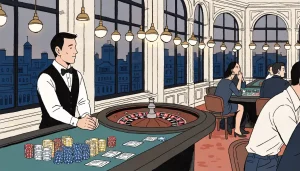
A British online casino’s live section is often arranged around recognisable table games: blackjack, roulette and poker sit beside newer formats that borrow the look of a television show. Crazy Time belongs to that latter group. It is encountered as a live casino game, rather than simply as another title in a catalogue of conventional tables. The distinction is one of presentation as much as setting: the familiar table gives way to a studio and a host-led spectacle.
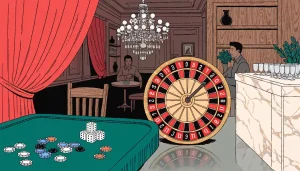
That change does not erase the older casino vocabulary. The wheel remains a visible point of reference, and the surrounding experience still belongs to the broad family of casino games. But the show format makes the live area feel less like a row of tables and more like a programme with a game at its centre. For someone looking to play Crazy Time live, the relevant place on a casino site is therefore its live casino or game-show category, if the operator offers the title. A general casino landing page may contain many kinds of games; the label attached to a category does useful work.
The British live-casino setting has a history of its own. Grosvenor first unveiled live casino games in 2013, with card and casino options that included Blackjack, Texas Hold’em and Roulette. That launch placed live versions of established games within a British casino brand’s online offer. It also gives a useful point of comparison: the live casino did not begin with elaborate game shows. Its early reference points were games whose names and conventions were already familiar from physical casinos.
Traditional Tables
Games like blackjack and roulette rely on recognition through cards, a wheel, and a dealer.
Game-Show Formats
Formats like Crazy Time add theatrical framing and a host-led spectacle to the casino encounter.
Crazy Time sits at a later edge of that tradition. Blackjack and roulette invite recognition through a table, cards, a wheel and a dealer; a game-show format adds theatrical framing to the casino encounter. Neither presentation makes the other obsolete. They answer different tastes in atmosphere. One is spare and legible; the other is designed to hold attention through a more conspicuous performance. The casino has room for both, which is perhaps less a revolution than an expansion of its stage.
The phrase “Crazy Time wheel” can make the game sound like a standard wheel table, while “live casino” points towards the streamed, hosted setting. Both describe part of what draws interest, but neither alone tells the whole story. The title is most naturally found among live offerings rather than inferred from a casino’s general game count. A site’s navigation may place it under live games, game shows, or a similarly named category; the wording varies, and the useful clue is whether the section groups hosted games separately from slots and automated tables.
There is no reason to treat a large live section as a guarantee that every particular game will be present. Casino catalogues differ, and a title may be easier to locate through the site’s own game search than by scanning every table. The point is not that one operator has the definitive collection, but that Crazy Time belongs to a recognisable strand of online casino entertainment: live, hosted and shaped as a show.
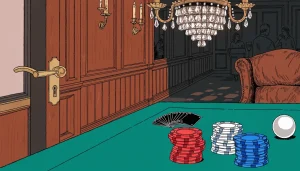
The setting can make the game feel more sociable than a solitary screen, though it remains gambling rather than a television programme. The distinction matters. A lively presentation is still attached to wagering, and the camera does not soften the financial stakes. Only money that can be afforded to lose should be used.
Strategy in a Game Built Around a Show
A Crazy Time casino strategy begins with a distinction that is easy to lose in the glow of a live studio: a player can make choices about participation, but cannot direct the result. The show’s pace, commentary and visual drama invite attention; they do not turn chance into a contest of observation. A confident presenter is still presenting, not sending clues.
That matters because the word “strategy” can promise more than it delivers. In a game built for spectacle, a plan may help organise a player’s own conduct: deciding whether to take part, setting a spending boundary in advance, and stopping when that boundary is reached. It cannot make a future outcome more obedient. No sequence of past results grants control over the next one.
What a plan can govern
A useful plan is less a prediction system than a set of limits. It can define how much money is available for entertainment, how long attention will be given to the game, and what will count as a reason to stop. Those decisions belong to the player. Whether the round produces a satisfying result does not.
- Decide how much money is available for entertainment
- Set a specific time limit for the session
- Define a clear reason or boundary to stop playing
This is also where the language of “systems” becomes slippery. A staking pattern may look orderly on a page, and changing an approach after a loss may feel like action. Neither feeling establishes an advantage. Chasing losses is especially poor arithmetic: the money already spent cannot be summoned back by increasing a later wager.
The British language of gambling regulation places responsibility on operators in important ways, but personal limits remain a separate matter. The sensible measure of a session is not whether a pattern seemed to work, but whether the money at risk was genuinely affordable to lose. Only gamble what can be afforded to lose.
The appeal of a tracker
A Crazy Time casino tracker may be presented as a notebook, chart or automated record of earlier rounds. Such a record can describe what has happened within its own history. It cannot, simply by displaying that history, establish what will happen next. A casino tracker for Crazy Time is therefore best understood as a record, not a forecast.
There is a human reason these tools attract interest. People notice runs, gaps and repetitions because the mind is made to search for order. A visual record gives that search a tidy surface. But tidy presentation is not evidence of predictive power. If a tracker labels a result “due”, it is making a claim about the future that the record itself cannot prove.
The same caution applies to claims dressed up as a Crazy Time live casino strategy. A method may describe where to place a wager or when to change it; that makes it a method of choosing, not a method of controlling. The distinction is small in wording and large in consequence.
History is not a forecast
Interest in Crazy Time casino history can be useful when it means learning how a game came to be presented or how its format is discussed. History becomes misleading when it is treated as a shortcut to future results. An archive of earlier rounds may support description; it does not make chance answer to memory.
The most grounded Crazy Time casino game strategy is therefore modest: decide on limits before play, do not mistake a run for a promise, and stop when play no longer feels like entertainment. A tracker can help preserve a record, but should not be allowed to prescribe another wager.
The show can be watched. The outcome cannot be negotiated.
Crazy Time: The Game Behind the Search
Crazy Time sits at an awkward but familiar crossroads: it is presented as a live casino game show, while people may encounter it under broad labels such as “casino game” or even “slot”. Those descriptions can help someone find a game, but they do not settle what the game is. A label is a doorway, not a definition.
The show framing matters because it changes the feel of the experience. Rather than suggesting a quiet machine in a row of games, the name evokes a hosted event: something watched as well as played. That puts the spectacle in the foreground. The casino setting remains part of the picture, but it is not the whole picture; the game-show presentation gives the activity a public, performative quality.
That distinction is useful in Britain, where ordinary language and regulatory categories do not always line up neatly. The Gambling Act 2005 describes a casino in terms of an arrangement that gives people the opportunity to take part in casino games. It is a broad legal description, not a shortcut for deciding that every game shown on a casino site belongs to the same technical category. Nor does the word “slot” in a search or conversation establish that a particular game is legally an online slot.
The difference is more than a matter of tidy terminology. A player might use “slot” as a loose umbrella for a colourful game involving chance, just as “live casino” might describe the room or presentation in which a game appears. Neither phrase necessarily says what the game’s underlying classification is. For that, the specific product and the rules that apply to it matter; a search phrase alone cannot do the work.
Crazy Time’s identity, then, is best approached in layers. There is the name, which makes the game recognisable. There is the game-show style, which shapes its presentation. There is the casino context, which explains why it is encountered alongside gambling products. And there is the question of formal classification, which cannot be answered simply by choosing whichever everyday label feels closest.

This layered quality reflects a broader change in casino culture. The older image of gambling often centres on a table, a wheel or a machine. A game show borrows from television’s vocabulary: a host, a stage-like setting, an audience-facing rhythm. The result may feel closer to entertainment, but presentation does not turn wagering into something other than wagering. The costume is part of the experience; it is not a guarantee of its nature.
For anyone considering play, that is the useful starting point: recognise the show around the game without letting the show obscure the gambling within it. The atmosphere may be lively, but outcomes remain uncertain, and no presentation changes that. Any wagering should be limited to money that can be afforded to lose. A bright set is still a casino setting.
Free Play, Without the Deposit
A free version of Crazy Time can make the game easier to approach: its presentation can be watched and its basic rhythm experienced without staking money. That has a modest but real use. A player can decide whether a lively, show-led format is appealing before opening a real-money account. No deposit is needed for that judgement.
Free play has limits, though. It is not a rehearsal that predicts what will happen when money is involved, and it cannot demonstrate how a particular casino handles accounts, payments or complaints. Nor does a free game establish that the site hosting it is authorised to offer gambling in Great Britain. Entertainment and oversight are separate questions.
The phrase “free spins” can muddy the picture. A free version of a game and free spins attached to a casino offer are not necessarily the same thing. The latter may come with conditions, and the word “free” does not make those conditions disappear. Availability and terms depend on the offer; no general claim about an operator or promotion follows from the existence of a free-play option.
That distinction matters because free play is about access without a wager, while a real-money account brings different responsibilities and risks. It is sensible to treat a demo as a way to see whether the format suits, not as proof of likely winnings, a shortcut to choosing a casino or a substitute for reading the terms of an offer. Free, in this case, describes the immediate price of playing. It says little else.
Reviews can help describe a game or explain what a free mode offers, but an enthusiastic review is not proof that a casino is safe. Licensing must be assessed separately, and a free game alone cannot settle that question. The British system makes a distinction between trying a presentation and taking part in regulated gambling for money; the two should not be allowed to blur simply because they appear on the same screen.
Free play removes the stake, not every reason for care. If play moves to real money, gambling should be limited to what can be afforded to lose.
Bonuses and Deposits: The Conditions Around the Offer
A Crazy Time casino bonus is an offer attached to an account, not a feature that changes the game. A welcome bonus may be linked to an initial deposit; a no-deposit offer, if one is available, does not require that same first payment. Neither label explains what can be withdrawn, when it can be withdrawn, or whether a particular game contributes towards the offer’s conditions. Those details sit in the terms.
The distinction between bonus funds and cash balance matters. A casino may require a player to wager bonus funds, or winnings associated with them, before a withdrawal is permitted. It may also restrict which games count, set an expiry condition, or exclude some forms of play. The precise rules vary by offer. “No deposit” is not a synonym for unrestricted, and “welcome” is not a synonym for simple.
A Crazy Time casino deposit bonus should therefore be read as a contract with conditions, not as extra money already earned. The terms need to explain eligibility, the deposit requirement, any wagering conditions, withdrawal rules and what happens if the offer is cancelled. Payouts from the game and the release of bonus-related funds are separate matters; a displayed win does not itself settle the account’s bonus conditions.
Before a first deposit, remote gambling operators must prompt new customers to set a financial limit and make account-level limit controls accessible. Operators must verify age before permitting deposits. Credit cards cannot be used to fund gambling, including through a money-service business, and a wallet that allows credit-card funds for gambling cannot be accepted. The paperwork is part of the product.
Searches for a UK casino bonus, including offers described as no-deposit or linked to Crazy Time, can also bring up sites said to be “not on GamStop”. That phrase is not a bonus condition and does not make an offer a safe substitute for a UK-regulated account. A player considering any gambling should stake only what they can afford to lose. Short sentence. It matters.
Rules, Scores and Multipliers in Context
The labels “rules”, “scores” and “multipliers” can sound like a compact description of how a Crazy Time round works. They are not a substitute for the game’s own rules display. That distinction matters: a score records or presents an outcome, while the rules determine which outcomes count and how any wager is settled. The screen may make the result vivid; only the terms explain its meaning.
A multiplier is best read as a calculation applied under the conditions set out in those terms, not as a prediction of what the next round will produce. Its presence does not make an outcome more likely, and a large figure on screen is not, by itself, a measure of a player’s eventual return. The applicable selection, settlement rule and any stated qualification all matter. Without those details, the number is theatre as much as arithmetic.
The same care applies to scores. A displayed score can help make a round legible, but it should not be confused with a personal balance or treated as evidence that a particular result is due. Past outcomes describe what has happened; they do not settle what follows. A score is a record, not a forecast.
For anyone comparing explanations of Crazy Time casino rules, the useful test is whether they account for the wording and presentation in the game itself, rather than repeating a loose summary. The live display and the rules information should be read together, especially where a multiplier is involved. If a description leaves unclear which outcome qualifies or how a wager is resolved, it has not explained the scoring.
That is the unshowy part. The numbers still matter.
A trusted Crazy Time casino is not defined by a confident explanation of scores, but by the clarity of the game information and the conditions attached to play. No description can remove the chance involved. Only gamble what can be afforded to lose.
A Demo as a Way to Learn the Format
A demo can make Crazy Time’s presentation easier to follow before any real-money play is involved. The wheel, host and changing pace give the game a show-like rhythm; watching a round in a demo can help explain how its visual cues and transitions fit together. It is a way to learn the format, not a rehearsal that predicts what will happen next.
The distinction matters because a demo’s apparent ease says nothing about real-money outcomes. It cannot show that a particular approach will produce a return, nor does a smooth run establish what real play will feel like. The screen may look familiar, but the stakes change the atmosphere. Not the mathematics.
Labels such as “slot demo” sometimes attach themselves to Crazy Time, but a label does not settle the game’s classification. A demo is best understood as a presentation of the game that can help someone recognise its layout and sequence, rather than as proof that it behaves like a conventional online slot.
Nor does a demo establish anything about the status of the site hosting it. Game presentation and operator licensing are separate matters; a polished interface is not a licence. Before depositing, a player should verify the operator’s licence number on the Gambling Commission’s public register.
The useful question, then, is modest: does the demonstration make the format clearer? It may help with that. It is not evidence of winnings, a substitute for checking an operator’s credentials, or a reason to treat gambling as risk-free. Only gamble what can be afforded to lose.
Are online casino games licensed and regulated?
Yes. In Great Britain, remote gambling operators must hold the relevant Gambling Commission licence, and the Commission regulates commercial gambling, including online casinos.
What are the online slot stake limits in Great Britain?
The limit is £5 per game cycle for adults aged 25 and over, and £2 for adults aged 18 to 24. These limits do not apply to roulette or blackjack.
Is LuckyPays licensed by the UK Gambling Commission?
LuckyPays is not shown on the Gambling Commission’s public register under its brand or the domain luckypays.io, so it is not listed as licensed there.
Related posts

UK Casino Welcome Bonuses: How Offers Work

VPN-Friendly Casinos in the UK: How Access Works
