
French Roulette Online Casinos in the UK
 Available in GB
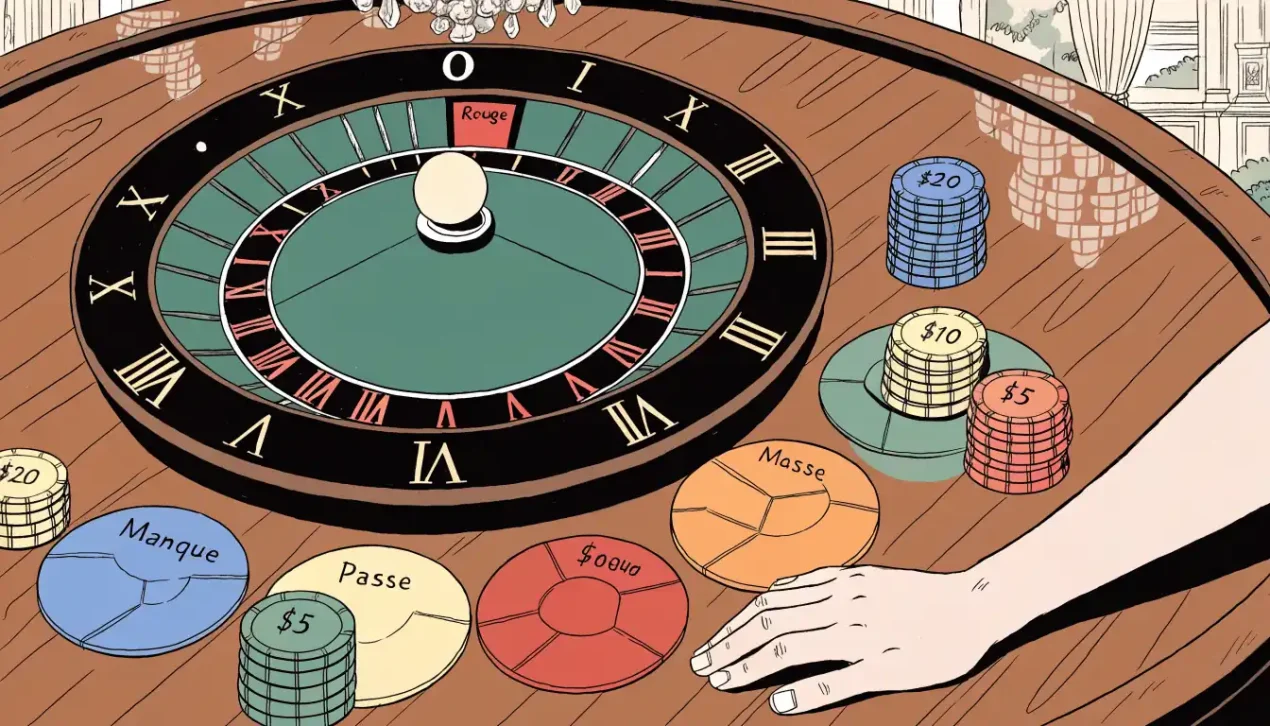
A practical look at French roulette’s zero rules, UK casino checks, game formats, stakes, payouts and bonus terms.
The French Wheel and Its Zero Rule
The defining feature of French roulette is not an elaborate betting system but a small piece of green felt: the zero. On a European wheel, the pockets run from 1 to 36, with one zero alongside them. That makes 37 possible landing places. The zero is not a number that belongs to either red or black, odd or even, low or high. It sits outside those familiar divisions, quietly giving the house its mathematical advantage.
That arrangement is easy to overlook when a game is presented on a screen. Numbers, colours and chips supply the visible drama; the zero is only one pocket among many. Yet its presence changes the arithmetic behind every wager. A bet on red, for instance, can win on red numbers and lose on black numbers, while the zero belongs to neither side. Without a rule that softens its effect on certain bets, the house edge on European roulette is 2.70%.
French roulette is distinguished by two rules associated with that green pocket: La Partage and En Prison. Their importance lies in what happens to even-money wagers when the ball lands on zero. These are bets whose potential return matches the stake, such as red or black. Rather than treating zero as an ordinary losing result in every case, the French rules can preserve some value for the player’s stake.
La Partage is the more direct of the two. If the ball lands on zero, half of an even-money bet is returned. The other half is lost. That partial refund reduces the house edge on those bets to 1.35%, half the European roulette figure. The advantage is narrow in scope: it applies to even-money bets, not indiscriminately to every chip on the layout. A single-number wager, for example, is not transformed into an even-money bet simply because it is placed on a French table.
There is something almost parliamentary about the arrangement. The zero remains in the rules and keeps its power, but its consequence is negotiated rather than absolute for a particular class of bet. The house still has an edge; it simply accepts a smaller one on the wagers covered by La Partage. A refund is not a victory, and it does not make the wheel predictable. It changes the cost of one losing outcome over time.
En Prison offers another form of relief on even-money wagers, and its name suggests the image: the stake is held rather than immediately settled when zero appears. Its presence alongside La Partage is part of what makes French roulette distinctive. The exact application can depend on the table’s stated rules, so the name alone should not be treated as a complete description of how a particular game handles a trapped wager. What matters to the character of the variant is that zero does not always produce the same immediate loss as it would under standard European rules.
Together, La Partage and En Prison explain why French roulette has the lowest house edge among standard roulette variants. The phrase “lowest house edge” is comparative, not magical. It describes the mathematical terms of the game, not a promise about an individual session. A run of spins may feel generous or severe; neither feeling alters the underlying probabilities. The rules reduce the house’s advantage in defined circumstances, but they do not remove it.
This is also why “French roulette” is more than a decorative label for an online table. A game may display the familiar European wheel and still require attention to the rules governing zero. Where La Partage is available, the reduction is tied to even-money bets. Where En Prison is named, its treatment of a held stake belongs in the table rules, not in assumptions carried over from another game. The wheel supplies the possibilities; the rules determine how some of them are settled.
The appeal is therefore partly mathematical and partly cultural. Roulette has always made its logic visible: a wheel, a ball, a field of numbered choices, and a house advantage hidden in plain sight. French rules do not abolish that advantage. They place a modest limit on what zero can take from certain wagers, a small concession that gives the game its particular reputation.
The pocket stays green.
A UK Licence Is the First Table to Check
An online casino offering French roulette for real money to people in Great Britain must hold a current operating licence from the UK Gambling Commission (UKGC). The operator’s location does not change that requirement: a business based overseas still needs the relevant UKGC licence to serve the British market. The Commission is the sole regulator of online casino activity in Great Britain.
Legal access begins with age. Gambling is permitted from age 18, and an operator must verify a customer’s age before allowing a deposit. A polished site or familiar game name is not evidence of permission to operate. Before depositing, the licence number should be checked against the UKGC’s public register. Platforms without a valid UKGC licence cannot legally offer real-money live roulette to British residents.
Regulation also leaves practical marks on an account. UKGC-licensed operators must prompt new customers to set a financial limit before their first deposit and provide accessible account-level controls. Live casino operators must offer deposit and loss limits, session time reminders, reality checks, cool-off periods and GamStop self-exclusion. These are not decorative features; they are part of the framework within which real-money play is offered.
There is recourse if a dispute arises. UKGC licensees must provide an internal complaints process and access to an approved Alternative Dispute Resolution service. That does not make every disagreement disappear, but it places a formal route between a customer and an operator. Offshore sites sit outside this system, even when their pages are available from Britain. Accessibility is not authorisation.

Finding French Roulette Among UK Casino Games
French roulette can be easy to miss in a casino catalogue, not because the name is obscure, but because online game libraries are organised in several competing ways. Roulette may sit under table games, live casino, or a broader casino-games menu. A site may also divide its listings by format or provider. The same game can therefore appear in more than one place, while a catalogue search may return a mixture of tables that share the word “roulette” but not the same rules.
The practical first step is to treat the game’s title as a starting point rather than proof of its format. A listing marked French roulette indicates the intended variant, but the game information should confirm which rules are in use. In particular, the table description or rules panel should make clear whether La Partage and En Prison apply. Those names matter more than decorative differences in the felt or wheel graphics: a table’s label is useful only when its rules match it.
That is a small act of reading against the interface. Casino menus are designed to make a large collection feel effortless; the important information often lives one click deeper, in a rules tab, help panel or game information window. If the title is simply “roulette”, the rules screen is more reliable than the thumbnail. If no rules are visible before play, it is difficult to know what version the table offers.
Do
- Check the UKGC public register for a valid licence
- Verify if La Partage or En Prison rules apply to the specific table
- Locate the RTP information in the game menu
Don’t
- Assume all roulette tables follow French rules
- Rely solely on a game’s visual theme or title
- Ignore the specific game weighting for bonuses
Search the catalogue, then check the table
A search box can narrow a large library, but the results need sorting by substance. French roulette may be grouped with European roulette because both use a single-zero wheel, while a casino may reserve “French” for tables displaying the particular French rules. That is not a dependable convention across every catalogue. The wording varies, and the rules panel settles the question.
Filters can help distinguish a live table from an automated game, or separate roulette from other table games. They are useful for finding a format, not for establishing the conditions of play. A filter called “live” describes presentation; it does not establish the variant’s rules. Equally, a French-themed image is not evidence that the table follows French roulette rules. Online design has a gift for making the visible detail seem decisive.
A broader search for French roulette at UK online casinos may produce several versions of the game, including tables with different layouts and interfaces. The choice between them is not merely visual. Each listing should identify the game and provide access to its rules and relevant information. Where the same title appears in both live and automated sections, the two entries may offer different experiences, even if the underlying variant is named alike.
RTP information should be findable
Return-to-player information is another part of the catalogue worth checking before a table is chosen. At UKGC-licensed operators, RTP information must be accessible. It may appear in the game’s information panel, the rules menu or a separate help section, rather than beside the play button. A clear route to it matters: a figure hidden behind an obscure sequence of menus is technically present but not especially useful.

RTP is a statistical description of a game’s expected returns over extensive play, not a forecast for an individual session. It should be read alongside the stated table rules, not as a substitute for them. If a game offers more than one rules configuration, its information needs to be understood in the context of the version actually selected. The catalogue entry, the rules panel and the RTP details should tell a consistent story.
This is also why comparisons between French roulette casinos should begin with the actual game page, rather than a promotional tile. A tile can identify a title; it cannot explain which rules are active or where the game information is kept. A listing that makes those details readily accessible gives a clearer account of the product than one that relies on a familiar name alone.
A catalogue is not a verdict
The phrase “best French roulette casinos” suggests that a single ranking could settle the matter. In practice, the useful comparison begins with whether the desired variant is present, how clearly it is identified, and whether its rules and RTP information can be checked before play. The number of roulette tiles in a library says little by itself. Several entries may be different presentations of similar games, while a concise catalogue may be easier to navigate.
The same caution applies to premium French roulette casinos. “Premium” can describe a visual style or a category within a site; it does not, on its own, explain the rules or the information available about a table. A polished interface is pleasant, but clarity does more work. The catalogue should make it possible to distinguish the French variant from other roulette offerings without relying on guesswork.
Online casinos with French roulette are therefore best approached as catalogues to inspect, not as promises to accept at face value. Locate the game, open its information, confirm the rules and find the RTP details. Only then does the title become more than a label. The quiet work is the useful work.
What Makes a French Roulette Casino Worth Considering
A French roulette table can be present in a casino lobby and still be a poor reason to choose that operator. The useful question is not whether the game’s name appears in a menu, but whether the conditions around it are legible: what rules apply, what information is available, how account controls work, and whether the promotional small print changes the value of play.
The table rules should be visible before a wager is placed. French roulette is not a label that guarantees identical conditions everywhere; a clear game description should spell out the rules attached to that particular table. The interface should make those rules accessible without sending players through a maze of help pages. If the table’s terms are difficult to locate, that is already information about the quality of the offering.
The same standard applies to the wider account. A casino is a financial service as well as a collection of games, and its controls should not be hidden behind decorative menus. UKGC-licensed operators must provide account-level tools for setting deposit and loss limits, along with session reminders, reality checks and cool-off periods. GamStop self-exclusion must also be available. These are not ornamental features for a responsible-gambling page; they are part of the conditions under which a licensed live casino operates.

There is a practical test in the route to those controls. Remote operators must ask new customers to set a financial limit before the first deposit and must provide accessible controls for managing account limits. A casino that makes it straightforward to find these settings treats them as ordinary account functions. One that buries them among promotional material has made a choice, too.
Disputes are another measure of the operator’s seriousness. UKGC licensees are required to provide an internal complaints process and access to an approved Alternative Dispute Resolution service. The relevant information should be easy to find, with a clear explanation of how a complaint is raised and what happens if the operator’s own process does not resolve it. A polished roulette lobby cannot compensate for an opaque route when something goes wrong.
Payment conditions deserve similar attention. UKGC-licensed casinos cannot accept credit cards for gambling, and operators cannot sidestep that restriction by accepting a wallet that lets credit-card funds reach gambling activity. The point is not merely to identify an available payment logo. It is to understand whether the operator’s payment arrangements fit the rules and whether the account’s limits and transaction information are presented plainly.
Promotions can make a casino look more generous than its terms support. For roulette, the important detail is often game weighting: how much a wager contributes toward meeting a bonus requirement. UK operators commonly assign roulette only a partial share, with reported rates falling between 10% and 20%. That means a bonus balance may take substantially more play to clear through roulette than its headline amount suggests. The exact rule belongs to the operator’s terms, not to assumptions formed from another casino’s offer.
Those terms should say which roulette formats qualify, whether there are exclusions, and how bonus funds are treated while a promotion is active. A concise offer with explicit conditions is more useful than an impressive headline followed by qualifications scattered across several pages. The bonus is only one part of the offer; clear wording is a mark of the whole operation.
There is also a modest but telling distinction between a casino that merely displays responsible-gambling language and one that makes the controls usable. Limit settings should be reachable from the account, self-exclusion information should be unambiguous, and the complaints route should not require detective work. Regulation establishes obligations; the quality of the site is visible in how those obligations are carried out.
A final check belongs outside the casino itself: the UK Gambling Commission’s public register. The licence number should be verified there before depositing, rather than accepted as a badge copied onto a page. Platforms without a valid UKGC licence cannot legally offer real-money live roulette to British residents. That is not a matter of table preference.
The strongest choice, then, is not a casino crowned “best” by a slogan. It is an operator whose game rules, account controls, payment arrangements and bonus terms can all be understood before play begins. Clarity is the real luxury.

From Penny Stakes to the High-Limit Room
A roulette table’s minimum stake is a small piece of information with a large practical effect. It determines how little can be risked on a single decision, and therefore how long a modest balance can remain in play if the stakes stay low. The maximum matters just as much at the other end: it marks the ceiling for a wager at that table, not a promise that larger stakes will be available elsewhere in the same casino.
For French roulette, the label alone says little about either limit. Tables using the same variant can offer different stake ranges, and an operator may provide several versions aimed at different budgets. A low-minimum table can make the game accessible without implying that every bet must remain small. Conversely, a table presented as a standard option may not suit someone who wants to stake more than its maximum allows.
A specialist review reports that some UK live roulette tables begin at 10p, while auto-roulette and speed formats can start at 5p. These are reported entry points, not a fixed schedule across the market. The available minimum depends on the particular table and operator, and a low starting stake should be checked against the table’s maximum before play begins. The gap between the two tells more than a category label does.
The stake range, not the room’s name
Casino menus often sort tables into broad groups such as low stakes, standard limits and VIP or high-limit play. Those names are useful signposts, but they do not establish a common price scale. “Standard” is not a uniform setting shared by every operator; “VIP” may describe a separate table or a presentation tier, while the actual permitted wagers remain a matter of that table’s rules.
Low Stakes
Tables that may offer entry points as low as 5p or 10p.
Standard Limits
Commonly used tiers, though the specific range varies by operator.
High-Limit
Tables permitting much larger wagers for different budget needs.
The important comparison is the minimum and maximum shown in the game information or betting interface. A low-limit French roulette table may suit a player who prefers small, steady wagers. A higher-limit table allows larger stakes, but it does not alter the nature of the game or make a result more predictable. It simply changes the amount exposed to each decision.
A table’s limits also shape how a balance is used. Repeated wagers at the minimum can still accumulate into a substantial total over a long session; the word “penny” describes the entry point, not the eventual spend. At the other end, a high maximum can make a single decision carry much greater financial weight. The room’s atmosphere may be polished. The arithmetic is not.
Before choosing a table, it is worth distinguishing a low minimum from a low overall cost. The first describes the smallest permitted wager. The second depends on how often and how much a person chooses to stake, and cannot be inferred from the table label. A session budget set before play can keep the choice of table from quietly becoming a choice about escalating exposure. Limits available within the account can also help keep spending bounded.
When higher limits change the feel
High-limit play is often framed as a mark of status, but its defining feature is simpler: the table permits larger wagers. Some casinos separate these tables from ordinary selections; others make the limits visible in the game lobby. Access may differ by operator, and not every French roulette title will have a dedicated high-limit version.
A larger maximum is not automatically useful. If the minimum is also higher, the table may leave little room to adjust the stake gradually. If the permitted range is broad, it may accommodate a wider choice of wagers—but the potential loss rises with the amount staked, not with the prestige attached to the table.
The same caution applies to claims of “standard” limits. There is no single standard range that can be assumed across UK casinos. The game’s name identifies the variant; the table’s displayed rules establish the stakes. That distinction is more dependable than the décor, the label, or the promise of a private room.
For a small-budget session, the practical question is whether the minimum fits the intended stake and whether the maximum is clearly stated. For higher-limit play, the relevant question is whether the table’s ceiling matches a pre-set budget rather than an impulse formed in the room. Different thresholds, same wheel.
Live Dealers, Automated Wheels and the Pace of Play
A live French roulette table brings the casino’s most visible ritual onto a screen: a studio, a human dealer, a physical wheel and the ball’s actual drop. The stream preserves the pauses as well as the spin. The dealer gathers wagers, sets the wheel in motion and announces the result; meanwhile, the interface carries the betting activity around the broadcast. It is a different sort of attention from watching a number generator produce an outcome.
Live vs RNG
Live dealer tables feature a physical wheel and human dealer in a studio, following a manual sequence. RNG roulette uses software to simulate spins, allowing for a much faster and more efficient pace of play.
That distinction matters to the rhythm of play. A live table has a human sequence to follow, and the next spin waits on the completion of the current one. Even without leaving the screen, the experience has something of a shared room: the wheel turns at a pace set by the dealer and the table’s procedure. Online live French roulette is therefore not simply a faster way to encounter the game in a studio. Its appeal lies partly in seeing the physical event unfold.
RNG roulette works differently. A random number generator simulates each spin, so there is no streamed wheel or dealer handling a ball. The outcome appears through software, and the cycle can move more quickly than a standard live table. It is an efficient format, though efficiency has its own atmosphere: less ceremony, fewer visible pauses, and a more direct succession of results.
Speed roulette sits at the brisk end of the spectrum. A specialist review reports more than 150 spins an hour for this format, against 80 to 100 at a standard table. These figures describe a reported comparison, not a fixed pace for every operator or session. Still, the practical difference is plain: a quicker table compresses the intervals between decisions. The wheel—or the game interface—has less time to become background.

The numbers tell a related story for RNG American roulette. Reported rates are 150 to 200 or more spins an hour, while live dealer play is put at 50 to 60. Those figures concern American roulette, so they should not be treated as a promised speed for a French table. They do show why format can shape the experience as much as the wheel’s design: software can move through rounds without the visible work of a studio dealer.
A faster pace is not merely a technical convenience. More spins mean more occasions to make a decision in the same stretch of time, and less space between one result and the next. Live play makes those intervals visible; RNG and speed formats shorten or remove them. Neither format changes chance into prediction. The difference is how quickly the game presents another moment in which a stake can be placed.
For anyone comparing live casino French roulette with an automated option, the useful distinction is not that one is more authentic in every sense. Live play shows a real wheel and a human dealer; RNG play simulates the spin; speed roulette is organised around a faster cycle. A live auto table may sound like a contradiction, but the phrase can describe an automated format associated with roulette rather than a dealer-led broadcast. The important point is to identify what is actually on screen: a streamed physical wheel, or a simulated result.
There is no universally correct tempo. Some players prefer the dealer’s measured sequence; others value the compact rhythm of software-led rounds. The format determines the pace, and the pace determines how much room a session leaves for thought. A small difference in presentation can become a large difference in habit.
Roulette Bets and What Their Payouts Mean
A roulette layout offers two broad ways to place a wager. Inside bets sit on the numbered part of the table and cover a small patch of the wheel’s possibilities. Outside bets occupy the margins: they cover larger groups, so a win is less selective and the payout is smaller. The distinction is not a promise about likelihood; it is a map of how much of the board a stake covers.
A straight-up bet names one number. If the ball lands there, the payout is 35:1 on European and American roulette. That means the stated winnings are thirty-five times the stake, with the original stake returned as well. It is the most concentrated choice on the layout: one pocket, one result.
A split bet straddles the line between two adjacent numbers. Its 17:1 payout reflects that wider cover. A street bet covers a horizontal row of three numbers and pays 11:1. On a French roulette table, these familiar inside bets make the layout legible at a glance: a chip placed on a number, line or row marks a different span of outcomes, and the return changes accordingly.
Outside bets trade that narrow focus for broader categories. Red or black, odd or even, and high or low each pay 1:1. A winning wager returns an amount equal to the stake, as well as the stake itself. These bets do not identify a particular number; they classify numbers by colour, parity or position in the sequence. The table’s central zero is not part of those ordinary categories, which is why a seemingly simple choice still depends on the table’s rules.
Payout notation describes the return for a successful bet, not the full story of how a particular spin is settled. The shape of the wager matters too: a chip on one number is different from a chip spanning a line, even when both are placed close together. At an online table, the betting layout provides the practical guide: selecting a marked area determines which bet is being made, while the displayed paytable confirms its return.
The arithmetic is plain. The wheel is not.
Premium Play and the Small Print on Bonuses
A premium label does not change how bonus funds are counted. The decisive detail is game weighting: the share of a qualifying wager that goes towards meeting a wagering requirement. Roulette rules can differ between operators, and between versions of the game offered by the same operator, so the terms attached to the bonus matter more than the table’s branding.
A specialist review reports that some operators count live roulette at 10% or 20%, while RNG roulette may count at 100%. These are reported examples, not a promise about any particular casino. Live tables may also be excluded from a bonus altogether. If a game contributes only a small share, a substantial amount of play may be required before the condition is met; if it is excluded, wagers there do not advance it at all.
The wording deserves attention before a bonus is accepted: which roulette games qualify, whether live and RNG play are treated differently, and what happens when a contribution rate is low. A headline offer can look generous while its qualifying-game rules make it less useful for someone who mainly plays roulette. The small print does the counting.
A specialist review also reports that, from January 2026, UK regulations cap bonus wagering requirements at 10 times the relevant amount for licensed operators. That ceiling does not make every offer equivalent: game weighting, eligibility and other terms still shape how a bonus works. Nor does a bonus turn roulette into a premium product in any meaningful mechanical sense. The wheel remains the wheel; the distinction lies in the conditions attached to the funds.
Playing Roulette Without Pretending to Beat Chance
The Martingale is a progression built around a simple response to losing: double the next bet. A win is meant to recover the earlier losses and leave a gain equal to the original stake. On paper, the sequence looks tidy. In play, each loss makes the next required wager larger, while the player’s bankroll remains finite.
That is the point at which a betting method stops being arithmetic and becomes a test of endurance. A losing streak can consume funds quickly; a table limit can also interrupt the progression before a recovery bet is possible. Neither circumstance makes the next spin more favourable. It only changes how much is at risk when it arrives.
French roulette may appeal to players who value its rules, but choosing it does not turn a betting progression into a forecast. When people play French roulette online, the sequence of wagers can be planned; the result of the next spin cannot. Roulette outcomes are determined by chance, and no system can identify the final outcome in advance.
There is a quiet social logic to the Martingale’s appeal. It gives loss a script: increase the stake, wait for the reversal, restore order. Casinos have always offered rituals as well as games. The ritual can make uncertainty feel managed, though the arithmetic asks for more money after every defeat.
A sensible boundary is therefore behavioural, not predictive: decide what can be lost before play, and do not raise that boundary to rescue a progression. The Martingale does not remove risk; it concentrates it into a sequence that grows more demanding as losses accumulate.
Chance keeps no account.
French Roulette Beside the Other Casino Wheels
A casino offering French roulette presents a different mathematical bargain from an American wheel, although the difference is easy to miss on a screen. The European wheel has 37 pockets: numbers 1 to 36 and one zero. The American version adds a double zero, making 38 pockets. That extra green space is not decoration. It gives the house another route to an advantage.
The standard house edge is 2.70% on European roulette and 5.26% on American roulette. French rules can reduce the edge on even-money bets further: La Partage and En Prison are the reason French roulette is regarded as the lowest-edge standard variant. The distinction lies not in a more predictable ball, but in what happens to certain wagers when it lands on zero.
American roulette’s double zero changes the arithmetic even before any special bet is placed. The basket bet, covering the zero, double zero, and the first two numbers, carries a 7.89% house edge. It is a costly patch of felt to favour.
A specialist review has also described some American tables with a third green pocket, marked 000, and a 7.69% house edge. That is a report about a particular kind of table, not a settled description of the market; the wheel’s listed pockets and rules should be read rather than inferred from its label.
The cultural distinction is almost tidier than the mathematical one. French roulette carries rules that soften the consequence of zero on selected bets; American roulette makes the extra pocket visible and lets the edge do its work. Neither wheel turns chance into a negotiation. But on a French table, the house has agreed to give something back under specific conditions. On the American wheel, it has kept an additional door open.
What is the difference between European and American roulette wheels?
European roulette has 37 pockets: numbers 1–36 and one zero. American roulette has 38, adding a double zero; their house edges are 2.70% and 5.26%, respectively.
How does the 10x wagering cap affect roulette bonuses?
Since January 2026, licensed UK operators can set bonus wagering requirements of no more than 10 times the bonus. Roulette wagers commonly count for only 10–20% of the requirement, so they contribute more slowly than games with a higher contribution rate.
Are real-money roulette sites in the UK safe?
Use a site with a current UK Gambling Commission licence: licensed operators must provide account controls, safer-gambling tools and a formal complaints route. Check the operator’s licence on the Commission’s public register before depositing.
Top online casinos in the UK
- SpinFormulaBonus: 550% Up To £15,000 + 550 FS · Payout speed: 1-3 business days
- SlotoSportBonus: 500% up to £ 10 200+ 777 FS · Payout speed: 1-3 business days
- Revery PlayBonus: 100% up to€1,000+ 100 FS · Payout speed: 1-3 business days
- AmunbetBonus: Join now and get 450% up to 2,700 GBP + 450 FS · Payout speed: 1-3 business days
- BeOnBetBonus: 100% up to €500 + 100 FS · Payout speed: 1-3 business days
- JetsetspinsBonus: 200% Bonus + 100 Free Spins + Free Royal Wheel · Payout speed: 1-3 business days
- NightWinBonus: £900 + 400 free spins · Payout speed: 1-3 business days
- x3betBonus: Welcome Pack 100% Up to £1.000 + 200 Free Spins · Payout speed: 1-3 business days
- ZombillionBonus: Welcome Pack 250% up to £4000 + 200 FS · Payout speed: 1-3 business days
- BritsinoBonus: Welcome Package – Get your £2,200 + 2,000 FS · Payout speed: 1-3 business days
Related posts

UK Casino Welcome Bonuses: How Offers Work

VPN-Friendly Casinos in the UK: How Access Works
