
Online Casino Games for Real Cash in the UK
 Available in GB
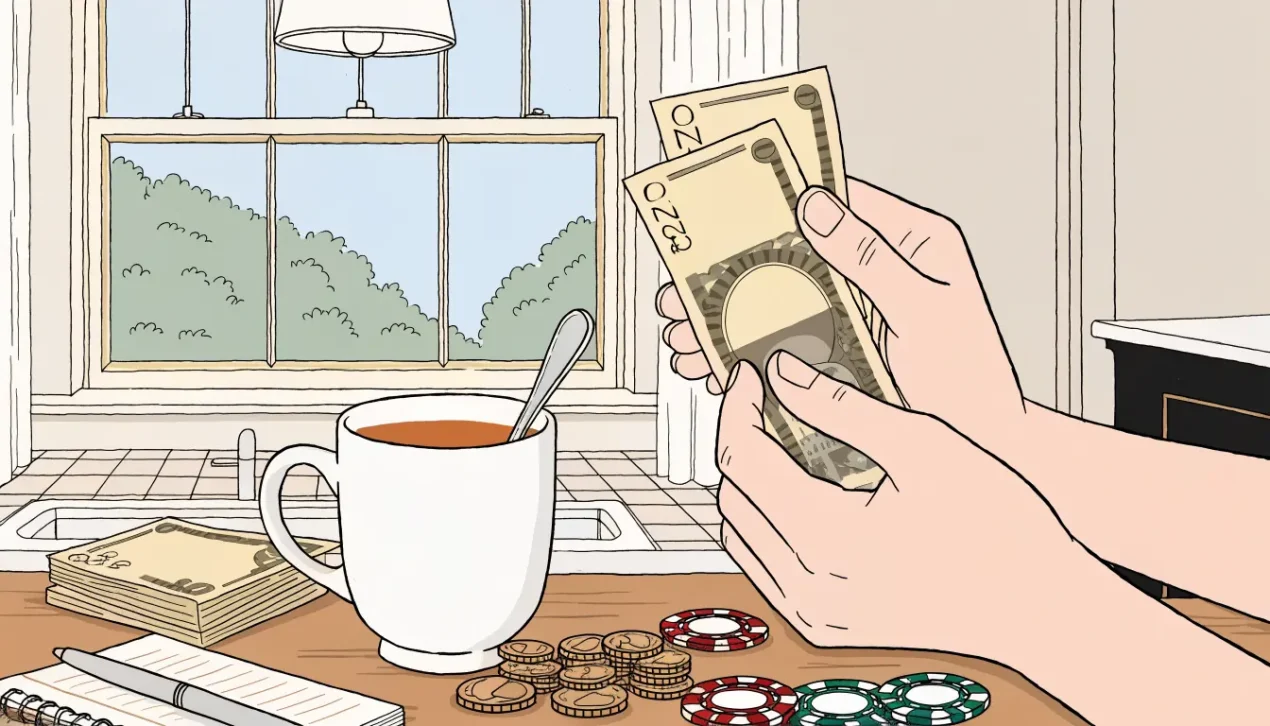
Explore how stakes, paylines, payout information, licensing and bonus conditions shape real-money slot play.
Real-money slots: the stake is part of the game
A slot played for real money is not simply a familiar game with a cash button added. The stake changes the character of each turn: money is committed before the symbols settle, and the amount at risk is part of the arrangement from the start. In Britain, that amount is also subject to a specific limit. The rules set a boundary around the play itself, before questions of what a result might mean arise.
For customers aged 25 and over, the maximum stake is £5 in an online slot game cycle. For those aged 18 to 24, it is £2. These are per-cycle ceilings, not suggested amounts or targets. A game may offer a choice below the applicable maximum, but it cannot make a higher stake available within a cycle. The distinction matters: a limit on a single play is not a statement about how much someone will spend over a session.
That is the quiet architecture of real-money slots. The screen presents a choice, but the choice sits inside rules about how much can be put into motion at once. The age bands make that boundary different for younger adults, even though both groups are old enough to take part. A maximum stake does not tell anyone how to play; it defines the outer edge of what the game may accept.
Slots have a peculiar ability to make money feel momentarily abstract. A stake can appear as a number beside a bright button, then vanish into animation and sound. The interface is designed around repetition: select a stake, start a cycle, watch the display resolve, decide what comes next. The regulated ceiling returns one practical fact to that otherwise polished scene. The number on the button is still money.
That does not mean every spin costs the maximum. The ceiling is not a fixed price of admission. The chosen stake can be lower, and the amount selected is what gives a particular cycle its financial scale. A player comparing games, or even looking at different settings within one game, is therefore not comparing decoration alone. The cost of play belongs to the mechanics, as surely as the reels and symbols do.

The phrase “online casino games for real cash” can suggest a broad category, but the stake rules discussed here apply specifically to online slots. They should not be casually transferred to every casino game on a site. A slot’s game cycle has its own form: a stake is placed, the game runs, and the cycle concludes. The limit is tied to that unit of play.
There is a social history in such a rule, even when it appears as a small line of interface logic. Gambling has often been presented as an entirely private matter of taste, as if every decision began and ended with the individual. A stake ceiling says otherwise. The state has decided that the scale of a single online slot cycle should not be left wholly to a product’s design or a player’s immediate impulse. It is a modest intervention in a commercial setting built to invite another turn.
Modest, but concrete. A limit is not a promise that play will be harmless, nor does it convert a casino into a savings device with spinning symbols. It sets a maximum for one part of the activity. The wider pattern of spending remains a separate matter, which is why a deposit limit is worth considering before making a first deposit. That decision concerns funds added to an account, not the maximum stake permitted in an individual slot cycle.
The difference between those two limits is easy to blur. One governs what can be staked in a game cycle; the other is a personal boundary around deposits. Neither should be mistaken for the other. A player might choose stakes well below the permitted maximum and still need a firm boundary on deposits. Conversely, the legal ceiling does not describe the total amount that may be deposited over time.
In a real-cash casino, then, the first useful question is not which title looks most generous or which animation promises the most excitement. It is more basic: what is being risked each time the game runs, and where is the applicable ceiling? For online slots in Britain, the answer begins with age and the stated maximum for each cycle. The rest is choice within that frame.
The stake is not a footnote. It is the opening condition.
What a slot payout can—and cannot—tell you
A slot’s last result is visible; its next one is not. That simple imbalance encourages stories. A stretch of losses can look like a pattern gathering force, while a recent win can seem to announce more of the same. Neither reading follows from the sequence. Previous spins have no bearing on future outcomes, and each player has an equal chance of winning.
This is easy to accept in the abstract and harder to feel while watching the reels. People are skilled at finding shape in repetition: a symbol appears twice, a near miss follows, then several spins pass without a payout. The mind arranges these events into a plot. The machine offers no such plot. Its previous results do not make a future win due, and a run of losing spins is not evidence that compensation is on its way.
Nor does a win prove that a particular slot has become generous. A payout is an event, not a forecast. It can tell a player that a winning outcome occurred on that spin; it cannot establish what the next spin will produce. In real-money slots, that distinction matters because money makes coincidence feel personal. A win can seem like skill or momentum, a loss like a debt the game must repay. Neither impression changes the next outcome.
This is the limit of what can be inferred from a session. A string of results may describe what has happened, but it does not become a reliable map of what is about to happen. The same is true when several people play: no one acquires an advantage because another player has just lost, and another person’s success does not use up a future win. Each player has an equal chance of winning; the order of earlier spins does not decide whose turn it is.
That point also puts claims about real-cash winning slots in their proper place. A title may be remembered for a dramatic payout, and a player may recount a lucky run, but a past result is not a promise attached to the next session. Stories travel better than ordinary outcomes. The quiet fact that one spin does not know what the last spin did is less memorable, but more useful.
The phrase “how to win real cash playing slots online” invites a method, as if a sequence of choices could coax a payout from a game. The available principle is less theatrical: past spins cannot be used to predict the next result. No timing ritual or interpretation of a losing streak changes that. Winning may happen; the history of previous spins cannot say when.
A payout can therefore answer a narrow question: whether that spin produced a win. It cannot certify a trend, reveal that a loss has gone on long enough, or turn a real-cash payout slot into a dependable source of future returns. A result is a result. The rest is a story laid over it.
Paylines, spin costs and the shape of a win
A slot’s paylines are the routes across its reels along which a winning combination can be recognised. Activating more of them changes the terms of a spin: it gives more possible routes to a winning combination, while raising the cost of that spin. The two effects arrive together. More lines are not simply more opportunity added at no price.
That trade-off can be easy to miss on a screen built around movement and colour. A player may think first about the pattern that could land, and only afterwards about how many lines are active. Yet the setting is part of the stake. If the number of active paylines rises, the spin costs more; a run of spins at that setting therefore uses more money than the same number of spins at a lower-cost setting.
The attraction is understandable. A machine with more active lines offers more ways for a combination to count as a win. That can make each spin feel more open, less dependent on a single narrow path through the reels. But the increase in opportunity should not be mistaken for a promise that any particular spin will pay. A winning combination remains a possible result, not a scheduled one.
There is a small piece of theatre in the arrangement. Reels turn, symbols settle, and the eye follows the lines as if tracing a route through a crowded room. The more routes switched on, the more places there are to look for a match—and the higher the price of setting the scene. The display may make the extra activity feel like a feature; the balance records it as cost.
For real-money slot play, the useful comparison is not simply between a game with fewer lines and one with more. It is between the additional chance of a winning combination and the additional amount taken for each spin. Those are connected, but they are not interchangeable. A higher spin cost buys access to more active lines; it does not turn a win into a certainty or make the value of a result self-evident.
This matters on a phone as much as on a larger screen. A compact interface can place the line setting beside the spin controls, where a tap may change the price before play continues. The visual scale changes; the arithmetic does not. A real-cash slot machine is still charging for the configured spin, not for the drama of watching it.
Paylines are therefore a game setting with a financial consequence, not a secret route to reliable returns. More can mean more chances for a winning combination, and more spent each time the reels turn. Both belong in the same decision. Dry arithmetic, bright lights.
When a casino says it pays
“Pays” can describe several different moments, and they are not interchangeable. A slot may show a win; the game balance may update; a withdrawal request may be submitted; and, later, funds may arrive through a payment service or bank. A casino saying that it pays real cash is making a claim about the possibility of cashing out, not a promise that each stage happens at once.
That distinction is easy to lose in the bright language of casino screens. A displayed balance looks finished: a number, neatly placed, with no visible journey attached. But a balance inside an account is not the same thing as money received outside it. Between the two sits a practical process, shaped by the operator’s handling of the request and the payment route available. The screen is immediate. The transfer is not necessarily so.
PayPal
Open banking services
Debit cards
This is why a claim about an online casino that pays real cash needs a more precise reading than its slogan permits. The important question is not merely whether the site describes withdrawals as possible, but what the stated payment information says about the route and the steps involved. A payout claim cannot, by itself, establish when money will appear in a bank account. Nor does the phrase “fast payout” tell the whole story unless the method and the relevant conditions are clear.
Payment method matters. A specialist review identifies PayPal, open banking services and debit cards connected to fast payout systems as generally the quickest options. That is a comparison of methods, not a clock: it does not give a guaranteed arrival time for an individual withdrawal. Even when the route has a reputation for speed, the casino’s own processing and the payment provider’s part remain separate pieces of the journey.
The distinction matters for casino apps as much as for websites. An app may make it easier to open a game or view an account balance, but the word “app” does not reveal how a withdrawal is handled. A casino app that pays real cash still depends on the payment arrangements behind the interface. The same is true of slot apps: the game’s presentation and the transfer of funds are different things, however closely they sit together on a phone screen.

There is a small linguistic trick in the phrase “slots that pay”. It gives the game the verb, as though the reels themselves send money out. In practice, a slot can record an outcome and add an amount to an account balance; the movement from that balance to an external payment method belongs to another part of the arrangement. The game may be the reason a balance changes. It is not the payment channel.
For anyone comparing what slot machines that pay real cash are said to offer, the useful detail is therefore not a vague assurance that cashouts are available. It is whether the payment information names its methods clearly and explains what happens after a request is made. A casino’s own presentation can describe a process, but a label alone cannot remove the difference between an amount shown on screen and money received.
A cautious reading also leaves room for the unglamorous parts of managing an account. Before a first deposit, a new remote customer should consider setting a deposit limit. That decision belongs at the beginning of the financial relationship, not as an afterthought prompted by a withdrawal. It does not make a payout quicker, and it should not be confused with a casino’s claims about payment speed.
The public vocabulary of casino payments tends to compress distinct events into one confident word. “Win” may refer to a game result; “payout” may mean an amount credited to an account; “withdrawal” describes an attempt to move funds beyond it. Those terms can overlap in marketing copy, but they answer different practical questions. A stated payout tells little about the experience of receiving funds unless the route is also considered.
So, when a site says it pays, the claim is best understood as a beginning rather than a timetable. The listed methods offer a more concrete point of comparison: PayPal, open banking and debit cards linked to fast payout systems are identified as generally quicker, while no method name can guarantee the timing of a particular transfer. The money has a route. The wording has limits.
A licence is a boundary, not a guarantee of a win
A real-money casino operates within a legal boundary, not in a promise about what happens after a spin. In England, Scotland and Wales, a business offering gambling to customers must hold the relevant licence from the UK Gambling Commission (UKGC). That requirement applies to remote casinos as well as other forms of commercial gambling.
The boundary follows the customer, not the equipment. A company may run its systems from another country, but if it offers remote gambling to consumers in Great Britain, the location of its servers does not remove the licensing requirement. The Commission regulates the activity offered into the British market, rather than simply the place where the business happens to keep its machinery.
This matters when a site presents itself as a source of real cash online slots. Its branding, presentation and claims about games do not alter the legal question: is the operator licensed to offer gambling to people in Great Britain? The same principle applies to real-cash casino games more broadly. A licence is permission to conduct the business under the relevant framework; it is not a prediction about individual results, nor a certificate that every session will end in a payout.

The distinction is easy to lose in the language of online casinos that pay real cash. “Pays” describes the movement of money, while a licence describes the operator’s legal position. One does not prove the other. A casino may advertise cash prizes, but the presence of a prize claim does not itself establish that the operator has permission to serve the British market. Conversely, the licence is not a guarantee of a win. Regulation draws a line around lawful commercial activity; chance remains chance.
There is one important geographical qualification. The Gambling Act 2005 governs England, Wales and Scotland, but not Northern Ireland. Northern Ireland has a separate regulatory framework, so the Great Britain licensing position should not be carried across as though the same rules applied there in the same way. “UK” is a familiar shorthand in casino advertising; legally, it can blur a distinction that matters.
For Great Britain, the UK Gambling Commission is the sole regulator for commercial gambling. It issues operating licences to businesses and personal licences to individuals who work in regulated roles. Those are different permissions: one authorises a business to offer gambling, while the other applies to people operating within the system. A site’s polished interface is not a substitute for either kind of licence.
This framework also explains why a real-cash casino is not merely a website with games and a cashier. It is a commercial gambling operation subject to a regulator when it serves customers in Great Britain. Remote access does not make the activity legally weightless, and a business’s overseas location does not create an exception to the requirement.
Still, licensing is a boundary, not a verdict on every practical detail of play. It establishes that an operator has the required permission to offer gambling in the market; it cannot tell anyone whether a particular spin will win, or turn a game of chance into a dependable source of income. The regulator can authorise the business. It cannot authorise luck.
That is the useful meaning of “licensed” in this context: a statement about the operator’s standing, not a forecast dressed up as reassurance. For real cash slots online, the legal status of the business and the outcome of the game remain separate matters. One is a condition of offering the service in Great Britain. The other is uncertain by design.
A boundary, not a promise.

What a ‘best’ real-cash casino can honestly mean
“Best” is a compact word asked to carry several different burdens: a site’s games, its terms, its service and the confidence that it is operating within the rules. A single ranking can flatten those distinctions into a score, though a score cannot establish that every part of the experience is equally good. For a real-cash casino, the most defensible starting point is narrower: whether the operator’s authority to offer gambling can be checked against the regulator’s own record.
In Great Britain, that check means the UK Gambling Commission’s register. It records businesses and the licences attached to them; it is not a list of recommended casinos. An entry establishes a regulatory fact, not a judgement about the quality of a site, the fairness of a particular game or the speed of a payment. Those are separate questions, and a licence should not be made to answer them by implication.
Grace Media (Gibraltar) Limited offers a useful example of the kind of detail the register contains. Its record gives account number 57869 and lists Remote Casino licence 057869-R-334655-009 with the status “Active” and “Current”. The names and numbers make the entry identifiable rather than merely reassuring. That is the practical value of a public register: it allows a claim about an operator’s status to be compared with an official record.
It does not follow that every casino associated with a company is thereby endorsed by the Commission. Nor does the entry amount to a promise about a player’s experience. The regulator’s role is to oversee licensed gambling activity; a register is a record of that boundary, not a consumer-award ceremony. Dry distinction, but an important one.
The phrase “best real-cash casinos” therefore needs a stated measure before it can mean much. A comparison based on licensing can be made by checking the operator and the relevant permission, rather than relying on a badge or a ranking presented without its method. Other comparisons may concern matters beyond the register, and should not be dressed up as regulatory findings.
The same care applies to searches for mobile, Android or other forms of online casino play. The device does not turn a licence into an endorsement, and a polished screen does not establish who holds the operating permission. The relevant record belongs to the business responsible for offering the gambling, not to the adjective attached to its site.
A trustworthy comparison can begin with what is verifiable and keep its claims within that boundary. “Best” may still be useful as a personal judgement, but it is not a regulatory category. The register supplies evidence of status. It does not choose a favourite.
Mobile slots and the changing pace of play
On a phone, a slot’s rhythm is not just a matter of reels and sound. It is also shaped by the pause between one spin and the next: a small interval that can make play feel more measured, or leave less space for thought. A specialist review reports that the enforced 2.5-second delay between spins has been removed. That is a change in the pace of play, not a promise of better results.
The distinction matters because mobile design makes actions easy to repeat. A thumb can start another spin without the ceremony of moving to a machine or even shifting position. When a built-in pause disappears, the game may feel more immediate. The screen has not changed its arithmetic; the interval in which a player might stop and reconsider has.
That is a social detail as much as a technical one. Gambling has always been organised around time: the length of a round, the wait for a result, the moment when the next decision becomes available. A forced pause placed some of that time outside the player’s control. Its removal gives the interface a quicker beat, while leaving the responsibility for stopping where it already was: with the person playing.
Mobile real-cash slots therefore cannot be judged by appearance alone. A large display, tidy menus or a smooth transition between screens says little about how quickly play can gather momentum. Nor does a faster sequence make a game more generous. The timing of spins and the chance of an outcome are separate matters.
Britain also bans autoplay on online slots. That is a different restraint from the former spin delay: one concerns automatically continuing play, the other the interval before a player can initiate another spin. The distinction can be easy to lose in a compact app interface, where both rules are experienced simply as friction—or its absence. The rules are not interchangeable.
This leaves no honest basis for naming a best real-cash casino app from the change in timing alone. The detail applies to the experience of play, not to a particular operator or title. A mobile casino may present a slot neatly, but the pace still deserves attention as part of the product, not as decoration around it.
A quicker rhythm is not a neutral convenience. It changes how much breathing room the interface supplies, without changing what a spin can deliver. That is the whole difference.
Bonus spins come with terms attached
A free spin is not quite a small gift placed in a player’s hand. It is an offer with a boundary around it: who may claim it, when it expires and what happens to any winnings. The headline describes the invitation; the terms describe the arrangement.
An affiliate review says welcome deals are generally restricted to new customers, with one offer allowed per household, and that some payment methods, including e-wallets, may be excluded. Those conditions can make an apparently simple promotion less simple at the point of claiming it. Eligibility may depend not only on whether someone has played before, but on how an account is registered and funded. The details belong to the particular offer, not to a universal rule about casino bonuses.
Time is another condition. An affiliate review describes bonus funds and free spins as commonly expiring within a stated period of 7 to 30 days. An unused spin does not necessarily wait indefinitely, and bonus funds may stop being available when the deadline passes. The expiry date therefore belongs beside the offer’s value, not in the small print after it. A bonus with a clock attached is still a clock.
DO
- Check the expiry date of bonus funds and spins
- Read the specific terms of a promotion
DON’T
- Assume a ‘no-deposit’ offer has no conditions
- Treat a promotional payout as a guaranteed sum
The winnings can have a separate ceiling. An affiliate review notes that some free-spin offers restrict how much can be withdrawn from resulting wins. That is distinct from whether a spin produces a win at all: it concerns the amount that may be taken out if winnings are generated. A displayed balance may therefore not be the same thing as a withdrawable sum.
Other terms can govern how bonus funds are used and cleared. Wagering requirements, game eligibility and withdrawal conditions may all affect the route from a promotion to cash. Each offer needs to be read as its own contract, rather than as a general promise attached to every free spin.
The useful comparison is not simply how many spins appear in the promotion. It is whether the eligibility rule, expiry and withdrawal conditions are clear before the offer is accepted. The decoration is brief. The conditions do the work.
No-deposit claims and the evidence available
A no-deposit casino offer suggests that real-money play can begin without first adding funds. The phrase is attractive because it seems to remove the first financial step; it does not, by itself, explain what the promotion permits, which games qualify or whether any winnings can be withdrawn.
Those details belong to the offer’s terms, not its headline. A free-play balance may be promotional rather than cash, and conditions can determine what must happen before winnings become withdrawable. A claim of “no deposit” is therefore not the same thing as unrestricted access to cash. The distinction is plain enough, though advertising tends to place it in small print.
Nor does a deposit-related claim establish how a casino handles later payments. Deposit methods, withdrawal arrangements and promotional eligibility are separate matters. Treating one as proof of the others turns a narrow promise into a much larger one.
The same caution applies to lists of top real-cash casino sites. A ranking does not show that a particular operator is offering a no-deposit promotion, or that the offer remains available on the terms implied by a short advert. In Great Britain, a real-money casino serving customers must hold the relevant UK Gambling Commission licence; that is a question of regulatory status, not evidence of a bonus.
A sound comparison begins with the exact wording attached to an offer: whether a deposit is required, what the promotion covers, and what conditions govern withdrawal. If those particulars are not visible, the phrase alone cannot settle them. No deposit is a promotional label, not a promise that real cash will arrive without conditions. A small distinction; a consequential one.
Which slot games pay real cash? The limits of a name-free answer
A slot can pay real cash when it is played for real money, but no title carries a promise that a particular spin will produce a prize. The distinction matters: a game’s capacity to award money is not evidence that a player will win, or that a named slot has a special claim to do so.
Names can make a claim feel concrete. A list of top-rated slots, for instance, may suggest that ranking and payout are the same thing. They are not. A game’s result does not become more certain because it is popular or described as highly rated. Each spin stands on its own; earlier outcomes do not make a later win due.
The same caution applies to free slots advertised alongside real-cash prizes. A free-play version may offer a way to experience the mechanics, but that alone does not establish that its prizes can be withdrawn as cash. The terms of the particular offer would have to make that clear. “Free” describes the stake, not necessarily the value or status of any prize.
Real-money slot play is therefore a category, not a catalogue of guaranteed-paying titles. A cash prize depends on the outcome of play, while claims about a particular game or prize need to be read for what they actually promise. The name on the screen is not a forecast.
How can you check whether an online casino is licensed in the UK?
For Great Britain, search the UK Gambling Commission’s register for the operator or casino brand and confirm that the relevant licence is active and current. Northern Ireland has a separate regulatory framework.
What is a wagering requirement?
It is the amount you must wager before you can cash out bonus-related winnings. For example, a £10 bonus with a 20x requirement means wagering £200.
Which payment types are listed?
The payment types listed include PayPal, open banking services, debit cards linked to fast payouts, fiat currency and cryptocurrency.
Is LuckyPays licensed by the UK Gambling Commission?
The UKGC register dated 26 September 2026 does not list LuckyPays under its brand or stated domain, including luckypays.io. Operators serving consumers in Great Britain must hold the relevant UKGC licence.
Top online casinos in the UK
- SpinFormulaBonus: 550% Up To £15,000 + 550 FS · Payout speed: 1-3 business days
- SlotoSportBonus: 500% up to £ 10 200+ 777 FS · Payout speed: 1-3 business days
- Revery PlayBonus: 100% up to€1,000+ 100 FS · Payout speed: 1-3 business days
- AmunbetBonus: Join now and get 450% up to 2,700 GBP + 450 FS · Payout speed: 1-3 business days
- BeOnBetBonus: 100% up to €500 + 100 FS · Payout speed: 1-3 business days
- JetsetspinsBonus: 200% Bonus + 100 Free Spins + Free Royal Wheel · Payout speed: 1-3 business days
- NightWinBonus: £900 + 400 free spins · Payout speed: 1-3 business days
- x3betBonus: Welcome Pack 100% Up to £1.000 + 200 Free Spins · Payout speed: 1-3 business days
- ZombillionBonus: Welcome Pack 250% up to £4000 + 200 FS · Payout speed: 1-3 business days
- BritsinoBonus: Welcome Package – Get your £2,200 + 2,000 FS · Payout speed: 1-3 business days
Related posts

UK Casino Welcome Bonuses: How Offers Work

VPN-Friendly Casinos in the UK: How Access Works
