
Casinos That Accept Direct Banking: What to Check
 Available in GB

Direct banking can mean Open Banking, a conventional bank transfer, or a broader cashier label, so the route matters.
What “Direct Banking” Means at an Online Casino
“Direct banking” sounds like a single payment method. In a casino cashier, it is better understood as a loose label for ways of moving money between a gambling account and a bank account without treating a card or e-wallet as the central route. The label can cover Open Banking, a conventional bank transfer, or both. That ambiguity matters: two casino pages may use similar wording while describing different ways to pay.
Open Banking refers to a bank-linked payment route. A conventional bank transfer is a transfer made through banking services in the ordinary way. Both involve a bank account, but the terms are not interchangeable. When an online casino advertises Open Banking, the phrase points to a particular kind of bank-connected payment service. When it lists bank transfer, it may mean a payment initiated through the bank rather than through that service. A cashier may offer one, the other, or present them under a broader banking label.
The phrase “direct banking” can therefore tell less than it appears to. It says something about the relationship between the payment and a bank account, but does not, by itself, identify the exact route. It also does not establish whether the method is available for both deposits and withdrawals, or what conditions apply at a particular casino. Those details belong to the payment method as displayed in the cashier, not to the broad label.
This is why searches for Open Banking casinos in the UK can lead to pages that use several expressions for what may be related, but not identical, options. “Bank payment”, “bank transfer” and “Open Banking” may all appear in the same general conversation about funding a casino account. Treating them as synonyms makes comparison harder. The useful distinction is between a payment route connected to the customer’s bank and a payment route that uses another kind of provider or instrument.

A debit card, for instance, is linked to a bank account but is not usually what a casino means by Open Banking. The card is the payment instrument; the underlying account is not the route named in the cashier. An e-wallet is different again: it sits between the casino and the bank account, even if money originally came from that account. A prepaid voucher does not become a bank-linked payment simply because the person buying it has a bank account. The cashier’s labels describe the route being used, not the distant source of every pound.
That distinction is practical, not merely linguistic. If the account details and payment route belong to the same customer, basic ownership information is less likely to create avoidable friction around a transaction. A mismatch between the account holder and the payment route can make an otherwise straightforward movement of money harder to reconcile. The point is not that a bank-linked method removes every possible check. It is that a consistent account identity gives the transaction a cleaner beginning.
The expression “direct” can also suggest that a payment travels without any service or process between the casino and the bank. That should not be assumed from the wording alone. Payment services can connect the parties while still drawing on a bank account; a conventional transfer can also involve steps beyond the customer’s account. The label is useful as a broad signpost, but poor as a complete description of the route.
Speed is another reason the phrase attracts attention, although speed is not part of its definition. A specialist review reports that Open Banking and bank transfers can support instant deposits and fast withdrawals at many sites. That is a report about possible performance, not a promise attached to every cashier or every transaction. “Direct banking” alone does not say how quickly a payment will be handled.
The term also says nothing about whether a particular casino accepts a given route at the moment of payment. Online casino cashiers can distinguish methods that look similar in general descriptions, and availability can depend on the operator’s current arrangements. A site described as accepting direct banking may mean Open Banking, bank transfer, or a selection of bank-linked options. The wording needs to be read alongside the actual method names shown there.
For the same reason, a list of casinos that accept Open Banking is only meaningful when “Open Banking” is being used precisely. A list that folds conventional transfers into the same category may still be useful as a broad survey of bank-related payments, but it answers a different question. The distinction is small on a page and substantial in a transaction.
“Direct banking”, then, is an umbrella phrase rather than a technical guarantee. Open Banking names one kind of bank-connected route; bank transfer names another. Both sit apart from cards, e-wallets and vouchers, even where those other methods ultimately draw on money held in a bank. The cashier’s specific wording is the better guide to what the casino actually offers. A label is only a label.
Top online casinos in the UK
- SpinFormulaBonus: 550% Up To £15,000 + 550 FS · Payout speed: 1-3 business days
- SlotoSportBonus: 500% up to £ 10 200+ 777 FS · Payout speed: 1-3 business days
- Revery PlayBonus: 100% up to€1,000+ 100 FS · Payout speed: 1-3 business days
- AmunbetBonus: Join now and get 450% up to 2,700 GBP + 450 FS · Payout speed: 1-3 business days
- BeOnBetBonus: 100% up to €500 + 100 FS · Payout speed: 1-3 business days
- JetsetspinsBonus: 200% Bonus + 100 Free Spins + Free Royal Wheel · Payout speed: 1-3 business days
- NightWinBonus: £900 + 400 free spins · Payout speed: 1-3 business days
- x3betBonus: Welcome Pack 100% Up to £1.000 + 200 Free Spins · Payout speed: 1-3 business days
- ZombillionBonus: Welcome Pack 250% up to £4000 + 200 FS · Payout speed: 1-3 business days
- BritsinoBonus: Welcome Package – Get your £2,200 + 2,000 FS · Payout speed: 1-3 business days
Open Banking in the Online Casino Cashier
In a casino cashier, Open Banking is best understood as a payment choice that connects a deposit to a bank account. Its significance is not simply that money starts in a bank. The cashier becomes a point of contact between the casino account and the customer’s banking relationship: the amount and transaction are presented for authorisation, and the bank’s own process is part of completing the payment.
That connection changes the shape of the deposit journey. A card form asks for card details; a bank-linked option instead directs the transaction through an account and its authorisation process. The precise screens vary between casinos and payment providers, so there is no single sequence that every Open Banking casino follows. A cashier may display the service by name, or present it as a bank-payment option. The label matters less than the route it opens.

For someone considering an online casino that accepts Open Banking in the UK, availability is only the first question. The method needs to appear in that casino’s live cashier, at the time the transaction is made. Payment menus can differ between operators and may change, so a description elsewhere cannot establish what a particular account can use now. The cashier is where the stated option becomes a usable one.
Once selected, the bank-linked journey generally involves identifying the relevant bank and authorising the payment through the process offered. This is not the casino asking for a card number and security code. It is a transaction that depends on the bank recognising and approving the account holder’s instruction. The distinction is practical: the customer moves between the casino’s payment screen and a bank-facing stage, then returns to the casino account once the transaction has been handled.
That hand-off can make the experience feel less like filling in a payment form and more like confirming an instruction. It also means that the bank’s own access and security arrangements are part of the journey. If the banking stage cannot be completed, the deposit may not be completed either. A cashier option is not a promise that every attempt will pass through; it is a route with its own checks and dependencies.
Do
- Check the live casino cashier for the specific method name.
- Ensure the bank account and casino account belong to the same person.
Don’t
- Assume “direct banking” always means Open Banking.
- Rely on general descriptions instead of checking the actual payment menu.
The account names matter. Where the casino account and bank account belong to the same person, and the same named account is used regularly for deposits and withdrawals, there is less room for an avoidable mismatch in ownership details. Consistency does not guarantee that a transaction will be accepted or that later administration will be effortless. It does remove one plainly unnecessary complication: money entering under one person’s banking identity while the casino account belongs to another.
The cashier is also where Open Banking sits alongside the operator’s wider responsibilities. UK remote gambling rules require age verification before a customer can deposit. New customers must also be prompted to set a financial limit before making a first deposit, with account-level controls available afterwards. These requirements are not features of Open Banking itself. They are part of the regulated casino environment through which the payment is being made.
This makes the payment screen more than a row of logos. It is the place where a selected method meets account status, identity and the operator’s controls. A bank-linked option may be visible while other steps remain necessary before funds can be deposited. That is not necessarily a fault in the payment route; it reflects the fact that the casino is handling gambling funds, not merely processing a retail purchase.

There is a social history tucked into this small interface. Banking has long been treated as the respectable, legible face of money: named accounts, recorded instructions, institutions able to trace who paid whom. Online gambling has had to fit itself into that same administrative language. The cashier’s bank connection is therefore both a convenience of modern payment design and a reminder that regulated gambling is built around identifying the person behind the transaction.
For casino sites with Open Banking, the meaningful comparison is not a claim that the method is universally available or identical everywhere. It is whether the cashier presents a bank-linked route clearly, whether the account holder can follow its authorisation steps, and whether the casino account and bank details correspond. An online casino that accepts Open Banking may still offer a different set of screens or conditions from another operator. The name of the method does not make the whole experience uniform.
A deposit journey can be simple without being invisible. The customer selects a bank-linked payment, the bank participates in authorising it, and the casino records the result against its account. Each institution has a role. The cashier is the narrow corridor between them.
The Bank-Linked Route, Without the Jargon
“Bank-linked” can describe two different ways of moving money. In an online casino, Open Banking connects a payment to a bank account through a service that handles the connection, with the customer authorising access or a payment. A conventional bank transfer is less integrated: the payer sends money from their banking service to the recipient using transfer details. Both involve a bank account, but the route and the information attached to the transaction differ.
Open Banking
A bank-linked payment route where the transaction is authorised through the customer’s banking process.
Conventional Bank Transfer
A transfer made through banking services where the payer sends money using supplied transfer details.
That distinction matters because a bank transfer is not automatically an Open Banking payment. A cashier may display both, or use a broad label that leaves the underlying route unclear. With Open Banking, the payment flow is arranged around a bank connection; with a standard transfer, the customer generally initiates a separate transfer using the details supplied. The precise screens and steps depend on the service, so the label alone does not explain every part of the journey.
The useful common ground is ownership. If the casino account, the bank account and the payment route all belong to the same person, the basic details have a better chance of lining up. That can reduce avoidable questions about who funded the gambling account. It does not guarantee that a transaction will pass without checks, or that a casino will never ask for documents. It simply removes one elementary source of friction: a mismatch between the named customer and the account supplying the money.
This is less a technical trick than a matter of ordinary bookkeeping. A casino needs to understand where money came from and who is entitled to receive it. When the names and account details point to one customer, the trail is easier to interpret than when a payment appears to come from someone else. The system is not being asked to solve a mystery. Small mercy.

Open Banking and a conventional transfer can therefore reach a similar practical destination without being interchangeable. One may carry a more directly linked payment authorisation; the other may rely on a separate transfer instruction. That difference can affect how a casino identifies the transaction, but it does not alter the central expectation that the account holder and the source of funds should make sense together. A route can be bank-linked without being a direct transfer, and a bank transfer can be made without using an Open Banking connection.
The same logic extends to money leaving a gambling account. Anti-fraud and anti-money-laundering controls commonly favour sending funds back along the route from which they arrived. If a different destination is proposed, the operator may need more evidence before it can establish that the request is legitimate. This is one reason a payment method should not be judged only by how it handles a deposit: the relationship between the original source and a later payout matters too.
A consistent route makes the transaction history easier to follow. Switching between accounts, using another person’s banking details, or asking for money to go somewhere unrelated can complicate that picture and bring additional checks. The point is not that every alternative is prohibited or impossible; it is that an unexplained change may need explaining. The cleanest record is often the one with a single customer’s name attached from the beginning.
For a casino using Open Banking, then, the meaningful question is not whether the words “bank” or “direct” appear in the payment description. It is whether the route clearly links the customer’s own account to the transaction, and whether the same ownership remains legible when funds move back. The mechanics are plain enough. The paperwork is less sentimental.
Instant Deposits, Bonus Terms and the Small Print
An Open Banking deposit may appear in a casino balance almost immediately, but speed is a feature of the payment journey, not a promise about every transaction. Specialist casino reviews describe Open Banking and bank transfers as routes that can deliver instant deposits at many sites; the wording matters. Availability and processing depend on the casino and the payment route it offers, so “direct banking” alone does not establish when funds will show.
That distinction becomes important when a promotion is attached to a deposit. A fast payment does not automatically count as a qualifying payment, and a qualifying payment does not necessarily make every promotion available. The cashier handles the movement of money; the bonus terms decide whether that movement meets the offer’s conditions. They are separate systems, even when their buttons sit close together.
A search for an Open Banking casino no-deposit bonus can also blur two different things. A no-deposit offer, by definition, is not made available because a customer has deposited through Open Banking. Its own terms determine who may claim it and what restrictions apply. Where a promotion requires a deposit, the terms may specify which payment methods qualify. There is no sound basis for treating a bank-linked payment as eligible simply because the casino accepts it.
The small print can make the difference between a payment that arrives and one that counts. Promotion terms may define eligible payment methods, whether a deposit must be made before an offer is claimed, and what happens if a customer uses a method excluded from that offer. Those details belong to the promotion itself, not to the general description of the cashier. A method can be available for ordinary deposits while being left out of a particular promotion.
E-wallets illustrate the same separation. Specialist casino reviews have reported that Skrill and Neteller are sometimes excluded from promotions at individual sites. That is a report about operator terms, not a permanent property of either wallet and not a rule that applies across the market. The terms attached to the current offer are the relevant evidence; an old promotion page or a general payment-method list may describe something else.

The label “bonus” can also conceal conditions that matter more than the headline. An offer may carry eligibility rules or requirements for releasing winnings, while a payment method may be restricted independently. The sensible reading is therefore sequential: first establish whether the offer applies to the account, then whether the chosen payment route is permitted, then what conditions govern any resulting balance. A deposit receipt answers only the first question the cashier was designed to answer: whether the payment went through.
The appeal of an instant deposit is easy to understand. Money arriving quickly removes one small interval between decision and play; it does not improve the value of a promotion or soften its conditions. That is precisely where speed can be misleading. The transaction may be finished before the terms have been read.
No shortcut here.
How to Judge a Direct-Banking Casino Without a Name List
A casino’s payment menu is more useful than a headline promising bank access. “Direct banking” can describe different arrangements, so a fair comparison starts with the cashier itself: does it show an Open Banking option, a conventional bank transfer, or both? Those routes are not interchangeable. A clear label helps establish what is actually offered; a broad claim on a landing page does not.
Availability should be checked at the point where a deposit would be set up. Payment options can change, and a method described elsewhere may not appear for a particular account or at that moment. The cashier is also where any conditions attached to the route should be visible. A site that explains the steps, names the payment route plainly and does not blur it with unrelated bank methods is easier to assess than one relying on an umbrella term.
The same care applies to claims about withdrawals. A method appearing beside the deposit button does not, by itself, establish that it can also be used for payouts. The withdrawal area or the operator’s payment information should clarify whether the same route is supported in both directions. That distinction matters when comparing Open Banking casinos: a deposit route alone does not describe the whole banking arrangement.

Currency is another practical test, and it is easy to overlook while concentrating on the payment logo. A specialist review may state that a casino supports GBP, but that is a prompt for a live check, not a substitute for one. Confirm the account currency before making the first transaction. If the account is set to a different currency, conversion may occur; the displayed method cannot settle that question.
The payment menu may also list familiar card brands without confirming that every card product is currently eligible in the UK. A specialist review can be a useful starting point, but availability and eligibility need to be checked in the cashier. The important comparison is not how many logos a site displays. It is whether the route needed is available for the intended account and explained without ambiguity.
Safety is a separate judgement from convenience. A bank-linked payment label does not establish that the casino itself is properly authorised. Remote gambling licensees serving Great Britain must hold the relevant UK Gambling Commission licence, and the licence number can be checked on the Commission’s public register before funds are deposited. The account should also offer the required financial-limit controls and responsible-gambling tools; payment design is no substitute for those safeguards.
A useful comparison therefore has several parts: the route is named precisely, its current availability is visible in the cashier, deposit and withdrawal support are distinguished, the account currency is confirmed, and the operator’s licence can be verified. These checks do not produce a universal winner. They show whether a particular casino’s banking arrangements are legible and suitable for the task being considered.
That is a modest standard, but a revealing one. Payment menus are small pieces of institutional design: they show whether an operator expects people to understand where money is going, or merely to recognise a familiar logo. Clear terms matter more than a crowded row of badges.
Direct Banking Alongside Familiar UK Payment Routes
A direct-banking casino in the UK sits within a cashier shaped by a familiar habit: paying with a debit card. UK casinos commonly accept debit cards, including Visa and Mastercard, so a bank-linked route does not replace an obscure or obsolete practice. It exists alongside a payment method many customers already recognise.
That context matters when comparing casino sites with direct banking in the UK. A cashier may present a bank-linked option beside debit-card payments, but the presence of one does not establish that the other is available, or suitable for every account. Payment menus are practical arrangements, not declarations of loyalty to a particular financial technology. The ordinary card remains part of the landscape.
Credit cards are different. The UK regulator banned credit-card gambling on 14 April 2020, and the rule has not been relaxed. UK-licensed casinos cannot accept credit-card payments for gambling deposits. The restriction also reaches credit-card funding routed through a money service business, so changing the visible step in a payment chain does not make the underlying source acceptable.
The distinction reflects a policy choice about borrowing and gambling: a familiar card product is not automatically an appropriate way to fund play. Debit cards draw on money held in an account; credit cards involve borrowing. The law treats those routes differently. Plain enough.
For anyone weighing a UK direct-banking casino against a card-based cashier, the useful comparison is therefore between permitted routes, not between “old” and “new” technology. A debit card may be familiar; direct banking may offer another way to connect a payment to a bank account. Neither label, by itself, says whether a particular transaction will be available. The cashier’s current options are what count.
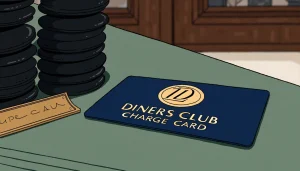
The same distinction matters when a site describes itself as a safe or trusted direct-banking casino. The payment wording alone is not evidence of regulatory status. In Great Britain, remote gambling licensees serving customers must hold the relevant UK Gambling Commission licence; payment methods do not substitute for it. A legal casino’s cashier operates inside that framework, where the credit-card ban remains a firm boundary.
Direct banking is thus best understood as part of the UK payment mix, not as a reason to assume that every bank-related route is interchangeable. Debit cards remain commonplace; credit-card gambling deposits remain prohibited. The line is deliberate.
What Else May Appear in the Payment Menu
A casino cashier can place bank-linked payments beside options that work quite differently. Their presence does not make them interchangeable: some are designed for funding an account, while others may have separate rules for withdrawals or promotions. The payment menu is less a universal catalogue than a set of routes the operator has chosen to support.
Paysafecard is a prepaid voucher for deposits. It can suit someone who wants to use a voucher balance rather than connect a bank account, but it is deposit-only. That distinction matters when considering how money can later leave the casino account: a method shown beside an Open Banking casino payment method is not necessarily a route for receiving a payout.
Other Payment Options
Casinos may offer alternative methods such as Paysafecard (prepaid vouchers) or e-wallets like Skrill and Neteller, though these may have different rules regarding withdrawals and promotions.
Apple Pay is another possible deposit option at some UK Gambling Commission-licensed casinos. Its appearance depends on the operator, so it should not be assumed to be available everywhere. Nor does a deposit option by itself establish that the same method can be used for withdrawals. Cashier labels can make unlike things look like neighbouring versions of the same service. They are not.
E-wallets may also sit alongside bank payments. Skrill and Neteller are available at some sites, but their promotional treatment should be checked in the relevant terms. A specialist review has reported that these wallets may be excluded from promotions; that is a report about some offers, not a rule that can be applied to every casino or bonus. The small print decides.
This is where the idea of an Open Banking casino payment method UK players can use needs a little precision. A cashier may offer a bank-linked route, a voucher, a digital wallet and a mobile-wallet option in one place, but each has its own compatibility. A method may accept deposits without supporting withdrawals; a promotion may treat one payment type differently from another. Neither the icon nor its position in the menu settles those questions.
The useful comparison is therefore not simply between a bank payment and a collection of alternatives. It is between the functions each cashier option actually performs: whether it can fund the account, whether it can receive money back, and whether the offer terms recognise it. Different routes, different rules.
Deposit Limits, Currency and the Cost of Moving Money
The amount accepted by a direct-banking casino is not a single figure attached to the method. A specialist casino review reports minimum deposits in the £10–£20 range, with the threshold depending on the payment route selected. That is a guide, not a promise: the cashier’s displayed minimum is the one that applies to a particular transaction.
Maximums can be set per transaction, per day or per month. They may also depend on the payment method and the status of the account. A bank-linked option therefore does not imply an unlimited deposit, nor does a limit shown for one route necessarily apply to another. The payment screen is where those conditions become concrete.

There is a separate limit, concerned not with the cashier but with the customer’s own finances. UK Gambling Commission rules require remote gambling licensees to prompt new customers to set a financial limit before their first deposit. They must also make account-level limit controls accessible. This turns a regulatory safeguard into part of the funding process, rather than a control hidden away after money has already moved.
Currency deserves equal attention. A specialist casino payment guide says GBP is supported, but account currency should be confirmed before the first transaction. If the casino account and bank account use different currencies, conversion may enter the journey. A specialist payment guide notes that costs can arise from casino or provider charges, bank or issuer fees, exchange-rate spread and, for some routes, network fees. A conversion spread may be less visible than a stated charge and still cost more.
There is no universal cheapest route. The total depends on the actual amount and on which charges apply at each stage. A flat fee can be easy to spot; an unfavourable exchange rate can be quieter. That is the less theatrical cost. A net-banking casino may show a payment as a single deposit, while the bank statement and account currency reveal more of the arithmetic. Before funding, the meaningful comparison is the amount leaving the bank against the amount credited to the casino account, alongside the limit selected in the account.
Withdrawals: Fast Routes, Approval and Delays
A fast deposit through a direct-banking route does not set the pace for a withdrawal. Paying money into a casino and receiving an approved payout are separate transactions, and the second involves a decision by the operator. The cashier can show a withdrawal as requested while it is still awaiting internal review.
A specialist casino review notes that Open Banking and bank transfers can support fast withdrawals at some sites. That is a possibility, not a dependable promise attached to every direct-banking casino withdrawal. The route matters, but so does the casino’s own approval process; a payment method cannot make that stage disappear.
Account verification is another part of the timing. If KYC is incomplete, the operator may need to finish its checks before releasing funds. First withdrawals can take longer while those checks are completed, so a payout estimate should be read alongside the casino’s stated approval process and the account’s verification status.

There are two clocks, then: the casino’s processing and approval, followed by the payment route’s delivery. A quick result at the cashier’s first stage does not establish when the money will arrive in the bank account. Nor does the phrase “instant banking withdrawal” settle the question by itself; it may describe the route or a site’s claim, rather than the full interval from request to receipt.
This distinction is easy to miss because deposits are visible at once in the player balance, while a withdrawal has to pass through checks before it can travel. A specialist review identifies approval and account verification as factors in withdrawal speed. Exact timing therefore depends on the operator and the state of the account, rather than on the word “banking” alone.
Fast, but conditional.
Why Payouts Usually Return to the Original Source
A casino payout is not simply a transfer of winnings to whichever account is most convenient. UK anti-money laundering rules usually require funds to go back to the payment source used to deposit them. The rule creates a traceable line between money entering a gambling account and money leaving it, making it harder for a casino account to be used to disguise where funds came from or where they are going.
That logic applies to direct banking as well as other payment routes. If a deposit came from a bank account held by the customer, returning funds to that source keeps the transaction within a recognisable ownership trail. It is a security control, not a judgement about the customer. Payment systems have always needed ways to distinguish an ordinary transfer from one that only looks ordinary.
An alternative payout destination may still be possible, but it can mean extra verification. The casino may need to establish that the proposed account belongs to the same person and understand why the original route cannot be used. Until those checks are resolved, the payout arrangement may remain unsettled. Closed-loop rules can therefore make the named account used for both deposit and withdrawal the least complicated route.
This is one reason that a best casino that accepts direct banking is not defined solely by whether its cashier offers a bank-linked deposit. The path back matters too: the payment terms should explain how the original source is treated and what evidence may be needed if circumstances change. A payment method is only half a route.
Why can a fast payout casino still delay my withdrawal?
A casino must process the withdrawal internally, and first payouts may take longer while your account is verified. Processing can also be delayed if your account is not fully verified.
Why must withdrawals return to the deposit method?
Returning funds to the original payment source is a common anti-fraud and anti-money-laundering control. Using the same customer’s account and payment route for deposits and withdrawals can also reduce ownership checks and avoidable friction.
Are Visa and Mastercard deposits definitely debit cards?
No. Visa and Mastercard are commonly accepted for debit-card deposits, but the card listing alone does not confirm that every card product is eligible; check the casino cashier and your card’s eligibility.
Can I use a credit card at 333 Casino in Great Britain?
No. Credit-card gambling has been banned at UKGC-licensed casinos since 14 April 2020, and the rule has not been relaxed.
Which method has the lowest fees?
There is no universally cheapest method. Compare casino and provider charges, bank or issuer fees, currency-conversion spread, and any network fees for the payment and amount you plan to use.
Is Skrill available?
Yes. Skrill is available at some UK-friendly casino sites and remains a common deposit option, though it may be excluded from promotions.
Are fast casino withdrawals guaranteed?
No. Withdrawal speed depends on the casino’s approval process and whether your account is fully verified.
What are the deposit limits at HunnyPlay Casino?
Minimum deposits usually start at £10–£20, depending on the payment method. Maximum limits per transaction, day, or month vary by method and account status; UKGC-licensed casinos must provide accessible account-level limit controls.
Related posts

UK Casino Welcome Bonuses: How Offers Work

VPN-Friendly Casinos in the UK: How Access Works
