
American Roulette Casinos in the UK: Rules and Play
 Available in GB
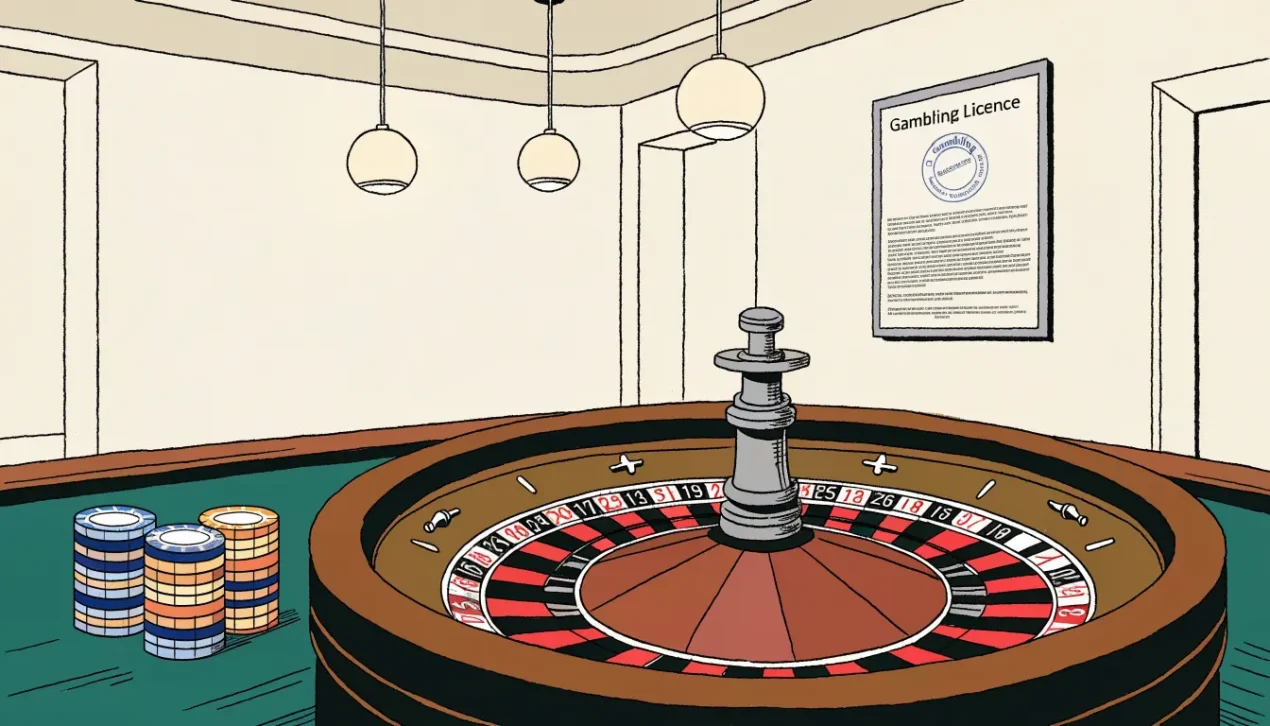
The guide separates operator licensing from game choice and explains the wheel, table layout, stakes and roulette’s place alongside slots.
The Rules Behind a UK Roulette Casino
An online roulette room may look like a private entertainment space: a table, a wheel and a choice of wagers made from a phone or computer. In Great Britain, however, the business behind that screen sits within a public regulatory system. The UK Gambling Commission oversees commercial gambling there, including online casinos. Its role is not to recommend a particular table or decide which version of roulette is most appealing. It sets the framework in which licensed gambling businesses must operate.
That distinction matters when comparing American roulette casinos in the UK. A familiar design, polished website or prominent game title says little about the legal standing of the operator. The relevant question is whether the company holding the service has the appropriate Gambling Commission operating licence. A casino’s appearance is a sales matter; its permission to serve customers is a regulatory one.
The Commission’s reach is not determined by where a company keeps its computers. Remote gambling offered to consumers in Great Britain falls within its remit even when the equipment supporting the service is located elsewhere. The arrangement reflects a simple principle: a business cannot avoid the rules of the market it serves merely by placing its machinery beyond the border. For a player choosing among online casinos with American roulette, the operator’s connection to the British market matters more than the geography of its servers.
There is a useful distinction between the licence held by a business and the personal licences held by individuals involved in operating gambling. The Commission grants operating permissions to companies and personal permissions to people working in relevant roles. Those are not interchangeable credentials. A named employee’s status does not substitute for the company’s authority to provide gambling, and a corporate licence is not a general statement that every individual associated with the business holds a personal licence.

The Commission is the sole regulator for commercial gambling in Great Britain. This central role gives the licensing system a clear point of reference, rather than leaving the status of an online casino to the judgement of advertising, a game provider or a review site. The regulator’s public register is the practical place to confirm whether an operator appears under the correct business identity and licence details.
Before making a deposit, the licence number should be checked against that register. The name on a website may be a brand rather than the legal name of the licensed company, so the relationship between the two should be clear. A mismatch, missing information or an entry that cannot be confirmed is a reason to pause rather than to infer that the site is authorised. The check is not a ceremonial box. It is the point at which a claim made by the casino can be compared with the regulator’s record.
A licence is not a medal for a casino’s design, nor a promise that every session will be enjoyable. It identifies a business operating within the relevant regulatory framework. That framework is what separates a licensed service from a site that merely presents itself as British-facing. The Commission regulates the activity; it does not choose a player’s roulette table, assess the appeal of its interface or certify that a particular wagering choice is sensible.
Online gambling in the UK is legal for adults aged eighteen and over when it is provided by an operator holding a UK Gambling Commission licence. Operators must verify a customer’s age before allowing money to be deposited into a gambling account. In practice, this makes age checks part of the account relationship, not a detail that can be left until after play has begun. A licensed casino should be able to explain who is providing the service and how its regulatory status can be confirmed.

This is a more useful starting point than an ungrounded ranking of the best American roulette casinos. A league table can make selection appear settled by adjectives: best, trusted, leading. Those words may reflect a reviewer’s priorities, a commercial arrangement or a passing impression. A licence check answers a narrower but more important question: whether the operator has the permission required to serve the market. It does not answer every question about the game, and it should not be made to do so.
The regulatory boundary also says something about how Britain treats remote gambling. The screen may make the transaction feel detached from ordinary public institutions, but the service remains a commercial activity subject to oversight. A roulette game does not become exempt from that relationship because it is digital, branded as entertainment or supplied through a distant technical system. The regulator’s concern is the offer to consumers, not the theatrical setting around it.
That is the threshold, not a recommendation. Roulette can be approached as recreation, but money placed at a casino is exposed to loss; gambling should be limited to what can be afforded to lose. The licence check establishes who is accountable within the British system. The rest is a matter of choice—and chance.
Top online casinos in the UK
- SpinFormulaBonus: 550% Up To £15,000 + 550 FS · Payout speed: 1-3 business days
- SlotoSportBonus: 500% up to £ 10 200+ 777 FS · Payout speed: 1-3 business days
- Revery PlayBonus: 100% up to€1,000+ 100 FS · Payout speed: 1-3 business days
- AmunbetBonus: Join now and get 450% up to 2,700 GBP + 450 FS · Payout speed: 1-3 business days
- BeOnBetBonus: 100% up to €500 + 100 FS · Payout speed: 1-3 business days
- JetsetspinsBonus: 200% Bonus + 100 Free Spins + Free Royal Wheel · Payout speed: 1-3 business days
- NightWinBonus: £900 + 400 free spins · Payout speed: 1-3 business days
- x3betBonus: Welcome Pack 100% Up to £1.000 + 200 Free Spins · Payout speed: 1-3 business days
- ZombillionBonus: Welcome Pack 250% up to £4000 + 200 FS · Payout speed: 1-3 business days
- BritsinoBonus: Welcome Package – Get your £2,200 + 2,000 FS · Payout speed: 1-3 business days
What “Best” Can Mean Without a Casino Shortlist
The phrase “best American roulette casino” sounds as though it ought to lead to a ranked table, complete with winners and runners-up. But a ranking without comparable, current evidence is decoration. For a casino serving Great Britain, a more useful starting point is whether the operator holds the relevant Gambling Commission licence. That is not a flourish attached to a review; it is a condition of offering remote gambling to consumers in Great Britain.

The licence matters more than a polished lobby or an inviting roulette thumbnail. The Gambling Commission regulates remote gambling offered to people in Great Britain, even when the operator’s key equipment is located elsewhere. Geography does not make the obligation disappear. An online casino may be based abroad, but if it serves this market, the relevant licence still has to be in place.
That gives “best” a less glamorous, more testable meaning. A candidate for the best online casino for American roulette should first be an operator whose regulatory status can be checked, rather than one whose virtues exist only in promotional language. The UK Gambling Commission’s public register is the place to verify the licence number before depositing. A name on a home page is not a substitute for that check, nor is a badge whose connection to the licensed business is unclear.
A careful check concerns identity as well as status. Casino brands and operating companies do not always share a name, so the relevant question is whether the licensed entity corresponds to the service being considered. The brand, stated domain and licence information should tell a consistent story. A mismatch is not proof of wrongdoing by itself, but it is a reason to pause rather than to let a familiar logo settle the matter.
This approach will not produce a neat podium of American roulette casinos in the UK. It produces something less theatrical: a threshold. If an operator cannot be matched to the relevant licence, there is no sound basis for treating it as a suitable choice for British consumers. If that threshold is met, it establishes regulatory standing; it does not prove that every feature, claim or commercial term is favourable. Those are separate judgements, and they should not be smuggled into the word “licensed”.
Do
- Verify the licence on the public register
- Ensure the brand corresponds to the licensed entity
- Check the specific game’s rules and paytable
Don’t
- Rely on a reviewer’s ranking or adjectives
- Assume a brand name is the legal operator
- Mistake a polished interface for regulatory compliance
The distinction matters because “best” often bundles unlike things together. One player may mean a clear interface; another may mean a particular version of roulette; another may be drawn to a welcome offer or a broad casino catalogue. A review can compare such features only if it explains what was checked and when. Without that, a top-place label is merely an opinion wearing a medal.
Nor does a discussion of the best American roulette online casino need to become a lesson in American roulette rules, inside wagers or outside wagers. Those are questions about the game and its table, not reliable evidence about the operator behind it. A casino can present the game attractively and still leave the more consequential question unanswered: who is legally responsible for providing the service?
There is a social point in this rather plain test. Remote gambling crosses borders with the ease of a screen loading; regulation insists that responsibility should not cross out of view with it. Britain’s licensing framework makes the operator’s relationship to the market part of the choice, rather than a matter hidden behind the game. That is a modest safeguard, not a promise that gambling is risk-free.
A sensible comparison therefore begins with the register, then keeps its claims in proportion. Licence verification can establish whether the operator has the required standing to serve Great Britain. It cannot, by itself, establish that a casino is the best for every player, or that an offer is worth accepting. A league table that treats those questions as settled by a star score has skipped the difficult part.

The same restraint applies to the word “best” in a search for an online casino for American roulette. There may be many ways to judge the playing experience, but a ranking should not replace a check that is both concrete and consequential. The relevant licence is the entry point; the rest of the comparison must be judged on its own evidence.
Before any deposit, age verification is also part of the operator’s responsibilities: gambling accounts cannot be funded until the customer’s age has been checked. And the financial decision remains the player’s, whatever a review calls a casino. Only gamble what can be afforded to lose. A short sentence, but not a small one.
American Roulette Online: The Game in Its UK Setting
American roulette online is a familiar table game translated into a screen-based setting. Its appeal is not difficult to understand: the game gives chance a visible, ceremonial form. A wheel, a table and a result make uncertainty feel organised. On a website or app, that small theatre sits alongside menus, account controls and other games, but it remains a distinct activity rather than a general measure of whether a casino is suitable.
The online version can be encountered in different visual forms. A screen may present a digital game, while a live format places a dealer and physical equipment in view. Those presentations can alter the atmosphere: one is shaped by animation and interface design, the other by the sense of watching events unfold in a studio. Neither changes the basic fact that roulette is a casino game, not a slot. The setting is different; the category matters.
That distinction is particularly relevant in Great Britain, where rules introduced for online slots have attracted attention beyond the games they govern. A specialist casino review states that the Great Britain online slot stake limits do not apply to roulette or blackjack. That is a claim about the boundary between game categories, not a general statement about what a roulette session costs or what a particular table permits. The limits should not be carried across from slots simply because both kinds of game appear on the same casino platform.
There is a social history in that confusion. When a rule is attached to a conspicuous product, its name can travel further than its scope. A slot limit becomes, in casual discussion, a limit on online gambling as a whole. Yet regulation often works by drawing lines between forms of play, and those lines matter to the person deciding what a screen is actually offering. Roulette’s exemption from the cited slot limits does not make it risk-free, nor does it establish a suitable stake for any individual.
The phrase “American roulette” identifies the version being sought; it does not answer the wider question of where the game is hosted or how the operator is governed. A casino’s menu may contain many games, but a roulette title alone says little about the standards attached to the account behind it. In Great Britain, remote operators serving consumers must hold the relevant Gambling Commission licence. Licence status belongs to the operator, not to the name or appearance of an individual game.

That separation is easy to overlook on a polished screen. The game occupies the foreground; the company and its obligations sit elsewhere, in account information and regulatory records. A player considering a deposit should verify the operator’s licence on the Gambling Commission’s public register before paying in. Age must also be verified before an operator allows a customer to deposit. Such checks are not decorative paperwork: they are part of the framework in which legal remote gambling is offered in Great Britain.
The experience itself can feel casual precisely because the screen removes much of the ceremony associated with a physical casino. There is no journey to a gaming room, no crowd gathered around a table, and no need to treat the activity as an occasion. That convenience can make a session seem smaller than its financial consequences. The game remains gambling, whether the display is animated, streamed or reduced to a compact panel.
A useful boundary, then, is not between old-fashioned and modern roulette, but between the game and the environment that presents it. American roulette online offers a recognisable form of casino play; the surrounding platform determines the account conditions and the regulatory context. The slot limits mentioned in specialist commentary do not govern roulette, but that distinction is not permission to treat every stake as harmless. Only money that can be afforded to lose belongs in gambling.
The screen may make chance look neat. The consequences are less tidy.
The American Wheel, and the Limits of What Can Be Verified
The wheel gives roulette its most recognisable image: a moving centre, a ring of numbered spaces, and the pause in which motion becomes a result. Online, that image may be rendered on a screen, but the word “American” is not, by itself, a description of how a particular casino has built or presented its game. It is a label that needs to be read alongside the game information attached to the table.
That distinction matters because the wheel is often asked to carry more meaning than it can. A search for an American roulette wheel may be looking for a recognisable visual, for a particular version of the game, or for confirmation of what appears on screen. Those are related interests, but they are not identical. A title can identify a game without settling every question about its display, equipment or operation.
The same care applies to the phrase “double zero”. It may appear in a game name or description, but a phrase alone does not establish the precise specifications of a particular online wheel. Nor does a polished animation tell the whole story. The moving image is part of the presentation; the rules and information supplied for the game are what give that image context. A wheel can be visually persuasive. It is still only one part of the account.

This is a small but useful distinction in a market where digital casino games borrow the language and imagery of physical rooms. The online wheel can evoke the old ceremonial quality of roulette: attention gathered around a turning object, followed by a moment of collective interpretation. Yet a screen is not a physical table, and an animation should not be treated as proof of hardware or of a wheel’s exact construction. Atmosphere is not specification.
There is also a regulatory distinction, though it concerns the game category rather than the wheel itself. A specialist review reports that Great Britain’s online slot stake limits do not apply to roulette or blackjack. That does not establish anything about the design of an American roulette wheel; it simply separates roulette from the slot rules discussed in that review. Categories matter. The wheel does not become a slot because it is animated, and its appearance does not determine which rules apply.
For anyone comparing an online casino with American roulette, the useful reading is therefore modest: treat the wheel as the visible centre of a game, not as a complete specification. The name, on-screen presentation and accompanying game description each have their own job. Confusing them creates certainty where there is only an attractive image.
The wheel turns; the label frames it; the game’s stated terms do the explaining. That is enough to keep the visual in its place, without asking it to answer questions it was never designed to settle.
Live Casino Features
Live roulette provides a human-led presentation with a dealer and physical equipment, creating a studio atmosphere that differs from purely computer-generated digital games.
Live Roulette in the Company of Other Casino Games
Live roulette sits within a broader kind of online casino entertainment: games presented by a human dealer rather than solely through a computer-generated interface. The distinction is not merely visual. A dealer gives the game a visible pace and a human presence, while the surrounding studio presentation can make a remote session feel more like an event than a solitary screen exercise. That atmosphere is part of the appeal, though it does not change the underlying fact that the game is still played online.
Roulette is rarely the only attraction in a live casino. It shares the setting with card games and other formats, each bringing a different kind of attention: the measured ritual of a table, the social language of cards, the brief suspense of a result. The grouping matters because “live casino” describes a mode of presentation, not a single game. A search for a live American roulette table may therefore lead into a wider lobby of games, rather than a roulette-only destination.
There is a UK-market history behind that arrangement. Grosvenor first introduced its live casino games in 2013, with a collection that included Blackjack, Texas Hold’em and Roulette. The launch placed roulette beside familiar card games from the outset, reflecting a broader idea of the casino as a collection of table experiences rather than one signature attraction. The catalogue has a social logic: variety keeps the room legible as a casino, even when the room itself is on a screen.

The dealer is the defining feature of the live format, but the phrase should not be mistaken for a promise of companionship. The interaction remains bounded by the platform and the game. What it offers is a human-led presentation, with a sequence that can be watched as it unfolds, not the old-fashioned freedom of lingering at a physical table. Technology carries the room; the dealer supplies its visible centre.
For roulette, this context helps separate the game from the wider question of casino choice. A live American roulette offering belongs to a category shaped by people, cameras and presentation as much as by the game itself. Its neighbouring tables may be card games, but that does not make roulette a card game, nor does a live setting tell anything by itself about the operator behind it. Atmosphere and accountability are different matters.
Online gambling should remain entertainment, not a way to solve financial problems. Only gamble with money that can be afforded to lose.
Playing Online: Payouts, Stakes and the Slot Distinction
Playing American roulette online brings two separate questions together: what a particular game pays, and which rules apply to the amount staked. They are easy to confuse because both appear beside the same digital table. Yet a slot limit is not a roulette payout rule, and neither tells the whole story of a game’s terms.
A roulette payout depends on the wager selected and the game’s published paytable. That schedule is the useful reference before play: it explains how the game settles different outcomes and what a winning wager returns. There is no single payout figure that can stand for every selection. A headline return, where one is displayed, should not be treated as a promise that any session will produce that result. The outcome of an individual round remains uncertain.
The practical routine is therefore less mysterious than promotional language can make it. Choose an American roulette game, examine its rules and paytable, then decide whether the available terms fit the intended stake. The game’s own information matters more than a general claim about “roulette payouts”, since that phrase can conceal differences between wagers. A displayed return is not a forecast.
A distinction also matters when comparing roulette with online slots in Great Britain. A specialist review describes the statutory online slot stake limits as applying to slots, not to roulette or blackjack. That point should be read narrowly: it separates game categories; it does not establish a roulette stake cap, guarantee that every casino sets identical table terms, or remove the need to check the rules shown for a particular game. A restriction aimed at slot play cannot simply be carried across to a roulette table.
This is where the interface can mislead by proximity. A casino may place several games in the same lobby, but shared surroundings do not make their rules interchangeable. Slot controls and roulette paytables answer different questions. For roulette, the relevant information is the table’s own wager conditions and settlement schedule, rather than a limit described for slot game cycles.
Online play also makes the pause before wagering unusually important: the rules are on screen, but so is the invitation to continue. Reading them is not ceremony. It is the point at which a player can tell what a chosen wager means before the outcome is known.
The figures that attract attention are not the only figures that matter. A payout schedule describes possible settlement, not a dependable income or a measure of how long funds will last. Roulette remains gambling, whether played at a physical table or through a screen. Only gamble with money that can be afforded to lose.
Reading the Roulette Table Layout
A roulette table is the betting surface associated with the game; on screen, it becomes part of the game interface. The phrase “table layout” can therefore refer to what is displayed around the game, rather than to the wheel itself. Keeping those ideas separate matters: a view of a wheel does not, by itself, explain how the accompanying betting surface is arranged.
The visual presentation can invite assumptions. Familiarity with the name of a game may make a table seem self-explanatory, but a picture is not a rulebook. Labels, markings and the way a screen presents them need to be read in the context of that particular game. Without a clear account of those details, describing exact positions or claiming that every American roulette table follows one identical screen arrangement would be guesswork.
That distinction is useful when looking at an online American roulette game. The table is not the same thing as the American wheel: one is the surface or interface used for play, the other is the game’s wheel. Nor is a casino’s general website layout necessarily the roulette table. Pages around a game may contain menus or other information, but their design does not establish the rules or structure of the game itself.
- Table Layout
-
The betting surface associated with the game, which includes the markings and labels used for placing wagers on a screen.
A careful description stays close to what is visible and explained. It does not infer a rule from a graphic, or treat a decorative element as a functional part of the table. Where the interface gives instructions, those instructions are more useful than assumptions borrowed from another screen or a physical setting. The image may look familiar. That is not the same as confirmation.
This restraint is particularly relevant to the phrase “American roulette casino table layout”. It can mean the betting surface within a game offered by a casino, not a standard design shared by every casino. The setting says where the game is encountered; it does not establish the exact appearance of its table. Specific descriptions need to belong to a particular game interface, rather than being presented as universal features.
The broader context still matters. A UK-facing remote gambling operator must hold the relevant Gambling Commission licence, and a licence number can be checked on the Commission’s public register before a deposit. That is a question about the operator, not a feature of the table. Different matters, best kept separate.
A screen can show a table; it cannot make an unsupported description reliable. And gambling should remain within what can be afforded to lose.
Roulette Is Not a Slot: A Useful Regulatory Boundary
A roulette table and a slot game may sit side by side in an online casino, but they do not fall under the same stake rule. The distinction matters because a limit attached to one category can easily be mistaken for a general ceiling on casino wagering. It is not.
A specialist review reports that Great Britain’s online slot limits set a maximum of £5 for each game cycle for adults aged 25 or older, and £2 for those aged 18 to 24. Those figures concern slots. The same review says the limits do not extend to roulette or blackjack. An American roulette game therefore should not be described as subject to the slot cap simply because it appears on the same casino site.
That boundary is narrower than it may sound. It does not establish what a roulette table will accept as a minimum or maximum wager, nor does it say what any particular operator allows. Those are separate details of a game or account, and should not be inferred from rules written for slots. Category first; assumptions later, if at all.
The word “online” does not change the game’s category. An American roulette game played through a browser or app remains roulette for this comparison, rather than becoming a slot because the play is digital. Its position in a casino lobby is not a regulatory test either. A familiar interface can make unlike products look as though they share a single set of conditions.
There is a modest social logic in the distinction: regulation can address a defined form of play without flattening every casino game into one rule. But precision matters. The slot limits say nothing here about roulette’s payout structure, table layout or available wager sizes. They should not be stretched into a general description of what roulette costs to play.
For anyone comparing an online American roulette game with slots, the useful point is simply that the cited stake limits are slot-specific. The distinction is real; the details of roulette remain a separate matter.
Real-Money Play and the Cost of a Deposit
Real-money American roulette sits within the same payment and account safeguards as other remote gambling in Great Britain. These rules concern how gambling is funded and managed, not the shape of a roulette wheel or the game’s wagers. The deposit is where a pastime meets household money; regulation treats that boundary as worth making visible.
A licensed operator must verify a customer’s age before allowing funds to be deposited into a gambling account. Before a new customer makes a first deposit, the operator must also prompt them to set a financial limit and provide accessible controls for changing account-level limits. These measures do not remove the possibility of loss. They put a pause and a point of review in the path to play.
Credit cards cannot be used to fund gambling with a remote operator. The prohibition also covers credit-card money routed through a money service business, and wallets that permit credit-card funds to be used for gambling. A payment method’s familiar logo, then, does not settle whether it is permitted: the source of the funds matters.
The operator’s status matters too. Before depositing, the licence number should be checked against the UK Gambling Commission’s public register. A polished cashier is not a substitute for a regulator’s record.
Real money can make each decision feel more consequential than play without a cash balance. That is a feature of the stakes, not a special rule for roulette. Deposits are money at risk, and gambling should be limited to what can be afforded to lose. The regulator’s safeguards can structure a pause; they cannot turn a loss into a harmless one. A plain distinction, and an important one.
How Many Pockets Does an American Roulette Wheel Have?
A precise pocket count should be tied to the rules for the particular game, rather than treated as a fact established by its label alone. “American roulette” identifies a form of roulette, but the name by itself is not a substitute for the game’s published specification. Where a casino page gives a number, the useful question is whether the rules for that exact table or game confirm it.
That distinction matters online. A title, thumbnail or short description may identify a game without setting out every physical detail. The table’s rules are the better place to check what the game actually represents. If the rules do not state a pocket count, a confident number elsewhere on the page may be repeated convention rather than confirmation.
The phrase “American roulette wheel with 38 pockets” appears in descriptions of the game, but it should not be used as a verified specification without support from the particular game’s rules. Nor should a figure be inferred from the word “American”. A reader comparing games needs an answer attached to the game being offered, not an assumption carried from one description to another.
This is a small point with a broader lesson: casino terminology can sound more exact than the information accompanying it. The game name may set an expectation; only the rules can clarify what a particular online version claims to provide. If that detail is absent, the responsible answer is not to fill the space with a plausible count.
The distinction does not alter the wider regulatory boundary: roulette is not treated as an online slot for the Great Britain slot stake limits, a point attributed in a specialist review. That is a narrow classification, not evidence about a wheel’s construction.
A roulette session also carries financial risk, whatever the game description says. Only gamble what can be afforded to lose.
What are the online slot stake limits in Great Britain?
The limit is £5 per game cycle for adults aged 25 and over, and £2 for adults aged 18 to 24. These limits do not apply to roulette or blackjack.
Are online casino games licensed and regulated?
Yes. Online gambling offered to consumers in Great Britain is regulated by the UK Gambling Commission, and operators must hold the relevant licence.
Is LuckyPays licensed by the UK Gambling Commission?
The Commission’s public register dated 26 September 2026 does not show an entry for LuckyPays or luckypays.io. Check the register using the casino’s legal company name and licence details before depositing.
Related posts

UK Casino Welcome Bonuses: How Offers Work

VPN-Friendly Casinos in the UK: How Access Works
