
Live Blackjack Online Casinos in the UK: A Guide
 Available in GB
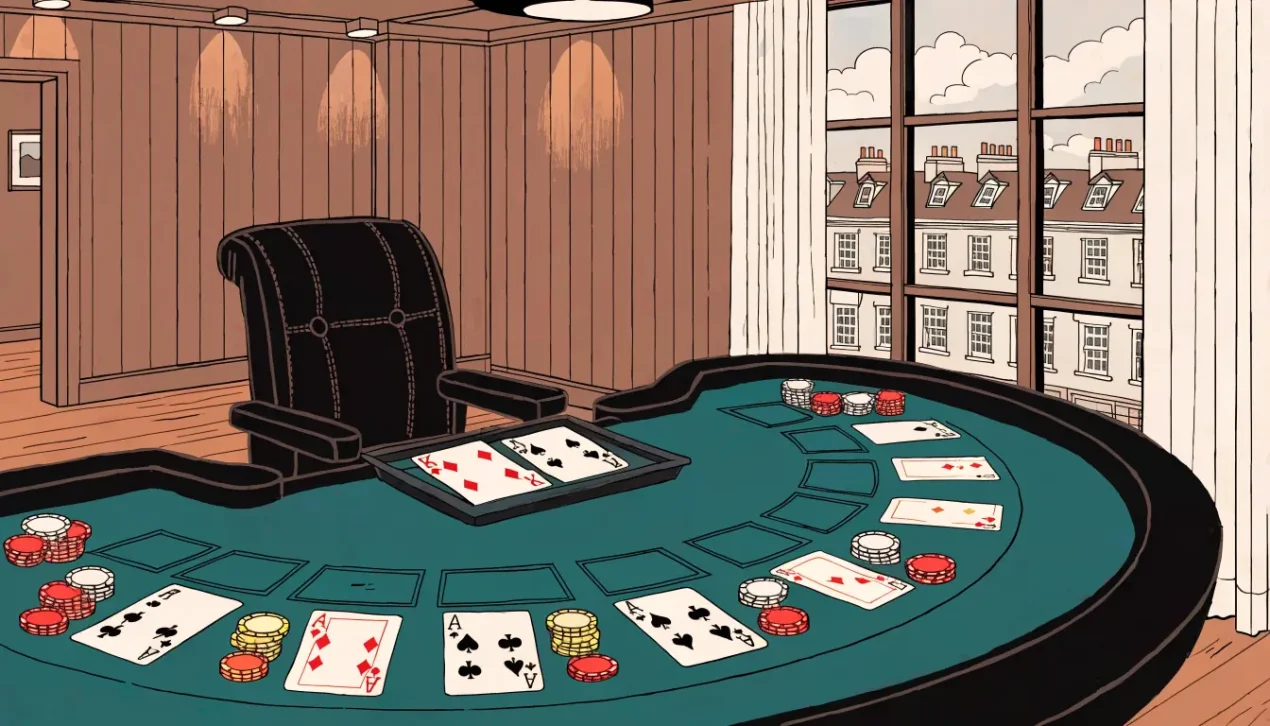
A practical overview of licensing, streamed dealers, table rules, variants, stakes and the account conditions behind real-money play.
A UK Blackjack Casino Begins with a Licence
A blackjack casino operating online is more than a collection of tables behind a sign-in screen. It is a business offering a casino game for real money, and in Great Britain that business sits inside a regulatory system with a defined boundary: the operator must hold the relevant licence from the Gambling Commission. The location of its website, offices or gaming equipment does not remove that obligation.
This matters particularly for live blackjack, where the visible table may be streamed from a studio far from the person placing a wager. Distance can make the arrangement feel like a matter between a player and a remote entertainment company. Legally, the important question is not where the camera or server happens to be. It is whether the operator is offering remote gambling to consumers in Great Britain. If so, the Commission’s rules apply.
The UK Gambling Commission regulates commercial gambling in Great Britain and is the sole regulator for that activity there. Its remit includes online casinos, not only venues with doors and a physical gaming floor. The distinction between a traditional casino and an online one is therefore a difference in how the game is delivered, not an exemption from gambling regulation. A screen does not turn the business into something else.
The Commission grants operating licences to businesses and personal licences to individuals who perform relevant roles in the industry. Those licences are not interchangeable. The operating licence concerns the company’s permission to provide gambling; a personal licence concerns an individual’s permission to carry out specified work in the sector. Both reflect a system that treats gambling as a regulated commercial activity, with responsibilities attached to the organisation and to people involved in its operation.

That framework gives the phrase “UK blackjack casino” a practical meaning. It should describe an online casino authorised to serve the British market, rather than simply a site that accepts sterling, uses English or has a name that sounds local. A company may be based elsewhere and still fall within the Commission’s jurisdiction when it offers remote gambling to consumers in Great Britain. A distant studio is no escape hatch.
There is a constitutional wrinkle in the word “UK”. The Gambling Commission is the regulator for commercial gambling in Great Britain; the legal arrangements are not identical across every part of the United Kingdom. The Gambling Act 2005 governs gambling in England, Wales and Scotland, but not Northern Ireland. For online blackjack advertised as available to British consumers, the central point remains that the remote operator must hold the relevant Commission licence. Care with geography is not pedantry when licensing powers have borders of their own.
A licence also distinguishes regulated provision from an appearance of regulation. A polished website, a live dealer speaking into a camera, or a page describing a casino as British does not itself establish that the business has permission to offer gambling in Great Britain. The licence belongs to the operator, not to the game’s visual style. A familiar card table can be presented by a company subject to the British system or by one outside it; the felt and cards do not tell the story.
For that reason, a licence is not merely a badge added to a website’s footer. It marks which regulatory framework governs the operator’s commercial activity and where a player’s account sits in relation to that framework. The Commission’s reach over remote gambling follows the offer to consumers, rather than the physical location of the equipment used to deliver it. The modern casino has learned to travel without moving.
The public register is the place to confirm an operator’s status, and the relevant licence number should be checked there before a deposit is made. That check is about the company behind the site, not whether a particular blackjack table looks convincing. The latter is a question of presentation; the former is a matter of legal permission. They are easily confused, and only one can be settled by a camera angle.
This boundary comes before any comparison of table layouts, dealers or game formats. A UK-facing online blackjack casino is not defined by a British flag on its homepage or by the country hosting its live feed. In Great Britain, it is defined first by whether the business has the Commission’s authority to offer remote gambling to consumers. Everything else happens inside that boundary.
What “Best” Means When the Table Is Live
“Best” is a useful word for a search and a poor verdict on its own. A live blackjack casino is not made suitable by a polished lobby, a familiar dealer’s greeting or a table with a dramatic name. The more useful test is whether the operator can be checked, whether the account gives clear ways to manage play, and whether help is available when something goes wrong. These are not qualities that make every player value the same casino. They are a way to look past presentation.
The first check is regulatory, not aesthetic. A remote operator serving customers in Great Britain is required to hold the relevant Gambling Commission licence. The public register allows the business and its licence details to be checked rather than taken on trust from a badge in a footer. The licence number should match the operator shown on the site; a familiar trading name alone is not enough to settle who is responsible for the account. This is a more solid starting point than a recommendation copied from a review page.
A register entry is not a personal endorsement of every feature or every table. It establishes that the operator sits within the British regulatory system; it does not promise that a particular interface will suit every player, or that play will end favourably. Those are separate questions. A casino may look convincing while making basic account information hard to find. The register is a threshold, not a gold star.
After that, the test becomes practical. Account controls should be visible where they can actually be used, not tucked behind a trail of promotional banners. Clear access to limit-setting and other play-management options matters more than a reassuring sentence about responsible gambling. The design should make it possible to understand what controls exist and how to reach them without having to guess which menu contains the important part.
There is a social point here, too. Gambling rules are not merely a frame around entertainment; they reflect a judgement that commercial play needs boundaries and routes for intervention. A responsible operator makes those routes legible. If the account area treats limits as an afterthought while making offers conspicuous, the difference in emphasis is worth noticing. A control that cannot be found is not much of a control.
Complaints information belongs in the same assessment. The route should be identifiable, with a clear explanation of how an issue is raised and what happens if it remains unresolved. UK-licensed casinos must provide an internal complaints process and access to an approved Alternative Dispute Resolution service. That does not mean every dispute will be decided in a player’s favour. It means there is a defined path beyond an exchange with customer support, rather than an argument left to drift inside the operator’s own system.
DO
- Check the operator’s licence number on the public register
- Ensure account controls and limit-setting options are clearly visible
- Verify the identity of the company responsible for the account
DON’T
- Rely solely on a polished website or a familiar trading name
- Trust a badge in a footer without verifying it via the register
- Ignore whether help and complaint routes are easily accessible
The quality of a live blackjack experience can also be judged by how much the site explains before play begins. Table information should be easy to locate: the rules in force, any minimum or maximum wager shown for that table, and the practical steps involved in joining or leaving it. The point is not to turn a game into a legal document. It is to avoid discovering a condition only after the interface has encouraged a decision. Clear presentation is a form of respect for the player’s attention.
The stream and the table interface deserve a separate, modest inspection. Is the dealer’s action visible? Can the available controls be understood without obscuring the game? Does the connection remain usable on the device being used? These are questions of fit, not guarantees about future performance. A sophisticated studio cannot compensate for controls that are confusing, just as a simple layout may be perfectly adequate if it presents the relevant information plainly.
Promotional language should be read with the same restraint. A prominent offer may have conditions that affect whether it is useful, and its presence does not tell much about the quality of the blackjack table itself. Comparing casinos by the largest headline claim confuses marketing with service. The better comparison asks whether the terms are easy to locate and whether the operator gives a clear account of what must be done to qualify. If the explanation is difficult to follow, that is already information.

No single checklist can name one best online casino for blackjack for every person. One player may care most about an uncluttered screen; another may put greater weight on account tools or the clarity of the complaints route. The sensible approach is to treat the licence check as essential, then judge the surrounding experience by what can be verified on the site rather than by adjectives in its advertising. A live table can be entertaining. The account around it should still be accountable.
The Dealer, the Camera and the Table
A live-dealer blackjack table is a game conducted by a person and carried to the player as a video stream. The camera is not decoration: it makes the dealer, cards and table visible, turning a remote session into a broadcast of an event taking place elsewhere. The screen becomes a window onto a physical table, while the decisions and wagers are made through the online interface.
That arrangement differs from automated blackjack. In an automated game, software presents the cards and manages the sequence without a human dealer appearing on screen. The play may resemble a table game, but its visible world is constructed by the software. In live blackjack, a dealer handles the cards and the camera records the action; the interface connects that scene to participants who are not in the studio.
Automated Blackjack
Software presents the cards and manages the sequence without a human dealer appearing on screen.
Live Blackjack
A human dealer handles the cards and the camera records the action in a streamed environment.
Live Dealer Experience
A combination of a human dealer, a camera view, and software that transmits the interaction.
The distinction is partly technical and partly social. A streamed table gives a game a human pace: cards are handled in view, the dealer addresses the table, and each round has the small pauses of a procedure being performed rather than merely rendered. Those pauses can make the game feel more like a casino table than an animation. They do not, by themselves, alter the rules or the uncertainty of the result.
The dealer is central to that impression, but not the sole maker of the experience. The camera chooses what can be seen; the interface indicates where a participant can act; the stream carries the dealer’s movements across the distance. A player at home is not simply watching a broadcast, since the table accepts wagers and responds to choices through the software. Nor is the player physically seated among the other participants. Live play occupies an odd middle ground: a real person performs the game, while the online system makes that performance usable at a distance.
This is why the phrase “live dealer” describes more than a picture of a person beside cards. It signals a particular division of labour. The dealer conducts the visible table, the camera supplies the view, and software transmits the interaction between the table and its remote audience. The experience depends on all three. Remove the dealer and the format becomes automated; remove the stream and the distant participant loses the table’s visible action.

The format also gives online casinos a way to borrow the rituals of a physical venue without reproducing the venue itself. There is a dealer, a surface on which cards are dealt, and a shared focus for people taking part from separate places. But the camera’s frame is selective. It shows the table as a composed scene, not the whole social life of a casino: the surrounding room, its noise and the informal exchanges between people remain beyond the edge of the image. A clean view, not a crowded room.
In Britain, Grosvenor provides an early point of reference for this kind of online presentation. The company introduced live casino games in 2013, with Blackjack alongside Texas Hold’em and Roulette. The range placed blackjack among familiar card and casino games, rather than presenting the live table as an isolated novelty. It also marked a shift in how a casino could appear online: not only as a menu of games, but as a place from which a dealer’s table was broadcast.
A live blackjack game can therefore feel recognisable without being identical to a visit to a casino. The dealer and dealt cards supply human presence; the stream supplies sight and sound; the interface makes participation possible from elsewhere. The table is real, but the player’s seat is digital.
How a Blackjack Hand Reaches Its Result
A blackjack hand is a small sequence of choices made against a fixed objective: build a hand close to the game’s target without going over it. The cards supply the uncertainty; the player decides whether to accept that uncertainty or stop taking cards. A decision changes the shape of the hand, not the cards already dealt.

A hand begins once the wager is placed and the opening cards are dealt. Card values are added to produce a total. Number cards count at their face value, picture cards carry the same value, and an ace can count in whichever way is more useful without taking the hand over the target. That flexibility makes an ace valuable, but not magical: the rest of the cards still determine what the hand can become.
The player’s first decision is usually whether to draw another card or stand. Drawing, often called hitting, adds a card and changes the total. If the new total exceeds the target, the hand busts and ends there. Standing means keeping the current total and waiting for the dealer’s hand to be resolved. A modest total may feel unsatisfactory, but taking another card is not automatically an improvement. It trades the chance of reaching a stronger total for the risk of busting.
The dealer then completes the hand under the table’s rules. In a common arrangement, the dealer has a card that is not initially visible; the details of when it is revealed and which actions are available can depend on the table. The dealer does not make the same open-ended decisions as the player. That difference matters: the player chooses whether to take more cards, while the dealer follows set instructions.

If the player has not busted, the hands are compared. A higher total that remains within the target beats a lower one; a dealer who goes over the target loses to any player hand still standing. Matching totals generally result in a tie, with the original wager returned rather than treated as a win. A natural combination of opening cards may be treated differently from a total assembled later, so the table’s stated rules determine how that result is settled.
Some tables also offer actions that alter the original wager or divide an opening pair into separate hands. These are not merely decorative buttons: they change the amount at risk or the number of decisions still to come. Their availability and conditions are table-specific, so the on-screen rules matter before an action is selected.
Live play adds a visible dealer and a streamed sequence, but the hand still turns on these stages: wager, deal, decision, dealer resolution and comparison. The camera can make the process feel social; it cannot make a risky choice safer. No sequence of clicks guarantees a favourable result. Blackjack gives players meaningful decisions, but those decisions operate inside chance, not outside it.
Live Blackjack Variants and the Wider Casino Floor
Live blackjack is not a single table repeated under different lighting. Casinos may offer a traditional format alongside tables with altered rules, side-bet options or a more theatrical presentation. The shared name does not make the tables interchangeable: the rules shown for a particular game determine what choices are available and how its result is settled.
Some tables keep the familiar blackjack structure and make the dealer and cards the main event. Others add optional side bets, which are separate wagers with their own conditions; they change the shape of the table, not the underlying aim of the main hand. A player comparing casino blackjack games therefore has more to consider than the title on the lobby tile. The table rules and any additional wager terms matter.
There are also formats designed to accommodate several players at once, and products whose presentation departs from a conventional felt table. Infinite Blackjack, for instance, signals a distinct named format rather than simply another spelling of standard blackjack. The label alone is not a substitute for reading its rules. Even when the same central game is recognisable, the details can differ from table to table.
Blackjack occupies one part of a wider live-casino floor. Roulette is an obvious neighbour: its pace and decisions are different, but the live dealer and shared table setting give it a related social frame. Lightning Roulette is a named example of a roulette product with a more show-like presentation. Card tables extend the range in another direction; poker formats, including Texas Hold’em, place more emphasis on play between participants than a contest against a dealer. Baccarat is another established live-table game, with a simpler set of betting choices than blackjack.
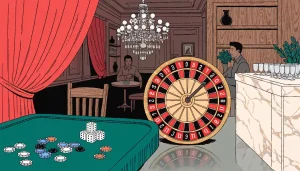
The wider floor can also include game-show-style titles. Crazy Time and Dream Catcher make clear how far the category has stretched beyond conventional card and wheel games. Their presence beside blackjack does not make them variants of it; they belong to the broader live-casino selection, with different rules and a different kind of participation.
This variety is part of what makes a live casino feel less like a single game and more like a collection of rooms, each with its own pace and ritual. The useful distinction is between a blackjack variant, which changes the way blackjack is presented or played, and another live game altogether. A title may share the dealer, stream and lobby with blackjack while asking for a wholly different kind of wager. Similar scenery; different game.
Top online casinos in the UK
- SpinFormulaBonus: 550% Up To £15,000 + 550 FS · Payout speed: 1-3 business days
- SlotoSportBonus: 500% up to £ 10 200+ 777 FS · Payout speed: 1-3 business days
- Revery PlayBonus: 100% up to€1,000+ 100 FS · Payout speed: 1-3 business days
- AmunbetBonus: Join now and get 450% up to 2,700 GBP + 450 FS · Payout speed: 1-3 business days
- BeOnBetBonus: 100% up to €500 + 100 FS · Payout speed: 1-3 business days
- JetsetspinsBonus: 200% Bonus + 100 Free Spins + Free Royal Wheel · Payout speed: 1-3 business days
- NightWinBonus: £900 + 400 free spins · Payout speed: 1-3 business days
- x3betBonus: Welcome Pack 100% Up to £1.000 + 200 Free Spins · Payout speed: 1-3 business days
- ZombillionBonus: Welcome Pack 250% up to £4000 + 200 FS · Payout speed: 1-3 business days
- BritsinoBonus: Welcome Package – Get your £2,200 + 2,000 FS · Payout speed: 1-3 business days
Joining a Live Table: From Account to First Hand
A live blackjack session begins before the dealer appears on screen. An account has to be opened with an operator, and its details completed before money can be deposited. In Britain, age verification must take place before a customer is allowed to deposit. It is a safeguard with a practical consequence: registration is not simply a door that opens onto the cashier.
Before a first deposit, a new customer must also be prompted to set a financial limit. That choice should not disappear into the machinery of registration. Account-level limit controls must remain accessible, so the limit can be reviewed and adjusted through the account rather than treated as a one-off formality. The sequence matters: set the boundary before funds enter play.

Before depositing, the operator’s licence number should be checked against the Gambling Commission’s public register. A familiar name or polished table screen is not a substitute for a record that can be verified. The register is the public-facing part of a system in which permission belongs to the operating business, not to the appearance of its website.
Once the account is ready, the live casino lobby is the point of departure. Blackjack tables may be grouped by game or presented as separate streams, with table information indicating the available wagering range and any rules particular to that table. These details are worth reading before joining: a table that looks suitable at a glance may not fit the intended stake or pace. The screen is an invitation, not an instruction.
Selecting a table typically opens its live interface, where the dealer and table are visible and controls for choosing a wager are presented. The amount is entered or selected before the hand begins, then confirmed through the on-screen control. A first visit can be spent simply locating those controls and reading the table information; there is no need to hurry into a wager because a seat is available. The small pause belongs to the player, even when the game is live.
Some casino lobbies may also offer a free-play or practice mode for blackjack. Where available, it can familiarise a newcomer with the layout without staking real funds; it should not be mistaken for a promise that every operator or table provides one. Real-money play begins only when an actual wager is placed. A modest first step is still a financial decision.
Registration, verification, limits, table selection: each stage makes the next one possible, but none makes play compulsory. The interface can make entry feel effortless. The account safeguards are there to keep it deliberate.

Strategy Without the Promise of a System
A blackjack strategy is less a secret route to victory than a way of making decisions consistent. It can help turn a table’s rules into a plan: when to take a risk, when to stand firm, and how to avoid letting the previous result dictate the next choice. That discipline has value even when the cards refuse to reward it.
Basic strategy is built around probabilities, not foresight. It considers the player’s hand alongside the dealer’s visible card and indicates which available decision is statistically preferable under the relevant rules. A live casino table may differ from another in details that affect those recommendations, so a chart or strategy guide only makes sense when it matches the table being played. Memorising instructions without noticing their conditions is not much of a system.
Nor does following a strategy make a hand predictable. Cards already dealt do not become obliged to behave differently because a player has made a careful choice. The dealer may still finish with a stronger hand; a sensible decision can still lose, and a poor one can sometimes win. Results are not a moral judgement on the quality of the decision. Casinos have always offered the more tempting interpretation.
For live play, the social setting can complicate that discipline. A dealer’s pace, the streamed table and the presence of other players can make a decision feel more urgent than it is. A strategy can serve as a quiet reference point amid that performance, rather than a command to act mechanically. The rules remain the rules; the atmosphere is decoration.
More elaborate casino blackjack strategies may involve tracking patterns or trying to infer what remains in the shoe. Such approaches do not remove uncertainty, and an apparent pattern is not evidence that a particular result is due. A player can use knowledge to make choices more coherent, but cannot make the game owe a return.
The practical test of any blackjack strategy is therefore modest: does it clarify a decision, and does it fit the table’s rules? If not, it is merely confidence in a costume. A strategy can shape play. It cannot promise its outcome.
Blackjack Stakes and the Slot-Limit Confusion
The word “stake limit” can make a casino floor sound more uniform than it is. In Great Britain, a specialist review reports online slot caps of £5 for each game cycle for adults aged 25 and over, and £2 for adults aged 18 to 24. Those figures concern slots, not every game offered by an online casino.
That distinction matters for anyone moving between a slot lobby and a live blackjack table. The same specialist review says the slot caps do not apply to blackjack or roulette. A blackjack wager is therefore not subject to those particular limits simply because it is placed through an online casino. The game category, rather than the casino setting, is doing the regulatory work.
Slots are built around cycles that begin and end with a spin; blackjack unfolds through wagers, cards and player decisions. Treating both as interchangeable “casino games” obscures why a rule aimed at slot stakes does not automatically govern a blackjack wager. The limits should not be carried over from one game to the other by assumption.
This is a narrow distinction, not a statement that blackjack has no rules or that every table sets the same terms. A casino’s own table rules still determine what wagers it accepts. Nor does the slot-cap distinction turn a blackjack table into a safer form of gambling: money can still be lost, and a different regulatory category is not a promise of a different outcome.
The source of the figures also deserves care. A specialist review is not the regulator, and a review’s account of limits should not be mistaken for a complete description of gambling law. The practical point is precise: the stated Great Britain caps concern online slots, while blackjack and roulette sit outside those particular caps. In a casino where the lobby places games side by side, the boundary is easy to miss.
For live blackjack online in the UK, the relevant comparison is therefore not whether a slot cap appears elsewhere on the same site, but which game the rule actually covers. Different games, different treatment. The distinction is small in wording, consequential at the point of wagering.
Bonuses, Payment Routes and the Cost of Play
A blackjack promotion can look generous in its headline and become more modest in its terms. A casino bonus may be restricted to particular games, require a qualifying deposit or carry conditions on when bonus funds can be withdrawn. Live blackjack may be treated differently from other games when a promotion is used, so the terms matter more than the label. An offer described as no-deposit still has conditions; the phrase does not mean that winnings are automatically available as cash.
The same caution applies to a blackjack casino bonus offer framed around free play. Bonus funds and cash are not necessarily interchangeable, and the rules may specify which wagers count towards any requirements. Before accepting an online casino blackjack bonus, it is worth understanding whether it applies to live tables, what happens to unused funds and which conditions affect withdrawal. If the terms are unclear, the apparent value is difficult to assess.
Payment routes also shape the cost of play, though not by making a wager cheaper. Deposits and withdrawals can involve different methods and processing conditions, while a promotion may be tied to a particular payment route. Those details belong in the operator’s terms; a bonus headline alone cannot explain them.
There is a firm boundary on credit. UK-licensed casinos cannot accept credit-card payments for gambling. The restriction also covers credit-card funds routed through a money service business, and wallet payments where the wallet allows credit-card funds to be used for gambling. Changing the route does not change the source of the money.
That distinction matters because a deposit is not merely an administrative step. It determines which funds enter the account, and the promotion’s terms determine whether those funds qualify for an offer. A casino blackjack bonus should therefore be judged by its conditions and payment rules, not by its label or advertised size.
Promotions do not alter the uncertainty of a live hand, nor do they remove the possibility of losing deposited money. Gambling should be limited to what can be afforded to lose.
Rules at the Table—and Rules Around the Account
Blackjack rules govern what happens at the table: how a round is run, which options are available and how a result is settled. Those rules belong to the game and its particular table. Account protections belong to a different system. They concern the relationship between a remote casino and the person using its service, rather than the decisions made during a hand.
That distinction matters because a table’s rules cannot explain what happens when a customer wants to stop gambling, raise a complaint or challenge how an account has been handled. In Great Britain, UK Gambling Commission licensees must provide responsible-gambling tools, including self-exclusion. The tool is an account safeguard, not a blackjack rule: it acts beyond the limits of any one table.
There are formal routes for complaints, too. A licensed casino must have an internal process for handling them and provide access to an approved Alternative Dispute Resolution service. The internal route gives the operator an opportunity to address a complaint; ADR offers a further route where the dispute remains unresolved. These are protections around the account, not promises about the outcome of a particular hand or complaint.
The regulatory framework also reaches beyond the customer interface. Licensed operators are required to contribute to the Research, Education and Treatment levy, supporting work connected with gambling harms. A blackjack table may present itself as a self-contained game, complete with its own rules and pace. The account behind it sits within wider obligations.
So the rules of blackjack at a casino and the rules governing a casino account should not be confused. The first set describes play; the second sets out safeguards, routes for redress and responsibilities attached to offering gambling remotely. Neither makes gambling risk-free. A clear table rule can explain how a wager is settled, but it cannot change the possibility of losing money. Gambling should be limited to what can be afforded to lose.
What are the online slot stake limits in Great Britain?
The limit is £5 per game cycle for adults aged 25 and over, and £2 for adults aged 18 to 24. These limits do not apply to blackjack or roulette.
Are online casino games licensed and regulated?
Yes. Operators offering remote gambling to consumers in Great Britain must hold the relevant Gambling Commission licence, and the Commission regulates that activity.
Is LuckyPays licensed by the UK Gambling Commission?
The public Gambling Commission register dated 26 September 2026 does not list LuckyPays under that brand or its stated domain, luckypays.io.
How do I check if an online casino is licensed in the UK?
Check the operator on the Gambling Commission’s public register and compare the listed licence details with the company responsible for the casino account.
Related posts

UK Casino Welcome Bonuses: How Offers Work

VPN-Friendly Casinos in the UK: How Access Works
