
Casinos That Accept Upaycard in the UK
 Available in GB
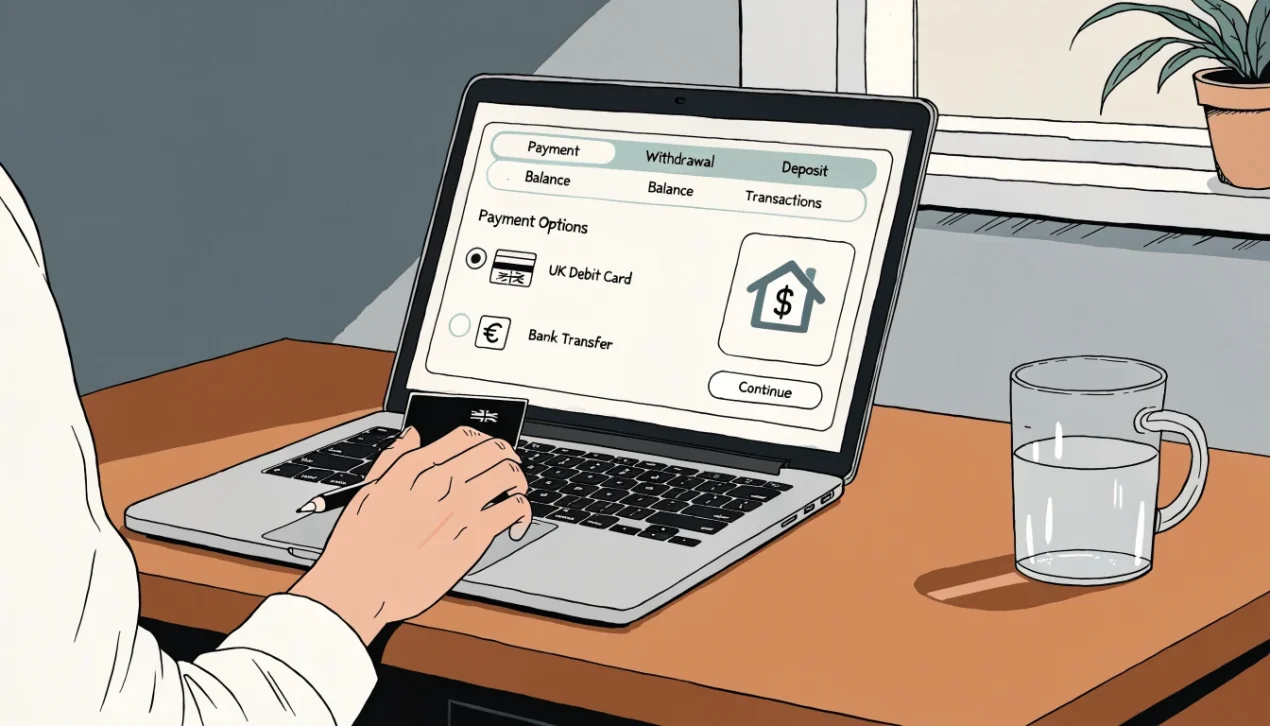
Casino listings can be outdated or account-specific, so the cashier is the practical check before choosing a deposit route.
The Upaycard Question: Availability Must Be Checked at the Cashier
A casino being described online as an Upaycard option is not the same as Upaycard appearing as an available payment method in its cashier. The distinction is mundane, but it is the one that matters before a deposit: a method discussed in a review, directory or forum may not be offered to every customer, or at the time an account is ready to use it.
For casinos that accept Upaycard in the UK in 2026, the practical answer is therefore account-specific. The cashier is the place to confirm whether the method is listed and can be selected for the account in question. A mention elsewhere is a reason to check, not evidence that a deposit will go through. Availability can change, and a payment route may be subject to eligibility conditions that are not apparent from a general description of a casino.
That makes lists labelled as all Upaycard casinos, or as the best sites for an Upaycard deposit, less definitive than they sound. A list can record what a site has reported, while the payment screen reflects what the operator is making available at the point of use. A new casino’s appearance in a list does not settle the matter either. Nor does a site’s support for mobile play establish that Upaycard can be used there: games and payment facilities are separate parts of the service.
The same caution applies to claims about Upaycard bonuses or games. A casino may have games and promotions while the named payment method is absent from its cashier; conversely, the presence of a payment method does not establish that a particular promotion applies to it. Those are different conditions, and one cannot be inferred from the other.
A specialist casino review may name Visa and Mastercard among the methods associated with a site, but that sort of listing is not a live confirmation of what a UK customer can use. Even for familiar card brands, current availability and the eligibility of a particular card product need checking in the cashier. The broader lesson is not that every listing is wrong. It is that a summary and a transaction screen answer different questions.

For a UK-facing casino, the wider setting matters too. Remote gambling licensees serving customers in Great Britain must hold the relevant UK Gambling Commission licence, and online gambling is legal for adults aged 18 and over when the operator is properly licensed. A payment-method label does not establish that an operator has the required licence. These are separate checks: one concerns the operator’s authority to offer gambling, the other concerns whether a particular payment route is available to an account.
The cashier should be read as a specific offer to that account, not as a permanent catalogue. If Upaycard is absent, an old review or a claim on another page cannot make it selectable. If it is present, the displayed terms and any eligibility prompts still matter. The method’s name alone does not show that every account holder can use it, or that the same option will remain available later.
Account details can also affect how smoothly a payment is handled. When the casino account and payment route are in the same customer’s name, there is less scope for a basic mismatch in ownership information to create avoidable questions. This is a practical point about consistency, not a guarantee of acceptance: the operator’s requirements and the cashier’s available choices remain decisive.
For anyone assessing whether Upaycard casinos are still available in the UK, the useful test is narrow. Open the relevant casino’s cashier, check whether Upaycard is actually offered, and confirm that the account can select it before relying on that route. A search result, an old review, or a mobile-site label cannot substitute for that check. The cashier is less glamorous than a ranking. It is also closer to the transaction.
Top online casinos in the UK
- SpinFormulaBonus: 550% Up To £15,000 + 550 FS · Payout speed: 1-3 business days
- SlotoSportBonus: 500% up to £ 10 200+ 777 FS · Payout speed: 1-3 business days
- Revery PlayBonus: 100% up to€1,000+ 100 FS · Payout speed: 1-3 business days
- AmunbetBonus: Join now and get 450% up to 2,700 GBP + 450 FS · Payout speed: 1-3 business days
- BeOnBetBonus: 100% up to €500 + 100 FS · Payout speed: 1-3 business days
- JetsetspinsBonus: 200% Bonus + 100 Free Spins + Free Royal Wheel · Payout speed: 1-3 business days
- NightWinBonus: £900 + 400 free spins · Payout speed: 1-3 business days
- x3betBonus: Welcome Pack 100% Up to £1.000 + 200 Free Spins · Payout speed: 1-3 business days
- ZombillionBonus: Welcome Pack 250% up to £4000 + 200 FS · Payout speed: 1-3 business days
- BritsinoBonus: Welcome Package – Get your £2,200 + 2,000 FS · Payout speed: 1-3 business days
When Upaycard Is Not an Option, Other Payment Routes
When a payment route does not appear in a casino cashier, the alternatives are not interchangeable versions of the same thing. A bank card, a bank transfer, a prepaid voucher and an e-wallet each place the transaction in a different part of everyday financial life. The useful comparison is not a league table: it is whether a method is listed for the account and whether its features fit the intended use.
Debit cards
Visa and Mastercard debit cards are widely accepted and connect a deposit to a bank account.
Bank transfers
Funds move through the banking system, sometimes via open banking services for instant deposits.
Prepaid vouchers
Methods like Paysafecard are deposit-only and do not support receiving funds back.
E-wallets
Services like Skrill and Neteller provide a separate balance between a bank and a merchant.
Debit cards
Visa and Mastercard debit cards are widely accepted by UK casinos. They connect a deposit to a bank account and are familiar to many customers, which can make them the most straightforward alternative to investigate. That does not make either card brand a universal guarantee: a cashier’s current list determines what a particular site supports.
The distinction between debit and credit is important in the UK. A card’s familiar logo does not establish which kind of product it is, or whether that product is eligible for gambling payments. For an alternative-method comparison, the practical point is simply that debit cards are a commonly accepted route, while the card product and the cashier still need to match.
Bank transfers and open banking
Bank transfers move funds through the banking system rather than through a prepaid balance or a separate wallet. Open banking services can connect a casino payment to a bank account through an authorised payment flow. A specialist casino review describes open banking and bank transfers as capable of providing instant deposits and fast withdrawals at many sites; that is a description of the services reported there, not a promise that every bank, account or casino will behave the same way.
These methods may appeal to people who prefer to keep payments close to their existing bank account. They are also a reminder that “bank transfer” can cover different processes: the label alone does not tell how a particular cashier handles the transaction. The listed method, the bank involved and the site’s own payment flow all matter.

There is a quiet social history in this preference. Banking has long been treated as the respectable infrastructure behind money, while newer payment products have had to explain themselves as intermediaries. Yet an established name is not the same as a guaranteed fit. The cashier, rather than the method’s general reputation, settles the immediate question.
Prepaid vouchers
Paysafecard is a prepaid voucher and is deposit-only. That makes it distinct from a bank-linked card or an e-wallet: the voucher can be used to put money into an account, but it is not a route for receiving funds back. It may therefore suit a deposit where spending from a prepaid balance is the point, but it cannot serve as a complete two-way payment arrangement.
The word “prepaid” can sound like a small technical detail. It is not. A method’s deposit function and its role in the wider account are separate questions, and the cashier should make the deposit-only status clear before a voucher is treated as the whole payment plan.
E-wallets
Skrill and Neteller are offered by some casino sites, rather than being present everywhere. Specialist casino reviews describe Skrill as a particularly familiar deposit option among UK-facing sites in 2026. That observation concerns its visibility in current reviews, not a guarantee that it will appear in every cashier or suit every account.
E-wallets sit between a bank account and a merchant payment. They can give a customer a separate balance and a distinct payment account, which is part of their appeal. They also introduce another service into the transaction: an account must exist with the provider, and the casino must support that wallet. A method mentioned on a general payment page may still be absent from an individual cashier.
Promotion terms can add another distinction. Specialist reviews report that Skrill and Neteller are often excluded from offers, so the presence of a wallet in the cashier should not be taken to mean that every promotion treats it like a card or bank payment. That is a separate condition, not a reason to assume either acceptance or exclusion at a particular site.
Across these categories, the label is only the beginning. “Card”, “transfer”, “voucher” and “wallet” describe different ways funds are organised, but the available routes belong to each casino’s own cashier. The most sensible alternative is therefore the one actually listed and appropriate to the transaction, not the one made to sound best by a generic ranking.
Convenience is local.
Deposits Are Only Half the Transaction
A deposit and a withdrawal may use the same account, yet they are not mirror images. Money going in is a payment instruction. Money coming back must also pass through the casino’s approval process and satisfy checks about who owns the account and where the funds came from. A payment method that appears in a deposit menu therefore says little, by itself, about how a later payout will be handled.
That distinction matters to anyone considering an Upaycard deposit at a UK casino. Even if a cashier presents a card route for deposits, the return journey is a separate question. The payment route, the account details and the casino’s withdrawal procedure all affect what happens next. A search for a casino that accepts Upaycard can therefore answer only part of the practical question. The deposit is one movement of funds; the payout is another.

UK anti-money laundering rules generally require winnings to be returned to the original payment source. This closed-loop control helps connect the withdrawal to the funds that entered the account, rather than allowing an unexplained route to appear at the final stage. It is a safeguard against misuse, not a promise that every payment method will handle both directions in the same way. If a method cannot receive a payout, the casino may need to establish an appropriate alternative route and check its ownership.
That is why a payment method should not be treated as a deposit-and-withdrawal pair unless the cashier or the casino’s payment terms confirm both functions. An Upaycard logo on a deposit screen, if present, would not by itself establish that Upaycard can receive withdrawals. Nor does a successful deposit prove that the casino has finished checking the account. The transaction has entered the system, not necessarily completed its full journey.
The first withdrawal can involve additional review while the casino completes verification. Processing time includes the operator’s internal approval, and the first payout may take longer if KYC checks are still outstanding. A delay at this point does not automatically mean the payment has failed: the casino may be checking identity and the relationship between the account holder and the payment source before releasing funds. The distinction is mundane, but important. “Requested” and “approved” are not the same status.
A specialist review describes a card deposit as potentially instant while a payout can take several business days. That is an illustration of the gap between the two stages, not a timetable that applies to every casino or every card. The casino’s own processing, verification status and the route used for the return all matter. A deposit can look effortless because the authorisation happens quickly; the withdrawal may still wait for human or procedural approval. Money has acquired paperwork.
The cleanest journey is often one named account used consistently for depositing and withdrawing, with the account and payment details belonging to the same customer. That reduces the chance that basic ownership information creates avoidable friction. It does not remove the casino’s checks, and it cannot override the original-source requirement. If the original route is unavailable for payouts, any substitute may need its own verification.
These distinctions are particularly relevant when a casino promotion or a no-deposit offer has drawn attention to the site. A bonus does not change the route by which a real-money withdrawal is reviewed, and a quick payment into an account does not establish how quickly funds can leave it. The payment screen describes the entrance. The cashier’s withdrawal rules describe the exit. Both matter.
Mobile Slots and the Payment Route
A phone can make a casino feel like a single object: the games, the account and the cashier gathered behind one screen. They are not quite so unified. A slot opening and running on a mobile site says something about access to that game; it says nothing conclusive about whether Upaycard is available for funding. The payment route belongs to the cashier, not to the game catalogue.

That distinction matters when a search for mobile slots by Upaycard seems to promise one neat combination. A casino may have slots that work on a phone while offering a different set of deposit methods there, or no Upaycard option at all. Even a mobile app or a well-designed mobile site cannot establish what an individual account can use. Availability can depend on the operator’s current cashier and the account’s circumstances.
The practical check is therefore quite unromantic: open the casino cashier on the device being used and inspect the payment methods shown for that account. A method mentioned on a casino page, in a review or in a discussion elsewhere is not equivalent to an option that appears at the point of transaction. Payment pages change; search results have longer memories.
A specialist casino review may list Visa and Mastercard among the methods associated with a site, but that is not proof of present UK availability or of eligibility for every card product. The cashier is the place to confirm both. This is a question of compatibility, not of whether the phone can load the casino.
Currency deserves the same quiet attention. Some specialist casino pages state that GBP is supported, but the account currency still needs confirmation before the first transaction. A mobile screen can make a payment feel immediate while hiding the more consequential detail: whether the account and the payment are being handled in pounds, or whether conversion enters the transaction.
Free-play slots do not settle the matter either. A game that can be opened without a real-money deposit demonstrates that the game is accessible in that mode. It does not test a real-money deposit route, much less prove that Upaycard is accepted. The resemblance between a practice game and a funded account is visual, not financial.
Nor does the phrase “Upaycard slots” identify a special class of machine. Slots are games; Upaycard, if offered, would be a payment method. The two can coincide only where the casino’s current cashier supports that route and the account is eligible to use it. A mobile layout is no substitute for that check. Two separate doors.
Real-Money Play Does Not Make Payouts Instant
A deposit and a withdrawal are different stages of a transaction, not opposite sides of one speed guarantee. A payment route that appears quickly in a casino account says little about how soon winnings will arrive. After real-money slot play, the casino must process a withdrawal request; its own approval procedure and the state of the account’s verification both affect the wait.
That distinction matters in searches for slots played with Upaycard, including searches framed around real-money games or a casino app. The game itself does not set the payout timetable, and finding a payment method mentioned alongside slots does not establish that it will be available for withdrawals. Nor does a smooth deposit settle what checks may be needed when money is coming out. Different machinery, different pace.
KYC can become part of that interval. If the account is not fully verified, the operator may need to complete checks before approving the withdrawal. A first request can therefore involve more than moving funds through a payment network: the casino’s review has to happen first. The precise sequence and timing depend on the operator and account, so a broad promise of instant winnings would confuse a payment feature with the entire approval process.
A specialist review describes PayPal, open-banking services and debit cards connected to fast payout systems as methods that can rank among quicker withdrawal routes. That is a comparison of payment rails, not a guarantee for every casino or every account. Even when a route is commonly described as quick, the casino’s internal decision remains part of the journey. Speed at the final transfer stage cannot erase time spent awaiting approval.
This is why claims attached to “Upaycard slots” need careful reading. A page may discuss deposits, games and withdrawals in the same breath, while the three are separate matters. A method’s presence in a cashier does not, by itself, confirm that winnings can be returned through it; nor does the availability of real-money slots establish the payout conditions. Those details belong to the casino’s current terms and account-specific cashier information.
For a meaningful comparison, the relevant question is not simply which route is labelled fast. It is whether the account is verified, how the casino handles withdrawal approval, and which payout methods it makes available for that account. A method described as swift cannot compensate for a pending review. The clock has more than one keeper.
Depositing by Card: The UK Credit-Card Boundary
A card’s name does not settle whether it can fund a gambling deposit. The important distinction is whether the payment is made from debit funds or relies on credit. UK casinos commonly accept debit cards, including Visa and Mastercard, but that does not make every card product or transaction eligible. The cashier’s current options and the card’s funding type both matter.
Credit-card payments for gambling have been prohibited in the UK since 14 April 2020. The restriction remains in force for UK-licensed casinos: a credit card cannot be used to fund a gambling account, whether the payment is made directly or routed through a money service business. A route that merely changes the visible payment label does not change the underlying source of credit. That boundary is deliberate.
The rule reflects a judgement about how gambling should be financed. A debit card draws on money already held in an account; credit makes it possible to spend borrowed funds. The distinction is not a comment on whether a particular player can afford a deposit. It is a limit placed on the payment system, and remote gambling licensees must observe it.
For searches connecting Upaycard with credit-card casinos, the label alone cannot establish that a deposit is permitted. The relevant detail is the product and source of funds behind the transaction. If a card draws on credit, it cannot be used for gambling at a UK-licensed casino. If it is a debit product, acceptance still depends on the operator and the cashier’s current list. A payment brand is not a legal classification.
Other deposit routes do not erase the same boundary. Some UK Gambling Commission-licensed casinos accept Apple Pay for deposits, but wallet payments cannot be used where the wallet allows credit-card funds to be used for gambling. The payment route must therefore be considered alongside the funding source, rather than treated as a workaround.

The same distinction applies when a search combines card deposits with slots or asks about direct withdrawals: neither the game nor the wording attached to a payment brand changes the credit-card rule. Deposit eligibility is a question of lawful funding and operator acceptance, not of how a transaction is described.
A debit card may be a familiar option, but the words “Visa” or “Mastercard” do not guarantee that every card will work. Current availability and card-product eligibility belong to the casino cashier; credit funding remains outside the permitted boundary.
Bonuses and Payment-Method Exclusions
A payment route and a promotion answer different questions. A cashier may list a method for deposits, while the bonus terms may exclude deposits made through it. That distinction matters for searches about Upaycard casinos and welcome bonuses: acceptance of Upaycard, where it is offered, would not by itself establish that a deposit qualifies for an offer.
The same applies to a slots promotion, a bonus code or a no-deposit bonus. Their existence and their conditions are separate matters. A payment method cannot prove that an offer is currently available, and an offer’s headline does not settle whether a particular deposit method is eligible. The relevant terms need to be read alongside the cashier options.
Payment exclusions can be easy to miss because they sit in the small print rather than beside the deposit button. Some specialist reviews report that PayPal may be excluded from bonus eligibility. That is a report about the conditions described by those reviews, not a rule applying to every casino. The operator’s own promotion terms are the more useful place to check the current position.
Do
- Check the casino cashier for live availability
- Read the specific promotion terms for exclusions
Don’t
- Assume a method works for bonuses just because it works for deposits
- Rely on old reviews or general rankings to confirm current access
Specialist reviews also report that Skrill and Neteller, where accepted, are often excluded from promotions. Again, the wording is not universal: conditions can differ between operators and offers. A casino may accept an e-wallet for ordinary deposits yet treat a deposit through that wallet differently when a welcome offer is involved. The cashier and the terms must agree.
There is little glamour in this distinction. A bonus headline invites attention; eligibility is decided by the conditions attached to it. Before treating an offer as part of the value of a deposit, the terms should state whether the chosen method qualifies, whether a code is required, and what restrictions apply. If those details are unclear, the offer should not be counted on.
For Upaycard specifically, the practical point is modest but important: neither a welcome bonus nor a slots bonus can be inferred from payment acceptance. Even a visible offer may have method-specific exclusions. Check the casino’s current terms for that promotion, rather than assuming a deposit through Upaycard will activate it.
Minimum Deposits, Limits and the First-Deposit Prompt
A low minimum deposit and a high account limit are different things. The first is the smallest amount a casino will accept through a particular route; the second concerns how much can be deposited across a transaction or over a period. Neither establishes that Upaycard is available. That still depends on the payment options shown in the casino’s cashier.
A specialist review places the starting minimum deposit at £10–£20, with the selected payment method affecting where it falls in that range. It is a guide to the figures a casino may set, not a promise that every account or payment route will have the same threshold. A search for a £5 Upaycard deposit does not establish that a casino accepts Upaycard at that amount. The cashier’s stated minimum is the relevant figure for the selected route.
Maximum deposits can also differ. A casino may apply separate caps per transaction, per day or per month, and the permitted amount can depend both on the payment method and the status of the account. Those ceilings are not the same as a customer’s own financial limit: one is a payment or operator restriction, the other an account control.
In Great Britain, remote gambling licensees must prompt new customers to set a financial limit before the first deposit. They must also make account-level limit controls accessible. The prompt is therefore part of the process before a first payment, not a statement of the casino’s minimum deposit. A £10 minimum, where one applies, does not mean that amount has been selected as a personal limit.
This distinction matters when a payment route is presented as instant or convenient. A deposit can still be refused if it falls below the method’s minimum or exceeds a transaction cap; an account limit may impose another boundary. The figures can be checked in the cashier and account controls before choosing an amount. They should not be inferred from a payment-method name, a mobile interface or an offer elsewhere on the site.
There is no single Upaycard minimum that can be carried across UK casinos. The payment route, its displayed threshold and the account’s own controls each have their place. Three separate limits.
Understanding Deposit Limits
There are three separate types of limits to consider: 1. Minimum deposit thresholds set by the method. 2. Transaction and account caps set by the operator. 3. Personal financial limits set by the customer.
Comparing Alternatives by Their Real Cost
The best alternative to Upaycard cannot be identified by looking only at the fee shown beside a payment button. A transaction may involve charges from the casino, payment provider, card issuer or bank, as well as currency conversion and, where relevant, network costs. Which of these apply depends on the route and the transaction itself.
A specialist payment review points to a less visible cost: the exchange-rate spread. A method can show no flat charge and still deliver a worse conversion rate than expected. That difference may outweigh a fee that is clearly displayed. The useful comparison is therefore not “free” against “fee”, but the amount that leaves the account set against the amount credited, with any charges and conversion effects included.
Currency matters. If an account and a payment instrument use different currencies, conversion may enter the calculation; the displayed rate and the provider’s terms are more informative than a headline claim about low fees. The same care applies to network costs, which may be separate from charges imposed by the casino or provider.
A payment route with several possible charges is not automatically more expensive than one with a single visible fee. Nor does a familiar brand establish what a particular transaction will cost. Fees can depend on the provider’s terms, the bank or issuer, the casino’s own rules and the currency involved. A specialist review describes these cost categories, but they are not a fixed tariff shared by every site.
This is why there is no universal lowest-fee method. The comparison has to use the actual amount and the exact route under consideration, including any casino charge, provider or bank fee, exchange spread and network cost. Otherwise, the apparent bargain may be an artefact of looking at only one line of the transaction.
An Upaycard alternative is worth comparing on that full basis, rather than by reputation or a bare “no fee” label. The cashier’s terms and the payment provider’s own pricing are the relevant details; a general ranking cannot settle the cost of an individual transfer. Cheap on the surface is not the same as cheap in total.

Upaycard and Non-Gamstop Searches: Two Separate Questions
A cashier listing Upaycard would establish only that the payment method is available for that account under the conditions shown there. It would say nothing about whether the casino is connected to Gamstop. Payment acceptance and self-exclusion status belong to separate parts of an operator’s arrangements; one cannot be inferred from the other.
That distinction matters in Britain, where remote gambling licensees serving the market must hold a UK Gambling Commission licence. A search for a casino outside Gamstop does not make the operator’s licensing position disappear, and a payment brand is not evidence of a site’s regulatory status. Nor does the phrase “not on Gamstop” establish that a particular casino accepts Upaycard. Both claims need independent confirmation, and neither should be attached to a named site without reliable evidence.
There is a human reason to keep those questions apart. Payment systems describe how money reaches an account; self-exclusion exists to help prevent access to gambling. Treating the first as a route around the second confuses a transaction with a safeguard. A cashier’s menu is not a measure of whether gambling is appropriate, or of the protections available if play becomes difficult to control.
Account controls form another part of that picture. UK rules require remote operators to ask new customers to choose a financial limit before they make their first deposit, and to make account-level limit settings accessible. These controls are distinct from payment-method availability and Gamstop participation: seeing one in an account does not prove anything about the others.
The terms “Upaycard” and “not on Gamstop” can appear together in a description, but that pairing is not proof of compatibility or status. The useful distinction is plain: check the operator’s UKGC standing separately from the cashier’s payment options, and do not treat either as a substitute for the other. Two questions. Two checks.
Do UK casino withdrawals require verification?
Verification may be completed before a withdrawal is approved, and first withdrawals can take longer while checks are carried out. A fully verified account can help avoid delays.
Which payment methods are accepted in Great Britain?
UK casinos commonly accept Visa and Mastercard debit cards; PayPal, bank transfers, open banking and e-wallets such as Skrill or Neteller are also available at some sites. Paysafecard is for deposits only, and the cashier shows which methods are available for your account.
Are Visa and Mastercard deposits definitely debit cards?
No. The Visa or Mastercard logo alone does not identify whether a card is debit or credit, so check your card product and the casino cashier’s eligibility rules.
Why can a fast payout casino still delay my withdrawal?
The casino’s internal approval and account verification can delay a withdrawal, especially the first one. A card deposit may be instant even though the payout takes several business days.
Is Skrill available?
Yes, Skrill is available at some UK-friendly casino sites and is a common deposit method. It may be excluded from promotions.
Related posts

UK Casino Welcome Bonuses: How Offers Work

VPN-Friendly Casinos in the UK: How Access Works
