
Casinos That Accept Tether in the UK: Payment Checks
 Available in GB

Tether acceptance depends on the available cashier option and supported network, not just a site’s crypto-friendly label.
What a Tether Casino Means in Practice
A casino described as “crypto-friendly” has not necessarily confirmed that it accepts Tether. The phrase may cover several digital currencies, or refer to a general payment category rather than a working option available to a particular customer. Even a reference to Tether does not, by itself, establish that every Tether network is supported. The label is broader than the transaction.
That distinction matters because a payment method has more than one part. There is the asset, such as Tether, and there is the network used to move it. A casino could refer to one without making the other clear. The same name on two payment screens, or in a review and on a website, is not enough to establish that funds can be sent along the same route. A familiar label can conceal a specific technical choice.
“Tether casino” is therefore a description to examine, not a settled category. It may mean a casino whose site mentions Tether, one whose payment information names a particular network, or one where the option is actually available in an account’s payment interface. Those are different claims. For anyone comparing Tether casinos in the UK, the useful question is not simply whether cryptocurrency appears in the site’s general list, but whether the relevant asset and route are explicitly identified for the intended transaction.
This is not a peculiarity of crypto. A specialist review of casino payment pages may group Visa, Mastercard, bank transfers, e-wallets and several cryptocurrencies under a broad list of methods. Such a list indicates what the page says; it does not prove that every option is available in every circumstance. The distinction is familiar in ordinary banking, too: a payment brand can be named while the account, product or transaction type still determines whether it can be used.

Visa and Mastercard illustrate the point. A specialist review may list both, but that is not confirmation of current availability in Britain or of eligibility for every card product. UK-licensed casinos cannot accept credit-card payments for gambling. The Gambling Commission’s ban, which took effect in 2020, has not been relaxed. A card brand alone cannot tell a player whether a particular card can be used; the product and the applicable rules matter.
The same caution applies when a payment description appears to make a casino more accessible than it is. In Great Britain, remote gambling licensees serving customers must hold the relevant UK Gambling Commission licence, regardless of where the business is based. A cryptocurrency option does not replace that requirement or establish a site’s regulatory status. The legal distinction is plain, even when the payment language is not: a crypto label is not a licence.
This regulatory setting also shapes what “UK” means in a description of Tether casinos. It should refer to more than a site that can be opened from a British connection or that displays sterling somewhere on its pages. Online gambling is legal in Great Britain at sites holding the required UKGC licence, and age restrictions apply. The relevant question is whether the operation is licensed to serve the market, not whether a payment method makes it technically possible to send funds.
The apparent convenience of a single digital-currency label can obscure several separate checks. A site may mention cryptocurrencies without naming Tether; it may name Tether without specifying the network; or it may describe a method that is not currently presented to a UK account. Each description leaves a different gap. None should be filled by assuming that all cryptocurrencies work alike or that an option advertised in one context must apply in another.
There is a social history behind these labels. Payment systems have always turned complicated arrangements into reassuring shorthand: a card logo, a bank’s name, a wallet brand. Crypto adds network names to that vocabulary, and makes the shorthand denser rather than clearer. The reader sees a currency; the transaction depends on the route. A tidy badge is not a settlement.
For that reason, a list of casinos said to accept Tether would only be meaningful if it separated confirmed Tether support from generic cryptocurrency claims and distinguished the networks actually named. Without those details, a list risks making a broad marketing phrase look like a verified payment facility. The words “Tether casino UK” may sound precise, but precision has to come from the operator’s current information and the applicable UK status, not from the wording of a page.
The practical meaning, then, is modest: Tether support is a specific payment claim, not a synonym for crypto acceptance. A casino’s general reference to digital currencies does not establish that it takes Tether, and a Tether reference does not establish support for every network. In Britain, neither claim settles the separate question of whether the remote gambling licensee is authorised to serve the market. Labels are only the beginning.
Using Tether at an Online Casino: The Cashier Is the Test
A casino’s welcome page can call itself crypto-friendly without establishing that Tether is available for a particular account. The cashier is more useful: it shows which payment methods the operator currently presents for that customer and whether Tether appears as a selectable option. General claims about cryptocurrency support are not a substitute for that check.
The distinction matters because “crypto” is a category, not a payment instruction. A cashier might name a digital currency without making clear whether the option is Tether, another asset, or a particular transfer route. Where the label is unclear, the casino’s payment terms or help pages need to resolve it before any funds are sent. An attractive badge on a landing page cannot do that work.

A careful check begins after signing in, when the account’s own cashier is available. The deposit screen should identify the currency and present the instructions associated with the selected method. If Tether is not listed there, a broad statement elsewhere on the site does not confirm that it can be used. If the cashier does list it, that still leaves practical details to verify: whether the option is available to the account, what information must be entered, and whether the terms describe the intended transaction clearly.
The cashier is also where a deposit option must be distinguished from a complete payment route. A method shown for adding funds does not, by itself, establish that it can be used for every account function. The wording around the option should make clear which transaction it covers. If only deposits are described, it should be treated as deposit-only unless the operator confirms otherwise. This is a small distinction with an inconvenient talent for appearing later.
Currency deserves the same attention. A specialist review reports GBP support on the pages it examined, but an account’s selected currency still needs checking before a first transaction. A displayed Tether option does not prove that the casino account is denominated in pounds, or that a transfer will avoid conversion. The account settings and cashier should agree on what currency is being used; otherwise, the apparent amount and the amount recorded by the casino may not be on the same basis.
The account itself is part of the payment check. Details held by the casino and the payment route should belong to the same customer. Matching ownership information reduces the chance that a basic discrepancy creates avoidable friction when the transaction is reviewed. A payment method belonging to someone else is not a harmless shortcut: it complicates the operator’s ability to connect the account with its funding source.
Do
- Check the casino cashier for explicit Tether support
- Verify the specific network (e.g., BEP20 or TRC20) matches your wallet
- Ensure the account currency and transaction details are clear
Don’t
- Assume a “crypto-friendly” label means Tether is available
- Rely on generic cryptocurrency mentions without network details
- Ignore the importance of UKGC licensing status
There is a broader British context. Remote gambling licensees serving customers in Great Britain must hold the relevant UK Gambling Commission licence, and online gambling is legal in the UK only through licensed and regulated sites. That status does not prove that a casino accepts Tether, nor does a crypto logo prove that the site is properly licensed. These are separate checks. A licence is a matter of the operator’s legal standing; the cashier is evidence of the payment choices currently presented to an account.
The same separation applies to card payments. UK-licensed casinos cannot accept credit-card payments for gambling, including credit-card funds routed through a money service business. Wallet payments are also restricted where the wallet allows credit-card funds to be used for gambling. A payment page should therefore be read as a set of specific permitted routes, not as a general invitation to move money by any available means.
For a British account, the first-deposit process has another formal step: remote operators must prompt new customers to set a financial limit before accepting that first deposit, and account-level limit controls must remain accessible. Operators must also verify a customer’s age before allowing deposits. These requirements sit alongside the payment method, rather than being replaced by it. Tether does not change the operator’s obligations.

A sound cashier check is therefore quite plain. The account is registered under the customer’s own details; the operator’s UKGC status is independently confirmed; the cashier names Tether rather than merely advertising cryptocurrency; and the transaction instructions match the action being taken. The account currency is checked before funds move, and unclear terms are settled with the operator rather than guessed at.
That process does not produce a ranking of Tether casinos, and it cannot turn an unverified claim into a confirmed option. It does something more modest and more useful: it establishes what the site actually offers to that account, at that moment, and what the payment screen says the option is for. The cashier is not a promise. It is the test.
Top online casinos in the UK
- SpinFormulaBonus: 550% Up To £15,000 + 550 FS · Payout speed: 1-3 business days
- SlotoSportBonus: 500% up to £ 10 200+ 777 FS · Payout speed: 1-3 business days
- Revery PlayBonus: 100% up to€1,000+ 100 FS · Payout speed: 1-3 business days
- AmunbetBonus: Join now and get 450% up to 2,700 GBP + 450 FS · Payout speed: 1-3 business days
- BeOnBetBonus: 100% up to €500 + 100 FS · Payout speed: 1-3 business days
- JetsetspinsBonus: 200% Bonus + 100 Free Spins + Free Royal Wheel · Payout speed: 1-3 business days
- NightWinBonus: £900 + 400 free spins · Payout speed: 1-3 business days
- x3betBonus: Welcome Pack 100% Up to £1.000 + 200 Free Spins · Payout speed: 1-3 business days
- ZombillionBonus: Welcome Pack 250% up to £4000 + 200 FS · Payout speed: 1-3 business days
- BritsinoBonus: Welcome Package – Get your £2,200 + 2,000 FS · Payout speed: 1-3 business days
Casino Sites, Slots and the Limits of What Can Be Verified
A site described as a Tether casino is making a claim about a payment method, not offering a separate kind of casino game. The label does not establish that Tether is available to every customer, that a particular network is supported, or that every game can be played using funds deposited that way. Those are separate questions, and a broad description cannot settle them.
The same distinction matters when comparing UK-facing sites. A “best” label may suggest that operators have been checked against a common standard, but without clear, current evidence of the specific payment option and the conditions attached to it, a ranking is more confident than informative. A site may advertise cryptocurrency support while leaving the relevant currency or route unspecified. Naming operators on that basis would turn an untested label into a recommendation.
There is also a difference between a casino’s legal status and its payment menu. Real-money gambling offered to customers in Great Britain must come from a remote gambling licensee holding the relevant UK Gambling Commission licence. The fact that a site uses the words “Tether casino” or “UK” does not establish that it is licensed to serve the British market. Nor does a licence, by itself, confirm support for Tether. These checks answer different questions.
“Non-GamStop” is similarly not a payment category. It does not tell whether Tether is accepted, whether a casino is licensed for the British market, or what protections apply. An offshore site may be accessible from Britain, but accessibility is not the same as permission to offer gambling here. For British customers, the distinction is substantial: remote operators selling into the market must hold a UKGC licence, whatever country they operate from.
Tether and slot play are separate matters
A Tether deposit would not create a special class of slot or change the rules governing online slots in Britain. The game remains subject to British requirements regardless of how an account is funded. Autoplay is prohibited, and each online slot spin must last at least two and a half seconds. Maximum stakes are capped at £5 per game cycle for customers aged 25 and over, and £2 for those aged 18 to 24.
This is part of a broader choice about how gambling is organised: payment technology can cross borders quickly, while the rules attached to a licensed product remain national. The currency label does not carry the game outside that framework. Crypto is not a legal exception.

A search for Tether slots, then, may be asking two things at once: whether a casino accepts Tether, and whether it offers particular slot games. Neither answer proves the other. A game catalogue cannot establish payment support, and a payment claim cannot establish which titles are available or under what conditions. Even a site that presents both claims needs to be assessed on each point independently.
The British rules also shape the experience before play begins. Remote operators must ask new customers to set a financial limit before their first deposit and make account-level limit controls accessible. That requirement concerns the account and its safeguards, not the choice of token or game. It is one reason a site’s promotional language is a poor substitute for checking how its licensed service actually operates.
The useful standard for a purported Tether casino site is therefore not how many times it uses the word “crypto”, or whether it presents a catalogue of slots beneath it. It is whether the operator’s status and its specific payment and game claims can be verified separately. A page title cannot do that work. A promotional badge cannot either.
No meaningful list of “best” sites or Tether casino slots follows from the label alone. The distinction is less glamorous than a ranked table, but more important: payment availability, game choice and British regulatory status are three different claims, each requiring its own evidence.
BEP20, Deposits and the Cost of Moving Funds
A BEP20 label is not a promise that a casino will accept a Tether transfer by that route. It names a particular network format, and the destination must support the same route as the sending wallet. A casino that mentions cryptocurrency in general has not thereby confirmed BEP20 deposits. The distinction is less glamorous than a list of the best Tether casinos in the UK, but it matters more when money is about to move.
Cost comparison begins with the amount that would actually be sent, not with a headline claim that one method is free. A specialist review of casino payment costs identifies several possible charges: fees from the casino, payment provider, bank or issuer, plus currency conversion and network costs. Which of these applies depends on the payment route and the terms displayed for that transaction. A low fee in one place does not settle the whole calculation.
The network charge is only one part of the arithmetic. If the casino account is denominated in pounds while the transfer is made in USDT, a conversion may also be involved. The exchange rate offered can contain a spread: the difference between the quoted rate and the rate implied by a reference market price. A specialist review of payment costs warns that this spread can outweigh a visible flat charge. The small print may be doing the expensive work.
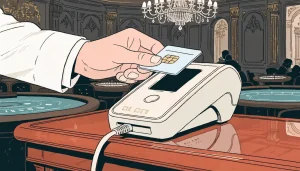
For BEP20, the useful comparison is therefore not “cheap network” against “costly network” in the abstract. It is the total value that leaves the sending account, the amount credited by the casino, and any stated charges attached to the route. Those figures should be checked together before confirming a transfer. If the cashier does not specify the network and the applicable costs clearly, a favourable-looking label is not enough to make the route dependable.
This also changes what “best USDT casino” can sensibly mean. A low transfer cost alone says nothing about whether the casino accepts the selected Tether route, how it handles account currency, or whether it is available under the rules for British customers. Remote gambling licensees serving Great Britain must hold a UK Gambling Commission licence. A search result or crypto badge is not a substitute for that status, nor does it establish a BEP20 option.
The appeal of a Tether slot casino is easy to understand: one digital balance appears to promise a direct line from wallet to play. In practice, the payment path has several possible toll gates, some visible and some folded into conversion. Comparing the total cost for the intended deposit is more meaningful than choosing by the network name alone. The route must match. The arithmetic must, too.
Comparing Tether Casino Payment Options
A casino described as crypto-friendly has not necessarily confirmed that it accepts Tether. The phrase may refer to other digital currencies, or to a payment route that is unavailable to customers in Britain. Even a reference to USDT does not settle which network or account conditions apply. General branding is not a payment specification.
Debit Cards
Commonly used via Visa or Mastercard, but subject to UK gambling restrictions.
Bank Transfers
Often used for instant deposits and fast withdrawals at many sites.
Paysafecard
Categorised as a prepaid voucher used for deposits only.
The same distinction matters when comparing sites presented as the best Tether online casinos in the UK. A ranking is useful only if it compares a method that is actually available to the intended customer, rather than repeating an operator’s broad claim. A site’s general presence online is not proof that it may lawfully serve people in Great Britain: remote gambling licensees offering real-money play to this market need a UK Gambling Commission licence. Payment choice and regulatory status are separate checks.
A sensible comparison starts with the methods named for the relevant market. UK casinos commonly accept debit cards, including Visa and Mastercard, but that does not make either card a substitute for Tether. Open banking and bank transfers are also described in a specialist review as options that can provide instant deposits and fast withdrawals at many sites; those timings are not a promise for every operator or account. Paysafecard belongs in a different category: it is a prepaid voucher for deposits only. Treating these methods as interchangeable would obscure what each one can do.
That category difference is more useful than a long list of logos. A method may be familiar and widely named yet still fail to match the intended purpose; another may be visible only under particular account or market conditions. For a UK USDT casino, the relevant comparison is therefore not simply how many payment symbols appear on a page, but whether the specific option is offered to UK customers and whether its stated functions match the planned use. A Tether label alone does not answer those points.

“New” does not improve the evidence. A recently launched casino may describe its payment range attractively, but age and promotional language reveal little about the actual compatibility of a payment method. Nor does the word “top” establish a meaningful comparison. The useful distinction is between a site that advertises cryptocurrency in general and one whose terms and payment information identify the relevant method for the intended market.
The result is a less glamorous way to assess the best USDT online casinos: compare precise method names and stated availability, then separate those details from general claims about convenience or crypto support. Debit cards, bank services and deposit-only vouchers provide context for the wider payment choice; they do not verify Tether acceptance. Compatibility is specific. Branding is not.
Deposits, Withdrawals and the Return-to-Source Rule
A Tether deposit describes only the first leg of a payment. It does not, by itself, establish how a casino with Tether handles a later withdrawal. The distinction matters: a cashier may show a way to put funds into an account without confirming that the same route can carry winnings back out.
In Britain, the return-to-source principle is tied to anti-money-laundering controls. Remote gambling licensees commonly have to send a payout back to the original payment source, rather than treating every method shown in the cashier as interchangeable. Returning funds this way also helps prevent fraud. Payment rails, it turns out, have memories.
For a Tether casino site, the practical question is therefore not simply whether USDT appears among deposit options. The withdrawal rules need to explain whether payouts can be made to the same Tether route, whether another method is required, and what happens when the original route cannot receive funds. A stated alternative may involve additional checks; it should not be assumed to be an automatic substitution.
Account ownership matters in this chain. Using an account and payment route belonging to the same customer can reduce avoidable friction over basic ownership details. A mismatch between account names or payment details may complicate a transaction, even where the deposit itself went through. That is a reason to treat the outward journey as part of the payment decision, not as an administrative afterthought.
A Tether casino withdrawal may also take longer than the initial payment. Processing time includes the casino’s own approval, and first withdrawals can take longer while checks are completed. A specialist review describes this as a potential delay rather than a fixed timetable; the actual process depends on the operator and the account. No method label can promise a release time.
Before funds move, the written withdrawal conditions should be read alongside the cashier’s available routes. The relevant details are the permitted payout destination, any conditions for using an alternative, and whether the withdrawal process depends on the account passing checks. This applies equally to a live casino with Tether: the game category does not settle how the money returns.
The central point is modest but consequential. A deposit option is not a payout guarantee. In a market where payment routes are also part of fraud prevention, the route back is governed by rules as well as convenience.

Crypto Payments, Fees and Exchange-Rate Spreads
A Tether payment can look like a single transfer while carrying several separate costs. A casino may charge a fee; the payment provider may add one; a bank or issuer may impose its own charge; and the network may require a transaction fee. If the account and the payment are valued in different currencies, conversion can add another cost. The total is the relevant figure, not the most prominent line in a cashier.
For a crypto casino using USDT, the exchange rate deserves particular attention. A conversion spread is the gap between the rate used for the transaction and a reference market rate. It may be less visible than a stated fee and can, in some cases, cost more than a flat charge. The amount credited after conversion therefore matters as much as the advertised price of moving funds.
A specialist review of casino payment methods advises comparing charges across the casino, provider, currency conversion and network for the amount being considered. That is more useful than declaring one method the cheapest: there is no universal lowest-fee option. A route with no casino fee may still carry a provider charge or an unfavourable spread; a low network cost does not settle the rest of the calculation.
Currency settings can quietly alter the arithmetic. Specialist casino pages describe GBP as supported, but that does not establish the currency selected for every account. The account currency should be confirmed before a first transaction. If a balance is converted between pounds and a crypto-denominated amount, the applicable rate and any spread affect what arrives on either side of the payment.
Understanding Conversion Costs
When depositing USDT into a GBP account, be aware of the following: – Network transaction fees – Exchange rate spreads between the market price and the casino rate – Potential currency conversion fees applied by the provider or bank
A sensible comparison records the amount leaving the source, every stated charge, the exchange rate applied and the final amount credited. The same calculation can be made for a prospective withdrawal, without assuming its route or charges will mirror the deposit. Fees shown at one stage may not describe the full cost of the payment.
This matters to anyone comparing a Tether crypto casino in the UK with a conventional payment route. The label “crypto” does not itself reveal whether the casino, provider or network absorbs a cost, passes it on, or builds it into conversion. Nor does an advertised zero fee settle the exchange-rate question. Small print, plainly read.
TRC20 and ERC20: Confirm the Route Before Sending
TRC20 and ERC20 identify different networks, not interchangeable labels for a single transfer. A casino that mentions Tether or USDT in general has not thereby confirmed that it can receive tokens sent through either route. The distinction matters at the point of payment: the network selected in the casino’s instructions must match the network selected in the sending wallet.
A mismatch can leave funds inaccessible or require a lengthy recovery process; it should not be treated as a harmless variation in wording. Before sending, the cashier’s current instructions need to be checked for the specific token and network, including any address or other details the operator provides. A wallet’s ability to send USDT over a network proves only that the wallet can make that kind of transfer. It does not establish that a casino supports it.

The names also invite a misleading shortcut. Searching for a TRC20 Tether casino or an ERC20 Tether casino can produce broad claims about crypto payments, but a general crypto label does not settle the route. The relevant detail is explicit confirmation for that operator and transaction, not a logo, an old review or a page that mentions Tether without naming the network. Payment arrangements can change, so stale descriptions are poor instructions for moving funds.
The same care applies to ownership information. Keeping the casino account, wallet route and payment details in the same person’s name can reduce avoidable questions about who controls the funds. That is a practical consistency check, not proof that the network is supported or that a transfer will be accepted.
Costs deserve a separate look before a transfer. They may arise from the casino, a payment provider, a bank or issuer, a currency conversion spread, or the network itself. A low-looking charge at one stage does not describe the total cost. The route, currency and displayed terms all matter.
No inference should be drawn from the network name alone. Confirm the exact route in the live payment instructions, and do not send funds while the token or network remains ambiguous. A small label can carry the whole transaction.
Bonuses, Deposits and Promotion Conditions
A Tether deposit and a casino promotion are separate permissions. A cashier may display a cryptocurrency option while the bonus terms exclude deposits made through it. The reverse can also be true: a promotion may mention crypto, but that does not establish that Tether, or a particular network, qualifies. A Tether casino bonus therefore depends on the wording attached to the offer, not merely on the payment logo.
- Confirm Tether deposits are eligible for the specific promotion
- Check if the bonus terms exclude certain crypto networks
- Read the full contract regarding deposit-related requirements
Welcome bonuses and deposit bonuses commonly have conditions beyond the payment method. The terms may define which deposits count, how a bonus is credited and what happens if an account uses an excluded method. Those details matter before accepting an offer: once a promotion is attached to a deposit, its rules can affect the balance and any later withdrawal. A headline is not the contract.
The same distinction applies to a no-deposit bonus. Its name indicates that a qualifying deposit is not the stated trigger; it does not establish that an offer exists, that it is open to every account, or that Tether is involved. A search for a Tether casino no-deposit bonus in the UK cannot substitute for the operator’s current promotion terms. Eligibility may depend on conditions set by the casino, so an offer should not be treated as available until those terms are clear.
Payment exclusions are not peculiar to cryptocurrency. A specialist casino review notes that PayPal may be left out of bonus eligibility, while specialist reviews also report Skrill and Neteller as methods that some sites exclude from promotions. These are not fixed rules across the market; the terms of the specific offer govern. The broader point is plain: a familiar payment method does not automatically qualify a deposit.
Claims about an anonymous Tether casino bonus deserve the same scrutiny. A description suggesting anonymity does not prove that a promotion is available or that an account can avoid the operator’s requirements. The label should not be allowed to stand in for written eligibility conditions.
Before accepting a USDT welcome or deposit bonus, the useful distinction is between the payment method being offered and the payment method being eligible for that particular promotion. If the terms do not identify the relevant method clearly, the bonus remains uncertain. No surprise there.

KYC Checks, Verification and Payout Timing
The appeal of a no-KYC Tether casino is plain: fewer requests for documents, less interruption between opening an account and using it. But “no verification” is a claim about an operator’s procedures, not proof that a casino is suitable for people in Britain. Remote gambling licensees serving Great Britain must hold a UK Gambling Commission licence, and operators must check a customer’s age before allowing a deposit. An absolute promise of no checks sits uneasily with that regulated setting.
KYC can involve confirming identity or other account details, and the timing matters. A withdrawal may wait while the casino completes its internal approval process; whether the account is fully verified also affects how quickly that process moves. A specialist review has described first payouts as potentially taking longer while checks are completed, but that is not a fixed timetable for every operator or transaction. A payment displayed as Tether or USDT does not settle the question of when money can leave the account.
The practical distinction is between an account that has completed the operator’s checks and one that has not. A request for documents at payout can feel like a new condition, especially where verification was not prominent during registration. It is still part of the operator’s account review, not evidence that a cryptocurrency transaction itself has failed. No shortcut is guaranteed.
Consistency helps keep basic ownership details from becoming another source of delay. The cleanest route is often a single named account used for both depositing and withdrawing, with the casino account and payment account belonging to the same customer. That does not remove KYC or determine the operator’s approval speed; it simply reduces avoidable questions about whose funds are involved.
A casino advertising itself as a Tether casino with no verification should therefore be judged by what its terms say about identity checks and withdrawals, not by the slogan alone. In Britain, the more consequential distinction is whether the service operates within the UK regulatory system. Fewer questions are not the same as fewer risks.
Do UK casino withdrawals require verification?
Verification may be needed, particularly before a first withdrawal, and an account that is not fully verified can delay payment.
Are Visa and Mastercard deposits definitely debit cards?
No. Visa and Mastercard are card brands, not card types; the cashier must confirm whether the specific card is eligible. UK-licensed casinos cannot accept credit-card payments for gambling.
What is the current minimum deposit?
Minimum deposits usually start at £10–£20, depending on the payment method.
Which method has the lowest fees?
There is no universally cheapest method. Compare casino and provider charges, any bank or issuer fees, currency-conversion spread, and network costs for the transaction.
Can I use a credit card at 333 Casino in Great Britain?
No, not for gambling at a UK-licensed casino: credit-card gambling has been banned in Great Britain since 14 April 2020.
Why must withdrawals return to the deposit method?
Returning funds to the original payment source is a common anti-fraud and anti-money-laundering control. Using another route may require additional verification.
What is the fastest withdrawal method for UK casinos?
PayPal, open banking services, and debit cards linked to fast payout systems are generally among the quickest. The casino’s approval process and account verification also affect how soon funds arrive.
Related posts

UK Casino Welcome Bonuses: How Offers Work

VPN-Friendly Casinos in the UK: How Access Works
