
Casinos That Accept Debit Cards in the UK
 Available in GB
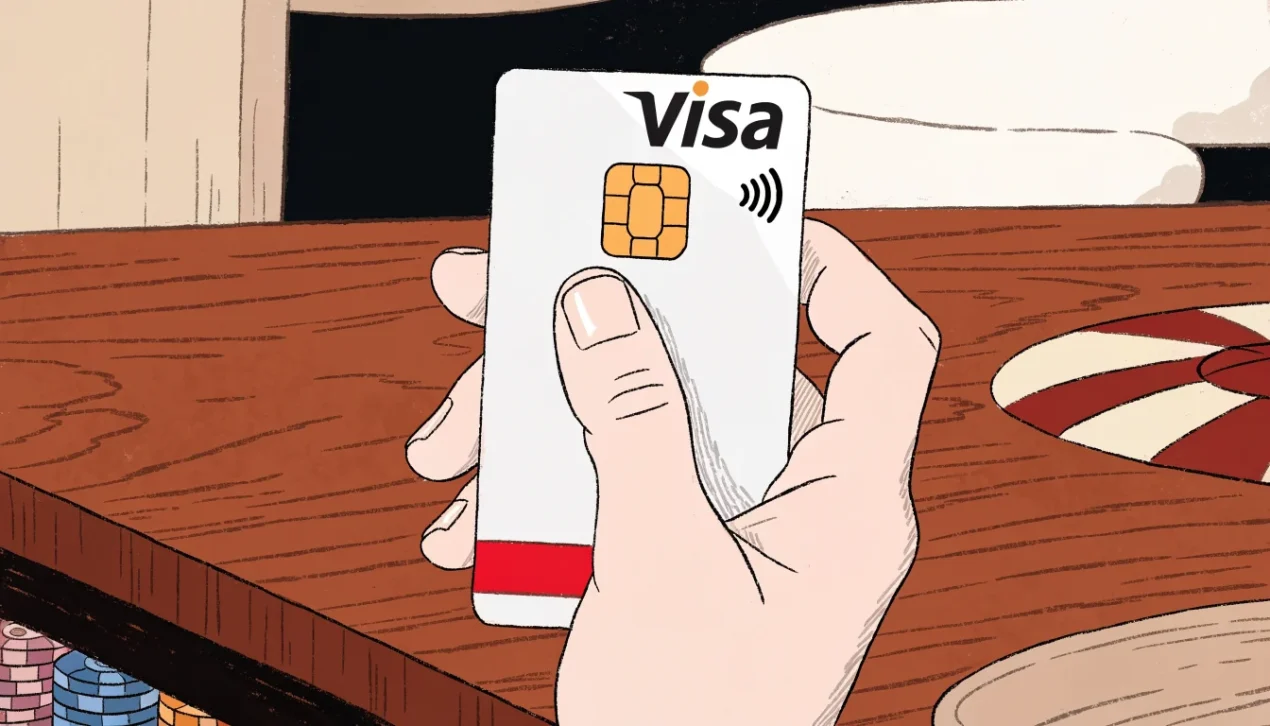
A practical look at card availability, deposit limits, withdrawal routes and the payment details that can affect bonuses and costs.
Debit cards remain a familiar route into UK online casinos
A debit card is an ordinary piece of financial infrastructure, which is part of its appeal. It sits between a person’s bank account and the online cashier, using money held in the account rather than a line of credit. UK casinos commonly accept debit cards, including Visa and Mastercard. The method is familiar not because gambling has made it unusual, but because the same card already serves everyday payments.
That familiarity can obscure an important distinction. A debit card and a credit card may look alike and carry the same network name, yet they do not represent the same source of money. A debit transaction draws on funds in a bank account; a credit transaction relies on borrowing from the card issuer. For gambling payments at UK-licensed casinos, that difference is decisive.
Credit-card payments for gambling have been prohibited since 14 April 2020. The ban remains in force. Remote gambling licensees cannot accept credit cards for gambling, including where credit-card funds are routed through a money service business. A credit card does not become acceptable merely because it is used through an intermediary or presented within another payment arrangement. The route cannot disguise the source.
The rule reflects a particular judgement about risk: gambling should not be funded through borrowing in the way a purchase might be. A debit card does not make gambling harmless, nor does the label “debit” tell anything about whether a payment is affordable. It does, however, mark a boundary in the payment system between spending money held in an account and drawing on credit. Regulation has made that boundary visible at the cashier.
For people comparing online casinos that accept debit card deposits, the broad answer is straightforward: debit cards remain a familiar option at UK casinos, with Visa and Mastercard among the commonly accepted networks. That is a general description, not a promise that every card will work at every site. The cashier is where an operator presents its available payment routes; acceptance in the abstract is not the same as a guarantee for every card or account.
There is also a difference between a payment network and the card itself. Visa or Mastercard identifies the network, while the card is issued under a particular product and linked to an account. That distinction matters in a market where credit-card gambling is barred but debit-card payments remain common. The familiar logo alone does not erase the legal distinction between debit and credit.
A debit card’s ordinary status gives it a quiet advantage: it does not require a separate account with a payment brand or a new financial routine. It belongs to the same everyday world as grocery shopping, transport and household bills. In casino payments, that plainness is useful. It also means the transaction can feel less like a distinct financial decision than it is. The payment may be routine; the activity it funds is not.
The UK framework treats that difference as more than a matter of product design. Remote gambling licensees serving the British market must operate under a Gambling Commission licence, and the credit-card restriction is part of the conditions surrounding that regulated activity. The rule is not an optional preference that individual casinos can quietly set aside. For a UK-licensed casino, credit-card payments for gambling are outside the permitted route.
Debit cards therefore occupy a middle ground: established enough to be familiar, but still subject to the operator’s payment arrangements and the rules that govern gambling. The category is broad, while the actual transaction is specific. A card might carry a familiar network name and still be a credit product rather than a debit one; the distinction is not cosmetic.
The phrase “debit card casino” can suggest that the card defines the casino. It does not. It describes one way to fund an account, not a special kind of gambling site. The central point is simpler: UK casinos commonly accept debit cards, while credit cards cannot be used for gambling at UK-licensed casinos. One familiar route remains. The other is closed.
Top online casinos in the UK
- SpinFormulaBonus: 550% Up To £15,000 + 550 FS · Payout speed: 1-3 business days
- SlotoSportBonus: 500% up to £ 10 200+ 777 FS · Payout speed: 1-3 business days
- Revery PlayBonus: 100% up to€1,000+ 100 FS · Payout speed: 1-3 business days
- AmunbetBonus: Join now and get 450% up to 2,700 GBP + 450 FS · Payout speed: 1-3 business days
- BeOnBetBonus: 100% up to €500 + 100 FS · Payout speed: 1-3 business days
- JetsetspinsBonus: 200% Bonus + 100 Free Spins + Free Royal Wheel · Payout speed: 1-3 business days
- NightWinBonus: £900 + 400 free spins · Payout speed: 1-3 business days
- x3betBonus: Welcome Pack 100% Up to £1.000 + 200 Free Spins · Payout speed: 1-3 business days
- ZombillionBonus: Welcome Pack 250% up to £4000 + 200 FS · Payout speed: 1-3 business days
- BritsinoBonus: Welcome Package – Get your £2,200 + 2,000 FS · Payout speed: 1-3 business days
Deposits, limits and the moment before play
A debit-card deposit is a short sequence of decisions, even when the cashier makes it look like one. The account holder chooses the card option, enters an amount and supplies the requested payment details. The casino sends the transaction for authorisation; if it is approved, the funds appear in the gambling balance. A declined payment may leave no usable balance, however familiar the card is elsewhere.
The amount entered is only one boundary. The cashier sets a minimum for the selected method, while the card issuer may apply its own checks or restrictions. Specialist casino reviews have reported minimum deposits in the £10–£20 range, with the figure depending on the payment method. That range is a guide to what those reviews have found, not a promise that every casino or every card will accept the same starting amount. The live cashier is the place where the actual threshold appears.
There is a practical reason to notice that threshold before entering card details. A deposit that falls below the minimum cannot complete as requested; raising it changes the amount leaving the bank account and the amount available to play with. The interface may invite a quick selection, but the decision is still a financial one. Money moves from an everyday account into a balance designed for gambling.
The maximum is less uniform. A casino may set one ceiling for a single transaction and separate limits over a day or a month. The selected payment method and the status of the account can affect which ceiling applies. Specialist reviews describe these limits as varying between methods and account circumstances, so a maximum displayed elsewhere—or remembered from an earlier transaction—cannot be treated as a standing allowance. The cashier’s current limit is the relevant one.

A card issuer can also refuse a payment, even when the casino accepts debit cards in general. Authorisation is not a guarantee, and a rejected transaction does not necessarily mean that the casino has removed the method. The amount, the card, account checks or issuer controls may all matter. Repeated attempts with changing amounts can make a simple problem harder to understand; the transaction status and any explanation shown by the casino or bank are more useful than guessing.
There is another limit that sits before the first deposit, not merely inside the cashier. UKGC rules require remote gambling operators to prompt new customers to set a financial limit before that first deposit, and to make account-level limit controls accessible. This is distinct from the casino’s minimum and maximum transaction amounts. A cashier can permit a deposit within its technical range while an account-level control restricts what can be put in. The two systems answer different questions: what the payment route will process, and what the customer has chosen to make available for gambling.
That distinction matters because a deposit cap can be mistaken for a personal budget. The casino’s maximum is an outer boundary, not a recommendation. A financial limit belongs to the account and is intended to shape spending across activity, rather than merely describe what a particular card transaction can carry. Before funds enter the balance, the payment screen and the account controls therefore have different jobs.
Age is also a gate, not a formality postponed until play begins. Operators must verify a customer’s age before allowing a deposit into a gambling account. If the account has not passed that check, the payment process may stop before the money is accepted. The arrangement reflects a wider British principle: access to gambling is controlled at the point where money and permission meet, rather than left to a tick-box after the fact.
Once a deposit is authorised, the balance can be used for casino play, including online slots, subject to the operator’s account controls and the rules governing the games. The smoothness of the payment screen can make the transition feel almost administrative. It is not. The deposit is the moment a bank balance becomes gambling funds, and the minimum, the maximum and the personal limit mark three different edges of that decision.
When the cashier offers more than a card
A debit card is a familiar way to fund a casino account, but it is not the only route that may appear in a UK-licensed casino’s cashier. Some offer open banking, bank transfer or Apple Pay alongside cards. The choice is less a ranking than a small map of what that particular operator has connected: an option available at one site may be absent at another.

Open banking gives a casino a route to a bank account without treating the transaction as a card payment. A bank transfer is another bank-based option, while Apple Pay is accepted for deposits at some casinos licensed by the UK Gambling Commission. These are not interchangeable labels for the same service. Their availability depends on the cashier, and Apple Pay’s presence there does not establish that it can be used for withdrawals too.
The question of speed is more complicated than the word “instant” suggests. A specialist review of casino payment options reports that open banking and bank transfers can support instant deposits and fast withdrawals at many sites. That is a report about what some services and operators offer, not a promise that every transfer will arrive at the same pace. The route, the casino’s process and the payment service involved all matter.
A debit card can still make sense where it is listed and the intention is to use a straightforward card payment. Open banking or a bank transfer may be worth considering where the cashier offers them and the bank account is the preferred starting point. Apple Pay may suit someone who already uses it for payments, but the casino must list it, and its stated purpose should be checked before it is treated as a complete payment route. Availability first; convenience comes afterwards.
There is a modest social history in this crowded cashier. Casino payments have followed the habits of ordinary commerce: the bank account, the card, then services built around the devices and systems people already use. Each new route promises less friction, though the promise is specific to the connection between a player, a bank, a payment provider and an operator. A row of familiar logos can look like a single menu. It is really a collection of separate arrangements.
Open Banking
A route to a bank account without treating the transaction as a card payment.
Bank Transfer
An alternative bank-based option available at some sites.
Apple Pay
A mobile-based option accepted for deposits at some UKGC-licensed casinos.
That is why a casino described as accepting debit cards is not necessarily the best fit for every payment preference. Nor does a longer list of options automatically make a site better. A useful comparison is practical: whether the desired method is actually shown in the cashier, whether it is offered for the transaction in question, and whether its stated speed suits the purpose. Payment pages can change, so a general review or an old list may not reflect the current choice.
The cashier is the point where a broad claim becomes a real option. Open banking and bank transfers may be presented as routes capable of quick movement in both directions; Apple Pay is a deposit option at some UKGC-licensed casinos; and a debit card remains one possible route among them. None should be assumed available simply because another operator offers it.
More doors, not fewer decisions.
Card availability is decided in the cashier
A casino can name Visa and Mastercard among its payment methods without accepting every card carrying either logo. The logo identifies the card network; it does not settle whether a particular card product is enabled for that operator, or whether the cashier currently offers it to UK customers. A specialist review may record the networks listed on a casino’s payment page, but that listing is not a guarantee of transaction-level compatibility.

The cashier is the more useful test. Its available methods show what the account can use at that moment, rather than what a general payment page says the site supports. Even then, a card appearing in the menu is not the same as a successful payment: the transaction must still be authorised. A declined attempt does not, by itself, establish that Visa or Mastercard is unavailable across the casino; it may be the particular card or transaction that has not gone through.
That distinction matters when comparing debit card casino sites in the UK. A broad claim of card acceptance can sound more definite than the practical arrangement really is. For a casino debit card deposit, the relevant details are narrower: whether the cashier offers the network, whether the card product is eligible, and whether the account is set up in a currency the payment can use. Compatibility is not one switch.
Currency is easy to overlook because the payment method may look familiar. Pages reviewed by a specialist source state that GBP is supported, but the account currency still needs confirmation before the first transaction. If the account is held in another currency, the payment may involve conversion rather than a straightforward sterling transaction. The currency displayed on a general page cannot necessarily answer what has been selected for an individual account.
This is not merely a matter of tidy presentation. The amount entered and the amount ultimately reflected in the account can be affected by the currency route. A card may work, yet the transaction may not proceed in the way expected if the account currency differs from the card’s currency. Confirming GBP in the account settings before depositing avoids treating a network logo as a promise about the whole payment.
Do
- Check the cashier for available methods
- Confirm the account currency is GBP
- Use a card that belongs to the account holder
Don’t
- Assume all card networks are accepted
- Rely on general descriptions instead of the cashier
- Use a second person’s card
The same care applies to labels such as “debit card deposits” on an overview page. Such wording describes a category, not every card issued under that category. Current UK availability and product eligibility are decided in the cashier, and can differ from a site’s general description. That is why a list of casinos accepting Visa or Mastercard is a starting point, not a complete compatibility check.
There is a small institutional story here. Payment networks make commerce recognisable across borders; the cashier turns that broad infrastructure into a local, account-specific decision. The logo is the public shorthand. The actual route is more particular.
Check the exact option and the account currency before the first deposit. The distinction is plain.
Why a card deposit can be faster than a card withdrawal
A debit card can fund a casino account almost at once, yet a casino withdrawal to a debit card follows a different path. The deposit is an instruction to take money from the card; a payout is money leaving the operator, and it cannot be sent simply because a player has pressed a button. The casino first has to approve the request, while the payment route and account status can affect what happens next.
UK anti-money laundering rules generally require a payout to go back to the original payment source. For a card-funded account, that can mean returning money to the card rather than sending it to an unrelated destination. The route is not necessarily a mirror image of the deposit: the outgoing payment still has to pass through the casino’s own review and the relevant payment system.

That internal stage is part of the waiting time. A withdrawal request may remain pending while the casino checks it, and the overall pace depends in part on how quickly the operator approves it. A first payout can take longer if verification is still being completed. KYC, which establishes that the account belongs to the person using it, may therefore matter to the timetable as much as the card itself.
There is no single meaning of “fast” in an online casino debit card withdrawal. One clock measures the casino’s approval; another covers the movement of funds after approval. A status marked as processed does not necessarily mean the money has already appeared in the bank account. A card deposit may feel immediate because the account is funded at the start of play, while the corresponding withdrawal has to clear more than one stage.
Specialist casino reviews describe PayPal, open banking services and debit cards connected to fast payout systems as among the quicker withdrawal routes. That is a comparison, not a promise about an individual transaction. Even when a card is associated with a faster payout system, the casino’s approval process and the state of the player’s verification remain relevant. The label “fast withdrawal” cannot settle either question.
This distinction is useful when comparing a debit card casino withdrawal UK with the deposit experience that came before it. The speed of putting money into an account says little about how quickly winnings will return. The casino’s withdrawal terms, the status of verification and the payment route all shape the interval between requesting a payout and receiving it.
A card remains a familiar payment instrument, but familiarity does not make the two directions equally quick. Deposits arrive at the point where play begins; withdrawals leave only after the operator has completed its checks and released them. The delay is not necessarily a defect in the card. It is part of a process in which money going out is reviewed differently from money coming in.
The difference is plain enough. A deposit opens the door; a payout passes through the office first.
One name, one route, fewer complications
A debit-card deposit begins as a small act of identification as well as a transfer of money. The casino account has a customer’s name; the card has a cardholder’s name. When those details belong to the same person, the payment has a straightforward shape. When they do not, even a familiar card can leave basic questions hanging over the transaction.
That is why continuity matters at a casino accepting debit cards in the UK. A deposit made from a card in the account holder’s name, followed by a withdrawal requested through that same route, gives the transaction a clear line from entry to return. It does not promise a particular outcome or remove every possible check. It simply avoids adding a discrepancy that may need explaining.
A second person’s card is not a tidy workaround for an account in someone else’s name. Nor is it sensible to treat a relative’s or partner’s payment details as interchangeable with one’s own. The account and payment route should represent the same customer. When they do, ordinary ownership details are less likely to cause avoidable friction.

The cleanest arrangement is often one named account and one payment route used consistently for both deposit and withdrawal. For someone choosing a debit-card casino site, that means keeping the card linked to the account holder rather than moving between payment details without a clear reason. The principle is less about finding a clever method than about making the transaction legible.
This is distinct from the speed of a payout. A deposit with a debit card may appear promptly, while the return of funds can follow a different path through the casino’s process. Consistency cannot make those stages identical. It can, however, keep one avoidable complication out of them: uncertainty over whose money is moving through whose account.
The preference for a single route also reflects an ordinary administrative instinct. Institutions work more smoothly when names and records agree; gambling accounts are no exception. A debit-card casino list may identify sites that accept Visa or Mastercard, but acceptance alone says little about how neatly a particular account’s payment details fit together. That part is personal, and it begins with keeping the account and cardholder aligned.
Nothing elaborate. Just the same name, carried through.
The quiet work of payment security
A debit card deposit leaves more than a balance on a casino account: it creates a record linking a customer, a payment instrument and a source of funds. Returning money to that original source is a common anti-fraud and anti-money-laundering control. It makes the path of funds easier to account for, rather than allowing a payout to be redirected without explanation.
- Anti-money-laundering
-
Controls designed to prevent the disguise or misdirection of funds, such as requiring payouts to return to the original payment source.
That principle can matter even where a casino that accepts debit card payments offers other ways to receive money. A different destination may be legitimate, but the change can make the transaction harder to assess. The casino may need additional verification before it can be satisfied that the request belongs to the account holder and that the route is appropriate. Security checks are not an accusation; they are part of controlling how money moves through a gambling account.
This is one reason the cashier’s payment options do not necessarily operate as interchangeable doors. A method may be visible for deposits while the return of funds follows a separate process. If an alternative payout route is proposed, the casino can ask for further evidence or clarification. The particular checks depend on the operator and the circumstances; there is no single procedure that applies to every account.
For a casino that accepts debit card UK customers, the point is less dramatic than it sounds. A payment trail is useful precisely because it reduces the room for a transaction to be disguised or misdirected. The same control can create extra steps when the trail changes. That is the trade-off: tighter oversight in exchange for a less frictionless route.
A best casino that accepts debit card deposits is not simply one with a familiar logo in its cashier. Its handling of funds also depends on whether payment ownership can be established and whether the payout route satisfies its checks. Security works quietly, and sometimes inconveniently. That is the point.

Bonuses can depend on how the account is funded
A welcome offer is not simply attached to a new account. Its terms can make eligibility depend on the payment method used, so a deposit that reaches the balance may still fail to qualify for a promotion. The distinction is small in the cashier and large in the terms.
A specialist review reports that PayPal can be excluded from bonus eligibility, despite its appeal as a quick, convenient payment option. The same kind of review describes Skrill and Neteller as often excluded from promotions at sites that offer them. These are not universal rules: each casino sets its own conditions, and those conditions can change. The cashier and the promotion’s full terms, rather than a payment method’s general popularity, determine the position at a particular site.
This matters when comparing a debit-card casino bonus with a promotion that applies to several funding methods. A welcome bonus may name eligible payment options, exclude particular ones, or set conditions that affect whether a deposit counts. The word “deposit” on a promotional banner does not settle the question. The small print does.
There is also a difference between being able to fund an account and being able to claim an offer through that funding method. A player may find a payment option available, while its use leaves the account outside a promotion. That does not make the payment route defective; it means the bonus has its own rules. Casinos are quite capable of separating the two.
For anyone weighing a debit-card welcome offer against another promotion, the useful comparison is not only the advertised amount or headline. It is whether the chosen method is eligible, and what the terms say about claiming the offer. A payment choice can therefore shape the promotional value of an account without changing the games themselves.
The terms are decisive. A familiar brand is no exception.
Deposit-only vouchers and other payment distinctions
A payment method can solve one half of a transaction and leave the other untouched. Paysafecard is a prepaid voucher for making deposits; it is deposit-only, not a complete route for moving money both into and out of a casino account. Its role is therefore narrower than that of a debit card, which may serve as the funding method and, where supported, be involved in a later payout.
That distinction matters before a payment is selected. A voucher can put funds into an account, but it does not itself provide a way to receive a withdrawal. The casino’s cashier and payment terms determine what alternatives are available for payouts. Someone choosing Paysafecard for a deposit should understand that another method may be needed if money is later due back.
The word “prepaid” can make a voucher sound self-contained: value is loaded, then spent. Gambling accounts add another stage. Depositing is not the whole payment relationship, and the convenience of a one-way instrument does not make it a two-way one. A debit card deposit, by contrast, begins with an account-linked payment method, though card withdrawal support still depends on the casino and its rules.
This is a practical distinction rather than a judgement about which method is better. Vouchers may suit a deposit; cards may offer a more familiar payment path. Neither description alone establishes what a particular casino will accept for every transaction. The cashier’s available options matter.

A deposit-only voucher is best understood as an entry point, not an all-purpose payment arrangement. That small difference can shape how uncomplicated the account feels later. A one-way street, plainly marked.
The cost hidden between the payment and the payout
A Visa debit card casino can look cost-free at the point of deposit and still involve charges elsewhere in the transaction. The cashier may impose a fee; the card provider or issuing bank may apply its own. If the account and card operate in different currencies, the exchange rate can include a spread: a cost folded into the rate rather than displayed as a separate line. Card-network fees may also form part of the chain.
A specialist payment review identifies these as possible cost points, not charges that every casino or cardholder will face. The distinction matters. A fee shown by the casino is only one part of the arithmetic, and a safe debit card casino UK is not necessarily a fee-free one.

Currency deserves particular attention because a small-looking difference in the exchange rate can outweigh a visible flat charge. The relevant comparison is the total amount removed from the bank account against the amount credited to the casino balance, not the cashier’s fee in isolation. Account currency should be clear before the first transaction; otherwise, conversion may enter the calculation unexpectedly.
Bank transfers have their own mechanics. A specialist payment review notes that delivery can be affected by cut-off times, weekends and currency conversion. Those factors may alter the practical cost as well as the arrival time, especially where an exchange is involved. A transfer with no obvious casino charge is not automatically the least expensive route.
There is no universal cheapest method. The comparison has to account for casino charges, provider and bank fees, exchange-rate spread and any network cost for the particular transaction. The quietest fee can be the one built into the rate.
Why can a fast payout casino still delay my withdrawal?
A quick payment method cannot skip the casino’s internal approval process. First withdrawals may take longer while verification is completed, and an account that is not fully verified can also slow payment.
What is the current minimum deposit?
Minimum deposits commonly start at £10–£20. The exact threshold depends on the payment method and is shown in the casino’s cashier.
Which payment methods are accepted in Great Britain?
Common options include Visa and Mastercard debit cards, bank transfers, and e-wallets such as PayPal, Skrill and Neteller; some sites also offer open banking. Available methods vary by casino, so check its cashier.
Which method has the lowest fees?
There is no universally cheapest method. Compare the casino’s charges, provider or bank fees, currency-conversion spread, and any network costs for the amount you plan to transfer.
Why must withdrawals return to the deposit method?
Returning funds to the original payment source is a common anti-fraud and anti-money-laundering control. Using another route may require additional verification.
Related posts

UK Casino Welcome Bonuses: How Offers Work

VPN-Friendly Casinos in the UK: How Access Works
