
Casinos That Accept Boku in the UK: What to Check
 Available in GB

Boku availability varies by operator, and phone-bill deposits do not provide a withdrawal route.
Why Boku Has Become Harder to Find
Boku has not disappeared from British online casinos, but finding a direct deposit option has become less straightforward. The number of UK Gambling Commission-licensed casinos accepting it has fallen since 2023. That is a change in operators’ payment choices, not a ban on Boku: the Commission did not introduce a rule naming the service and prohibiting its use.
The distinction matters. A payment method can become scarce without becoming unlawful. Casino operators decide which methods to offer, and some have removed Boku because of compliance risk. The result is a shrinking pool of sites rather than a single national switch being thrown. For anyone comparing casinos that accept Boku in the UK, availability is therefore a matter to establish with the operator, not infer from a brand name appearing in an old list.
Specialist casino reviews have named BoyleSports, Sun Bingo, William Hill, Sky Vegas, PlayOJO, Genting Casino, Betfred, Lottoland, bwin and 888 Casino among operators associated with Boku deposits. This should be read as a reported set, not a promise that every cashier still offers the method. Payment menus change, and a review may describe an earlier state. A casino name can remain familiar long after a payment option has quietly left its cashier.
The same caution applies to smaller or more narrowly identified sites. Specialist reviews describe Jackpot Mobile Casino and Peachy Games as part of the remaining direct-Boku group. Their presence in such accounts helps explain why the option is still discussed, but it does not turn the group into a definitive or permanent directory. The sensible distinction is between a casino that has been reported as accepting Boku and one whose current cashier confirms it.
BoyleSports has also been described in specialist coverage as adding Boku to its cashier as a payment option for customers in the UK. That detail illustrates how payment availability can be specific to a market: a method may be introduced for one customer base without becoming a universal feature across every version of a casino. It also underlines why old lists are fragile. A change can add a name as well as remove one.
 Payments, credit cards and bank gambling blocksAt a glance Licensed gambling businesses in Great Britain must not accept gambling payments by credit card, including through a money service…
 Casinos That Accept E-Checks in the UKLearn why an e-check mention does not confirm availability, how to check the signed-in cashier, and why deposits and withdrawals may follow…
There is an institutional backdrop to this thinning-out, but it is not a Boku prohibition. The Gambling Commission regulates commercial gambling in Great Britain and issues operating licences to businesses, as well as personal licences to individuals working in relevant roles. Operators offering gambling to British customers must meet the licensing framework. Within that framework, each casino still makes decisions about its own payment arrangements and the risks attached to them.
Compliance risk is the stated reason some operators have dropped Boku. That does not mean the payment service itself was declared illegal, nor does it establish that every casino reached the same conclusion for the same reason. It means operators have reassessed whether they wish to keep the method available under the conditions in which they operate. The practical consequence is unevenness: one cashier may retain Boku while another removes it, even when both casinos serve the same broad market.
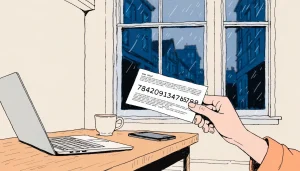
This is why broad claims about the “best” or “all” Boku casinos can mislead. A ranking suggests a stable field and comparable current options; the shrinking and changing availability makes that assumption difficult to sustain. A name in a specialist review is a lead, not confirmation. The cashier is the place where the operator’s present payment choices become visible, while the operator’s licence should be checked independently through the Commission’s public register before money is deposited.
For a British player, then, the relevant question is not whether Boku has been banned. It has not. The more useful question is whether a particular licensed casino currently offers direct Boku deposits to the account being used. That answer may differ across operators and over time, and the lists circulating online can lag behind the cashier. A small market, still shifting.
When Pay-by-Mobile Replaces Boku
Boku and Pay by Phone belong to the same broad family of payments, but they are not interchangeable names for one cashier option. Boku is a particular service: a casino deposit is billed through a mobile network. Pay by Phone describes the wider idea of paying through a phone account, and a casino may provide that route through a different provider. The payment can feel similar from the outside while the name and infrastructure behind it have changed.
Fonix
Used by operators such as MrQ and Duelz.
Siru Mobile
Used by operators such as Mr Vegas and Videoslots.
Boku
A specific service where deposits are billed through a mobile network.
That distinction matters as operators revise their payment menus. A specialist review tracking UK casino payment options reports that, since 2023, some operators have replaced Boku with Fonix or Siru Mobile, while others have removed Pay by Phone altogether. This is a reported pattern, not a guarantee that any particular cashier still offers a named service. Payment pages change, and a label seen in an older review may no longer match the option available at registration.
The move should not be read as a UK-wide prohibition on Boku. The UK Gambling Commission did not introduce a rule banning the service by name. Individual operators have stepped away from it amid compliance concerns, leaving each business to decide whether to keep a phone-billing route, use another provider or stop offering this type of payment. A change in the cashier is therefore an operator decision, not evidence that every phone-based deposit has become unlawful.
Fonix and Siru Mobile are examples of the replacement services identified in specialist coverage. That coverage names MrQ and Duelz as casinos using Fonix, and Mr Vegas and Videoslots as using Siru Mobile. These are provider-specific examples, not a definitive directory of current payment methods. The relevant detail is that a casino accepting Pay by Phone may not accept Boku itself: the network-based payment category can remain while the brand attached to the transaction changes.
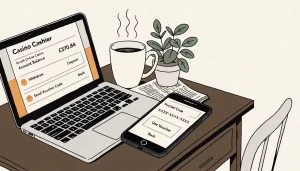
Mobile networks also form part of this landscape. Pay by Phone and Fonix are supported by EE, O2, Vodafone and Three. Network support, however, does not establish that every casino offers every provider, or that a payment will be available to every customer. The casino’s cashier and the mobile account both have a part in whether the route can be used. A familiar network logo is not the same thing as a Boku option.
This is one reason the phrase “Boku casino” can blur two separate questions. One is whether a site accepts Boku directly; the other is whether it accepts some other service that charges a mobile account. A player looking for a deposit from a phone bill may find the second route relevant, but it is not accurate to treat Fonix or Siru Mobile as Boku under another name. The operator’s payment screen is the practical point of distinction.
There is also an indirect route described in a specialist review: Boku can be used to add funds to Neteller, which can then be used at casinos that accept Neteller. This is not a direct Boku deposit into the casino account. It depends on the payment services and the casino supporting the necessary steps, so it should not be assumed to work wherever either Boku or Neteller appears separately. The route adds an intermediary; it does not make the casino a direct Boku cashier.
The shift says something about the infrastructure behind an apparently simple tap on a phone. A payment method is not merely a button. It involves the casino, the payment provider and the mobile network, each with its own arrangements and checks. When an operator removes one provider, the customer-facing category may survive under another name—or disappear entirely. The screen offers no guarantee of continuity.
Do
- Check the casino cashier to confirm current Boku availability.
- Register a separate withdrawal method like a debit card or e-wallet.
Don’t
- Assume Boku can be used to withdraw winnings.
- Treat Fonix or Siru Mobile as identical to Boku.
For anyone comparing casinos that accept Boku in the UK, provider names should therefore be read literally. Boku means Boku; Fonix and Siru Mobile are alternative Pay by Phone services. Current availability needs to be confirmed in the casino cashier rather than inferred from an old list or from the fact that a mobile network supports a service. The distinction is small on a menu, but consequential at the point of payment.
A Phone Bill Is Not a Withdrawal Route
Boku makes a casino deposit by moving the charge onto a mobile account. It is not a Boku debit card, and it does not create a balance from which casino winnings can later be paid. The distinction is easy to miss when payment options are displayed together in a cashier: they may all put money into an account, but they do not all carry money back out.
The deposit begins in the casino cashier. Boku is selected as the payment method, an amount is entered, and the mobile number linked to the account is supplied. Boku then sends an SMS verification code; confirming that code authorises the payment. The charge appears on the player’s mobile phone bill, or is deducted from prepaid credit. The route is simple in one direction. It ends there.

That is why searches for casinos accepting Boku debit cards can lead to a misunderstanding. Boku is a Pay by Phone service, not a bank card bearing the player’s name. Its role is to collect a deposit through the mobile network. It does not give a casino a card account to which winnings can be returned, nor does it work like an e-wallet with a reusable cash balance.
The difference is about the shape of the transaction, not merely its label. A deposit authorises money to move from the mobile account into the casino account. A withdrawal requires the operator to send funds out through a supported payout method. Boku handles the first movement, not the second. A successful deposit therefore says nothing about whether the casino can pay winnings to the same phone bill.
This matters because casino cashiers often place deposit and withdrawal options within the same general payment area. The visual arrangement can suggest that a method works both ways. With Boku, it does not. A player depositing by phone needs a separate withdrawal method, such as a debit card, e-wallet or bank transfer, registered with the casino. The available payout methods and any account-verification steps belong to the operator’s own process; the phone bill is not a substitute.
The point is not that Boku has failed when it cannot receive a withdrawal. That is not what it was built to do. Its function is closer to a one-way payment instruction: the customer confirms a charge through the mobile network, and the casino receives a deposit. Once funds are in the gambling account, any later cash-out must follow a different route.
There is a small but consequential difference between “Boku accepted” and “Boku available for everything”. The first refers to funding the account. It does not mean Boku can be used to move winnings, reverse the direction of the payment, or settle the account. Payment names carry less information than payment flows. The direction is the important part.
So, when asking whether online casinos still accept Boku deposits in the UK, the practical question is only half answered by the cashier. A Boku option can support the initial payment, but it cannot complete the full journey from deposit to withdrawal. Before depositing, the casino’s withdrawal choices need to be available and an alternative payout method registered. Otherwise the money can enter through the phone account while the route out remains unresolved.
A phone bill collects. It does not cash out.
Mobile Slots and the Pay-by-Phone Boundary
“Boku mobile slots” can sound like a category of games, as if a particular set of reels were built around the payment method. It is not. Boku is a way to fund a casino account: the deposit is charged to the player’s mobile phone bill. The slots remain part of the casino’s own games catalogue, not a Boku-branded collection.
That distinction matters on a phone screen, where payment and play sit close together. A person may browse a casino on a mobile device, choose a slot, and use Boku at the cashier. But the payment method does not determine which games appear, how they work, or whether a particular title is available. Searching for online slots that take Boku is really a search for casinos whose cashier offers Boku as a deposit option.

Nor does “pay by Boku” mean that the game itself is paid for one spin at a time through the phone bill. The deposit adds funds to the casino account; the casino then records play within that account. It is an ordinary payment boundary, though the phone bill makes it feel unusually close to everyday mobile use. The bill becomes a route into the account, not a label attached to every slot.
“Free Boku slots” mixes two different ideas. A free-play mode, where offered, is a feature of a casino game or platform; Boku concerns depositing money. It does not turn a game into a free one, nor does the presence of a free-play option tell anything about Boku. The payment method becomes relevant when an account is being funded, not simply because a slot is opened on a phone.
The same separation answers whether Boku slots are legitimate. Boku’s role as a payment service does not, by itself, certify a casino or its games. Legitimacy belongs to the operator and its regulatory standing, not to the payment button. In Great Britain, remote gambling operators serving consumers must hold the relevant Gambling Commission licence, so the operator’s current licence should be checked independently before money is deposited.
Mobile access and payment are often treated as one convenience, but they are separate arrangements. A phone can be the screen for playing and the billing route for a deposit; neither fact guarantees the other. A casino may offer mobile play without Boku, or Boku deposits without making any promise about a particular slot. The word “mobile” does too much work.
For anyone looking for real-money slots using Boku, the useful question is therefore whether the casino’s cashier currently lists Boku for deposits. The catalogue answers what can be played; the cashier answers how an account can be funded. One is entertainment, the other payment infrastructure. A phone happens to carry both.
Real-Money Slots, with a Separate Cash-Out Method
A slot game does not become a Boku game because Boku appears in the casino cashier. The payment method concerns how money enters an account; it does not determine which games are available or create a special category of slots. At a casino that accepts Boku, a deposit may fund real-money play, subject to the operator’s rules. Any winnings belong to the casino account, not to the phone bill.
The distinction matters because Boku is deposit-only. It cannot carry casino funds back to a player. Someone intending to play slots for money therefore needs a separate withdrawal method, such as a debit card, e-wallet or bank transfer, registered with the casino. The casino’s withdrawal rules still apply; choosing Boku at deposit does not make the eventual cash-out automatic.
This is a practical boundary, not a technicality. A payment option can look like a complete route into and out of a gambling account when it is only an entrance. The phone bill can be charged, but winnings cannot be credited to it through Boku. One direction only.
Searches for Boku slots, Boku slot machines or slots that accept Boku often blur the game and the cashier. In practice, the relevant question is whether the casino accepts Boku deposits and whether its games can be played for real money. Boku does not attach itself to individual slots. Nor does the payment method establish that a game is free, that a bonus applies, or that a casino offers a particular catalogue.

“Free” and “real money” describe different ways of playing. A free-play version, where offered, is not a Boku-funded real-money session; Boku is a way to deposit, not a source of free spins or a no-deposit balance. A player seeking real-money play must have funds in the casino account, while any cash-out depends on a separate supported route.
For a British audience, the operator’s status matters alongside its cashier. Remote gambling offered to consumers in Great Britain requires the relevant UK Gambling Commission licence, and legal online casino play is confined to licensed and regulated sites. The Commission issues operating licences to businesses; its public register is the place to verify an operator’s current licence before a deposit. A payment logo, however recognisable, is not a licence.
The same separation should govern expectations about winnings. Boku can be the method used to fund a real-money slot session, but it cannot be selected later as the destination for a payout. Before depositing, the casino account needs an alternative withdrawal method. Otherwise, the route into play may be clear while the route out is not.
Depositing by Phone Does Not Mean Paying by Credit Card
Boku sits beside card payments in a casino cashier, but it belongs to a different arrangement. A deposit is charged to a monthly mobile phone bill or taken from prepaid, pay-as-you-go credit. The phone account is the payment source; a bank card is not required. That distinction matters in the UK, where licensed gambling operators cannot accept credit cards for gambling, including when credit-card funds are routed through a money service business.
The name can make the transaction sound more like a banking service than it is. Boku does not turn a phone bill into a card, nor does it provide instant banking. It is a way to move a deposit into a casino account through the mobile network. A debit card remains a separate payment method, with its own cashier rules and withdrawal arrangements.
For someone using a monthly contract, the cost appears on the phone bill. A prepaid customer instead spends from the credit already available on the account. A specialist review of Boku payments describes the practical consequence: a prepaid deposit cannot exceed the remaining balance. The phone account sets that boundary; the casino does not transform insufficient credit into a loan.
The same separation applies when money leaves the casino. Boku is deposit-only, so winnings cannot be sent back to a phone bill or restored as prepaid credit. A casino account therefore needs another route for withdrawals. Players should register an alternative method, such as a debit card, e-wallet or bank transfer, and check that the casino accepts it for cash-outs before depositing. A payment route that works in one direction is not a complete cash-flow arrangement.
That point can be obscured by the phrase “Boku casino”. It describes a deposit option, not a promise that the operator can return funds through the same channel. Nor does a phone-based deposit make a casino a credit-card casino: the money is billed through the mobile operator or deducted from prepaid credit, rather than charged to a credit card.

The distinction is a small piece of financial plumbing, but it shapes the whole transaction. The deposit and the cash-out have separate routes. Plainly so.
Bonuses and the Fine Print on Pay-by-Phone Deposits
A Boku deposit does not carry a standard welcome offer with it. Bonus eligibility depends on the casino: a deposit made through Pay by Phone may qualify at one operator and be excluded at another. That distinction matters before a payment is made, because an offer displayed on a casino’s site does not by itself establish that every payment method counts towards it.
A specialist review identifies MrQ, Duelz, Mr Vegas and Videoslots as operators whose pay-by-phone deposits are accepted for bonus eligibility. This is a report about those operators, not a promise that their terms will remain unchanged or that every promotion at each one includes phone payments. The individual offer rules still govern.
The arithmetic can make a welcome bonus look more generous than its usable value. A specialist review describes a common UK offer as a 100% deposit match up to £100, paired with a 35x wagering requirement. The match is only one part of the bargain: wagering requirements determine how much qualifying play is needed before bonus funds or related winnings can be withdrawn. The precise terms, including which funds are subject to wagering, matter more than the headline percentage.
Bonus Eligibility
Bonus rules vary by operator. Some sites accept pay-by-phone deposits for bonuses, while others may exclude them. Always check the specific terms and conditions regarding wagering requirements and expiry dates before depositing.
Expiry rules also change the practical value of an offer. One specialist review reports bonus funds expiring within 30 days and bonus spins within 72 hours. Those periods should not be treated as universal rules across UK casinos; an operator’s own promotion terms set the applicable deadline. A short expiry can leave little room to use an offer, particularly if its wagering conditions are demanding.
The same care applies to phrases such as “Boku slots bonus” or “no-deposit bonus”. A bonus connected with a Boku deposit is not necessarily a bonus that can be claimed without depositing. The offer’s wording should say whether a payment is required, whether Pay by Phone qualifies, and which games or funds count towards its conditions. A code, where one is required, may have its own eligibility rules.
Promotional language is the bright shop window. The terms are the till receipt. Before depositing, the bonus conditions need to be checked for payment-method exclusions, wagering rules and expiry; pay-by-phone deposits may be excluded from welcome offers.
Small Deposits, Operator Limits and the Shape of a Boku Transaction
A Boku deposit is not an amount freely chosen down to the pound. A specialist review describes deposits as being available in steps divisible by ten, such as £10, £20 or £30. On that account, a £5 deposit would not fit the stated pattern. These denominations should be treated as reported terms, not a promise that every casino’s cashier will offer the same choices.

The reported ceilings are less tidy. One account of UK Boku payments gives a £30 limit for each transaction, with some casinos or mobile networks permitting £40 or £50. Other descriptions instead put the emphasis on a £30 daily network limit and do not specify a separate ceiling for each payment. These accounts do not agree: a per-transaction figure cannot simply be substituted for a daily cap, or vice versa.
That distinction matters at the point of payment. The casino’s cashier may show which amounts it accepts, but the mobile network can impose its own daily restriction. A specialist review attributes that daily enforcement to the mobile operator rather than the casino. The practical allowance may therefore depend on both the casino’s available deposit options and the network’s rules. One can be more permissive than the other; the stricter condition governs the transaction.
There is also a separate, lower per-payment estimate in some descriptions: roughly £10 for a transaction alongside the £30 daily network limit. Other accounts leave the per-transaction cap unstated. The disagreement is real, not a reason to blend the figures into a supposed universal rule. Limits and cashier options can change, so the amount displayed at checkout is more relevant than a remembered figure from another operator or network.
Pay by Phone has a deliberately narrow shape: small, discrete payments, bounded by rules that may sit outside the casino itself. It does not follow that every amount below a reported ceiling will be accepted. A cashier may offer only certain denominations, while a network limit may prevent another payment after earlier use. The transaction is governed by two gates. Neither is especially visible until the moment of deposit.
Can Boku be used for withdrawals?
No, Boku is a deposit-only service. You must use a different method, such as a debit card or bank transfer, to receive winnings.
Are Boku slots different from regular slots?
No, Boku is simply a payment method used to fund the account; it does not change the types of games available.
What Changes When a Casino Stops Taking Boku
When a casino removes Boku, the change is not always a move from phone billing to a bank card. A specialist payment review describes operators shifting to other Pay by Phone services, including Fonix and Siru Mobile, while some remove phone-based deposits altogether. The cashier may therefore offer a different route, or no equivalent route at all.
That distinction matters. A replacement service can still charge a deposit through a mobile account, but it is not Boku simply because the payment starts with a phone number. Names and availability vary between casinos, and an option shown by one operator says little about another. Payment menus are less permanent than their labels suggest.
A different path described in a specialist review uses Neteller as an intermediary: Boku can fund a Neteller balance, which can then be used at a casino that accepts Neteller. It is a two-step arrangement rather than a direct Boku deposit. The casino receives the e-wallet payment; the phone-bill charge belongs to the earlier step. That separation can preserve a phone-funded route where direct Boku is no longer listed, but it depends on Boku being available for funding Neteller and on the casino accepting Neteller.
For someone seeking an alternative, the useful comparison is not a universal ranking. It is whether the method appears in the chosen casino’s cashier, whether it can be funded from the intended source, and whether it suits the account’s payment setup. A service may sound familiar and still not be available at the particular operator.
Boku itself has not vanished from the UK, though its direct presence has narrowed. The practical transition is therefore uneven: one casino may substitute another Pay by Phone provider, another may point towards an e-wallet route, and another may leave phone billing behind. The cashier tells the local story. The name of the payment method tells only part of it.

Top online casinos in the UK
- SpinFormulaBonus: 550% Up To £15,000 + 550 FS · Payout speed: 1-3 business days
- SlotoSportBonus: 500% up to £ 10 200+ 777 FS · Payout speed: 1-3 business days
- Revery PlayBonus: 100% up to€1,000+ 100 FS · Payout speed: 1-3 business days
- AmunbetBonus: Join now and get 450% up to 2,700 GBP + 450 FS · Payout speed: 1-3 business days
- BeOnBetBonus: 100% up to €500 + 100 FS · Payout speed: 1-3 business days
- JetsetspinsBonus: 200% Bonus + 100 Free Spins + Free Royal Wheel · Payout speed: 1-3 business days
- NightWinBonus: £900 + 400 free spins · Payout speed: 1-3 business days
- x3betBonus: Welcome Pack 100% Up to £1.000 + 200 Free Spins · Payout speed: 1-3 business days
- ZombillionBonus: Welcome Pack 250% up to £4000 + 200 FS · Payout speed: 1-3 business days
- BritsinoBonus: Welcome Package – Get your £2,200 + 2,000 FS · Payout speed: 1-3 business days
Boku Does Not Establish a Casino’s GamStop Status
A casino offering Boku and a casino’s relationship with GamStop are separate matters. Seeing Pay by Phone in a cashier does not establish whether an operator is connected to GamStop, just as the absence of Boku says nothing about that status. Payment options describe how an account may be funded; they are not a reliable guide to a casino’s regulatory standing or self-exclusion arrangements.
That distinction matters when searching for casinos that accept Boku but are not connected to GamStop. The phrase can make two unrelated details seem like a single category. They are not. A payment method cannot certify an operator’s licence, and a licence cannot be inferred from the appearance of a familiar payment logo.
In Great Britain, the UK Gambling Commission is the sole regulator for commercial gambling. Its oversight applies to remote gambling offered to consumers there even when the operator’s key equipment is located elsewhere. The location of a website or its payment processing does not displace that responsibility.

The Commission’s register is therefore the place to check an operator’s licence before depositing. A current licence is a basic requirement for a legal online casino serving British customers; it is not established by Boku acceptance, a polished cashier or a claim on an affiliate page. UKGC-licensed casinos must also provide responsible-gambling tools, including self-exclusion. Those obligations should not be treated as proof of a particular GamStop connection.
The distinction is less dramatic than the search phrase suggests, but more useful. “Not on GamStop” is not a substitute for checking whether a casino is licensed to serve Great Britain. Nor should the availability of a phone-bill deposit be taken as evidence that an operator sits outside UK regulation. Licensing and payment rails answer different questions.
For a casino presented as a non-GamStop site with Boku, each claim needs separate scrutiny: the payment option in the cashier, and the operator’s current licence on the Gambling Commission’s public register. A phone number can settle a deposit. It cannot settle the legal question.
What are the deposit limits at pay by mobile casinos?
Boku’s standard UK limit is £30 per transaction, although some casinos or mobile networks may allow £40 or £50. Network-level limits are typically about £10 per transaction and £30 per day; your mobile operator also sets the daily limit.
Can I deposit by phone bill without Boku?
Yes. Some casinos use other pay-by-mobile providers, including Fonix and Siru Mobile, instead of Boku. MrQ and Duelz are examples of casinos using Fonix, while Mr Vegas and Videoslots use Siru Mobile.
Are Boku casinos still available in the UK in 2026?
Yes, a small number of UKGC-licensed casinos still accept Boku, but availability has declined since 2023. Check the casino’s current cashier, as payment options can change.
How to deposit with Boku at online casinos?
Select Boku in the casino cashier, enter an eligible amount and your mobile number, then confirm using the SMS verification code. Deposits are charged to your monthly phone bill or deducted from your PAYG credit.
Are there any Boku casinos left in the UK?
Yes. BoyleSports, Sun Bingo, William Hill, Sky Vegas, PlayOJO, Genting Casino, Betfred, Lottoland, bwin, 888 Casino, Jackpot Mobile Casino and Peachy Games have been associated with Boku deposits. Check the current cashier to confirm that a casino still offers it.
Related posts

UK Casino Welcome Bonuses: How Offers Work

VPN-Friendly Casinos in the UK: How Access Works
