
Mobile Top Up Casino UK: How Phone Deposits Work
 Available in GB

Payforit charges a contract bill or reduces prepaid credit; casino deposits and withdrawals follow separate payment routes.
What a Phone-Billed Casino Deposit Actually Does
A casino deposit made with Payforit does not draw directly on a bank account. It places the cost of the deposit on the mobile account instead: for a contract customer, the charge is added to a future phone bill; for a Pay as You Go customer, it is taken from prepaid credit. The casino balance rises, while the phone account carries the cost. That is the essential exchange behind a pay-by-phone deposit.
The word “top up” can make the transaction sound like adding value to a general-purpose wallet. Payforit is narrower than that. It moves money from a phone account into a casino account, subject to the payment option being shown by the operator. The source of the money is therefore a phone bill or existing phone credit, not a separate balance created for spending across different services.
The distinction between contract and prepaid service matters. With a monthly contract, the gambling charge joins the other items billed by the network and is payable as part of a later bill. With Pay as You Go, the deposit reduces the credit already on the phone. In either case, the casino receives a deposit, but the customer experiences its cost through the mobile account.
This arrangement gives the payment a particular shape. A card transaction is visible in a card account; a Payforit charge belongs to the phone account’s billing history. That can make the casino payment less obvious when someone is thinking only in terms of the casino balance. The money has not become less real because its route is different. It has simply been placed in a different part of household spending.
Phone billing also changes what “available funds” means. A contract customer may see the deposit added to an upcoming bill rather than taken from cash already set aside. A prepaid customer cannot spend credit that is not there: the deposit comes from the existing Pay as You Go balance. The two arrangements can look similar at the casino cashier, while having different consequences for the mobile account.

A specialist review reports Payforit deposit minimums in the range of £3 to £5, with a maximum of £30. Those figures describe the range reported by that kind of source, not a promise that every casino offers the same terms. The amount available for a particular deposit depends on what the operator displays in its current cashier. The stated upper figure is also a boundary on the size of a transaction, not an indication that the phone account has unlimited capacity beneath it.
The payment is tied to the account holder’s mobile service, which gives the method its convenience and its limits. A phone number can serve as the route through which the cost reaches the network account, but the casino deposit remains a gambling transaction. The phone company is not converting the charge into general-purpose funds; it is billing or deducting the specified amount through the customer’s mobile arrangement.
That separation is worth keeping in view when a casino balance is described as “topped up”. The phrase refers to the amount credited to the casino account, not to a lasting increase in phone credit. On a monthly contract, the phone bill will reflect the cost later. On Pay as You Go, the available prepaid balance falls at the time the charge is made. The casino sees the deposit; the phone account bears the corresponding cost.
Payforit also has a firm boundary at the other end of play: it cannot be used to withdraw casino funds. It is a way to put money into an account, not a two-way channel between the casino and the phone account. A player’s winnings do not return as phone credit through Payforit. The deposit route and the route for receiving money are not the same thing.
That is why a phone-billed deposit should be understood as a one-directional transfer with a specific billing consequence. The casino balance receives the deposit, and the phone account either records a future charge or loses prepaid credit. The method does not change the nature of the money or make the bill disappear; it changes where the cost first appears and how it is collected.
A small convenience, with a separate bill.
Top online casinos in the UK
- SpinFormulaBonus: 550% Up To £15,000 + 550 FS · Payout speed: 1-3 business days
- SlotoSportBonus: 500% up to £ 10 200+ 777 FS · Payout speed: 1-3 business days
- Revery PlayBonus: 100% up to€1,000+ 100 FS · Payout speed: 1-3 business days
- AmunbetBonus: Join now and get 450% up to 2,700 GBP + 450 FS · Payout speed: 1-3 business days
- BeOnBetBonus: 100% up to €500 + 100 FS · Payout speed: 1-3 business days
- JetsetspinsBonus: 200% Bonus + 100 Free Spins + Free Royal Wheel · Payout speed: 1-3 business days
- NightWinBonus: £900 + 400 free spins · Payout speed: 1-3 business days
- x3betBonus: Welcome Pack 100% Up to £1.000 + 200 Free Spins · Payout speed: 1-3 business days
- ZombillionBonus: Welcome Pack 250% up to £4000 + 200 FS · Payout speed: 1-3 business days
- BritsinoBonus: Welcome Package – Get your £2,200 + 2,000 FS · Payout speed: 1-3 business days
Mobile Deposits Alongside Cards and Other Payment Methods
A mobile casino top-up is one route through a cashier, not a separate kind of casino account. Payforit sits beside payment options that work through a bank card, an e-wallet or a prepaid voucher. That distinction matters: the method that attracts attention in a search for an online casino top-up by mobile may not be the one available, or useful, at a particular operator.
Independent specialist reviews list Visa and Mastercard among the methods accepted by casinos they cover. They also report Skrill and Neteller, PaysafeCard, and several major cryptocurrencies. These are reports about the operators reviewed, not a promise that every method appears in every cashier. Payment menus differ, and they can change. The cashier attached to the account is the practical record of what is offered at that moment.
The range reflects different habits of money management. A debit card connects a deposit to a bank account; an e-wallet holds funds in a separate payment account; a prepaid voucher is bought before it is used. Payforit, by contrast, is a way to charge a deposit to a phone account. None of these categories tells the whole story of a payment: availability, permitted transaction values and any charges are set by the operator and the method’s terms.
Specialist reviews describing UK casino payment options report that debit-card deposits are free and accepted across a broader range of operators than Payforit. That comparison is useful as a general indication, not a substitute for checking the live cashier. An operator may offer a card route while omitting pay by phone, or display Payforit without supporting every alternative named in a review. The menu is local to the account, not a national catalogue.

For someone considering a phone top-up at a casino, the alternatives include Boku, e-wallets and PaysafeCard, according to specialist reviews. They are not interchangeable in every practical respect. Boku is another pay-by-mobile option; an e-wallet requires an account with its provider; PaysafeCard relies on a prepaid balance. The details shown at checkout determine whether any of them can be used for a particular deposit.
A review list can still help map the field. Visa and Mastercard point to card funding; Skrill and Neteller to e-wallets; PaysafeCard to prepaid payment; cryptocurrencies to a separate digital-asset route. But a list describes reported acceptance across reviewed casinos, not a universal cashier. For a player comparing online slots top-ups by mobile with other ways to fund an account, the key question is not which method appears on the longest list. It is which one the chosen casino actually displays and what conditions accompany it.
There is a social difference between these routes, too. A card makes gambling part of ordinary banking; an e-wallet places a layer between the bank and the casino; a prepaid voucher separates spending from both. Payforit folds the deposit into phone billing or prepaid phone credit. Each arrangement gives money a different paper trail and a different point of visibility. Convenience is never simply convenience: it is also a decision about where a transaction sits.
That is why broad claims about the best online casino top-up method tend to flatten the important distinctions. A phone-billed option may suit someone who wants to avoid entering card details, while a card may be listed at more operators. An e-wallet or voucher may offer another route, but only where the cashier supports it. The payment labels are not guarantees of access.
Bank Card
A debit card connects a deposit to a bank account.
E-wallet
An e-wallet holds funds in a separate payment account.
Prepaid Voucher
A prepaid voucher is bought before it is used.
Payforit
This is a way to charge a deposit to a phone account.
The dependable comparison is therefore a narrow one: identify the methods shown by the operator, read their terms, and compare the relevant limits and fees before choosing. Independent reviews can suggest which options to look for, including Payforit and its alternatives, but a review cannot make a method appear in an account’s cashier. That small screen decides the matter.
The Rules Behind a Mobile Casino Deposit
A mobile deposit sits inside a system of rules that is broader than the payment screen. In Great Britain, remote gambling operators must hold a UKGC licence, and that licence brings requirements about how customers can fund play and how their accounts are managed. A phone-sized cashier does not make those obligations smaller. The screen may be compact; the rules are not.
One boundary is especially clear: credit cards cannot be used to pay for remote gambling. UK Gambling Commission rules prevent licensed operators from accepting credit-card payments for gambling, including when the payment is routed through a money service business. Changing the route does not change what the money is for. A payment that begins as credit-card borrowing cannot be made acceptable simply by passing through another financial service.
That matters when considering a mobile top-up casino deposit. The relevant distinction is not whether the payment is initiated on a phone, but whether the funding method is permitted for gambling. A mobile interface is only the doorway. It does not create an exception to the credit-card rule, and it does not turn a prohibited source of funds into an acceptable one.
The rule reflects a particular public judgement: gambling should not be funded by borrowing on a credit card. It is a restriction on the operator’s payment arrangements, rather than an invitation to search for a more elaborate route around them. The plain route is the lawful one.
Before a new remote customer makes a first deposit, the operator must prompt them to consider setting a financial limit. This is not simply a notice to be dismissed on the way to the cashier. The prompt is meant to make the question of how much to spend part of the account’s opening process, before money is committed. Account-level facilities for setting limits must remain accessible afterwards, so the decision is not confined to registration.

A limit is a personal boundary, not a forecast of what a session will cost or a guarantee against loss. Its importance lies in making a financial choice explicit. Gambling interfaces are designed to move from one action to another; the limit prompt interrupts that sequence with a decision about the account as a whole. The interruption is deliberate.
The cashier is also where the practical terms of a deposit need to be checked. A specialist review identifies the current cashier as the place to confirm the minimum deposit, the maximum transaction value, any fee and the account’s financial-limit controls. These details may depend on the operator and the selected method, so a remembered figure or a general description of mobile payments cannot settle what applies to a particular account at the time of payment.
This check is separate from the financial-limit prompt. A method can have a minimum amount or a transaction ceiling, while an account can also have a limit set by the customer. Those controls answer different questions: what the payment route will accept, and what the account holder has chosen to permit. Confusing them can leave the amount entered at the cashier inconsistent with either the method’s terms or the account’s own settings.
Fees deserve the same attention. A payment screen may make the amount being deposited prominent, while any additional charge is easier to overlook. The cashier’s stated terms are the relevant guide; assumptions based on another operator or another payment route are not. If the fee, minimum, maximum or account controls are unclear, the deposit terms are not yet clear enough to act on.
This is also why a familiar label should not be treated as a complete description of the transaction. The choice of a mobile payment option does not, by itself, establish which limits apply or whether an account-level restriction will affect the amount. Those conditions belong to the live cashier and the account settings, not to the phrase “mobile deposit” in isolation.

British gambling regulation places a pause before the first deposit and keeps limit controls available after it. The payment rules then draw a firm line around credit-card funding, including indirect routes through a money service business. These are not decorative notices alongside the transaction. They define the terms on which a remote gambling account can be funded.
The practical sequence is therefore less mysterious than the interface can make it seem: the payment source must be permitted, the account’s limit facilities must be considered, and the cashier’s current minimum, maximum and fees must be checked before a deposit is made. A phone may compress the process into a few screens. It cannot compress away the conditions behind them.
The SMS Step: Confirming a Phone Payment
A pay-by-mobile deposit has a small but decisive pause in it: the money does not move merely because a payment option has been selected. The confirmation stage links the casino transaction to a mobile number and asks for an action through the phone. For Payforit, the sequence is explicit: select Payforit in the cashier, enter a mobile number, receive an SMS containing a confirmation code, then submit that code to approve the deposit.
That code is not decorative paperwork. It is the point at which a proposed payment becomes an authorised one. Until it is entered, the deposit has not completed through this process. A mistyped number can send the message away from the intended phone, while a code entered incorrectly will not confirm the transaction. The sequence is simple, but it depends on each step matching the one before it.
The phone makes an unusual payment instrument: it is both the place where the transaction begins and the channel through which approval arrives. A bank card tends to put the card details and the confirmation screen in the same digital space; Payforit briefly moves the process into text messaging and back again. That detour is not complicated, though it does make the phone number more than a contact detail. It is part of the payment route.

Payforit: code, then submission
In a casino cashier that offers Payforit, the player first chooses the method and supplies the mobile number. The casino payment flow then sends an SMS with a confirmation code. The code must be entered into the relevant field and submitted before the deposit is confirmed.
The order matters. Selecting Payforit does not itself approve a payment, and receiving the text does not finish the process. The final submission is the authorisation step. A phone left on the table with an unread message is not a completed deposit; neither is a code received but never entered.
This can make a mobile casino top-up by SMS feel more deliberate than a one-tap purchase. There is a visible interruption between starting the transaction and completing it. That interruption is also why an old or inaccessible number can become a practical obstacle: the confirmation message has to reach the phone tied to the payment attempt. The cashier’s instructions determine what information must be entered, so the sequence should be followed as displayed rather than improvised.
Boku: approval before funds move
Boku also requires confirmation by SMS. The transaction must be approved through the text-message step before funds move; selecting Boku alone is not enough. A specialist review notes that the phone credit needs to cover both the deposit and any network fee for the transaction to succeed. If the available credit cannot meet that combined cost, the payment may not go through.
That is a different kind of interruption from simply waiting for a message. The SMS is an approval gate, while the available phone credit is a condition of completing the transaction. A failed payment can therefore reflect either an unconfirmed request or insufficient credit for the full charge. The distinction matters: repeating the same action without understanding which condition failed may change nothing.
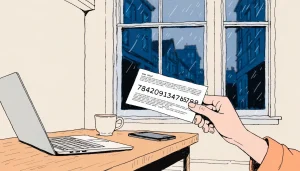
The required confirmation is also a useful moment to check that the amount shown in the payment flow is the intended one. An SMS approval should not be treated as a generic acknowledgement detached from the transaction it belongs to. The text and the cashier together form the confirmation process, and the payment should only be approved when they correspond to the intended deposit.
There is little ceremony in either route: choose, receive, confirm. Yet that brief exchange is where a phone-based deposit becomes more than an entry in a cashier. The message is the hinge.
Where Mobile Casino Deposits Are Available
Payforit belongs chiefly to the mobile casino: it is generally intended for players using a mobile device, rather than being a payment option that can be assumed to appear across every version of a casino’s site. Even there, a familiar logo or an old review cannot establish what the cashier offers now. Payment menus change, and availability is an operator-level detail.
A specialist review has reported Payforit at Kwiff, NetBet, JackpotJoy and Virgin Games. Those names are starting points for checking, not a guarantee that the option remains available to every account or at every visit. The decisive evidence is the current cashier, viewed on the device being used to make the deposit. If Payforit is absent there, an older description of the casino cannot bring it back.
That distinction matters because “mobile casino” can describe two different things: a casino website opened on a phone, and a payment method designed for use through a mobile account. They may coincide, but they are not interchangeable. A casino can work well on a handset without offering Payforit; another may show the method only in a particular cashier flow. The small screen is not itself a promise of a particular payment route.
There is also a regulatory boundary around the names on any shortlist. In Great Britain, an operator offering remote gambling to local customers must hold a UK Gambling Commission licence. The casino’s UKGC licence should therefore be checked alongside the live cashier, rather than inferred from its branding, a search result or a payment-method logo. A site that accepts a phone deposit is not, for that reason alone, a lawful casino for the British market.

This is a peculiarly modern sort of geography. The relevant location is not simply where a casino company is based, but whether it is authorised to serve the market and what it currently makes available to the account. A payment option can be visible in one context and missing in another; the cashier is the practical record of that arrangement.
For anyone looking specifically for mobile top-up casinos, the useful distinction is between an operator that has been reported as supporting Payforit and one whose current, UK-facing cashier actually displays it. The same care applies to mobile slots: a game being playable on a phone says nothing about which deposit methods the casino accepts. “Slots mobile top-up” is not a single product category, however tempting the phrase may be to treat it as one.
So the availability check is modest but necessary: establish that the casino holds a UKGC licence, then look for Payforit in its current cashier on mobile. A third-party review can point towards operators worth checking; it cannot substitute for either step. Two separate questions.
Depositing by Phone Does Not Set the Payout Route
A deposit and a withdrawal are separate decisions in a casino account. Paying by phone may put money into the balance, but it does not establish how winnings can be returned. Payforit, for instance, cannot be used to withdraw casino funds. The route out must be considered on its own terms.
That distinction is easy to miss when a cashier presents payment options as a neat row of buttons. The deposit side is visible at the moment money is added; the withdrawal side may have different methods, conditions and checks. A specialist review advises verifying whether the selected deposit method can also be used for withdrawals. That point is not a promise that both directions will be available.

Before making a mobile deposit, the account’s available payout route should be checked in the live cashier, alongside any outstanding identity checks and the operator’s current terms. A method shown for deposits may not appear among withdrawal choices. Nor does selecting a phone-based option settle what information will be required when a payout is requested.
This is where the account itself matters more than the device. The operator may need to verify the account holder before releasing funds, and the route shown must match the account’s details and currency. A payout method that cannot be connected to the account may leave winnings waiting while the necessary information is resolved. The small print is not ornamental.
A specialist review specifically recommends checking the route available to the account before depositing, as well as any identity requirements and current terms. These details can change, so an old review or a remembered cashier screen cannot settle the question. The account’s live information is the useful reference.
For anyone considering a phone top-up for casino play, the sensible distinction is plain: a way in is not automatically a way out. The deposit option may suit the first transaction while another verified method is needed for a withdrawal. Checking that handoff beforehand prevents the payment choice from becoming an unexpected obstacle later.
Phone Billing, Transaction Caps and Network Fees
Paying for casino play through a phone account puts a firm boundary around each charge. Specialist payment reviews report a £30 per-transaction cap for Payforit, attributed to the Phone-paid Services Authority. The same kind of review gives Boku a standard maximum of £30 per transaction. These figures describe the phone-payment ceiling, not the amount a casino account can accept by other routes.
That distinction matters because the phone account is doing more than relaying a payment. On a monthly contract, the charge can appear on a future bill; with pay as you go, it draws on prepaid credit. Either way, a transaction cannot exceed the applicable phone-payment cap. A larger amount cannot be made to fit by treating it as an ordinary card deposit.
Boku may bring another cost into the calculation. A mobile network can add a processing fee, and the amount depends on the network and tariff. The fee is separate from the casino deposit: it is a charge associated with handling the payment through the phone account. The total deducted from prepaid credit, or added to a bill, may therefore be higher than the amount credited to the casino balance.
That is a small but consequential difference. A deposit screen can foreground the sum intended for play; the phone account may reflect the network’s charge as well. Before completing a Boku payment, the relevant tariff terms and the amount of available phone credit need to cover both components. If the balance cannot meet the full charge, the transaction may not go through.
The rules around these payments favour bounded sums rather than large transfers. For mobile billing slots, that can make the phone route a limited way to fund an account, while leaving its precise cost dependent on the network arrangement. The cap is clear in the specialist-review reporting; the fee is not a fixed figure shared across all tariffs. Phone billing has its own arithmetic.
Getting Casino Winnings Back After a Mobile Deposit
A mobile deposit is only the beginning of the money’s journey. Payforit cannot return casino funds to a phone account, so winnings must leave by a payout route the casino supports. At UK-licensed casinos, that route may be a debit card, bank transfer, PayPal, or an e-wallet such as Skrill or Neteller. Which of these appears for a particular account is a matter for the live cashier, not a promise made by a general payment guide.

The distinction matters for anyone who has topped up a casino account by phone. A deposit option and a withdrawal option are separate entries in the cashier; the first does not establish that the second is available. Current operator terms and the account’s own cashier show the routes offered, alongside any conditions attached to them.
There is no dependable set of UK-wide figures for withdrawal ceilings, charges or processing times. A specialist review of casino payment arrangements makes the same practical point: those details vary, so the operator’s current cashier is the authority. A route that looks familiar can still carry different limits or handling terms at another casino. Small print does the heavy lifting.
Before treating a balance as money ready to leave, the withdrawal page should be checked for its available methods and stated conditions. The choice is not merely between speed and convenience; it is also about whether the account can use that route and what the operator says it will cost or how long it may take. For winnings after a slots deposit by mobile, the phone was the entrance, not necessarily the exit.
What Makes a Mobile Deposit Option Suitable
A suitable mobile deposit is not simply the one that appears first in a cashier. Its terms need to fit the account and the way funds may later be accessed. Minimum and maximum deposits, fees and processing times can differ by payment method; the figures shown in the live cashier are more useful than a general description elsewhere.
A specialist review notes that these conditions are tied to the selected method and the operator’s current cashier. That makes suitability a question of timing as well as preference. A payment option described in an older review may no longer carry the same limits or charges, and withdrawal terms can change too. The small print is not ornamental.
For someone considering a mobile top-up at a UK casino, the relevant comparison is practical: what amount the cashier permits, whether a fee is shown, and how the stated processing arrangements suit the intended use. A low deposit threshold may not matter if the method’s other conditions do not fit. Nor does a familiar payment name settle the question; the active terms do.
Withdrawal limits, fees and processing statements deserve the same attention, even when the immediate task is only to deposit. A specialist review cautions that such details may change, so older figures should not be treated as promises. The live cashier gives the current operator-specific position, while the payment method determines which terms apply.
There is no universal best mobile top-up casino. Suitability is less glamorous than a ranking: it is the match between the displayed terms and the account’s needs, checked at the point when the deposit is being made. A moving target.
Phone-Bill Deposits and the Small Print
A casino that accepts Payforit is not automatically the better-value choice. The deposit itself may be simple to make, yet its treatment under the operator’s promotions can change what that payment is worth. A specialist review reports that most UK casinos exclude Payforit deposits from welcome bonuses and other promotional offers. The precise terms still belong to the operator: a promotion’s conditions should be checked before a deposit is made, rather than inferred from the presence of a bonus banner.
That distinction matters because payment eligibility can sit in the small print, apart from the headline offer. A deposit may reach the casino account without qualifying for the advertised promotion. No drama, just arithmetic.
The other condition appears later, when a balance is ready to leave the account. A specialist review notes that a casino may refuse a withdrawal request if the balance is below its minimum withdrawal threshold. That does not mean the funds vanish; it means the request may not meet the operator’s stated condition. The minimum and any relevant terms need to be checked in the live account information, since they are specific to the casino and can change.
Together, these clauses make the apparent simplicity of a phone-bill deposit less complete than it first seems. The payment method can affect promotional eligibility, while the withdrawal minimum can affect whether a small balance can be requested at that moment. The useful comparison is therefore not just whether a casino accepts Payforit, but whether its current terms explain both the promotion rules and the minimum needed to request a withdrawal. A familiar payment button is not the whole bargain.
Can I withdraw casino winnings to my phone bill with Payforit?
No. Payforit is for deposits only; casino winnings cannot be paid back to your phone bill or prepaid credit through it.
Do UK casinos offer welcome bonuses for Payforit deposits?
Most UK casinos exclude Payforit deposits from welcome bonuses and other promotions.
How does Payforit work at a casino deposit?
Select Payforit at the cashier, enter your mobile number, then confirm the deposit using the code sent by SMS. The charge is added to a monthly phone bill or deducted from Pay as You Go credit.
Related posts

UK Casino Welcome Bonuses: How Offers Work

VPN-Friendly Casinos in the UK: How Access Works
