
Live Roulette UK: English-Speaking Dealers and Rules
 Available in GB

A guide to UK licensing, live-table formats, bonus terms and the limits of free play and roulette strategies.
The UK’s Live-Roulette Market Has a Longer Memory
A live roulette table online belongs to two histories at once. One is the old, recognisable history of the casino game: a wheel, a dealer, a ball, and the quiet interval in which the outcome is not yet known. The other is much newer, shaped by screens that bring a human table into a domestic setting. In the United Kingdom, that second history has a clear marker. Grosvenor unveiled live casino games in 2013, with Roulette among a range that also included Blackjack and Texas Hold’em.
The date matters less as a claim of invention than as evidence of a shift in presentation. Roulette itself did not need to be reinvented for an online audience. What changed was the setting in which it could be encountered. A digital casino could offer more than a graphic representation of a wheel: the live format placed a dealer and a physical game at the centre of the experience, with the screen serving as a window rather than a substitute for the table.
That distinction helps explain why live roulette has held a particular place in the broader casino landscape. A conventional online game is encountered through its interface; a live table adds a visible human presence. The dealer’s gestures, the wheel and the ball give the game a sequence that can be watched as well as followed. The player remains at a distance, but the action is presented as something happening elsewhere, in real time. It is a small theatrical arrangement, and casinos have always understood the value of ceremony.
Grosvenor’s 2013 launch placed Roulette beside card games rather than treating it as an isolated attraction. That is revealing. Live casino was presented as a range: different games, different rhythms, one shared format. Blackjack and Texas Hold’em depend on cards and decisions around a table; roulette depends on a wheel and a result that arrives after a visible pause. The games do not become alike simply because they are delivered through the same screen. The table is the common stage.
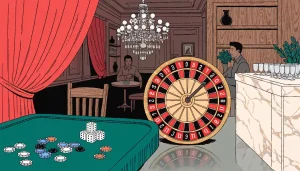
The idea of a roulette casino has therefore acquired more than one meaning. It can describe a venue organised around casino games, or an online service where roulette is part of a wider selection. Add the live element and the phrase points to something more specific: an online table designed to retain the signs of a physical game. The screen compresses distance, but it does not erase the difference between watching a recorded animation and following a dealer-led table as it unfolds.
That difference is also social, even when the player is alone. A live table carries the traces of shared attention: the dealer performs the same sequence for people viewing from separate places, and the wheel gives everyone the same focal point. Online play cannot reproduce the room around a casino table, with its noise, movement and accidental encounters. It can, however, preserve a public-facing performance. There is a person on the other side of the image, and that fact changes the texture of the game.
The British market’s longer memory is not just a matter of technology arriving later than the game itself. It is a record of how an established casino operator translated familiar games into a new setting. Grosvenor’s launch gives that transition a concrete point in time, rather than leaving live roulette as an apparently timeless feature of the internet. In 2013, Roulette was already part of a deliberate live-game offering. The screen had become another casino room, though a rather quieter one.
For people comparing roulette casinos in the UK, that history explains why “live” is more than a decorative label. It signals a style of presentation in which the dealer and physical equipment are visible parts of play. It does not, by itself, say anything about the quality of a particular table or operator; those questions belong elsewhere. Here, the useful distinction is between roulette presented as a self-contained digital game and roulette staged as a live encounter.
The wider live-casino scene continues to draw on that combination of familiar rules and newly arranged surroundings. The game’s recognisable form makes the transition legible; the live setting gives it a different pace and presence. A wheel can travel from a casino floor to a screen without losing its central role. The room changes. The ritual remains.
DO
- Treat gambling as paid entertainment
- Only wager money affordable to lose
DON’T
- Use gambling as a way to make money
- Wager money that cannot be afforded to lose
Gambling should be treated as paid entertainment, not a way to make money; only money affordable to lose should be wagered.
Online Roulette and the Boundaries of UK Regulation
An online roulette table may appear to belong to the place where its studio, servers or other equipment sits. For consumers in Great Britain, that is not the boundary that determines the regulatory framework. The relevant question is whether remote gambling is being offered to people in Great Britain. The UK Gambling Commission’s authority over that activity does not move offshore with the equipment.
This principle matters because online casino businesses can organise their operations across borders. A company may be incorporated elsewhere, use equipment in another country or run a live studio beyond Britain. None of those arrangements, by themselves, removes the requirement to hold the relevant Gambling Commission licence when serving Great Britain consumers. The rule follows the market being served, rather than the physical address of the roulette wheel or camera.
The Commission regulates commercial gambling in Great Britain as its sole regulator. Its remit includes online casino activity, where roulette is one of the games available through remote services. That makes the regulator more than a body concerned with premises or machinery: its role reaches gambling conducted through a screen, including casino play that has no public gaming floor in Britain.
Great Britain, the United Kingdom and the online table
The terms “United Kingdom” and “Great Britain” are often used as if they were interchangeable. They are not. Great Britain means England, Scotland and Wales; the United Kingdom also includes Northern Ireland. This distinction matters when describing the reach of gambling law and the Commission’s role. The Gambling Act 2005 governs gambling in England, Wales and Scotland, but not Northern Ireland. A statement about the framework for remote gambling offered to Great Britain consumers should therefore not casually be expanded into a claim about every part of the UK.
In everyday language, “UK online casino” remains a familiar description. In regulatory terms, however, the important boundary for remote gambling is the offer to consumers in Great Britain. A roulette casino online might present itself as international, but that branding does not settle which rules apply to its service in Britain. Nor does a foreign address for the operator or its equipment settle the matter.
This is a territorial approach shaped by the customer market. The Commission’s jurisdiction is not limited to businesses whose key equipment is physically located in Britain. Remote operators serving consumers there fall within the licensing framework even where the technology supporting the service is elsewhere. The screen can make distance feel decisive; regulation gives it less significance.
Licences define distinct roles
The Commission issues operating licences to businesses and personal licences to individuals working in relevant roles in Great Britain. These are different forms of permission, attached to different responsibilities. An operating licence concerns the business providing gambling activity; a personal licence concerns an individual operating within the regulated system. They should not be collapsed into a single generic idea of “being licensed”.
That distinction reflects how commercial gambling is organised. A company can provide the service, while people perform roles connected with its operation. The licensing structure recognises both the organisation and the individuals involved, rather than treating the casino as a disembodied website. Online play may feel like an encounter between a player and a page, but behind it sits a regulated business and a set of human responsibilities.
For someone considering online roulette in Britain, this framework explains why the operator’s legal status matters independently of the game’s presentation. A polished interface, a live dealer or a studio located abroad does not create a separate regulatory category. The question remains whether the business is permitted to offer remote gambling to consumers in Great Britain under the required licence.
That is also why the word “UK” in a casino’s name or advertising is not itself proof of regulatory status. Geography in marketing is often broad; jurisdiction is more exact. The Commission’s authority concerns commercial gambling in Great Britain, and its rules attach to the service offered there, not merely to the labels a business chooses for itself.
The framework is less dramatic than the table. It does not depend on where the roulette wheel turns, or on whether the dealer is in the same country as the customer. It depends on who offers the gambling and to which market. Distance, in this case, is no escape.
Roulette Sites: Check the Licence, Not Just the Shopfront
A roulette casino’s design can make it look established; it cannot establish who is legally responsible for taking deposits. For customers in Great Britain, remote operators must hold the relevant Gambling Commission licence. The useful check is therefore not whether a site displays a badge, but whether the operator and licence details can be matched to the Commission’s public register.
The register is searchable at the UK Gambling Commission website. Before depositing, check the licence number against the register and make sure the licensed business corresponds to the operator named in the site’s terms. A logo or a claim in promotional copy is not a substitute for that match. Company names and trading brands can differ, so the relationship between them should be clear rather than left to guesswork.
A specialist review of the Commission’s public register dated 26 September 2026 did not identify a LuckyPays entry under that brand or its stated domain, including luckypays.io. That is a specific finding about the register at that date, not a verdict about roulette sites as a category. It should not be stretched into a broader claim about every business using a similar name, nor treated as proof that a particular site is authorised. The practical point is narrower: when an entry cannot be found under the details presented, the operator’s identity and licence status remain unconfirmed until they can be matched through the regulator’s records.

The order of checks matters. First establish the legal operator; then see whether its licence covers remote gambling for Great Britain. Only after that does it make sense to consider the site’s tables, interface or advertised offers. A roulette page may be polished and a live studio may look reassuringly formal, but neither tells who holds the licence. The glass façade is not the building.
Account arrangements provide another useful test of whether a site’s claims are backed by the expected protections. Remote operators must ask new customers to set a financial limit before their first deposit and make account-level limit controls accessible. Operators must verify a customer’s age before allowing deposits. A site’s terms and account pages should explain how these steps work, rather than burying them behind vague promises of responsible play.
There should also be a route for complaints. UK Gambling Commission licensees must provide an internal complaints process and access to an approved Alternative Dispute Resolution service. Clear information about those routes matters because a logo cannot resolve a dispute, and an unexplained absence of complaint details is a reason to pause before funding an account.
The word “best” does little work here. A ranking cannot replace the basic check of the named operator against the register, and a favourable description on a roulette page does not establish regulatory standing. For live roulette in particular, the dealer and broadcast are the visible part of the service; the operator behind the account is the part that determines whether the site is operating within the British framework.
Gambling carries a financial risk. Only gamble what can be afforded to lose.
A Live Table Is Still a Roulette Game
Roulette is a casino game organised around a wheel and a table of possible outcomes. A wager is placed on where the ball may come to rest, or on a broader category of results. The live version changes the setting in which that decision is made; it does not turn roulette into a different kind of game.
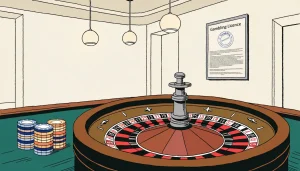
That distinction matters. A live table puts a dealer and a physical wheel at the centre of the experience, with play presented as it unfolds. The table’s pace, the dealer’s announcements and the visible movement of the ball give the game a social frame that a computer-generated display does not have in the same way. Yet the essential activity remains a wager on a roulette outcome. The camera, voice and table are part of the presentation, not a new set of rules.
In Britain, the history of online live casino play has a concrete marker. Grosvenor unveiled live casino games in 2013, with a range that included Blackjack, Texas Hold’em and Roulette. Roulette appeared alongside card games, rather than as an isolated novelty. That small detail captures something about the format: a live casino is a collection of table experiences, and the roulette wheel is one of its familiar inhabitants.
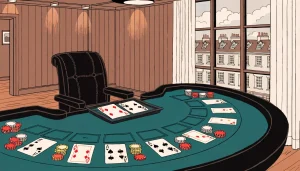
The phrase “live roulette” can sound as though the live element must be the main point. In practice, it describes how the game is hosted and shown. The roulette itself still turns on the relationship between a wager and the result on the wheel. A dealer may make the proceedings feel more legible or companionable, but no voice can alter the uncertainty at the heart of the game. Atmosphere is not an edge.
This also separates the question of what roulette is from the question of which casino offers a live table. A casino may provide roulette in a format that is not live, while another may include dealer-led tables among its casino games. The label alone does not establish which tables are available, how they are presented, or whether a particular operator carries them. Those are separate details, and the name of the game cannot answer them.
For people drawn to live play, the appeal is often less about a new game than about seeing a familiar one performed. The wheel becomes an object in the room, even when the room is a screen. There is a human rhythm to the exchange: a dealer speaks, wagers are made, the wheel turns, and the table moves on. It can feel closer to sitting among other players than watching an isolated animation. Still, the social impression should not be mistaken for control over the result.
Roulette has endured partly because its central idea is easy to recognise. The live table adds ceremony and company; it does not promise a more predictable outcome. The distinction is plain. A dealer can make a table feel alive, but roulette remains roulette.
Any session carries the possibility of loss, so gambling should be limited to money a person can afford to lose.
What Makes a Roulette Casino Worth Considering
A casino’s presentation can make roulette look like a polished room with a dealer waiting behind the glass. The more useful comparison begins before the table: with the operator responsible for the account, the controls available within it, and the route open if something goes wrong. A handsome interface is not an answer to any of those questions.
For customers in Great Britain, a remote operator must hold the relevant Gambling Commission licence. The licence is the starting point, not a decorative seal. Its status should be checked on the Commission’s public register before funds are deposited; a familiar name or professionally designed site does not establish that the operator is authorised to serve the market.
Account controls deserve the same attention as the games menu. Remote operators must prompt new customers to set a financial limit before the first deposit and make account-level limit controls accessible. These tools matter because roulette’s quick decisions can make an evening feel smaller than it is. A limit is useful only if it can be found and understood without searching through layers of account pages.

Age verification is another basic part of the account relationship: operators must verify a customer’s age before allowing a deposit. Licensed casinos must also provide responsible-gambling tools, including self-exclusion. Those provisions are not ornaments for a footer. They indicate whether a platform treats control as part of its service rather than as a problem left entirely to the player.
The complaints route is worth checking before play, not after a dispute has begun. UK Gambling Commission licensees must provide an internal complaints process and access to an approved Alternative Dispute Resolution service. A casino’s terms should make clear how a complaint is raised and how an unresolved issue can proceed. Clear procedures are not a promise that every disagreement will be settled in a player’s favour; they are a way to ensure there is a process at all.
Live roulette adds another layer of comparison, but not a separate standard of trust. The dealer, studio and pace may shape the experience; they do not replace the operator’s obligations. Table information should be legible enough to understand the available wagers and the conditions of play. A maximum stake, where displayed, describes a table setting, not a measure of value or a reason to increase a wager.
Nor does the phrase “best odds” settle the question of which casino deserves consideration. A site’s layout or promotional language cannot turn roulette into a dependable source of income. Practical comparison is less theatrical: licensing, usable account controls, a visible complaints route and game information that can be read before play begins.
The wider payment rules form part of that picture too. UK-licensed casinos cannot accept credit cards for gambling, including credit-card funding routed through a money service business; wallets that permit credit-card funds to be used for gambling are also barred. Such restrictions may make a payment method less convenient. Convenience is not the only measure.
Any roulette session remains gambling, not a plan for income. Only money that can be afforded to lose should be wagered.
Playing Roulette Without Confusing It with Slots
A casino account may hold money for several kinds of games, but that does not make their rules interchangeable. A deposit is money added to the account; a stake is the amount committed to a particular game. Roulette and online slots can draw on the same balance while remaining different products, with different mechanics and, in some cases, different regulatory treatment.
That distinction matters when comparing roulette with slots in Great Britain. A specialist review notes that the online slot stake limits do not apply to roulette or blackjack. Those limits should therefore not be described as roulette limits. Nor does the distinction establish that every roulette table has the same minimum or maximum stake: the table’s own terms determine what it accepts.
A live roulette game adds a human dealer and a streamed table to the familiar sequence of placing wagers and seeing where the ball lands. It is still roulette, not a slot game with a different screen. In a slot, a player initiates a game cycle; roulette centres on wagers placed against the possible outcomes of a wheel. The pace and presentation differ, even when both are accessed from the same casino lobby.

For anyone considering how to play roulette at a casino, the practical first step is to understand the table display and its permitted wagers before committing funds. A live casino may show the wheel and dealer in real time, while other roulette formats may present the action differently. The label “live” describes the setting, not a separate category of slot rules.
Account controls sit above these game distinctions. Remote operators must prompt new customers to set a financial limit before their first deposit and make account-level limit controls accessible. Age must be verified before a customer can deposit. Credit cards cannot be used to fund gambling, including through a wallet that lets credit-card funds be used for gambling.
These safeguards concern the account and the operator; they do not turn roulette into slots. A game-specific stake and an account deposit are separate decisions, and neither should be treated as a measure of what someone can afford to lose. Roulette remains a game of chance, whether played at a streamed table or through another casino format. Only money that can be lost without harm should be gambled.
Roulette Bonuses and the Conditions Around Them
A roulette bonus can look simple in a banner: a welcome offer, a deposit match or a no-deposit promotion. The useful detail sits elsewhere, in the terms that explain who can claim it and what happens after acceptance. A promotion’s name is not a reliable guide to its practical value.
Eligibility may depend on account status, location or whether an offer has been claimed before. The wording should also make clear whether roulette is included, and whether live tables qualify alongside other roulette games. A live casino bonus may exclude particular tables; a promotion mentioning Lightning Roulette should be checked for that game by name rather than assumed to cover every live format.
How wagering works
Terms may specify which games contribute, how qualifying play is counted, and whether winnings are subject to withdrawal conditions.
The central condition is often how wagering works. Terms may specify which games contribute, how qualifying play is counted, and whether winnings are subject to withdrawal conditions. Those details matter because a roulette offer can carry requirements that are different from the impression created by its headline. If the explanation is unclear about eligible play or what must be completed before a withdrawal, the offer is difficult to assess.
A no-deposit bonus is not automatically free of conditions simply because it does not require an initial payment. The offer still needs to state who qualifies, how any bonus funds can be used, and what restrictions apply to resulting winnings. A deposit bonus, likewise, should be read as a set of terms rather than as extra money without strings.
Licensing is a separate question from suitability. The Gambling Commission requires remote operators serving consumers in Great Britain to hold the relevant licence. That requirement does not establish that a particular roulette promotion is available, fair for a given player, or compatible with their preferences. The offer’s own terms determine those points.
Bonuses can also encourage more play than intended. Any decision to accept one should leave the normal spending boundary intact: only gamble what can be afforded to lose. A promotion is not a reason to increase a stake or continue playing to unlock a benefit. The small print is the offer. The banner is decoration.
Free Roulette, and the Limits of the Word “Free”
A free roulette game can make the table familiar before any money is involved. In a demo, chips or credits stand in for a real balance, allowing the pace and layout to be explored without treating each spin as a wager from an account. The experience may look much like a paid game, but the distinction matters: demo play does not turn pretend credits into winnings that can be withdrawn.
“Free” can also describe different arrangements. A game may be available in a practice mode, while a casino may use the word in an offer with separate terms. Those are not interchangeable. A free-play table is a way to see how the game is presented; it does not, by itself, explain whether a promotion has eligibility rules or other conditions.
Nor does a demo settle which version of roulette is on screen. French roulette, for instance, may be labelled as such, but the table’s displayed rules are what define that particular game. Reading them is more useful than assuming that every casino uses an identical presentation. The wheel remains recognisable; the details belong to the table.
The word “free” has another limit: it says nothing about gambling safeguards around a real-money account. Operators must check a customer’s age before permitting deposits, and new customers must be prompted to set a financial limit before their first deposit. Account-level limit controls must remain accessible. Those measures concern real-money gambling, not the make-believe balance in a practice game.
A specialist review of Great Britain’s online slot rules describes a per-game-cycle stake cap of £5 for customers aged 25 or older and £2 for those aged 18 to 24. Its account distinguishes roulette and blackjack from slots: those slot-specific caps do not apply to either table game. That distinction should not be turned into a claim that roulette has no rules; it means only that the slot limits are not roulette limits.
What is a free roulette game?
A demo uses chips or credits that stand in for a real balance, allowing you to explore the layout without risking real money.
Can a bonus replace a winning strategy?
No, a promotion is not a reason to increase a stake or continue playing to unlock a benefit.
Free play can therefore help with orientation, not with predicting results or proving that a real-money table is suitable. A demo is a rehearsal, not a financial plan. Any real-money gambling should be limited to what can be afforded to lose.
Roulette Has No Reliable Way to Win
The wish for a dependable route to a roulette win is understandable: a table presents order, with numbered pockets, marked betting areas and a dealer or electronic display turning uncertainty into something that looks almost orderly. But a system for choosing wagers cannot promise a particular result. A sequence of wins does not make the next outcome certain, and a run of losses does not establish that a win is due.
That applies whether roulette is played at a live table or on an electronic version. The setting changes how the game is presented; it does not turn a staking pattern into a guarantee. Claims about a “best” method should therefore be read as descriptions of someone’s preferred approach, not as evidence that it can win every time. No dependable strategy removes the possibility of losing the money wagered.
The distinction that matters in regulation is narrower. A specialist review notes that Great Britain’s online slot stake limits do not apply to roulette or blackjack. That is a statement about the scope of a rule, not a judgement that roulette is safer, more predictable or a better way to manage money. Rules for one game category do not supply a winning method for another.
A careful account of roulette separates three things that are often bundled together: the rules of the game, a player’s choice of wagers, and the outcome. The first can be explained; the second can be planned; the third cannot be promised. Confidence in a pattern may make it feel persuasive, especially after a favourable run, but feeling persuasive is not proof of reliability.
This is also why claims of winning every time deserve particular scepticism. They invite a reader to treat risk as a technical problem with a hidden solution, when no system can guarantee the result of play. Roulette remains gambling, not an income plan. Only money that can be afforded to lose should be wagered.
Lightning Roulette and Other Live-Table Variants
A live-casino menu can place Lightning Roulette beside formats with very different names, without making them the same game. Grosvenor’s live offering, introduced in 2013, included Roulette alongside Blackjack and Texas Hold’em. That early mix is a useful reminder: “live casino” describes a setting for several kinds of play, not a single format.
Lightning Roulette is one named roulette option to look for in a live casino. Other titles found in live-game catalogues include Crazy Time, Dream Catcher and Common Draw; Infinite Blackjack signals a different table-game category. A name alone, however, says little about a game’s rules or how a particular operator presents it. The useful comparison begins with the game information shown at the table, rather than assumptions borrowed from another title.

This distinction matters when searching for a Lightning Roulette casino in the UK. The phrase “Lightning Roulette slots” can blur two separate categories: roulette is a table game, while slots are a different type of casino game. Likewise, a search for a first-person version should not be taken as proof that a particular casino offers one. Availability depends on the games listed by the operator.
Nor do “casino scores” settle whether a variant suits a player. A rating cannot establish how its rules work, what the table interface shows, or whether the experience is enjoyable. The label is only a beginning.
Before depositing, verify the operator’s licence on the UK Gambling Commission public register. Licensed operators must also provide account controls and routes for complaints; these practical details matter more than the drama suggested by a title. Roulette remains a game of chance, whatever its presentation. Only wager what can be afforded to lose.
Are online casino games licensed and regulated?
Yes. Remote gambling operators offering online casino games to consumers in Great Britain must hold the relevant UK Gambling Commission licence, regardless of where their equipment is located.
What are the online slot stake limits in Great Britain?
The maximum stake is £5 per game cycle for adults aged 25 and over, and £2 for adults aged 18 to 24. These limits apply to slots, not roulette or blackjack.
Is LuckyPays licensed by the UK Gambling Commission?
No LuckyPays entry, including for luckypays.io, appears in the public Gambling Commission register dated 26 September 2026.
Top online casinos in the UK
- SpinFormulaBonus: 550% Up To £15,000 + 550 FS · Payout speed: 1-3 business days
- SlotoSportBonus: 500% up to £ 10 200+ 777 FS · Payout speed: 1-3 business days
- Revery PlayBonus: 100% up to€1,000+ 100 FS · Payout speed: 1-3 business days
- AmunbetBonus: Join now and get 450% up to 2,700 GBP + 450 FS · Payout speed: 1-3 business days
- BeOnBetBonus: 100% up to €500 + 100 FS · Payout speed: 1-3 business days
- JetsetspinsBonus: 200% Bonus + 100 Free Spins + Free Royal Wheel · Payout speed: 1-3 business days
- NightWinBonus: £900 + 400 free spins · Payout speed: 1-3 business days
- x3betBonus: Welcome Pack 100% Up to £1.000 + 200 Free Spins · Payout speed: 1-3 business days
- ZombillionBonus: Welcome Pack 250% up to £4000 + 200 FS · Payout speed: 1-3 business days
- BritsinoBonus: Welcome Package – Get your £2,200 + 2,000 FS · Payout speed: 1-3 business days
Related posts

UK Casino Welcome Bonuses: How Offers Work

VPN-Friendly Casinos in the UK: How Access Works
