
Top-rated UK online casinos: what ratings mean
 Available in GB
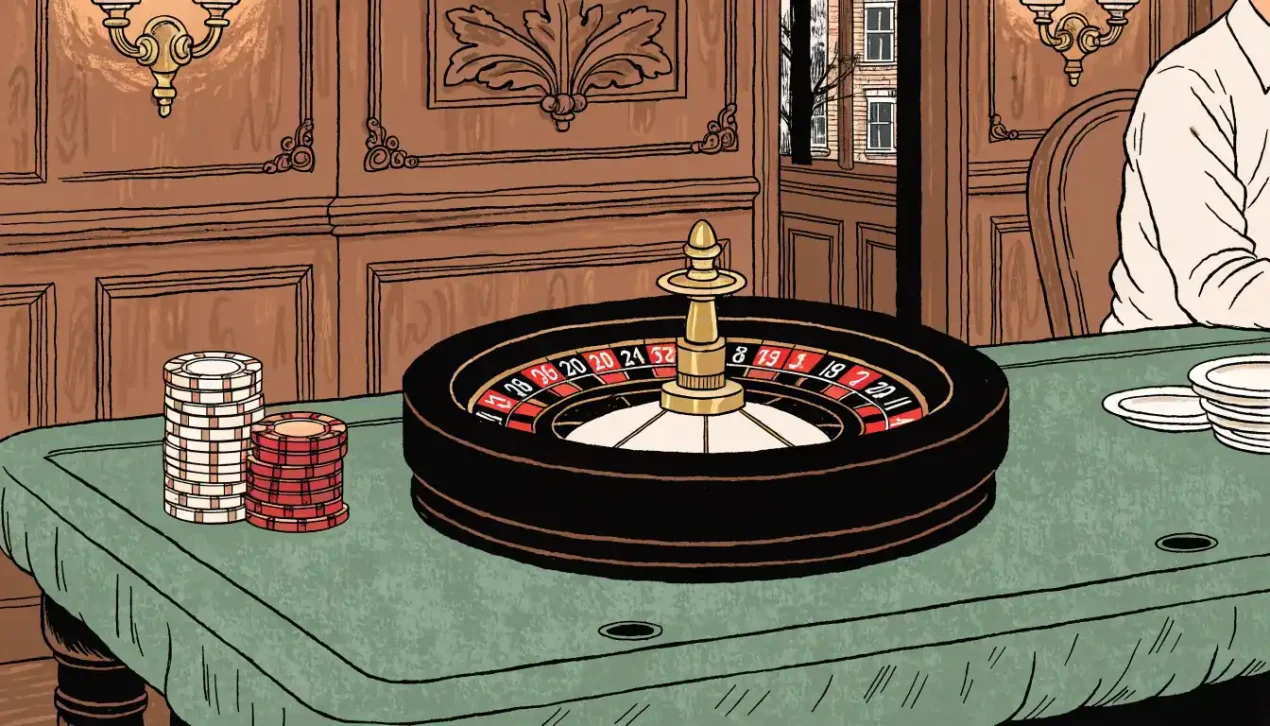
Ratings offer one way to assess a casino, but licensing, operator terms and the specific game version provide important context.
What a UK Casino Rating Can—and Cannot—Tell You
A casino rating is a judgement made against some set of criteria; it is not a regulatory status. A high score may summarise an assessment, but it does not turn the score into a licence or make the regulator responsible for the opinion behind it. That distinction matters in a market where the authority overseeing commercial gambling and the businesses it authorises have different jobs.
In Great Britain, the UK Gambling Commission is the sole regulator for commercial gambling. Its remit includes remote gambling offered to consumers there, even when the equipment used to provide the service is located elsewhere. The point is not that geography has ceased to matter in general. It is that moving the machinery beyond the border does not, by itself, remove a service aimed at British consumers from the Commission’s regulatory reach.
That gives a casino assessment a firm legal backdrop, but not an official league table. The Commission regulates gambling activity; it does not certify an editorial ranking as the definitive order of online casinos. “Top rated” can therefore describe a publication’s conclusion, but the phrase alone says nothing about who set the standard, what was measured or whether the assessment reflects a regulator’s view. A confident label can conceal a rather ordinary question: rated by whom, and for what?
A regulator licences people and businesses
The Commission’s licensing role is more specific than a general stamp of approval. It issues operating licences to businesses and personal licences to individuals working in relevant roles. These are distinct forms of authorisation: one concerns the organisation conducting gambling activity, the other an individual operating within the sector.
That distinction is easy to lose in casual descriptions of a “licensed casino”. The phrase can make the casino sound like a single object carrying one approval, when licensing applies to businesses and, in some cases, people as well. A rating may describe the public-facing service; a licence relates to the legal permission held by the relevant business or individual. They are not interchangeable forms of evidence.

Nor does the existence of a licence tell a reader how a particular comparison was constructed. A licensed business may still be scored according to a publication’s chosen measures, while another publication may weigh different qualities. Without knowing the method, a position near the top of a list cannot be read as a finding by the UK Gambling Commission. It is an assessment, not a regulatory verdict.
The Commission’s role is consequential precisely because it is not the same as reviewing every consumer-facing choice. Regulation sets the framework for commercial gambling in Great Britain; ratings arrange or describe options within that broader environment. One is public oversight, the other an act of comparison. Confusing them gives a private opinion the authority of a public body and leaves the reader with less clarity than the polished score suggests.
What a rating can reasonably mean
The phrase “top rated online casinos in the UK” can be useful if it is treated as shorthand for a particular comparison, rather than a settled fact about the market. A rating may indicate that its publisher considers one service stronger than another against stated criteria. Its value depends on whether those criteria are visible and whether the resulting judgement is being presented honestly as editorial work.
It cannot, by itself, establish that the Commission has ranked the businesses, endorsed the result or selected a national winner. The Commission’s status as Great Britain’s sole commercial gambling regulator does not make every review carrying a score an extension of its work. Public authority does not travel by implication.
There is also a difference between legal authorisation and comparative merit. A licence answers a regulatory question about permission to conduct relevant activity. A rating answers an evaluative question framed by whoever made the comparison. A reader may care about both, but one cannot substitute for the other. Treating a high rating as proof of regulatory standing would collapse two different kinds of judgement into one convenient badge.
The same care applies to claims about “best rated” or “highest rated” services. Those phrases may sound like measurable facts, yet they depend on the source and method of the assessment. If the basis is not clear, the superlative does little more than announce confidence. There is no official ranking inherent in the Commission’s licensing remit.

A sound reading of any casino comparison begins by keeping its categories separate: regulator, licensed business, licensed individual and independent assessor. Each has a different place in the arrangement. The Commission oversees commercial gambling in Great Britain and grants licences; businesses and individuals hold the relevant permissions; a rating expresses an assessment. No single phrase can do all three jobs. The label is not the licence.
Top online casinos in the UK
- SpinFormulaBonus: 550% Up To £15,000 + 550 FS · Payout speed: 1-3 business days
- SlotoSportBonus: 500% up to £ 10 200+ 777 FS · Payout speed: 1-3 business days
- Revery PlayBonus: 100% up to€1,000+ 100 FS · Payout speed: 1-3 business days
- AmunbetBonus: Join now and get 450% up to 2,700 GBP + 450 FS · Payout speed: 1-3 business days
- BeOnBetBonus: 100% up to €500 + 100 FS · Payout speed: 1-3 business days
- JetsetspinsBonus: 200% Bonus + 100 Free Spins + Free Royal Wheel · Payout speed: 1-3 business days
- NightWinBonus: £900 + 400 free spins · Payout speed: 1-3 business days
- x3betBonus: Welcome Pack 100% Up to £1.000 + 200 Free Spins · Payout speed: 1-3 business days
- ZombillionBonus: Welcome Pack 250% up to £4000 + 200 FS · Payout speed: 1-3 business days
- BritsinoBonus: Welcome Package – Get your £2,200 + 2,000 FS · Payout speed: 1-3 business days
The Supplier Behind the Casino Lobby
A casino lobby can make a game catalogue look like part of the casino itself. The titles sit beside one another, share the same search box and are reached through the same account. Behind that tidy arrangement, however, the businesses may be quite different. Amatic Industries GmbH makes and supplies gambling software; it does not run a consumer-facing casino.
That distinction matters when a name appears in a review of UK casinos or among games available on a gambling site. A mention of Amatic describes the software behind a title, not a separate place to open an account and play. There is no standalone Amatic casino for British customers. Its games reach players through operators that incorporate them into their own services.
Amatic is an Austrian business-to-business supplier, founded in 1993. Its work is therefore directed towards companies that provide gambling products, rather than towards individual players. A casino operator may offer games from a range of suppliers, just as a high-street venue can contain products made by businesses whose names are less visible than the shop’s. The lobby is the public face; the supply chain is less conspicuous.
The arrangement is not unusual in software. A game maker develops a product, while another business provides the setting in which customers encounter it. For remote gambling in Great Britain, that setting is a UKGC-licensed operator. Amatic’s games can be connected to such an operator directly, or delivered through an aggregator: an intermediary that brings software from providers into an operator’s platform. The route varies, but the principle is the same. The game is supplied to a casino, not sold to a player as an independent product.

Amatic’s permission to supply software in this market is reflected in its UK Gambling Software (Remote) licence. Its account number is 47992, and the licence has been active since 27 April 2017. That is a supplier licence, not a casino operating licence. It marks a place in the regulated supply chain; it does not turn the supplier into the establishment at the other end of the player’s account.
The company’s move into online gaming came later than its founding. Around 2010, it launched AMANET, its online gaming division. The change placed its work in a new distribution environment: instead of software being encountered only through physical machines, online titles could be integrated into remote casino platforms. The name AMANET may appear in connection with online games, but it still points back to a supplier, not a consumer-facing brand where British players can deposit and play.
That difference can be easy to lose among ratings and lists. A best-rated UK casino review may mention a provider as one feature of a site’s catalogue; a list of casino games may place a supplier’s title beside games made by other companies. Neither use makes the provider a casino, nor does a game’s presence establish that one operator is better than another. A catalogue describes what a platform carries, not the whole service around it.
The division of labour also explains why a supplier’s name cannot answer every practical question raised by a casino lobby. Amatic develops and distributes games, while the operator builds the customer-facing service in which those games appear. The two names may be close together on screen, but proximity is not identity. That is the quiet architecture of online gambling: software passes through commercial and technical links before it reaches a familiar-looking tile.
So a search for an Amatic casino app or an Amatic account leads to a category mistake. Amatic is not the operator behind a consumer account, and its catalogue is not a standalone casino product. Its games are made available through licensed operators, using direct connections or aggregator feeds. The supplier is behind the lobby, not inside it.
That is the distinction.

Real-Money Play Depends on the Operator
A slot may carry Amatic’s name, but the money around it belongs to a different business. Amatic Industries does not take bets from British players directly. It supplies games; the casino operator runs the account through which a player deposits, plays and receives any winnings. That division can be easy to miss when a game sits inside a polished lobby, where supplier and casino appear to be parts of one service. They are not.
The operator, not the game maker, is responsible for deposits, payouts, bonus terms and customer support. A question about a missing payment, a disputed promotion or an account problem therefore concerns the casino’s own procedures. The supplier’s role in creating a game does not make it responsible for handling the player’s balance or resolving an account complaint. A familiar title is not a shared cashier.
For British players, the key distinction is whether the operator holds a UKGC licence for the remote gambling it offers. A business selling real-money play into Great Britain must be licensed by the UK Gambling Commission, even if its own offices or equipment are elsewhere. A casino’s association with a recognised game provider is not a substitute for that licence. Nor does a list of games establish who is legally responsible for the account.
This is what ratings can obscure. A casino may be described as one of the best-rated places for real-money play, but the phrase is useful only if the underlying operator and its obligations are clear. A strong-looking game catalogue cannot answer questions about how deposits are handled, how payouts are processed or where customer support sits. Those are operator matters. The machinery of a slot and the machinery of a casino account may meet on screen; responsibility does not thereby merge.
The same distinction matters when an offer comes from offshore. Winstler, which holds a Curaçao licence, and MrJones, which holds an Anjouan licence, offer Amatic games but operate outside the UK regulatory framework. Their use of the same supplier does not bring them under UKGC oversight. A game’s presence is not a passport for the casino that hosts it.
Do
- Check the operator’s UKGC licence status
- Verify the specific RTP version of a game
- Review the operator’s current terms and conditions
Don’t
- Assume a high rating implies regulatory endorsement
- Treat a software supplier as a casino operator
- Confuse promotional free spins with cash winnings
For UK players, offshore offers should not be treated as equivalent alternatives to UK-licensed play. They do not sit within the UKGC system, and the UK protections attached to a UKGC-licensed operator cannot be inferred from a foreign licence or from the presence of familiar games. The distinction is not a judgement about how attractive a welcome offer looks. It is about which regulator governs the operator’s relationship with its customers.
Payment methods deserve the same care. A specialist review reported no confirmed UKGC-licensed operator accepting cryptocurrency for Amatic play. That is a statement about what was confirmed in that review, not a permanent rule about every casino or a guarantee about current payment options. In any case, the casino operator’s own terms determine which payment routes it accepts; Amatic does not take the deposit.
A search for the best real-money casino, the most appealing slot selection or a generous welcome offer can make the game feel like the main event. For a money decision, the less glamorous detail is more decisive: the operator holds the account, sets the terms and answers for the transaction. The supplier provides the game. Two different jobs.
Where Amatic Games Appear in UK Casino Lobbies
A casino’s game lobby is a changing catalogue, not a certificate. Amatic titles have been reported at a range of UK-facing operators, but a listing in a specialist casino review is evidence of what that review recorded, not a guarantee that every title remains available today. Games can be added, removed or presented differently as operator catalogues change.
One specialist review names Betfred, Jackpotjoy, William Hill, kwiff, PokerStars, Ladbrokes, Paddy Power, Unibet, Virgin Games and Casumo among the operators carrying Amatic games. A separate specialist review records another group: Sky Vegas, 32Red, 888casino, Betfred, Bet365, William Hill, Virgin Games, Betway, Betvictor and Betfair. Betfred, William Hill and Virgin Games appear in both accounts; the overlap is useful context, but it does not turn either account into a live inventory.
Together, these reports give a practical sense of the range of casino brands where Amatic games have been identified. They do not establish that every listed operator offers the same titles, or that a game seen in one lobby will also appear in another. Nor does a brand’s inclusion in a review amount to an overall rating. “Top rated” can suggest a settled order of merit; provider availability is a narrower, more checkable question.

There is a further distinction between a game appearing in a casino and a regulator recording that casino as an Amatic partner. Any operator holding the relevant UKGC licence may use a business-to-business arrangement with Amatic. A lobby entry is therefore an editorial observation about a catalogue, not a UK Gambling Commission endorsement, approval or register entry. The Commission’s register concerns licences and the businesses or people authorised under them; a third-party list of games serves another purpose.
That difference matters because lists tend to acquire authority simply by being repeated. A name in a review may prompt a closer look at the operator, but it cannot settle whether a particular Amatic title is present now. The operator’s own current game catalogue is the place to confirm availability before making a decision based on a specific game. A review can point towards a lobby; it cannot keep that lobby still.
The names also span familiar brands and platforms with distinct catalogues. Their appearance in these reported lists should not be read as a ranking of UK casino sites, a judgement on their broader offers, or a promise that Amatic content is available to every account. It records a connection between a supplier’s games and operator lobbies as described by specialist reviews, with the usual limitation of a time-sensitive catalogue.
In short, the lists are a map, not a verdict. A casino’s inclusion says something about reported game availability; it says nothing by itself about comparative quality, current access or regulatory endorsement. That is a smaller claim—and a more useful one.
Slot Formats, RTP Variants and the Price of a Spin
An Amatic slot often has a recognisable, traditional shape: five reels, three rows and either nine or ten fixed paylines. Scatter symbols may pay outside the lines, while a “Book of” theme can lead into a free-spin round. The arrangement is familiar without being identical from title to title; the symbols and features give each game its own character, but the underlying grid remains compact.

That structure matters when comparing a game with more elaborate-looking alternatives. Fixed paylines do not require a player to choose which lines are active, while scatter pays and the free-spin feature add routes to a result beyond ordinary line wins. None of this makes a slot more generous. A lively feature is a design choice, not evidence of a better return.
RTP, or return to player, is the game’s stated theoretical return over extended play. It is not a promise about an individual session, and it cannot predict the outcome of a particular spin. A specialist review has reported that the same Amatic title can be offered in different RTP versions at different casinos. That is a report about possible variation, not a rule that every title or operator follows.
The version therefore belongs in any meaningful comparison. Two casino lobbies may show the same game name and artwork while presenting different RTP information. The title alone cannot settle the matter. Where a game’s details are available, its listed RTP is more useful than a general reputation for being among the highest-rated slots; ratings describe opinions or editorial judgements, whereas RTP identifies a property of a specific game version.
The price of a spin also has a legal ceiling in Britain. For online slots, the maximum stake per game cycle is £5 for players aged 25 and over, a limit that took effect on 9 April 2025. For those aged 18 to 24, the maximum is £2 per game cycle, effective from 21 May 2025. These are age-based limits, not suggested stakes, and they apply to the cycle rather than to the number of paylines displayed.
That distinction can be easy to miss when a game presents several lines at once. A player may see a fixed-payline layout and think in terms of line settings, but the relevant statutory measure is the stake for the game cycle. The visual grammar belongs to the slot; the ceiling belongs to the rules governing British online play.
A top rating cannot replace either piece of information. The grid shows how a game is arranged, the RTP identifies the version’s stated theoretical return, and the stake cap sets the legal maximum for a cycle. Three different questions.
Free Spins, Paid Spins and the Rules Between Them
A slot round is not permitted to run at the player’s chosen speed in Britain. Online slots cannot offer autoplay, and each spin must be separated from the next by at least two and a half seconds. The pause is part of the design rule, not a decorative loading screen: it prevents a sequence of rounds from being set in motion and left to run unattended. In a game built around repetition, a small interval becomes a public policy.
A paid spin and a promotional free spin may look alike on screen, but they do not begin from the same place. In an ordinary round, the player stakes money for the chance of a return. In a free-spin promotion, the operator supplies the spin under stated terms. If it wins, the important distinction is what happens to the resulting cash: some promotional winnings remain subject to a playthrough requirement, while a zero-wagering offer credits the win as cash without requiring further play.
A specialist review reported zero-wagering free-spin offers at 32Red, Betfred and Bet365. That is a snapshot of reported promotions, not a promise that the same offer remains available or applies to every account. The terms attached to a promotion matter more than the word “free”: eligibility, timing and the treatment of winnings determine what the offer actually provides. The UK Gambling Commission’s limit on wagering requirements for bonus funds took effect on 19 December 2025, setting a boundary for such conditions. A boundary is not the same as an absence of conditions.

The distinction also helps separate promotional play from free games used simply to explore a slot. A demo round does not become a cash prize because the reels happen to land well; a promotional spin is governed by the operator’s offer terms. Nor does a free spin suspend the design rules. The required interval still applies, and autoplay remains prohibited.
These rules give the spin a distinctly British civic shape: not a guarantee against loss, but an attempt to keep pace and promotional language within limits. The machine still turns. It just cannot be told to turn on its own.
What Reviews Can Verify About Live-Casino Offers
A casino review can record that a provider appears in an operator’s games catalogue, but that is a narrower claim than confirming that every title is available to every account at the time of reading. Provider lists and game lobbies can change. A review is therefore evidence of a reported listing, not a standing guarantee of access.
That distinction matters especially when a page brings together online slots and live-casino offers. Amatic’s catalogue includes video slots and random-number-generator table games, but not live-dealer games. A casino may offer a live-casino section through other suppliers; its presence does not establish that Amatic supplies those tables. The label describes a product category, not a single provider’s whole catalogue.
A top-rated casino review in the UK can still be useful when it identifies the operator and the provider it says is available. But a rating cannot turn a dated observation into a current inventory check. Nor does the phrase “top rated” tell whether a particular Amatic title is visible, playable or available to a particular account. Praise and access are separate matters.
There is a practical point behind the distinction. A specialist review recorded Amatic availability at operators, but did not individually verify each listing. Staff at a UKGC-licensed operator should check the operator’s current provider list for Amatic titles before a deposit is made. That current list is more relevant to availability than an older review, however carefully written. The lobby is the evidence that needs checking.
This is not a reason to dismiss reviews. They can help establish what an editorial assessment found and identify which operator’s catalogue merits a closer look. Their limits should be visible: a review may describe an earlier snapshot, while the operator’s own current provider information addresses what is available now. For a live-casino comparison, the same discipline applies: confirm the supplier and the type of game rather than treating a broad category heading as proof.
A ranking can sort opinions. It cannot keep a game in a lobby.
Bonuses Without the Inflated Promise
A bonus is not a single benefit with a standard price attached. Its value depends on what must be done before winnings can be withdrawn, and the UK Gambling Commission has set a ceiling on that condition: wagering requirements on bonus funds cannot exceed ten times the bonus amount. The cap took effect on 19 December 2025. It limits the playthrough a promotion can demand; it does not make every offer equally useful or remove its other conditions.
Free-spin winnings can be treated differently. A specialist casino review records offers at 32Red, Betfred and Bet365 where wins from free spins carry zero wagering. In that arrangement, the resulting cash does not have to be played through again before withdrawal. That is a meaningful distinction from bonus funds subject to a wagering requirement, though the offer’s eligibility rules still matter.
The same review records a bet365 promotion requiring a £10 minimum lifetime deposit and distributing as many as 500 spins across 10 days. Those details describe a particular offer as reviewed, not a promise that identical terms will remain in place. Promotions change; the small print is the part least suited to being remembered from a headline.
The figures also show why a casino’s overall rating says little about whether a bonus fits a particular player. One promotion may have no wagering on spin wins but impose an eligibility condition; another may offer a larger headline amount while requiring playthrough. The relevant comparison is between the actual terms, not the size of the banner.

A top-rated casino in a general list is therefore not automatically the best choice for bonus value. The useful questions are narrower: whether the reward is cash or bonus funds, what wagering applies, and what conditions govern access. For any named promotion, the operator’s current terms should take precedence over a review’s recorded description. A promotion is a contract in miniature. The headline is merely its loudest sentence.
Browser Play, Mobile Access and the Missing App Question
Amatic games are generally accessed through a mobile browser, where they run as HTML5 games. A download is not required. That describes a route into the game, not a promise that every casino has a dedicated app or that its entire catalogue appears in one.
The distinction matters because “mobile casino” can describe several different things: a website adjusted for a phone screen, games that open in the browser, or a separate application. These are not interchangeable. A casino app may exist without offering a particular Amatic title; a game may work in a browser without being included in an app. The game’s format alone cannot settle what a particular operator has made available.
HTML5 is the practical bridge. It allows a game to run through a browser rather than requiring a separate installation of the game itself. The experience still depends on the casino’s own mobile site and how it presents its lobby. A title visible on a desktop page should not automatically be assumed to appear in the same place, or at all, on a phone.
That leaves the app question narrower than it first seems. Amatic’s browser-based mobile play is documented; a dedicated app containing its games is a separate claim and needs to be checked with the operator. An app icon, a mobile-friendly casino page and a playable Amatic title are three different pieces of evidence.
For anyone comparing casino apps in Britain, the useful distinction is not simply app versus no app. It is whether the operator’s current mobile route actually gives access to the game in question. The browser may be enough; an application is not a prerequisite established by the game’s HTML5 format.
This is a small change in the machinery, but a revealing one. The casino’s front door moves from a desk to a pocket, while the game remains a browser experience. Conveniently modern. Not the same as a dedicated app.
A Casino Comparison Starts With the Version of the Game
A casino’s overall rating cannot settle a question about a particular slot. Two lobbies may display the same title while offering different versions, so a meaningful comparison begins with the game’s own return-to-player figure, not the casino’s position in a ranking. That distinction can matter more than a glossy rating badge.
A specialist review reports that Amatic’s *Book of Aztec* has versions with RTP figures of 90.57% and 97.63%. The figures describe different versions of the same named game; they should not be treated as a promise about an individual session, or as proof that either version is currently available at a particular casino. RTP is a long-run theoretical measure, not a forecast of what a player will win.
The same specialist-review account says an Amatic title may be offered with different RTP versions at different casinos. That is a reason to compare the version shown for the game, rather than assume that a familiar title behaves identically wherever it appears. A casino comparison that omits this detail can make two unlike offers look interchangeable.
The practical evidence is the information attached to the game at the operator where it is offered. If the RTP is not displayed clearly, the comparison remains incomplete; the casino’s rating does not fill in the missing detail. Nor does a higher RTP figure establish that a casino is better in every other respect. It answers a narrower question about the configured version of one game.
This is why a “number one rated” casino or a top-rated real-money casino is not a useful conclusion on its own. Ratings compress different considerations into a single label, while the slot’s version is a concrete point that can be checked directly. For anyone comparing real-money play, that evidence is more relevant than a broad superlative.
The two reported *Book of Aztec* figures are far enough apart to show why the title alone is not a sufficient basis for comparison. But the report is a snapshot, not a permanent catalogue. Availability and configuration can change, and a casino should be assessed on the version it actually lists—not on a figure attached to the same game elsewhere.
Same title. Different terms.
Can I get free spins on Amatic slots at UK casinos?
Yes. 32Red, Betfred and bet365 offer free-spin wins with no wagering requirement; bet365’s offer requires a £10 minimum lifetime deposit and provides up to 500 spins over 10 days.
What bonuses and free spins are available at Amatic casinos in the UK?
32Red, Betfred and bet365 offer free-spin wins whose payouts are credited as cash with no wagering requirement. bet365 requires a £10 minimum lifetime deposit and distributes up to 500 spins over 10 days.
How do Amatic slots perform on a mobile browser?
Amatic games generally run as HTML5 games in a mobile browser and do not require a download.
What is the RTP of Book of Aztec and other top Amatic slots?
Book of Aztec has RTP versions of 90.57% and 97.63%. The same game can have different RTP versions depending on the casino operator.
Are Amatic games licensed and legal to play in the UK?
Amatic Industries GmbH holds a UK Gambling Software (Remote) licence. Its games are offered through UKGC-licensed operators, which hold the licences for the consumer-facing casino services.
What are the wagering requirements at Amatic casino bonuses in the UK?
The UK Gambling Commission’s cap on wagering requirements for bonus funds is 10×, effective from 19 December 2025.
Can Amatic slots be played on a mobile phone in the UK?
Yes. Amatic games generally work in mobile browsers as HTML5 games, with no download required.
Related posts

UK Casino Welcome Bonuses: How Offers Work

VPN-Friendly Casinos in the UK: How Access Works
