
Best Bingo Casinos UK: How Amatic Games Fit In
 Available in GB
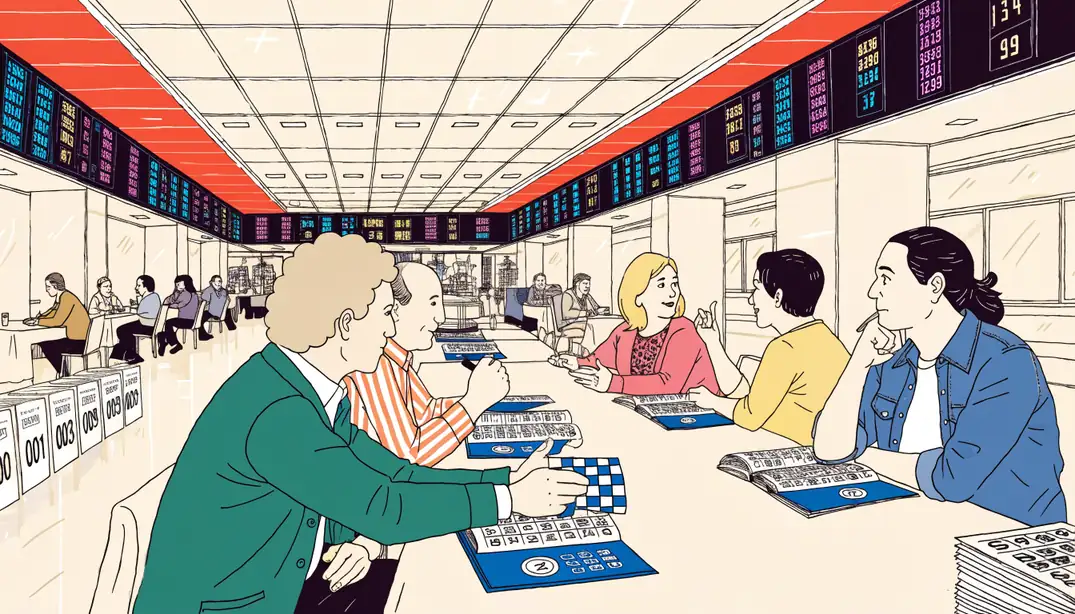
Amatic supplies games to operators; the listing alone does not identify a separate casino or bingo site.
A software supplier, not a bingo hall
The phrase “bingo and slots” can make a casino lobby sound like a single place with a single proprietor: one door, several games, perhaps a bingo room beside the machines. The commercial arrangement behind the screen is less theatrical. Amatic Industries GmbH is an Austrian business-to-business software supplier, founded in 1993. It makes games for operators; it does not run a consumer-facing casino or bingo hall.
That distinction matters when looking for online bingo and slots in the UK. A game carrying the Amatic name is not a separate website where players open accounts, deposit money or choose a bingo room. It reaches the public through an operator that has incorporated the supplier’s software into its own service. The supplier sits upstream; the casino or bingo operator presents the games to customers.
There is a small but revealing piece of regulatory architecture here. The UK Gambling Commission grants licences to businesses that conduct gambling and personal licences to individuals working in relevant roles. Amatic holds a UK Gambling Software (Remote) licence, account number 47992, which has been active since 27 April 2017. That is a supplier’s permission to provide gambling software within the regulated system, not an operating licence for a casino serving players.
The distinction between those licences reflects a broader division of responsibility. A software company can be authorised to supply games without becoming the business that offers gambling to the public. The operator is the visible institution: it maintains the customer-facing service and makes the games available within its own site. Amatic’s role is to provide software to that operator, rather than to invite players to gamble directly with the supplier.
For someone browsing bingo and slots online, the distinction may be hard to see. A game sits in a lobby alongside other titles, presented under the operator’s name and within its familiar account system. Yet that arrangement does not turn the software supplier into the casino. The lobby is the operator’s shop window; the supplier is one of the businesses whose products may appear behind it.

Amatic games reach UK operators through direct integration or through aggregator feeds. In a direct arrangement, the operator connects with the supplier’s software. An aggregator can act as an intermediary, feeding games from providers into operator platforms. Either route serves the same broad purpose: it allows a licensed operator to offer software made by a separate company. The route may vary; the division between making and offering remains.
This is why online slots and bingo in Britain cannot be understood simply by asking who made a particular title. The answer identifies the supplier, but not necessarily the company that provides the gambling service. The provider’s name may be prominent on the game, while the operator’s name governs the customer-facing environment. Two businesses, two functions. Not a shared till.
The regulator’s remit follows the activity rather than the location of the equipment. The Gambling Commission regulates remote gambling offered to consumers in Great Britain even when the key equipment is elsewhere. It is the sole regulator for commercial gambling in Great Britain. The point is not that every part of a digital service must sit inside the country; it is that serving the market brings the relevant activity within its regulatory framework.
That arrangement can seem abstract beside the ordinary language of bingo online slots or a casino menu. But the licensing structure is a way of assigning responsibility across a chain of companies. A supplier creates or provides software; an operator offers gambling to customers; the regulator oversees commercial gambling in its jurisdiction. The fact that these roles meet inside one website does not erase their separate legal identities.
It also explains why Amatic should not be described as a bingo casino. A supplier may contribute games to operators whose wider services include bingo and slots, but it does not thereby run those services itself. “Bingo and slots” describes a combination that customers may encounter at an operator; it is not a description of Amatic’s business model. Confusing the two makes the supply chain sound simpler than it is.
So the useful starting point is not whether Amatic has a virtual hall of its own, but what kind of company it is and how its software enters the market. It is an Austrian supplier operating on a business-to-business basis, licensed to provide remote gambling software, with games reaching operators through direct connections or aggregators. For the public, access comes through an operator’s service, not through Amatic as a standalone destination.
A modest distinction, perhaps. An important one.
Where Amatic games appear—and what a listing proves
Amatic titles are reported across a mixture of familiar betting and gaming brands, including operators with bingo alongside casino games. A specialist review names Betfred, Jackpotjoy, William Hill, kwiff, PokerStars, Ladbrokes, Paddy Power, Unibet, Virgin Games and Casumo. Another specialist review lists Sky Vegas, 32Red, 888casino, Betfred, Bet365, William Hill, Virgin Games, Betway, Betvictor and Betfair.
There is overlap between the two lists, but they are not a single, official catalogue. Taken together, they provide a useful map of operators associated with Amatic games, not a live inventory of every title in every casino lobby. The distinction matters for anyone comparing bingo-and-casino brands: an operator’s name appearing in a review does not establish that a particular Amatic slot can be opened there today.
A listing is an editorial statement. It is not an entry in the Gambling Commission’s register, nor does it certify the present contents of an operator’s game library. The UKGC regulates remote gambling offered to Great Britain consumers, and only operators with the relevant UKGC licence may offer Amatic games to people in the UK. Amatic’s own software licence permits it to supply games; it does not turn a supplier into a consumer casino or make a third-party list a regulatory record.

The names also sit within a changing commercial arrangement. Games can reach operators through direct integration or an aggregator, and a provider relationship does not mean that every title is distributed to every site. A brand may carry a supplier’s games in one part of its business, while a specific product, game version or lobby category is not visible to every account or at every moment. The catalogue is not a fixed shop window.
That is especially relevant when a site presents itself as a bingo destination. Bingo and slots may share an account or appear under one broad casino heading, but the label alone says little about which suppliers are connected to the slot lobby. “Bingo casino” can describe a combination of products, not a promise that a particular provider’s games sit beside the bingo rooms. A familiar brand name is not a game list.
Nor should two reviews naming the same operator be read as independent proof of current availability. The reports support the narrower claim that these operators have been associated with Amatic titles. They do not settle whether a named title is currently offered, whether the entire catalogue is present, or whether the game is available in the same form across every platform. Those details belong to the operator’s current games information.
The practical evidence is the operator’s own provider list or lobby, checked close to the point of opening an account. A current list of providers can indicate whether Amatic is part of the site’s offering; searching the live game catalogue can then establish whether the particular title appears. That is a modest step, not a guarantee about what may change later.
There is also a difference between a brand being named in a specialist review and its regulatory status. A review may help identify places to investigate, but it cannot substitute for the Gambling Commission’s public register when the question is whether an operator is licensed. The register concerns businesses and their permissions; an editorial list concerns reported games and commercial links. Confusing the two gives a directory more authority than it has.
The same care applies to words such as “best”. A list of operators carrying Amatic titles is not, by itself, a ranking of the best bingo casinos in the UK. It says nothing about which site is preferable, whether a title is available to a particular customer, or how an operator’s terms work. It is evidence of reported distribution, and no more.
That modesty is useful. Gaming brands can keep the same name while their lobbies change; supplier links can be present without every game being accessible. A reported association narrows the field. It does not settle the final question.
Top online casinos in the UK
- SpinFormulaBonus: 550% Up To £15,000 + 550 FS · Payout speed: 1-3 business days
- SlotoSportBonus: 500% up to £ 10 200+ 777 FS · Payout speed: 1-3 business days
- Revery PlayBonus: 100% up to€1,000+ 100 FS · Payout speed: 1-3 business days
- AmunbetBonus: Join now and get 450% up to 2,700 GBP + 450 FS · Payout speed: 1-3 business days
- BeOnBetBonus: 100% up to €500 + 100 FS · Payout speed: 1-3 business days
- JetsetspinsBonus: 200% Bonus + 100 Free Spins + Free Royal Wheel · Payout speed: 1-3 business days
- NightWinBonus: £900 + 400 free spins · Payout speed: 1-3 business days
- x3betBonus: Welcome Pack 100% Up to £1.000 + 200 Free Spins · Payout speed: 1-3 business days
- ZombillionBonus: Welcome Pack 250% up to £4000 + 200 FS · Payout speed: 1-3 business days
- BritsinoBonus: Welcome Package – Get your £2,200 + 2,000 FS · Payout speed: 1-3 business days
The familiar shape of an Amatic slot
An Amatic slot tends to present a compact, recognisable arrangement: five reels, three rows, and nine or ten fixed paylines. That is the familiar grammar of the video slot, rather than the numbered-card rhythm of bingo. The reels turn, symbols settle into view, and wins are assessed against lines that are already set. There is no choice of which lines to activate.

That fixed structure makes the games easy to read, but it does not make every title identical. Symbols, themes and the details of a bonus round vary; the broad framework remains recognisable. For someone moving between bingo and slots, the distinction matters. A bingo game draws its suspense from numbers being called against a card. A slot places it in the changing combinations of symbols across the reels.
Scatter symbols add another route to a win. Unlike symbols that must align along a payline, scatters can pay according to their appearance on the screen, subject to the individual game’s rules. They also help lead into the feature that gives many Amatic titles their most familiar family resemblance: the “Book of” free-spin round. The name signals a recurring design, not a promise that every game has identical entry conditions or rewards. Those details belong to the rules displayed for the particular title.

A free-spin round changes the pace of play, but not its basic form. The reels remain the centre of attention; the game temporarily supplies spins under its feature rules rather than requiring a fresh stake for each one. The attraction is obvious, and so is the limit of the phrase “free spins”: it describes a feature within a slot, not a separate bingo game or a guarantee of a return.
The same title can also carry different return-to-player settings at different casino operators. RTP is a theoretical measure of how much a game returns across play over time; it is not a forecast for an individual session. A specialist review reports two RTP versions for *The Book of Aztec*: 90.57% and 97.63%. Those figures illustrate why the game’s name alone cannot establish its setting at a particular casino. The version available there, rather than a general description of the title, is what matters.
How Amatic slots work
Amatic slots typically feature five reels, three rows, and fixed paylines, often including ‘Book of’ style free-spin rounds.
That difference is easy to miss because the screen and the game name may look unchanged. Yet a familiar set of reels does not necessarily mean identical mathematical terms. The operator’s game information is the relevant place to confirm the RTP attached to the version being offered. A figure remembered from another casino, or found in a general review, may refer to a different version.
This is a less theatrical part of slot design than the symbols or the free-spin round, but it shapes the terms beneath them. The game’s visible language is shared; its return setting need not be. A title can travel between operators without carrying one universal RTP with it.
For that reason, the useful description of an Amatic slot is both simple and qualified: five reels, three rows, fixed paylines, scatter wins and, in some titles, a “Book of” style free-spin feature. The outline is familiar. The precise rules and RTP belong to the specific game version shown by the operator. Familiarity is not sameness.
Bonus terms under a hard ceiling
A bingo-and-slots promotion can look generous in its headline and demanding in its conditions. The useful distinction is between the bonus itself and the amount of play attached to it: a wagering requirement tells the customer how much qualifying play must take place before bonus funds, or winnings linked to them, can be withdrawn. In Great Britain, that condition now has a firm upper boundary.

The UK Gambling Commission’s cap on wagering requirements for bonus funds took effect on 19 December 2025. A promotion cannot require more than ten times the bonus funds to be wagered. The rule puts a ceiling on one familiar way of making an offer less valuable in practice: a large-looking bonus paired with a still larger volume of required play. The ceiling is not a promise that every offer is easy to use. It is a limit on the requirement.
That matters when an offer combines bingo and slots. The category label does not, by itself, explain how its terms work. The relevant questions are what counts as bonus funds, whether a wagering condition applies to them, and how the offer describes qualifying play. A banner saying “bingo and slots” is not a substitute for those details. The ten-times cap concerns the wagering requirement on bonus funds; it does not establish that every game contributes in the same way, or that an offer has no other conditions.
The same distinction applies to a no-deposit bonus. The absence of a payment requirement does not tell the whole story about withdrawal conditions. If bonus funds come with wagering terms, the cap is relevant to the size of that requirement. The label alone cannot show whether any particular promotion is available, what its other conditions are, or how its games are treated. Those details belong to the offer’s own terms.
This is a modest but meaningful change in the bargain between operator and customer. Promotions have long used arithmetic that is technically visible and practically easy to overlook; a regulatory ceiling makes one part of that arithmetic less elastic. It does not turn a bonus into cash, nor does it remove the need to distinguish bonus funds from withdrawable money. A ceiling is not a recommendation.
For a bingo casino offer that also includes slots, the sensible reading starts with the bonus terms, not the largest figure in the advertisement. The operator should state the wagering condition clearly, and the requirement attached to bonus funds must stay within the UK limit. Where wording is unclear, there is no need to infer a more favourable interpretation from the promotional headline. The terms define the offer; the cap defines the outer edge of one term.
The date matters because the limit is a regulatory rule in force, not an optional feature an operator can present as a perk. It supplies a boundary for bonus wagering, while leaving the character of each promotion to its own conditions. A bonus may still ask for play. It cannot ask without limit.
Slot play within UK limits
The limits on online slots are unusually visible in the rhythm of play. A stake is not simply a figure chosen on a screen: its ceiling depends on the player’s age, and the rules also govern how one game cycle gives way to the next. That applies whether slots sit beside bingo in a casino lobby or are reached through a bingo-branded site.

For players aged 25 and over, the maximum stake is £5 per game cycle. This cap took effect on 9 April 2025. For those aged 18 to 24, the maximum is £2 per cycle, a lower ceiling introduced on 21 May 2025. The distinction is deliberate: the same slot is subject to different stake limits according to the player’s age.
The cap is about the stake for a cycle, not a promise that a session will cost a particular amount. A series of permitted spins can still add up; regulation sets a boundary around each one, not a budget for the evening. The arithmetic is modest. The habit may not be.
The rules also shape the pace. Online slots cannot offer autoplay, so a game cannot be set to run through spins automatically. A minimum interval of 2.5 seconds must pass between spins. The pause is brief, but it makes each next play a separate action rather than part of an uninterrupted sequence. There is no fast-forward button for the regulation.
A bingo-and-slots site may place several kinds of game under one roof, but these controls concern online slot play. They are not a general rule about every bingo game or every feature on a casino page. Nor does a promotion change the stake ceiling: the limit follows the slot game cycle, not the language used to advertise it.
There is another point before play begins. UKGC-licensed operators must prompt customers to set a financial limit before their first deposit. If a customer later lowers that limit, the change must take effect immediately. This is a separate safeguard from the stake cap: one sets a boundary on the account, while the other restricts the size of an individual slot stake.
Together, these measures place friction at two points: before money enters an account and while a slot is being played. They do not turn gambling into a harmless pastime, and they do not remove the need for restraint. They do make the rules part of the interface, not merely fine print.
When free spins turn into cash
Free spins belong to slot games, even when they appear in a casino that also offers bingo. They are rounds played on a named slot, with any resulting win handled under the promotion’s terms. That makes them different from free bingo tickets or a no-cost bingo game: the word “free” describes the spin, not necessarily what happens to its winnings.
A specialist review reported that 32Red, Betfred and bet365 had free-spin offers whose winnings carried 0× wagering. In practical terms, that means the resulting payout is credited as cash, without a further playthrough requirement attached to those winnings. It is a distinct arrangement from spins that produce a bonus balance which must be wagered before it can be withdrawn. The distinction matters more than the headline count of spins. A large bundle can still leave conditions between a win and cash; a 0× term removes that particular hurdle.
The report also described a bet365 offer requiring a £10 minimum lifetime deposit, with up to 500 spins distributed over 10 days. “Lifetime” is a meaningful qualification: the threshold concerns deposits made over the account’s history, rather than necessarily a new deposit made for each batch of spins. The distribution period also means the full allocation is not presented as arriving all at once. The reported terms connect the spins to a schedule, not simply to a single moment of registration.

These details should be read as a snapshot from a specialist review, not as a permanent promise from the operators. Promotions change, and an offer’s terms can differ from one version to another. The useful check is the wording attached to the specific promotion: whether the spins are tied to a particular slot, how they are released, and whether the winnings are described as cash with no playthrough. “Free spins” alone answers none of those questions.
There is a small linguistic muddle in the way casino promotions are sometimes described. A free casino game may mean a slot played without a cash stake, while free bingo normally refers to a separate bingo offer. Free spins are not a general-purpose free game across both products; they are a slot mechanic. Their value depends not just on receiving spins, but on what the terms say about the money, if any, that comes out of them.
For the bet365 terms reported, the stated deposit threshold and staged distribution are part of the picture; the 0× description concerns the treatment of winnings. Those are separate conditions, and one should not be mistaken for the other. A promotion is made of its small print.
The operator takes the bet
A bingo and casino site may place bingo rooms, slot games and other casino titles under one account, but that shared setting does not make every company behind a game responsible for the same things. Amatic supplies software. It does not accept bets from British players, receive their deposits or pay out their winnings.
DO
- Check the operator’s current provider list
- Read the specific terms of a promotion
DON’T
- Assume a supplier is the casino
- Rely on an editorial review as a regulatory record
Those tasks sit with the casino operator. The operator holds the relevant UKGC licence and is responsible for handling deposits and payouts, setting the terms of its bonuses, and providing customer support. If a question concerns a payment, a promotion or an account, it is therefore the operator’s role that matters—not the name attached to a slot in the lobby.
That distinction can be easy to miss in a casino and bingo UK offer. The game carries a supplier’s identity, while the surrounding account and its terms belong to the operator. A player using an Amatic slot is placing a bet through the casino, not opening a separate account with Amatic. The supplier’s role is to provide the game; it is not the cashier or the complaints desk.
The same division matters when a site presents bingo and slot games together. A bingo promotion, a casino bonus and a game supplied by Amatic can appear within one commercial setting, but the supplier does not thereby become responsible for the promotion or the account. A casino deal remains the operator’s offer, with the operator responsible for its terms.
Nor does the appearance of a provider’s name in a casino lobby amount to an official finding about that operator. It is an editorial listing, not an entry in the UKGC register. Any UKGC-licensed operator may use the business-to-business arrangement involving Amatic; the regulator’s register concerns licensing, not a catalogue of every supplier visible on a site.
For anyone trying to understand how to play bingo or casino games on one site, the practical point is less mysterious than the lobby makes it look: the operator takes the bet and administers the account; Amatic supplies some of the software through which a game is played. Different jobs. Different responsibilities.

A bonus is not the same as a new site
A promotion can make an established gambling brand look newly relevant without making it a new operator. A site may offer both bingo rooms and slots, and its bonus wording may mention one product, the other, or both. Those details describe an offer, not the age of the business or the date its service began.
The distinction matters when a promotion is labelled a no-deposit bonus. The phrase describes the advertised route into an offer; it does not, by itself, establish that a player can claim it, what conditions apply, or whether it is available at a particular site. Nor does a bonus attached to bingo and slots make the site a new bingo-and-casino service. Newness and promotion mechanics are separate questions.
For bonus funds, one condition now has a firm regulatory boundary. The UK Gambling Commission’s cap on wagering requirements took effect on 19 December 2025: operators cannot set a requirement above ten times the bonus funds. That ceiling applies when assessing bonus wagering terms, including where an offer is presented alongside slots at a site that also has bingo.
It does not turn every advertised bonus into a good offer, or remove the need to read the terms. A promotion can still have conditions beyond wagering, and its presence says nothing about whether an individual game is in the site’s current catalogue. A bonus is an inducement with rules attached, not a reliable label for a site’s history or its selection of games.
The language of “brand new” can therefore blur two different things: a newly launched operator and a current promotion at a familiar one. The cap concerns the second only insofar as it limits wagering on bonus funds. It does not certify a site as new, confirm a no-deposit offer, or establish that a particular bingo-and-slots combination is available. Terms first; novelty second.
Mobile play without an app download
A phone does not necessarily need a separate bingo or casino app to open an Amatic game. The games are generally delivered as HTML5 titles in a mobile browser, so play can begin through the operator’s site rather than through a dedicated game download.
That distinction is modest but useful. An app is a piece of software installed on the device; a browser game is served through a web page. HTML5 makes the latter route possible across devices, without making an app installation a condition of accessing the game. The familiar app icon is not the only doorway.
This is part of a wider change in how entertainment reaches people. Software once arrived in boxes, then on discs, then as downloads; now much of it appears inside a browser window, with the device doing less visible work. The practical result is less ceremony between opening a site and loading a game. No separate Amatic download is generally required.
That does not mean every operator has the same mobile setup, or that every game behaves identically on every screen. The route described here is the usual browser-based one, not a promise about a particular casino’s site or app. A casino may offer its own app, but that is separate from the question of whether an Amatic title itself needs to be downloaded.
For people looking for bingo and slot games on a phone, the useful distinction is between an operator’s app and the game’s delivery format. Amatic titles are generally HTML5 browser games; the game does not ordinarily demand a dedicated installation of its own. The small screen has become a front door, not a miniature desktop.

Checking availability before a first deposit
A new bingo-and-casino site can look like a fresh place to play, but its age says nothing about whether it carries Amatic games. The relevant detail is the operator’s current provider list. A specialist review advises staff at UKGC-licensed operators to check that list before a customer deposits, because a general mention of Amatic does not establish that a particular title is available at a particular casino.
That distinction matters when comparing a casino with bingo. A site may offer both, yet the bingo lobby and the slots catalogue remain separate parts of its service. Likewise, seeing bingo-style slots or side games described on a site does not confirm that the Amatic titles sought are among its current games.
The same caution applies to offers described as free slot or bingo play with no deposit. An offer’s wording concerns its own conditions; it does not establish which provider’s games can be played under it. Availability needs to be checked in the operator’s own current provider information, rather than inferred from a site’s launch date, general game-page descriptions or promotional language.
This is a small but useful distinction in a market where “new” can describe a brand, a product or merely a new offer. None of those labels is a substitute for a current list of providers. Before a first deposit, the practical check is whether Amatic appears in that operator’s provider information and whether the intended title is shown as available there.
A name on a general casino page is not the same as a playable game in the lobby. Nor does a site that combines bingo and casino games necessarily carry every supplier’s catalogue. The list is the test; the label is only the introduction.
Are Amatic games licensed and legal to play in the UK?
Yes. Amatic holds a UK Gambling Software (Remote) licence, and its games reach players through operators licensed to offer gambling in Great Britain.
Can Amatic slots be played on a mobile phone in the UK?
Yes. Amatic games generally run in a mobile browser as HTML5 games, without requiring a download.
Which licensed UK casinos carry Amatic slots?
Reported operators include Betfred, Jackpotjoy, William Hill, kwiff, PokerStars, Ladbrokes, Paddy Power, Unibet, Virgin Games, Casumo, Sky Vegas, 32Red, 888casino, Bet365, Betway, Betvictor and Betfair. Check an operator’s current provider list, as availability of specific titles may change.
Must a casino be Gambling Commission-licensed to offer Amatic slots to UK players?
Yes. The casino offering gambling to players in Great Britain needs the relevant Gambling Commission operating licence; Amatic’s software licence does not authorise it to run a casino.
Related posts

UK Casino Welcome Bonuses: How Offers Work

VPN-Friendly Casinos in the UK: How Access Works
