
High-volatility slots in the UK: payout patterns
 Available in GB

Volatility describes how wins are distributed, not whether a spin will pay or when a larger return is due.
What Volatility Changes in a Slot
Volatility describes the pattern of a slot’s returns: not whether it pays, but how wins tend to be distributed. A high-volatility slot tends to pay less often, with wins arriving in larger amounts. A low-volatility slot tends to return smaller amounts more frequently. The distinction is about the shape of payouts, not a promise that any particular spin will follow a pattern.
That makes “high volatility” a description of unevenness. A game may offer stretches with no win, followed by a larger payout; the larger win is part of the same design, not evidence that the next one is due. In a low-volatility game, returns are more widely scattered among smaller wins. Neither label tells what will happen on an individual spin.
For anyone asking what a high-volatility slot is in the UK, the basic answer is the same as elsewhere: it is a slot whose payouts tend to be less frequent and larger. The location does not change the meaning of the term. Nor does the label tell how large a win will be, how long a quiet patch might last, or whether a particular player will finish ahead. Those are not promises contained in the word “volatility”.
The distinction can be easy to misread because “win” sounds like a single, settled outcome. In practice, a small return and a substantial payout both count as wins, but they create different patterns. Low volatility favours the more frequent, modest return; high volatility favours the less frequent, larger one. It is a contrast between distribution styles, not between a safe game and a dangerous one, or a generous game and a stingy one.
That is the useful starting point before looking at individual formats. Volatility does not rank slots by quality, and it cannot identify a guaranteed route to profit. It tells something narrower: how often returns tend to appear, and how their size tends to be arranged. A label, not a forecast.

High-Volatility Slots and the Shape of a Session
A session is experienced as a sequence, even when its outcomes do not tell a story. A run of spins can feel as though it is gathering towards something: a quiet stretch seems to invite a breakthrough, while a win can make the next stretch appear newly promising. Volatility gives that sequence its texture, but it does not give it a plot.
With high-volatility slots, substantial returns tend to be less frequent. The space between them can therefore occupy much of a session, making play feel uneven: long passages of little change, followed, perhaps, by a payout that alters the balance sharply. “Perhaps” matters. A high-volatility design describes a pattern across outcomes, not a promise that a particular session will contain a dramatic moment.
The contrast is visible in low-volatility games, where winning combinations typically appear every three to six spins on average across most titles. Those wins tend to be smaller, so their presence can give play a steadier pulse. A screen may register success often without the balance moving decisively upwards. Frequency and financial significance are separate things, though the repeated signals of a win can make them feel like the same thing.
That difference shapes attention. In a quieter high-volatility session, each spin may seem to carry more narrative weight precisely because nothing much has happened for a while. A later payout can become the event around which the whole session is remembered, even if it does not undo the earlier losses. In a low-volatility game, the memory may instead be made of frequent small interruptions: each one breaks the silence, but none necessarily changes the overall direction.
The mind is an eager editor. It gives a sequence a beginning, a turning point and an ending, then treats the result as evidence about what was due. Yet a long gap before a payout does not establish that one is now more likely, and a recent win does not make another one inevitable. The session may feel as if it has moved through stages. The mathematics has no obligation to honour them.
This is one reason a high-volatility slot can feel more suspenseful without being more favourable. Suspense concerns the experience of waiting; expected value concerns the average financial result across repeated play. They are not competing descriptions of the same thing. One belongs to the player’s sense of time, the other to the structure of the game.
A positive house edge means that, over enough sessions, the mathematical expectation remains negative for the player. The route to that result can look gradual in one game and sharply uneven in another. Volatility changes the distribution of outcomes, not the direction implied by the edge. A large win during a session can be real and consequential, but it does not overturn that longer-run arithmetic.
For this reason, the phrase “best high-volatility slots” cannot sensibly mean games that turn risk into an advantage. A game with high volatility may suit someone drawn to the possibility of less frequent, larger payouts; that preference does not make those payouts more certain, nor does it cancel the house edge.
Session length can also distort judgement. When play continues through a quiet spell, the accumulated waiting may feel like an investment that ought to be rewarded. But time spent does not purchase a claim on the next outcome. Stopping after a win can preserve a memorable ending; stopping after losses can end an uncomfortable sequence. Neither choice changes the underlying expectation of the game. They change where the session ends, which is not quite the same as changing what it was worth.
The language of “hot” and “cold” stretches is tempting because it fits how people experience a screen: a run of outcomes feels like a climate. But the feeling of a pattern is not itself proof that the game is responding to the session. High volatility makes pauses and peaks more conspicuous; low volatility makes small wins more familiar. Each style supplies different material for the same human habit of finding meaning in a sequence.

So the practical question is not whether an uneven session is secretly building towards a payout. It is whether that rhythm remains acceptable when the hoped-for moment does not arrive. A high-volatility game can make a short session feel sparse and a win feel momentous. It can also end without the event that gave the waiting its apparent purpose.
That is the shape of the session: not a forecast, but a pattern of experience laid over uncertain outcomes. The edge stays put.
Top online casinos in the UK
- SpinFormulaBonus: 550% Up To £15,000 + 550 FS · Payout speed: 1-3 business days
- SlotoSportBonus: 500% up to £ 10 200+ 777 FS · Payout speed: 1-3 business days
- Revery PlayBonus: 100% up to€1,000+ 100 FS · Payout speed: 1-3 business days
- AmunbetBonus: Join now and get 450% up to 2,700 GBP + 450 FS · Payout speed: 1-3 business days
- BeOnBetBonus: 100% up to €500 + 100 FS · Payout speed: 1-3 business days
- JetsetspinsBonus: 200% Bonus + 100 Free Spins + Free Royal Wheel · Payout speed: 1-3 business days
- NightWinBonus: £900 + 400 free spins · Payout speed: 1-3 business days
- x3betBonus: Welcome Pack 100% Up to £1.000 + 200 Free Spins · Payout speed: 1-3 business days
- ZombillionBonus: Welcome Pack 250% up to £4000 + 200 FS · Payout speed: 1-3 business days
- BritsinoBonus: Welcome Package – Get your £2,200 + 2,000 FS · Payout speed: 1-3 business days
Slot Machines: Reels, Bets and Paylines
A slot machine presents its rules as a moving picture: reels turn, symbols settle, and a result appears. The picture can make the game seem simpler than its underlying bet structure. Reels describe the columns of symbols; paylines describe the routes across them that can count as winning combinations; the stake determines what is placed on the spin. These are separate parts of the machine, even when the screen makes them look like one event.
A five-reel slot has five columns in which symbols can land. The reels may be shown as turning independently, but the display is not a guide to how the game calculates a result. What matters is the game’s own rules: which symbol combinations qualify, where they must appear, and how the bet is applied. A five-reel game can have a bet applied across all five reels. That does not mean that every visible symbol, or every possible path through the display, is automatically part of a winning combination.
A payline is a pattern of positions running through the reels. It might travel straight across, or take a less regular route, depending on the game. When a qualifying set of symbols lands on a valid line, the game evaluates it according to its paytable. Some games make the active lines fixed; others let the player adjust them. In either case, the paytable and rules explain which patterns count and what each pays. A line is therefore not simply a decorative mark on the screen. It is part of the contract between the game and the stake.

The bet controls can make this harder to read than it needs to be. A game may present a total stake, a stake per line, or controls that combine line selection and bet size. The displayed total matters: changing one control can alter the amount placed on a spin, even if the reels and symbols remain identical. The visual ritual stays the same. The financial meaning may not.
This distinction also helps explain why “slot machine” is not a description of a single layout. A game can use a familiar row of reels while arranging its paylines, symbols and bet settings in its own way. Some interfaces emphasise the number of lines; others draw attention to the total stake. Neither presentation changes the need to read the rules attached to the game. The screen is the theatre; the paytable is the small print that decides what the theatre means.
The term high-volatility slot machine belongs to a different layer of description. It does not, by itself, tell how many reels are displayed, how a bet is spread, or which paylines are active. Nor does a five-reel layout establish a game’s volatility. These labels answer different questions: one concerns the machine’s structure, the other concerns the pattern of its returns. Treating them as interchangeable invites confusion before a spin has even begun.
That is why a list of high-volatility slot machines cannot be inferred from reel count or from the appearance of the interface. A five-reel game is not automatically high volatility, and a busy screen is not evidence of a particular payout pattern. The details have to come from information about the individual game, rather than its shape on a device.
There is a small history in these controls. The reel is an old mechanical image, retained by digital games long after the machinery itself has become an animation. Paylines carry that inherited language into a screen where symbols can be generated and assessed without physical reels at all. The familiar form makes the game legible; it does not make every game work alike.
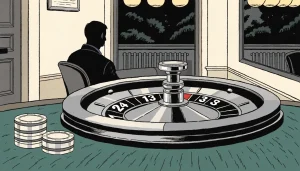
For anyone comparing high volatility slot machines in the UK, the useful first distinction is therefore mechanical: identify the reels, find how the stake is applied, and check which lines or patterns the game recognises. Only then does the volatility label have a clear place in the description. It is not a synonym for more reels, more paylines, or a larger-looking display.
The interface is not the rulebook.
High-Volatility Slot Games Without an Empty Top-Ten
A catalogue can make high-volatility slot games look like a neat shelf of labelled products: choose a title, expect a particular sort of ride. The label is less tidy than that. Volatility describes a pattern of returns, not a theme, a visual style or a promise attached to a name. A game does not become high-volatility because its screen is dark, its music dramatic or its title speaks of treasure.
The useful distinction is behavioural. High-volatility slots tend to pay out less often, with larger amounts when wins do arrive. That description identifies a broad category, not a reliable forecast for the next spin. It also does not say how large any particular win will be, or when it might occur. A label can summarise the design’s general character; it cannot turn uncertainty into a schedule.
That is why a list of the “best” high-volatility slot games would need more than a handful of titles arranged in confident order. Without comparable evidence about the games themselves, a ranking would be decoration masquerading as advice. Naming a game without a verified volatility classification would be no better: its title might be familiar, but familiarity is not a measure. An empty top ten is still empty, however handsome the numbers beside it.
What the category can—and cannot—tell
The phrase “high volatility” is most useful as a broad clue about the shape of returns. It does not identify a particular reel layout or tell anything by itself about how a game looks. Those are separate features. A slot’s visible design may be easy to describe; its return pattern is a different matter, and cannot be inferred from artwork or atmosphere.

Nor does the category provide a universal scale that allows every game to be placed in an exact order. “High” and “very high” can sound like precise measurements, but a phrase on a product page should not be mistaken for a guarantee that two games behave alike. Without a shared, clear basis for comparison, the extra word may add emphasis rather than useful detail.
This matters when a catalogue uses several labels for what may appear to be the same idea. A player looking for a high-volatility slot game may find descriptions that use “high variance” or make a more general claim about big wins. Such language can point towards the intended feel, but it does not establish how a game will perform in an individual session. Marketing has always been better at naming anticipation than settling it.
The category is also distinct from the mechanical definition of a slot machine. Reels, paylines and bet arrangements describe how a game is set up; volatility describes the broad pattern of its returns. One can identify the former by looking at the game’s rules. The latter should not be guessed from the number of reels, the theme or a dramatic feature name. Different questions need different answers.
Why “best” is a slippery word
A request for the best high-volatility slot games in the UK sounds like it calls for a ranked list. But “best” has no single meaning here. It might mean a particular return profile, a preferred theme or an experience a player finds entertaining. Those are not interchangeable standards, and a list that silently swaps between them would give its order a false authority.
The same problem appears in searches for high-return, high-volatility games. Return rate and volatility are different descriptions: one concerns the overall return built into a game, while the other concerns the distribution of wins. Neither term, alone or beside the other, tells a player what a short run will produce. A combined label may look like a verdict. It is not one.

There is a small cultural trick in the word “best”. It turns a private preference into something that appears to have been settled for everyone. A catalogue can sort games by theme or other visible attributes, but a ranking based on an unsupported claim about volatility would merely borrow the language of measurement. That is a tidy presentation, not a sound comparison.
For real money slots, the distinction is worth keeping plain. A game’s title, artwork and promotional description may make its identity memorable, but none of those things confirms a volatility classification. The category can help describe the kind of return pattern a game is designed to have; it cannot certify that one named title will suit every player, or that an impressive label will produce an impressive result.
The sensible way to read the category is therefore modestly. It names a general tendency: less frequent payouts, potentially larger amounts. It does not rank titles, predict a win or convert a game’s presentation into evidence. High-volatility casino games may sit alongside one another in a menu, but the shared label is not proof that they are equivalent, nor that any one is a universal choice.
A list needs evidence. A label needs restraint.
High or Low: The Trade-Off, Not a Verdict
Choosing between high- and low-volatility slots is not a choice between a good game and a bad one. It is a choice about the pattern in which a game distributes its returns. Low-volatility games tend to produce more frequent, smaller wins; high-volatility games tend to pay less often, with larger wins when they arrive. Neither pattern changes the basic fact that a win can be followed by a loss, or that a run of one kind of result says little about what comes next.
That distinction can sound tidy on paper. In play, it describes two different kinds of uncertainty. One style offers more regular signs of activity, though those wins may be modest. The other can leave longer gaps between payouts, while holding out the possibility of a more substantial return. The attraction of either depends on what someone finds tolerable: repeated small outcomes, or stretches with little reward and a less predictable payoff.
What “high” and “low” describe
Volatility is a way of describing how widely results can vary, not a promise about what a particular spin will do. A high-volatility slot is associated with less frequent payouts that may be larger. A low-volatility slot tends towards more frequent returns of smaller size. These are tendencies, not schedules. A game does not owe a payout because it has been quiet, and a low-volatility label does not mean that every sequence will feel steady.
“Very high volatility” intensifies the same broad idea: outcomes are understood as more uneven, with payouts occurring less frequently and the possibility of larger wins forming part of the appeal. It does not mean that a large win is due, or that the game has a hidden point at which it must compensate for earlier losses. The label describes the character of the distribution, not a timetable that can be read spin by spin.
This matters because words such as *high* and *low* invite a ranking. They sound like grades, as if one sits above the other on a scale of quality. Here they describe different shapes of play. A low-volatility slot is not necessarily safer in any meaningful financial sense, and a high-volatility slot is not automatically more rewarding. One may return smaller sums more often; the other may concentrate more of its potential in less frequent outcomes. The difference is about form, not a verdict.
The same distinction applies when the phrase is broadened to casino games generally. High volatility points to a more uneven pattern of results; low volatility suggests a more spread-out pattern. But the exact mechanics depend on the particular game. A slot’s label should not be treated as a universal measure that can be transferred unchanged to every other casino game.
The appeal of regularity
Low-volatility slots can feel more active because smaller wins occur more frequently. That regularity may make a game seem responsive: a result arrives, the balance changes, and the play continues with a sense of movement. For someone who dislikes long periods without a return, that pattern can be more comfortable. It offers activity, not certainty.
A win is still not necessarily a net gain. A small payout may return only part of what has been staked, and several modest wins do not by themselves establish that a session is ahead. The distinction between a winning combination and an overall profit is easy to blur when results arrive often. Frequency is visible; the total effect is less dramatic and can be harder to judge in the moment.
This is one reason the low-volatility style can be misunderstood. Its more frequent wins may make it seem as though losses are being softened or reversed. Yet a succession of small returns is not a guarantee that the total balance will rise. The game’s pattern can be comparatively gentle while its longer-run financial direction remains unfavourable to the player.
There is a human preference in that distinction. Repetition is easier to read than silence. A string of small outcomes supplies frequent feedback, and frequent feedback can feel like control, even when it is only a more visible pattern of chance. The low-volatility format may suit those who prefer that texture, but the feeling of continuity should not be mistaken for an advantage.
The appeal of concentration
High-volatility slots make a different offer. Their less frequent payouts can leave more space between rewarding outcomes, while larger wins form part of their appeal. That possibility can be compelling for someone who values the prospect of a pronounced result more than regular small returns. It can also be uncomfortable for someone who finds a long run without a payout difficult to tolerate.
The larger possible win is not an assurance, and it does not compensate automatically for the absence of earlier wins. A high-volatility slot may produce a notable result, but there is no promise that it will do so during any particular period of play. “Potentially larger” is not the same as “more likely to make money.” The distinction is important because game descriptions can make the scale of a possible prize more memorable than the uncertainty surrounding it.
The appeal of concentration can also alter how outcomes are interpreted. A player may remember the rare large return and give it more weight than many smaller losses around it. That is not a flaw unique to slots; striking events occupy more attention than ordinary ones. But a memorable win is still one result, not proof that the game’s overall pattern favours the player.
High volatility is therefore not simply the exciting option and low volatility the cautious one. Excitement and comfort are personal responses, not properties that settle the financial question. A high-volatility slot may appeal to someone who accepts sparse rewards in exchange for the possibility of a larger one. A low-volatility slot may appeal to someone who prefers more frequent feedback. Neither preference changes the uncertainty built into the game.
Is high volatility good or bad?
The question has no single answer because “good” can mean different things. It may mean more frequent wins, the chance of a larger payout, a steadier-feeling sequence, or a style that is easier to enjoy. Those aims do not always point in the same direction. Low volatility generally aligns with frequency and smaller outcomes; high volatility aligns with less frequent returns and the possibility of larger outcomes.
If “good” means that a slot is more likely to produce a profit over time, volatility alone cannot establish that. Volatility describes how results are distributed, not whether the game has a favourable mathematical expectation. Where a game has a house edge, its expectation remains negative over a sufficiently extended body of play, whether losses emerge gradually or arrive in sharper swings. A gentler pattern does not erase that edge; a more dramatic pattern does not reverse it.
This is a useful correction to the idea that choosing the right volatility can solve the financial problem. It can change the experience of uncertainty, but it cannot turn the game into a reliable source of income. A player may prefer one style and find it more enjoyable, but preference is not an edge.
DO
- Check the game’s rules and volatility classification.
- Consider your personal tolerance for uneven payout patterns.
DON’T
- Assume a large win is due after a quiet stretch.
- Treat high volatility as a guarantee of profit.
Nor does a high-volatility label mean the game is designed to pay back a large amount after a period of losses. That interpretation turns a description of variability into a supposed promise of correction. There is no basis for treating past outcomes as a signal that a future payout has become due. The same caution applies in reverse: frequent small wins do not guarantee that a low-volatility slot will keep producing them at a convenient pace.
“Do you want high or low volatility?” is therefore a question about tolerance and taste, rather than a universal rule. Someone who values frequent outcomes may prefer low volatility. Someone drawn to the possibility of a larger, less frequent payout may prefer high volatility. Someone who finds either pattern stressful may not enjoy either kind. The style cannot be separated from the player’s response to uncertainty, and no label can make that response predictable.
Finding a style without mistaking a label for a promise
For anyone comparing games online, the useful starting point is the game’s own information, where volatility is stated. A description may use a volatility category or a related explanation of payout behaviour. Such labels can help distinguish broad styles, but they are not guarantees about a particular result. If a listing gives little detail, the absence of a clear label should not be filled with guesswork based on the game’s theme, graphics or apparent prize size.
This answers, in practical terms, where high-volatility slots can be found online: in game catalogues and individual game information where a volatility description is provided. The label should be treated as a guide to the general pattern, not as evidence that a game is “best” or that its largest possible win is attainable on demand. A striking title or dramatic presentation says nothing by itself about the frequency or scale of returns.
There is no single best high-volatility slot for every player, because “best” depends on what is being valued. A person seeking frequent small wins is asking for something different from someone attracted by less frequent, potentially larger payouts. Even within one category, games may differ in their mechanics and presentation, so a shared volatility label does not make them identical. A label narrows the description; it does not settle the choice.
Comparisons are most useful when they stay modest. High versus low volatility is not a contest in which one side wins for everyone. It is a contrast between more frequent, smaller returns and less frequent, potentially larger ones. That contrast can help explain why two slots feel different, but it cannot predict how either will behave in a particular stretch of play.
The cleanest way to think about the trade-off is to separate preference from expectation. Preference concerns the pattern someone would rather encounter: more small returns, or fewer opportunities for larger ones. Expectation concerns the game’s mathematical direction over extended play. A preference can be entirely reasonable without improving that direction. The distinction is plain. The attraction is not.
Bonuses and the Clock
A bonus has a second measure alongside its value: time. A specialist review describes a typical bonus lifespan as 48 hours. That is a short window in which to read the offer, understand its conditions and decide whether it belongs in a plan at all. The clock is not a decoration around the promotion; it is part of what the promotion offers.
For anyone considering a high-volatility casino bonus strategy in the UK, that distinction matters. The phrase can make a bonus sound like a tool for improving the prospects of a particular slot style. It is not. A bonus does not change the volatility of a game, and a limited lifespan does not make a high-variance choice more favourable. It only places a time boundary around the offer.
The useful question is therefore not how quickly to put a bonus into play, but what the offer actually requires and when its stated period begins and ends. Those details belong to the specific promotion. A general lifespan cannot answer them for every casino. Reading the terms before accepting an offer is more practical than treating the headline as the whole agreement.
A countdown can also alter the mood of a decision. An expiring offer encourages haste; that is part of the design of any time-limited promotion, whether deliberate pressure or simple administration. The difference matters less than the effect: a bonus that cannot be considered calmly may be a poor fit, whatever its size or the game attached to it.
This is particularly relevant when a player is already drawn to high-volatility slots, where outcomes can be uneven. The bonus clock does not smooth that pattern or guarantee that the offer will be used in time. Nor does an expiry notice turn a promotion into a reason to keep playing. Its deadline is a condition, not a forecast.
A sensible reading of bonus terms keeps the promotion separate from the game. The slot determines its own play pattern; the offer has its own conditions and clock. If the two do not fit comfortably together, the offer can simply remain unused. No countdown can make that decision for anyone.
High-Volatility Casinos in Britain: The Regulatory Frame
A casino’s games may be described as high volatility, but that label says nothing about the legal standing of the operator. Volatility belongs to the game; licensing belongs to the business offering it. The two are easy to confuse in promotional language and entirely separate in practice.
In Great Britain, the UK Gambling Commission is the sole regulator of commercial gambling, including online casino activity. Its remit follows the market being served, not the location of a company’s servers or other key equipment: remote gambling offered to consumers in Great Britain falls within its regulatory scope even when that equipment is elsewhere. Distance, in other words, does not remove the obligation.
The Commission grants operating licences to gambling businesses and personal licences to individuals whose roles require them. A high-volatility casino serving the British market is therefore not a special regulatory category. The relevant question is whether the operator holds the appropriate authorisation, not whether its games promise rarer, larger payouts. A game’s design cannot lend its operator a licence.
The wider legal framework has its own boundary. The Gambling Act 2005 governs gambling in England, Wales and Scotland, but not Northern Ireland. For real-money online gambling in Great Britain, operators selling to consumers must hold a Gambling Commission licence, wherever they are based. Online gambling is legal for players aged eighteen and over when offered by an operator licensed by the Commission.
That arrangement reflects a distinctly practical view of jurisdiction: a business cannot avoid British oversight merely by placing its equipment abroad while serving customers at home. It also means that “high volatility” is a description of play, not a badge of regulatory approval. The distinction is plain, if less marketable.
Related posts

UK Casino Welcome Bonuses: How Offers Work

VPN-Friendly Casinos in the UK: How Access Works
