
Cascading Slot Games in the UK: How They Work
 Available in GB
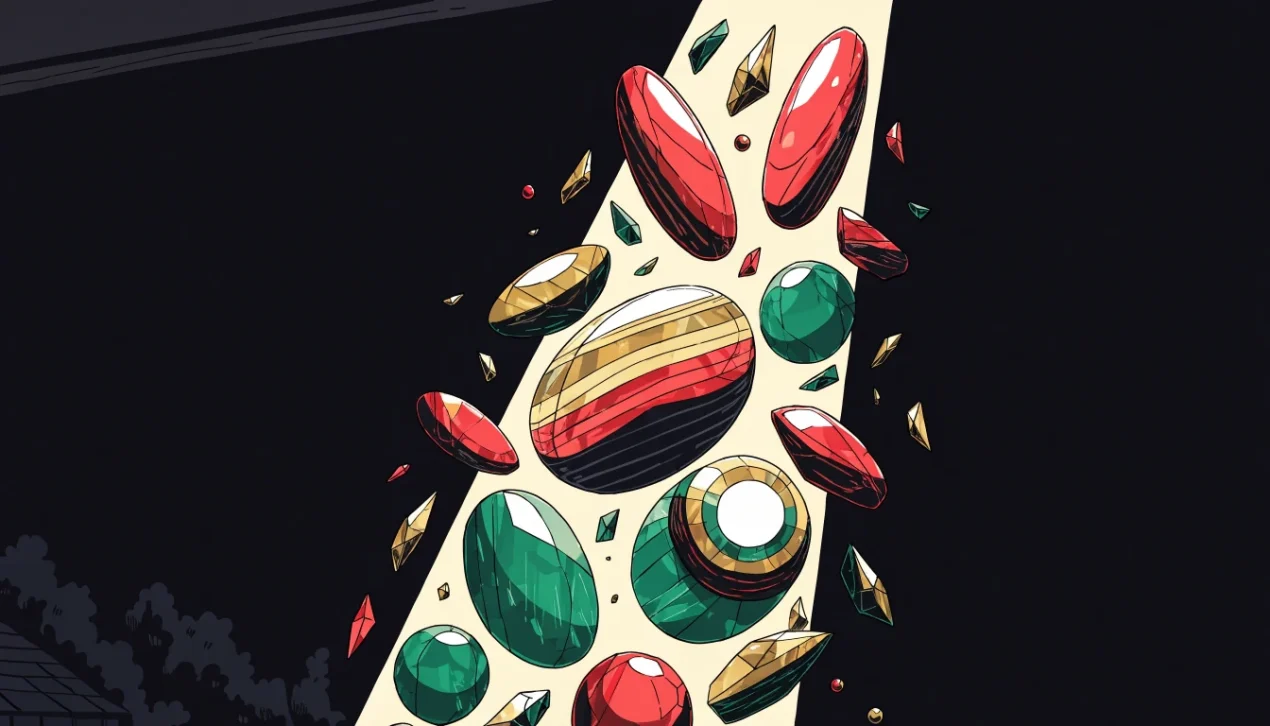
Winning symbols vanish and replacements fall into the grid, creating possible follow-up results within the same turn.
How Cascading Reels Change a Slot’s Rhythm
A conventional slot spin has a familiar punctuation: the reels move, stop, and present a result. Cascading reels alter what follows that stop. When a winning group of symbols appears, those symbols disappear from the grid and others fall into the spaces they leave. The new arrangement is then assessed, sometimes leading to another removal and another refill before the turn is over.
The result is a slot that can seem to keep moving after its reels have landed. Its rhythm is less like a single reveal and more like a short chain of events: stop, clear, fall, settle. The symbols do not simply arrive as a finished picture; the picture is revised in front of the player.
The phrase “reels” can be slightly misleading here. On a screen, the game may show columns and rows rather than physical strips turning in the way older machines did. What matters is the grid and the way symbols move within it. A cascading-reel slot uses the familiar visual language of reels, but its distinctive action happens after a result has been evaluated.
In many designs, a winning combination is removed while symbols above it drop down to fill the gaps. New symbols enter from the top, producing a fresh arrangement. The game checks that arrangement, and the same process may occur again if another qualifying group is formed. Other details can differ from one machine to another, including which symbols are removed and how new ones appear. The basic image, though, is a board that does not remain fixed after the first outcome.
That motion changes the sense of a spin. In a standard format, the stop is the main event; whatever happens next is usually a new spin, requiring a new action. With cascading reels, the initial stop can instead be the opening beat. The player sees a result, then watches the arrangement transform before the turn ends. The machine’s tempo comes from those successive changes, not only from the familiar sweep of the reels.
This is why the format can be described as a sequence within a spin rather than simply a different way of displaying symbols. A single paid turn may contain several evaluations of the grid. Each one follows from the state left by the previous one: symbols vanish, others move, and the board is read again. The sequence is still part of that turn; it is not a collection of separately initiated spins.

There is a small theatrical quality to the process. A winning group does not merely light up and disappear from the account of the machine. It makes room. The falling symbols give the next arrangement a visible cause, so the player can follow how one state becomes another. The screen behaves less like a row of sealed windows and more like a surface being rearranged.
That does not mean every cascade produces a new winning group, or that every game continues for the same length of time. The next arrangement may contain no qualifying combination, at which point the sequence ends. A particular machine’s rules determine what counts, how the board is refilled and when the turn is complete. The format describes the movement; it does not, by itself, promise a particular result.
The distinction is useful because the animation can make events feel continuous even when the underlying game is checking separate arrangements. The symbols falling into place are not a guarantee that the next position will be favourable. They are part of the mechanism by which the game presents and evaluates what comes next. Movement has a role in the experience, but movement is not evidence of an outcome.
The word “reels” also carries a piece of gambling history into a newer visual form. Early machines made spinning strips the central spectacle: symbols passed behind a window and stopped in a line. Digital slots inherited that vocabulary, even as their screens became more flexible. Cascading mechanics take another step away from the physical strip. Symbols can disappear from the middle of a grid, and the space they leave can shape what follows. The old name remains; the action has changed.
For someone encountering cascading slot machines for the first time, the practical difference is therefore less about the initial spin than about the time after it. A conventional result tends to feel final as soon as the reels stop. A cascading result may remain in motion while the game clears and rebuilds the grid. That gives each turn a beginning, a middle and a stopping point rather than one decisive instant.

The pace is different, not necessarily faster or slower. A cascade adds visible stages, and those stages make the outcome unfold rather than arrive all at once. The screen pauses, rearranges itself, and pauses again. A slot can make a great deal of ceremony out of gravity.
Cascading Slot Games: The Format Behind the Name
“Cascading slot games” is a category label, not the name of one particular machine or a promise that every game in the group works identically. The shared idea is a changing reel display: when a combination is removed, other symbols can move into the spaces it leaves. That feature gives the category its name. The surrounding rules, presentation and pace belong to each individual game.
The distinction matters because slot terminology often compresses several things into a single phrase. “Slot game” can mean the complete piece of software, including its symbols, interface, sounds and rules. “Reels” describes one part of its visual arrangement. A game with cascading reels is therefore a slot game organised around a particular display behaviour, rather than a separate species of casino entertainment.
The word “cascading” does not, on its own, describe the whole experience. It says something about how the game’s screen responds to a qualifying event, but not what theme it uses, how its symbols are arranged, or what other features it contains. Two games can sit under the same broad label and still feel quite different. The category is held together by a design principle, not by a single complete set of rules.
That is why “cascading slot machine games” is understandable everyday language, even though it can blur the distinction between a machine and a game. In a physical casino, a machine is the cabinet and its equipment as well as the game presented on screen. Online, the same phrase is commonly used for digital slot games, where there is no cabinet at all. The wording points towards the familiar slot format; it need not mean that a player is sitting in front of a physical machine.
“Cascading casino games” is broader still. A casino offers different kinds of games, but the adjective here generally identifies a slot-style format rather than a universal rule shared by every casino game. The label is useful when discussing a group of digital slots, but it is not a technical classification that turns unrelated games into one format. Language is tidier than software.

This broad category also explains why descriptions can vary. One account may emphasise the reel display; another may present cascading behaviour as one feature among several. Neither wording necessarily changes the underlying game. The important distinction is between the feature that places a game within the category and the full collection of rules that governs that particular title.
A game’s name or artwork, meanwhile, cannot establish that it belongs to the category. A theme may suggest motion, falling objects or transformation without indicating how the reels actually behave. Conversely, a game can use a restrained visual style and still be described as cascading if its relevant display follows that pattern. The mechanic, not the decoration, gives the term its meaning.
This makes the phrase “best cascading slot games” less straightforward than it first appears. “Best” depends on what is being compared, while “cascading” identifies only a shared feature. A useful comparison would need reliable details about individual games and a clear basis for judging them. Without those, the label can explain what kind of format is meant, but it cannot settle which title deserves a ranking. A category is not a verdict.
The year in a title does not alter that distinction. “Best cascading slot games in the UK in 2026” reads as a request for current recommendations, but the words themselves do not provide evidence about any particular game. A year can date a comparison; it cannot supply one. The more precise question beneath the wording is whether a game uses cascading reels and what else its rules involve.
In ordinary speech, people may use “cascading slot,” “slot with cascading reels” and “cascading slot game” interchangeably. The first is shorthand, the second spells out the feature, and the third names the game category. None of these phrases necessarily points to one specific title. Their small differences are mostly differences of emphasis: the game, its reels, or the broad family to which it belongs.
The category is therefore best understood as a naming convention with a practical centre. It groups slot games by a notable way their displays can change, while leaving room for substantial variation between them. That is enough to make the term useful, but not enough to infer every rule, feature or outcome of a game from the label alone. A shared format, not a shared script.

Top online casinos in the UK
- SpinFormulaBonus: 550% Up To £15,000 + 550 FS · Payout speed: 1-3 business days
- SlotoSportBonus: 500% up to £ 10 200+ 777 FS · Payout speed: 1-3 business days
- Revery PlayBonus: 100% up to€1,000+ 100 FS · Payout speed: 1-3 business days
- AmunbetBonus: Join now and get 450% up to 2,700 GBP + 450 FS · Payout speed: 1-3 business days
- BeOnBetBonus: 100% up to €500 + 100 FS · Payout speed: 1-3 business days
- JetsetspinsBonus: 200% Bonus + 100 Free Spins + Free Royal Wheel · Payout speed: 1-3 business days
- NightWinBonus: £900 + 400 free spins · Payout speed: 1-3 business days
- x3betBonus: Welcome Pack 100% Up to £1.000 + 200 Free Spins · Payout speed: 1-3 business days
- ZombillionBonus: Welcome Pack 250% up to £4000 + 200 FS · Payout speed: 1-3 business days
- BritsinoBonus: Welcome Package – Get your £2,200 + 2,000 FS · Payout speed: 1-3 business days
Cascading Slots and the Appeal of Consecutive Wins
The phrase “consecutive wins” gives cascading slots much of their particular appeal. A single paid spin can contain a win, a cascade and then another win, with each result appearing as part of one unfolding sequence. The screen seems to keep its answer open for a moment longer than a conventional spin would. That extra beat matters: it turns an outcome into a small episode.
It does not turn one win into a promise of another. Each cascade depends on the symbols and rules of the particular game, and a sequence can stop after its first result. The visual continuity is real; certainty is not. This distinction can disappear in the shorthand used to describe cascading wins slots, where the plural suggests an abundance that the mechanism cannot guarantee. It describes a possibility built into the format, not a dependable pattern of returns.
That possibility is easy to understand as entertainment. A win followed by a fresh arrangement of symbols offers another moment of expectation without requiring a new spin to begin. The player sees the first result, then waits to see whether the remaining symbols produce a further one. The experience has a rhythm of interruption and continuation: something lands, something clears, something may follow. A conventional result arrives more like a full stop. A cascade supplies a comma.
The difference is chiefly one of presentation, though presentation is not trivial. Games are designed objects, and their timing shapes what an outcome feels like. A sequence of small events can seem more dramatic than a single event with the same practical significance. The eye is given a story to follow; the account balance, less literary, records the result according to the game’s rules. There is the animation, and there is the settlement.
This is why the appeal of cascading wins should be kept separate from any claim about how often wins occur. A chain may create the impression of momentum, but momentum on a screen is not evidence that the next result is more likely. Each new drop is still governed by the game’s own probabilities and conditions. The design can invite anticipation. It cannot convert anticipation into a reliable forecast.

For people comparing the best cascading slots, the useful question is therefore not simply whether a game can produce several wins during one spin. The format itself already makes that kind of sequence possible. More revealing is how the sequence is presented and what the game’s rules say about it: whether a further win can follow, how the results are counted, and what conditions govern any special features. Those details belong to the individual game, not to the broad label.
The same care applies to cascading reels slots as a general description. The words point towards a style of play in which one result may lead into another, but they do not specify how generous, frequent or valuable those results will be. Two games can share a visible feature and offer very different experiences. A shared mechanism is not a shared temperament.
There is also a small cultural trick at work in the language. “Win” is a compact word for an event that may be modest, while “consecutive” lends it the air of a run. Put together, they suggest continuity and progress. That suggestion is emotionally legible: people are drawn to patterns, especially when a pattern appears to be forming in front of them. Yet a sequence of outcomes is not necessarily a trend. The mind supplies the plot readily; the rules supply no obligation to continue it.
This does not make the appeal false. Anticipation is part of how a game is experienced, and a cascade gives anticipation a visible shape. The screen pauses between outcomes, leaving room for hope without settling the question at once. That is a different kind of suspense from waiting for a single spin to stop. Its charm lies in the possibility of continuation, not in a guarantee of reward.
Free cascading slots can make that sequence easier to observe without putting money at stake, where such a play option is available. Free play can show how the game stages successive outcomes; it cannot establish what will happen in later paid play. Nor does a demonstration prove that a sequence is common or that it will repeat. It shows the design doing what it was built to do.
The distinction is plain, if less exciting than the animation: a cascade can extend a moment, not settle the next one. A good deal of the appeal lives in that gap. Just enough uncertainty.

Playing Cascading Slots Online: Free Play and Promotions
Playing a cascading slot online can mean two quite different things. A game may be available in a free-play mode, where virtual credits let someone try its features without staking cash. Or an operator may award promotional free spins, which are a form of incentive with rules attached. The word “free” covers both, but the money involved does not behave the same way.
Free play is chiefly a way to explore. It can show how a slot handles a winning combination, removes symbols and refills spaces, and whether another win follows. The credits are not a balance that can be withdrawn, and any simulated result does not become cash simply because it resembles a real-money round. It is a rehearsal, not a prize.
Promotional spins have a different purpose. They are issued under an offer and may produce winnings, but those winnings can be subject to conditions before they become withdrawable. The distinction matters particularly for cascading reels: a game’s familiar visual feature does not make it eligible for every offer, nor does it settle how its play counts towards wagering.
A specialist review of casino promotions describes free spins as being restricted to particular slots chosen by the operator. That is a detail with practical consequences. An offer might name a specific game, or set out an eligible-games list; a slot with cascading reels that is absent from it may not qualify. Even where a game is eligible, its contribution to wagering can differ from that of other games. The terms need to say which games count and at what rate.
This is where the apparently simple word “winnings” becomes conditional. A spin can produce a balance, while the rules governing that balance determine whether it can be withdrawn, whether it must first meet wagering requirements, or whether other restrictions apply. Eligibility, excluded games, payment-method rules and expiry conditions may all affect the outcome. A displayed amount is not necessarily an available withdrawal.
In Great Britain, the UK Gambling Commission sets a limit on bonus wagering: since 19 January 2026, an incentive cannot require wagering of bonus funds above 10 times the bonus amount. That ceiling does not mean every offer has no wagering, or that every spin’s winnings are immediately withdrawable. The specific offer still matters, including which play counts towards its requirement and whether a particular game is excluded.
The clock matters too. A specialist review of offers reports free-spin expiry periods as short as three to seven days. That is not a universal timetable; it is a reason to look for the stated expiry rather than assume the spins will remain available. Claiming an incentive and completing any attached requirement may also have separate deadlines. A promotion can expire before its winnings have met the conditions for withdrawal.
There is also a difference between being able to access an online slot and being able to use a promotion on it. Free cascading slots online may be available in a practice mode, while promotional spins may be confined to a short list of games. Conversely, an eligible slot can still be subject to a qualifying offer, wagering rules and a deadline. The game’s format is only one part of the arrangement.
For real-money play in Great Britain, operators serving customers must hold the relevant UK Gambling Commission licence. That licensing framework governs the offer as well as the game; it does not erase the terms attached to a promotion. An operator’s offer should make clear how the incentive is granted, what games qualify, how wagering is calculated and when the benefit expires. Reading those conditions is less entertaining than watching symbols fall away, but it is the part that decides what the balance means.

Free play remains useful when the aim is simply to understand the pace and presentation of a cascading slot. Promotional spins are not the same thing in a different wrapper: they carry conditions, and those conditions shape any potential withdrawal. One is practice. The other is an offer with paperwork.
Free Online Games and the Fine Print on Spins
Playing a cascading-reel game for free and receiving free spins through an offer are different arrangements. A free-play version lets the game be tried without using a promotional reward. Free spins, by contrast, are attached to an offer and come with conditions set by the operator. The distinction matters because a result in free play is not the same as winnings generated by promotional spins.
A specialist review of casino offers can help identify the details worth checking, but the operator’s current terms govern the promotion. The first detail is the eligible slot. An offer may name a particular game, so the presence of cascading reels does not by itself make every game in that format eligible. If spins are limited to a selected title, playing another slot may not use the reward as intended or count towards any requirement.
The stake attached to each spin also matters. Promotional spins may carry a stated value, and the rules can explain whether winnings are credited as cash or bonus funds. In Great Britain, online slot stakes are capped at £5 per game cycle for customers aged 25 and over, and £2 for those aged 18 to 24. An offer’s stated spin value does not remove those legal limits.
Do
- Check the operator’s current terms and expiry dates
- Verify the UK Gambling Commission licence number
- Set financial limits before your first deposit
Don’t
- Assume free spins are always withdrawable as cash
- Use credit cards for gambling payments
- Treat a game’s visual style as a guarantee of specific rules
Then come the clocks. The deadline to claim an offer may differ from the deadline to use the spins or complete any wagering attached to resulting funds. Those dates are not decorative details: a reward can expire unused, or winnings may remain subject to conditions after the spins themselves have been played. The operator’s terms should make clear what happens at each stage.
This is where the phrase “free online cascading slot games” can conceal two separate ideas. Free access to a game describes a way to try its mechanics; free spins describe a promotional benefit governed by eligibility and deadlines. A game can be available for free play while being absent from a particular promotion. Conversely, an offer can grant spins on a named cascading slot without making the game generally available as a free-play version.
For online slots with cascading reels, the useful comparison is therefore not simply whether a game is labelled free. It is whether the access is a non-promotional trial or an offer, which game qualifies, what each spin is worth, and how any resulting winnings are treated. The terms settle the matter. The label does not.
What “Cascading Reels Slot” Means in Practice
A cascading reels slot is a slot game described by the way its reels behave, not the name of one particular machine. The phrase joins two ideas: “slot” identifies the kind of game, while “cascading reels” points to a feature of its layout and play. It is a label, not a promise that every game using it shares the same design.

That distinction matters because casino language often compresses several different things into one phrase. A game may be called a slot, a machine or a game, while its individual features receive their own labels. Here, “cascading” modifies the reels; it does not identify a provider, a theme or a fixed set of rules. Nor does the wording alone establish how often a feature appears or what a spin may return.
The phrase can also sound more exact than it is. It does not, by itself, tell anyone whether a game has additional features, what its symbols look like or how its payouts are calculated. Those details belong to the particular game’s rules. The general label only signals that cascading reels are part of its design.
In everyday discussion, the singular form works as shorthand for this kind of slot. It need not refer to one unique title, any more than “a fruit machine” names one specific machine. The language describes a category through one visible characteristic, leaving the individual game to supply the rest.
A small distinction, but a useful one. The wording names a feature, not a specimen.
Accessing Cascading Slots Online in the UK
Online access to cascading slots sits within the same framework as other real-money casino play. In Great Britain, an operator selling gambling to local customers must hold a UK Gambling Commission licence; the game’s reel feature does not create a separate route around that requirement. A licensed casino must verify a customer’s age before allowing a deposit, and online gambling is for adults aged 18 and over.
That framework shapes the ordinary steps of opening an account. Before the first deposit, remote operators must prompt new customers to set a financial limit and provide account controls for managing it. These are not decorative settings around the cashier: they are part of how access to paid play is structured. The rules also prohibit credit-card payments for gambling, including credit-card funds routed through a money service business.
A cashier can show a payment method without making it eligible for every promotion. A specialist review has noted that a deposit route may be available for funding an account while being excluded from a particular incentive. The distinction matters: payment acceptance concerns how money reaches the account; promotion terms determine whether that route qualifies for a reward. The cashier is not the whole contract.
For a cascading slot, the practical question is therefore not merely whether the game appears in a casino’s catalogue. Access depends on the operator’s UK status and on the account conditions that apply to deposits and incentives. Those conditions can change, so a past description of a payment route or offer should not be treated as a standing promise. The operator’s current terms and the UKGC public register are the relevant checks; the licence number should be visible on the operator’s own site footer.
A regulated route, then—but not a blank cheque.
The Singular Cascading Slot: A Search Term, Not a Game List
The singular label suggests one particular machine, but it is better understood as shorthand for a kind of slot. It describes a feature, not a title. That distinction matters: a search for a cascading slot does not point to a single, identifiable game, and the label alone cannot support a recommendation.
The phrase is useful because it compresses a broad idea into a small space. Someone may use it while trying to identify a format, compare descriptions or understand why a slot is grouped with others that share a feature. The singular grammar does not narrow the subject to one product. English often uses a singular noun this way: “a car” can mean a category of vehicle, not a particular car parked outside.
That modest bit of grammar can give the phrase more precision than it has. A slot may be described as cascading, yet that word by itself says little about its overall character or whether it suits a particular player. Nor does it establish that every game using the label works identically. The name points towards a family resemblance, not a complete account.
There is also a difference between identifying a format and naming a game. A catalogue would need verified titles and details; a general label supplies neither. Treating the phrase as if it were a product name risks turning an ordinary description into a recommendation without evidence. A tidy answer, perhaps, but not a sound one.
In the UK, the wider setting matters when play involves money: online gambling is legal only through sites licensed by the UK Gambling Commission, and the legal age is 18. That does not alter what the singular phrase means. It simply separates a description of a slot from the conditions under which real-money play is offered.
So the singular form is best read as a doorway into a format, not as the name of a standout machine. No hidden champion.
Slots with Cascading Reels and Bonus Eligibility
A slot’s cascading reels describe how symbols are replaced after a winning combination; they do not determine whether the game qualifies for a promotion. That distinction can be easy to miss. A bonus may be advertised for slots generally while its terms name only selected games, or exclude particular titles altogether. The visual format is not a promise of eligibility.
The same separation applies to wagering. A game can be available to play while making no contribution to a bonus wagering requirement, or contributing at a different rate from other eligible games. A specialist review of casino promotions notes that checking both the eligible games and their contribution rates is important. Those details belong to the offer, not to the slot’s reel design.
This matters because a balance shown in an account is not automatically withdrawable. A specialist review also points to eligibility rules, excluded games, payment-method restrictions and expiry conditions as terms that can affect whether winnings may be withdrawn. A cascading feature says nothing about any of them. Nor does the fact that a game appears in a casino lobby establish that it is included in an active incentive.
The practical distinction is between access and qualification. A game may be playable with cash, yet excluded from bonus play; it may also be included but contribute under a specified rate. The operator’s promotion terms decide which applies, and those terms can change between offers. Reading the rules attached to the particular incentive is therefore more useful than assuming that all slots with the same mechanic are treated alike.
For a UK player, the promotion’s wording is the relevant guide to its conditions. The title’s animation may be distinctive; its promotional status is administrative. A small but consequential difference.
Free Cascading Slots Without a Download
A cascading slot can sometimes be tried in a browser, where the game loads on a website rather than being installed as separate software. Whether that option exists depends on the operator and the game. “No download” describes how the game is accessed; it does not, by itself, mean that play is free or that an account is unnecessary.
Free play may be offered as a demonstration, with no cash stake involved. It lets a player see how a particular game works, but its results are not withdrawable winnings. A real-money game is different: in the UK, online gambling is legal only through an operator holding a current UK Gambling Commission licence. The Gambling Act treats a casino as an arrangement offering participation in casino games; the screen is merely the modern frontage.
A no-deposit slot bonus is different again. It is a promotion, not simply a free version of a game, and its current terms determine who qualifies and how the reward is granted. A specialist review may describe offers that award spins or bonus funds for registration without a deposit, but that account should not be taken as a standing promise from an operator. Some offers may require a promotional code, and the reward may apply only to selected games.
The conditions matter more than the word “free”. Wagering rules, excluded games, payment-method restrictions and expiry can all affect whether winnings become withdrawable. Since 19 January 2026, gambling incentives cannot require more than ten times the bonus funds to be wagered. That ceiling does not remove the need to read the offer’s other conditions.
A browser-based demo and a promotional spin may look similar on screen. Their terms are not. One is a way to try a game; the other is an incentive governed by eligibility and rules.
Related posts

UK Casino Welcome Bonuses: How Offers Work

VPN-Friendly Casinos in the UK: How Access Works
