
Safe Online Casinos in the UK: How to Check Licensing
 Available in GB
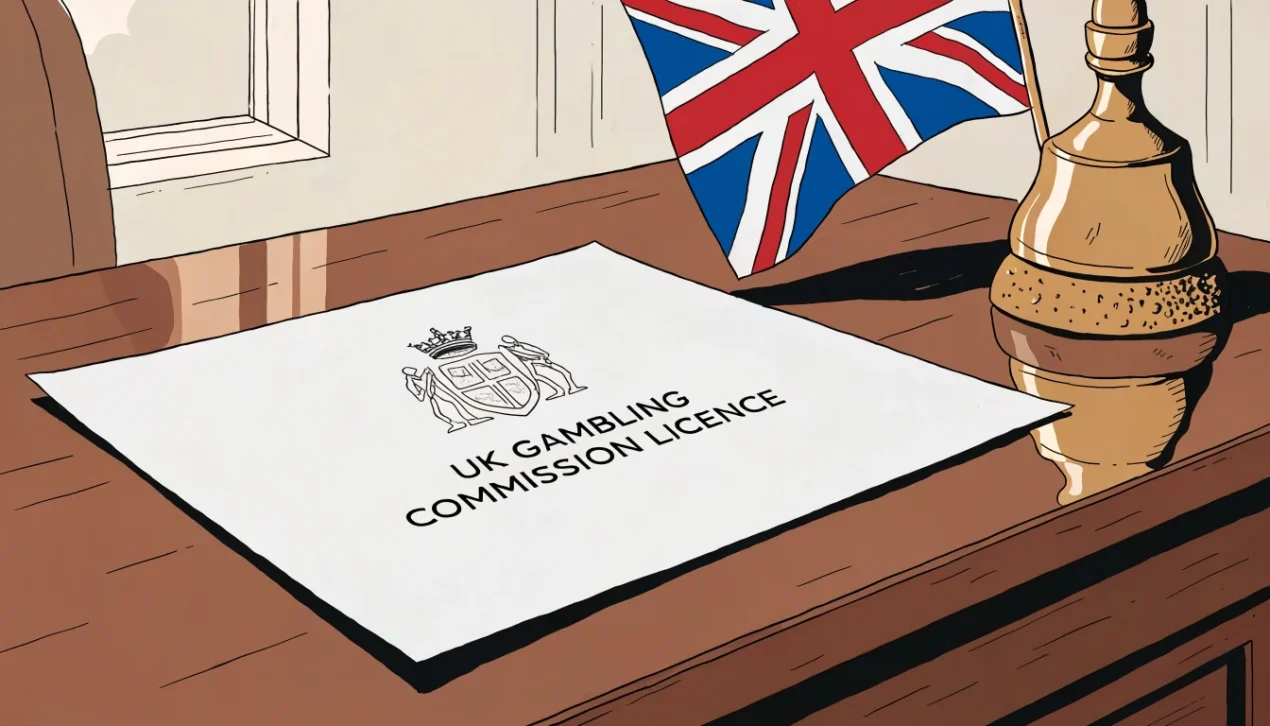
A practical way to assess licensing, account checks, terms, payment routes and game rules when judging whether an online casino is safe.
The Licence Is the First Safety Test
“Safe” is a word that can be stretched until it means little more than a polished website and a reassuring badge. In British online gambling, it has a more useful starting point: the operator must be authorised to serve the market. The UK Gambling Commission regulates gambling operators serving British players, and a casino needs a UKGC licence to operate legally for them. The licence is not a decoration added to a website after the games are chosen. It is the legal basis on which the service is offered.
That distinction matters because an online casino is not simply a collection of games. It is a business taking deposits, recording balances and setting rules for when money can be withdrawn. Regulation places that business inside a system of obligations. A licensed operator is accountable to the Commission for its conduct; the existence of a recognisable brand, attractive design or familiar game does not create the same accountability.
The British approach treats gambling as a commercial activity that requires supervision, rather than as an ordinary entertainment service with a disclaimer attached. The rules do not promise that every customer will avoid harm, or that every choice will be wise. They do establish a baseline for how a lawful operator must treat accounts and funds. It is a modest promise, but a concrete one.
Protections built into the account
Licensed operators must make several controls available to customers. Deposit limits allow a person to restrict how much can be put into an account; time-outs provide a way to step away for a period; and self-exclusion is available through GamStop, the national scheme for blocking access to participating gambling services. These measures belong to the operating framework, not to a casino’s optional idea of good customer care.
Their presence changes what “safe online casinos” can reasonably mean. Safety is not a claim that gambling carries no risk. It is the existence of controls that can interrupt access, alongside an operator that is required to provide them. Limits and time-outs are tools, not guarantees. Self-exclusion has a different role: it allows someone to exclude themselves across participating services rather than relying only on a setting at one account.

There is a social history in that design. Gambling once depended on a physical venue, its doors and staff; online, access can follow a person from room to room and hour to hour. The response has been to put some of the restraint into the account itself. A small administrative mechanism now carries a question that used to belong to the setting: when should play stop? Technology is very good at removing friction. Regulation, belatedly, puts some back.
Licensed operators must also keep player funds separate from the money used to run the business. This separation is intended to distinguish customer balances from operating capital, rather than leaving them indistinguishable within the company’s ordinary finances. It is a basic safeguard, not a promise that every possible financial difficulty disappears. The point is that player money should not simply be treated as the operator’s working cash.
Together, these requirements form a more substantial test than appearance. A site may be elegant and still lack the protections that make it a lawful British service. Conversely, the licence does not make gambling harmless or turn every operator decision into a good one. It identifies the regulator with authority over the business and the minimum protections attached to that status.
The term “licensed online casinos in the UK” therefore describes more than casinos that happen to accept British customers. For a lawful service aimed at Great Britain, licensing is a condition of operating, not a voluntary quality mark. That matters before comparisons of games, promotions or payment options begin: those features cannot substitute for the regulatory framework beneath them.
A licence is the first safety test, not the last word on safety. It establishes that the operator falls within the Commission’s system and must provide core account controls and segregate player funds. It does not certify that a particular customer will never lose more than intended, nor does it remove the need to understand how an account works. Safety here is institutional and practical, not magical.
The same distinction applies to phrases such as “trusted casino” or “best safe online casinos”. Marketing language can suggest confidence; a regulatory obligation gives that confidence a defined basis. The useful question is not whether a site sounds responsible, but whether the service is legally authorised and subject to the protections that follow from that authorisation. The label is easy. The obligation is the point.
This article may receive a commission if a reader registers with a partner casino. That commercial relationship does not alter the standard by which safety is described: for British players, the UKGC licence is the necessary beginning, with its associated safeguards providing the substance behind the word.
Top online casinos in the UK
- SpinFormulaBonus: 550% Up To £15,000 + 550 FS · Payout speed: 1-3 business days
- SlotoSportBonus: 500% up to £ 10 200+ 777 FS · Payout speed: 1-3 business days
- Revery PlayBonus: 100% up to€1,000+ 100 FS · Payout speed: 1-3 business days
- AmunbetBonus: Join now and get 450% up to 2,700 GBP + 450 FS · Payout speed: 1-3 business days
- BeOnBetBonus: 100% up to €500 + 100 FS · Payout speed: 1-3 business days
- JetsetspinsBonus: 200% Bonus + 100 Free Spins + Free Royal Wheel · Payout speed: 1-3 business days
- NightWinBonus: £900 + 400 free spins · Payout speed: 1-3 business days
- x3betBonus: Welcome Pack 100% Up to £1.000 + 200 Free Spins · Payout speed: 1-3 business days
- ZombillionBonus: Welcome Pack 250% up to £4000 + 200 FS · Payout speed: 1-3 business days
- BritsinoBonus: Welcome Package – Get your £2,200 + 2,000 FS · Payout speed: 1-3 business days
A Casino Outside the UKGC’s Reach
An offshore licence can look reassuring on a casino’s homepage: a regulator named, a seal displayed, perhaps a promise of oversight. But a licence issued elsewhere does not place an operator inside the British system. Its rules, supervision and routes for resolving complaints may differ, and the protection attached to a UKGC or Malta Gaming Authority licence cannot simply be presumed to travel with the brand.
That distinction matters because a site can be reachable from Great Britain without being authorised to serve its players. Remote gambling operators selling into the British market are required to hold a UKGC licence, wherever they are based. A foreign licence does not replace it. The border on a screen is porous; the regulatory one is not.
For a player, the difference is practical rather than ceremonial. Non GamStop casinos are not required to connect to GamStop, the British self-exclusion scheme. A logo or a general statement about responsible gambling is not evidence that a site will recognise an exclusion made through that system. Without an identifiable UKGC licence entry, GamStop protection should not be assumed.

Nor should the complaint route be expected to match the British one. Non GamStop casinos operate outside UK dispute resolution channels. A complaint may instead be handled through procedures set by the operator or its offshore regulator, if those procedures are available and applicable. That is not the same as having access to UKGC-regulated alternative dispute resolution. The distinction can become painfully visible only after a disagreement about an account, a balance or a withdrawal.
Player funds require similar caution. A missing UKGC entry is not evidence that UK-specific consumer-funds protections apply. The presence of another regulator’s name does not establish how money is held under British rules, or what recourse exists if the operator fails. Foreign oversight may impose obligations of its own; it does not, by itself, reproduce the British framework.
The difference also reaches the design of play. In Great Britain, online slot autoplay is banned, and each spin must last at least two and a half seconds. At sites outside GamStop, autoplay may remain available and there is no regulatory minimum spin duration. These are not small interface preferences. Autoplay removes repeated decisions from view; faster spins compress the time between one stake and the next. Regulation here addresses the rhythm of a session, not merely its paperwork.
There is a comparable gap around affordability checks. UKGC-licensed platforms can be required to ask for income information when a customer meets certain spending criteria, through enhanced checks whose triggers are not publicly specified. Non GamStop casinos have no equivalent systematic trigger. An operator may still make its own enquiries, but the British process should not be presumed to apply.
DO
- Verify the UKGC licence on the official public register
- Check that the domain matches the registered business
- Ensure the company name and licence number align
DON’T
- Rely on a visible logo or badge without verification
- Assume offshore licences provide UKGC-level protections
- Assume GamStop coverage based on a site’s design
None of this means that every offshore operator behaves identically, or that a foreign regulator has no rules. It means that protections must be judged by the system actually governing the operator, not by the visual language of safety. A polished badge, a familiar game or a smooth mobile site cannot answer who hears a complaint, whether GamStop exclusion is recognised, or what happens to customer funds.
The phrase “safe online casino” can therefore conceal two different questions: whether a site has security measures of its own, and whether it sits within the protections available to players in Great Britain. The first does not settle the second. An offshore licence may be meaningful within its own jurisdiction; it is not a substitute for British authorisation when an operator is serving British customers.
That is why an absent UKGC licence entry carries a specific warning. It does not establish GamStop coverage, access to British dispute resolution, or UK-specific safeguards for customer funds. Those protections cannot be inferred from silence, and a foreign licence does not fill the gap. The distinction is plain. The consequences may not be.
Free GAMSTOP Gaming may receive a commission if a reader registers with a partner casino.
The Name on the Badge Is Not the Whole Check
A licence badge is a claim, not a match. A name printed in a footer can look official while leaving the important question unanswered: does the UK Gambling Commission’s register connect this particular website to the business named there? A careful check follows the identity across the page and the register, rather than treating a logo as evidence in itself.
The register is the Commission’s public record of businesses and their licensed activities. It can be reached through the regulator’s official public register. A working link to that record should sit beside the site’s licence information; a badge without a route to the underlying entry is a dead end dressed as reassurance.
The details should line up. Start with the exact website domain, including its spelling, and look for it in the register. Then compare the casino’s trading name with the legal business shown in the entry, and check that the licence number quoted on the site belongs to that same business. A group may operate several brands, while a trading name may differ from the company name, so a familiar logo or similar wording is not enough. The chain matters: domain, brand, legal entity, licence number.

This is a narrower exercise than judging whether a site’s design feels polished or whether a safe gambling review sounds confident. Those impressions may describe presentation; they do not establish that the registered business is responsible for the exact site being examined. The same distinction applies to claims about safe slot sites or live casino services. The name on a page can be copied. A register entry is useful only when its details correspond.
A specialist review reported that, in the UKGC register dated 26 September 2026, no LuckyPays licence entry appeared under the brand or the stated domain. That is a dated register finding, not a permanent verdict: names, domains and records can change. It illustrates why a search should use the precise domain as well as the brand, and why an unclear result deserves more scrutiny rather than a guess that two similar names must refer to the same operator.
An absent or unidentifiable UKGC entry has practical consequences. It is not evidence that GamStop self-exclusion applies, nor that UKGC-regulated alternative dispute resolution or UK-specific protections for customer funds are available. Those arrangements cannot be inferred from a generic licence statement or from the mere fact that a site accepts British customers. The register must identify the relevant business and site; otherwise, those protections should not be assumed.
The comparison is especially important when a casino advertises free spins or other promotions. An offer says nothing about which legal business operates the website. Nor does a review’s use of phrases such as “safe online gambling” settle the identity question. The check is administrative, almost stubbornly so: the exact domain must belong with the trading name, and that name must connect to the legal entity and licence entry.
A discrepancy need not prove wrongdoing; company structures and brand names are not always displayed in the same way. But a missing link between the site and the register is a reason to pause, not to fill the gap with an attractive explanation. A current UKGC licence should be verified against the Commission’s public register before any deposit is made. Free GAMSTOP Gaming may receive a commission if a reader registers with a partner casino; that commercial relationship does not replace the register check. Brands change. Records are the point.

Real-Money Play Begins with Identity Checks
Opening an account is not the same as establishing that a casino is entitled to serve Great Britain. Identity checks are a practical part of account opening; a UKGC licence is a separate question about the operator. One concerns the person using the account, the other the business behind it. Confusing the two makes a completed form look more reassuring than it is.
For a real-money account, the usual first documents are a government-issued photo ID, such as a passport or driving licence, and proof of address. A utility bill or bank statement can serve as proof if it is dated within the previous three months. Some operators also ask for confirmation that the payment method belongs to the account holder.
The sensible order is to submit the documents as soon as the account is created, before depositing. Every licensed operator must verify identity before processing a withdrawal, so leaving the task until the money is ready to come out can turn a routine check into an avoidable delay. Early submission lets the operator review the information before funds are committed. It does not promise that every document will be accepted first time, but it puts the check where it belongs: at the beginning, not at the exit.
Age checks are part of that gatekeeping too. On licensed platforms, age must be verified before gambling-related content can be accessed, including free game demos, and before a customer is allowed to deposit. A demo may not involve a stake, but it still belongs to the gambling environment. The rule treats access itself as worth controlling.
Documents should be readable and consistent with the account details. A name or address that differs between the form and the evidence may prompt further review. That is not proof that a site is safe, nor proof that it is unsafe; it is an operational matter. The broader safeguard still depends on checking the operator’s current UKGC licence separately, rather than treating a request for a passport as a regulatory credential.
This distinction matters because verification asks for sensitive material. A careful account-opening process has a clear purpose and identifies what is needed, while the licence check establishes whether the business is authorised to operate in the market. Neither substitutes for the other. A polished upload page cannot establish a licence; a valid licence does not remove the need to complete identity checks.
The same caution applies to a safe casino welcome bonus. An offer does not change the documents needed to verify an account, and promotional language should not hurry a player into funding before the checks are complete. Identity verification is administrative, but its timing can affect real money.
If this site links to a partner casino and a registration follows, it may receive a commission. That relationship does not alter the distinction between account verification and operator authorisation.
There is little drama in a bill and an identity document. The important part is when they are requested: before the first deposit, while the account is still only an account.
Choosing Means Reading the Conditions, Not the Slogan
A reassuring badge or a promise of “safe play” says little about how an account will work when money is involved. A more useful comparison starts with the operator’s published terms and the points at which it may ask for information, limit activity or apply a decision to an account. Choosing a licensed online casino is less a matter of finding the warmest wording than understanding what the wording commits the operator to do.

Affordability checks are part of that picture. UKGC-licensed platforms may be required to request income verification when a customer meets criteria linked to spending. The thresholds that trigger enhanced checks are not disclosed in advance. That can make the request feel sudden, but it is not the same as an operator inventing a rule on the spot: the check sits within a system intended to assess whether gambling remains affordable. The practical question is whether the operator explains its process clearly and handles the request through its stated channels.
Before a first deposit, remote operators must prompt new customers to set a financial limit, and account-level controls must remain accessible. Those controls matter because a limit is useful only if it can be found and understood, not merely presented during registration and then buried. A comparison should therefore include the route back to account settings and the operator’s explanation of what a limit applies to. A small piece of interface can reveal more than a page of adjectives.
The written terms deserve the same attention. They should make clear how account rules operate and where the operator reserves discretion. Vague assurances of fairness cannot substitute for legible conditions. Nor does a polished design establish how a complaint, restriction or verification request will be handled; those procedures should be described in the operator’s own information rather than inferred from its tone.
There is a difference between reading terms and trying to predict every eventuality. The aim is to notice whether the basic obligations are stated plainly, whether the affordability process is explained, and whether account controls are easy to locate. If key conditions are difficult to find or expressed so broadly that their effect is unclear, that uncertainty is itself relevant to the choice. Trust is not a colour scheme.
The commission behind a recommendation is relevant too: Free GAMSTOP Gaming may receive a commission if readers register at a partner casino. That commercial relationship does not settle whether a site is suitable, and it should not replace scrutiny of the operator’s conditions. The comparison is strongest when it rests on what the operator says it will do, especially around affordability and account limits, rather than on a general claim that it is safe or reliable.
Bonus Arithmetic and the Small Print
A bonus is not simply extra money placed beside a deposit. It comes with a wagering requirement: a stated amount of qualifying bets that must be made before bonus-related funds can be withdrawn. The calculation may apply to the bonus alone or to the deposit and bonus together, so the same headline offer can create very different turnover.
At the regulatory ceiling, a 10x requirement applied to a £100 bonus means £1,000 in qualifying bets. If the requirement applies to a £100 deposit and a £100 bonus together, the turnover becomes £2,000. That difference belongs in the arithmetic before the offer is accepted, not in the surprise after it.
The rules for incentives also set boundaries. A wagering requirement attached to an incentive must not exceed 10x, and one incentive cannot combine more than one gambling product type, such as casino play and betting. A promotion that blurs those categories deserves particular scrutiny: its terms should say plainly which activity counts and how the requirement is calculated.

Turnover is not always credited pound for pound. A specialist casino review reports slots as contributing the full amount staked, while table games may count for only 5% to 10%. On that basis, a £10 table-game stake could add only 50p to £1 towards the requirement, depending on the stated contribution rate. The precise contribution schedule is part of the offer’s terms; a game that looks eligible may move the total slowly.
Stake limits matter too. A specialist casino review describes £5 per spin as a common cap on eligible bets while bonus credit is active. That is a reported contractual condition, not a promise that every operator uses the same limit. Exceeding an offer’s cap can affect eligibility or winnings under its terms, so the limit should be checked alongside the wagering calculation.
The small print often determines whether a bonus has practical value. It should identify the qualifying games, contribution rates, maximum eligible stake and the point at which withdrawal becomes possible. If those details are scattered or unclear, the advertised figure tells only a small part of the story. A bonus can be mathematically generous on its face and still be restrictive in use.
Free GAMSTOP Gaming may receive a commission if a reader registers with a partner casino. That commercial relationship does not change the arithmetic: the operator’s published terms remain the place where the actual conditions are set out.
Secure Payments, Crypto and the Limits of Speed
Payment security is not a property of a button marked “secure”. It depends first on whether the gambling service operates within the rules that apply to British customers. A UKGC licence brings the operator into a system with requirements for handling player funds and account protections; a payment method cannot supply those safeguards on its own. Fast processing is not a substitute for oversight.
Crypto can make the distance between an operator’s processing decision and the arrival of funds look unusually short. A specialist review reports that, after an operator has processed a withdrawal, settlement on-chain takes 10–30 minutes. That clock does not begin when a withdrawal is requested: the operator’s own processing comes first. Nor does a stated settlement window establish that the casino is properly regulated or that a payment will be approved without checks.
The distinction matters because a transaction can move quickly while the surrounding service remains difficult to hold to account. Crypto should therefore be considered as a payment route, not as a safety badge. The same caution applies to claims about confidentiality or convenience: those claims do not establish who operates the site, what rules govern it, or how a complaint would be handled.
Credit-card funding illustrates the regulatory difference more starkly. Since April 2020, UKGC-licensed operators have been prohibited from accepting credit-card payments for gambling. At offshore operators, however, credit cards may remain an option because that UKGC restriction does not apply within their regulatory scope. Their availability is not evidence of a safer service; it marks a difference in the rules governing the operator. For gambling offered to British customers, the local licensing requirement still matters.
A careful assessment separates three things that marketing often compresses into one: the operator’s regulatory status, its treatment of player funds, and the mechanics of the payment route. No payment technology can repair a missing layer of consumer protection. Speed is only speed.
Free GAMSTOP Gaming may receive a commission if a reader registers with a partner casino. That commercial relationship does not change the distinction between a regulated operator and a payment method, and it should not be mistaken for an endorsement of every route a site accepts.

Slot Rules Change the Pace of Play
A slot’s interface can make every spin feel like a private choice, but in Great Britain the pace is shaped by rules as well as by design. On UKGC-licensed platforms, autoplay is prohibited: each spin must be initiated separately. A spin must also last at least 2.5 seconds, a minimum interval introduced to slow play and reduce the intensity of a session. Small pauses, made mandatory.
That matters more than a game’s reassuring colours or familiar theme. A slot that cannot roll into the next round by itself leaves the player to make each decision; the delay also prevents a rapid sequence of spins. These mechanics do not make a game harmless, but they are concrete differences between regulated play and an interface designed to keep the action moving.
Stake figures need similar care. A specialist casino review has cited a minimum stake of £0.10 and bets of up to £100 per round at many casinos. That upper figure should not be mistaken for the legal stake available on online slots in Great Britain. The maximum is £5 per game cycle for adults aged 25 and over, and £2 for those aged 18 to 24. The rules set a ceiling, not a recommendation.
The distinction helps when comparing what a game displays with what a player can actually stake. A minimum listed stake describes an entry point; it does not establish that every game uses the same settings. Nor does a high figure in a review override the statutory limit. The interface may advertise freedom. The permitted stake remains bounded.
No Autoplay
UKGC-licensed platforms prohibit autoplay; every spin must be initiated separately.
Minimum Intervals
Each spin must last at least 2.5 seconds to manage the pace of play.
Stake Limits
Legal maximum stakes are capped at £5 per cycle for adults (and £2 for those aged 18-24).
For anyone weighing whether online slot games feel safe, the more useful evidence is therefore mechanical: no autoplay, a minimum interval between spins and a legally limited stake. The rules cannot settle every question about a session, but they shape its rhythm in ways that are visible before the first spin.
Deposits, Transfers and Payment Routes
A payment option is not safe merely because its logo appears at a cashier. The route matters: who processes the transaction, whether the money comes from a permitted source, and how clearly the operator explains deposits and withdrawals. A casino’s no-deposit bonus, if offered, is an incentive rather than a payment method; it says nothing by itself about how securely funds are handled.
In Great Britain, remote gambling operators cannot accept credit-card payments for gambling. The restriction has applied since April 2020 and also covers credit-card funds routed through a money service business. A digital wallet is not a workaround where it allows credit-card money to be used for gambling. The point is the source of the funds, not the number of steps between card and casino.
Debit cards and bank transfers can be considered on their stated terms. Before sending money, the cashier should make clear which methods are accepted, whether the payment account must be in the customer’s name, and whether the same route can be used for a withdrawal. A mismatch can leave funds waiting while the operator checks the transaction.
A specialist review comparing several brands reported bank transfers taking 3–5 banking days. That is a reported comparison, not a timetable applying to every bank or casino; processing arrangements can differ. The operator’s own payment information is the relevant place to check the route and any stated handling time.
New customers must be prompted to set a financial limit before making a first deposit, with account-level controls available afterwards. This makes the deposit screen part of the service’s safeguards, not merely a checkout page. Limits are useful only when they are visible and practical to manage.
This site may receive a commission if a reader registers with a partner casino. That commercial relationship does not change the payment rules, and it should not be mistaken for evidence that a particular method is suitable. Payment logos are not a safety system.
Casino Apps Still Sit Inside the Same Rules
An app is a doorway, not a separate standard of care. Its polished icon, biometric sign-in or place in an app store says little about the protections attached to the gambling service behind it. For a licensed operator, the relevant safeguards should carry across the app and the website: the format changes; the obligations do not.
Age checks begin before gambling-related material is opened, not merely when money is about to change hands. That includes free game demos. An operator must also establish a customer’s age before permitting a deposit. The distinction matters: a demo may involve no stake, but it still sits within the regulated service rather than outside it.
Licensed platforms must make account controls available, including deposit limits and time-outs, and offer self-exclusion through GamStop. New customers must be asked to set a financial limit before making their first deposit; controls for changing account limits must remain accessible afterwards. These are not decorative settings hidden behind the app’s convenience. They are part of the service’s design obligations.
A safe online casino app in Great Britain therefore means an app connected to a properly licensed operator, with protections that remain usable on a small screen. Notifications and quick access can make gambling easier to resume; they do not make it safer by themselves. The useful test is whether the regulated account controls and age checks are present and function across the app, rather than whether the interface looks reassuring.
Free GAMSTOP Gaming may receive a commission if a reader registers with a partner casino. That commercial relationship is separate from the operator’s duties: an attractive app, or a recommendation beside it, cannot replace them.
Is it safe to play at online casinos in the UK?
It is safer to choose a casino licensed by the UK Gambling Commission (UKGC). Licensed operators must offer deposit limits, time-outs and GamStop self-exclusion, and keep player funds separate from operating capital, though these safeguards cannot eliminate gambling risk.
How do I verify whether a UK online casino is safe before depositing?
Check that the casino holds a UKGC licence and use the working link beside its licence details to verify the operator in the Commission’s official register. Do not treat an offshore licence or a badge on the website as a substitute for UKGC authorisation.
What exactly are non-GamStop casinos and are they legal in the UK?
Non-GamStop casinos are operators that do not connect to the UK’s GamStop self-exclusion system, typically because they operate outside UKGC oversight. A casino must hold a UKGC licence to operate legally for UK players; an offshore licence does not replace it.
Can I find non-GamStop casinos in the UK accepting PayPal?
Some may accept PayPal, but availability is not universal and depends on PayPal approving the casino as a merchant.
Do all games count toward bonus wagering?
No. Slots contribute 100% of each pound staked, while table games typically contribute 5% to 10%. Check the bonus terms for the eligible games and any bet limits; most operators cap eligible bets at £5 per spin while bonus credit is active.
Related posts

UK Casino Welcome Bonuses: How Offers Work

VPN-Friendly Casinos in the UK: How Access Works
