Limits, account history and spending controls
 Available in GB
Limits and account records are not just settings hidden in a menu. They show whether you can slow decisions down, see what has happened, and spot when gambling is becoming harder to control.
At a glance
- Financial limits can include deposit, spend and loss limits, with periods such as 24 hours, 7 days and one month.
- Licensed remote systems should give easy access to at least three months of account and gambling history, with at least 12 months available on request.
- Money committed to gambling and relevant transaction details should be displayed clearly before commitment.
- Limits are protective friction, not a guarantee that gambling will feel under control.
Spending boundaries
Limits should be clear before you rely on them
Deposit limits, spend limits and loss limits are different controls. A deposit limit controls what can be put in; a spend or loss limit is about what can be used or lost within a period. Before you rely on a setting, read what it covers and when it takes effect.
Licensed remote gambling standards recognise limit periods such as 24 hours, 7 days and one month. The useful question is not only whether a limit exists, but whether it is easy to set, easy to understand and hard to ignore under pressure.
Plain check: a useful limit tells you the amount, the period, when the change applies, and what happens if you try to go beyond it.
Bank-level blocks are covered under payments.
Account history should make your spending visible
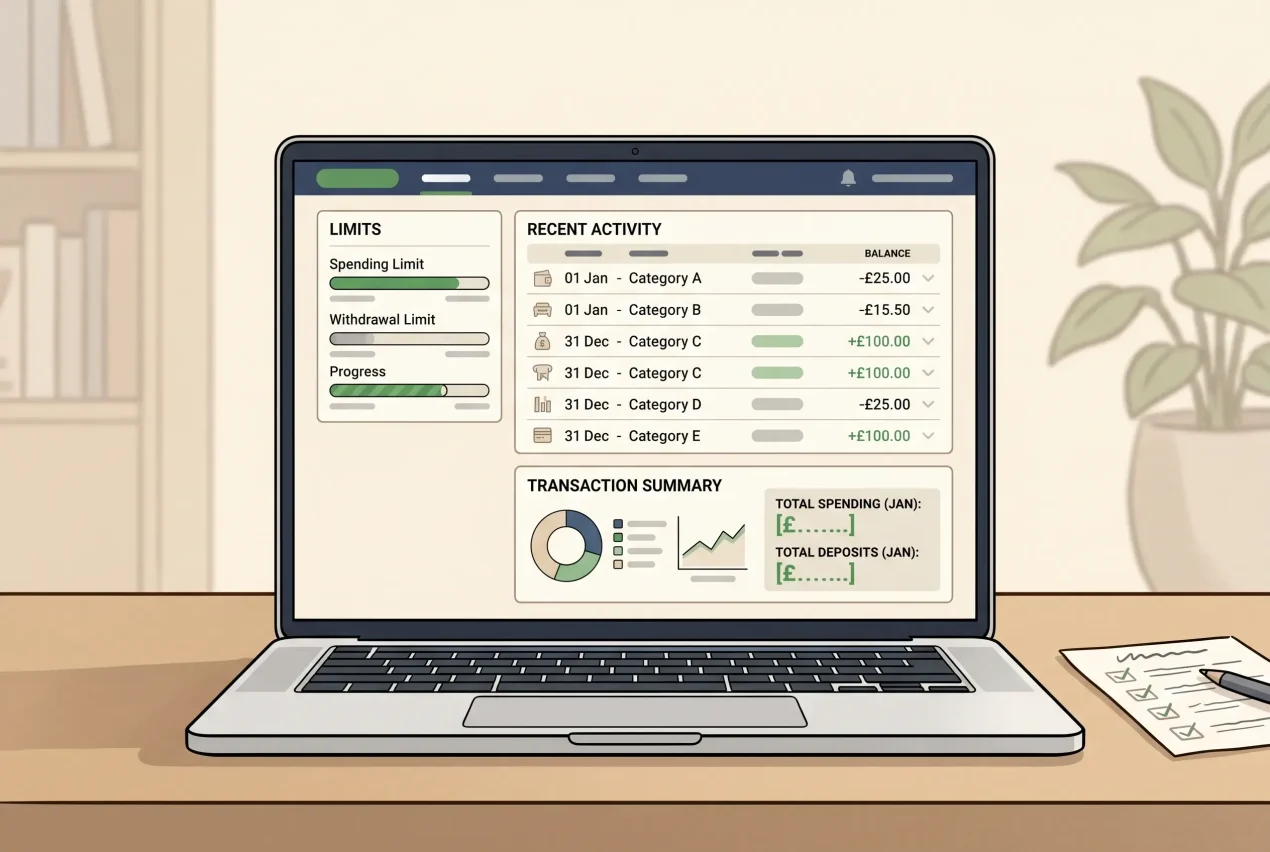
Account history is important because gambling can feel smaller when each decision is seen in isolation. A clear record helps you see deposits, stakes, withdrawals and recent activity together.
For licensed remote systems, easy access to recent account and gambling history is part of the expected standard, and a longer period should be available on request. Transaction displays should also make clear what money is being committed before the gamble is placed.
| Question | Why it matters | Related next step |
|---|---|---|
| How much went in? | Deposits show the money committed before winnings or losses are mentally separated. | Set or lower a deposit limit if the total surprises you. |
| How much was staked or lost? | Stake and loss records can reveal patterns that individual sessions hide. | Use a spend or loss limit where available, and consider support if the pattern feels hard to stop. |
| What happened around a withdrawal? | Records help when ID checks, terms or withdrawal timing become disputed. | Read account records and withdrawals. |
Useful block
Control and record checklist
- Can you set a meaningful deposit, spend or loss limit before paying?
- Can you see recent account and gambling history without contacting support first?
- Can you request a longer activity record if a problem appears later?
- Is the stake, currency and transaction clear before you commit money?
- Would a bank gambling block add safer friction outside the gambling account?
- Would support be safer than another limit change if you are chasing losses or hiding gambling?
Rules and wording can change. When a decision involves real money, use the current operator pages and official regulator information, not a screenshot or old advert.
When friction is not enough
Limits do not replace help when control is slipping
Licensed remote operators have duties around customer interaction and identifying possible harm, but you do not need to wait for an operator to notice a pattern. If limits feel like something to override, or if you are borrowing or hiding gambling, use support sooner.
Make the spending visible
Check the last three months of deposits, stakes and withdrawals where available.
Add friction outside the account
Use bank-side controls if account limits alone are too easy to change.
Use support if the pattern continues
Help if limits are not enough is the better next step when gambling feels hard to control.
The wider context is in our safety-first guide to sites outside GAMSTOP.
Related posts

Bonus terms and customer funds: checks before taking an offer

Getting help if gambling feels hard to control