
Classic Slots Online in the UK: Rules and Play
 Available in GB
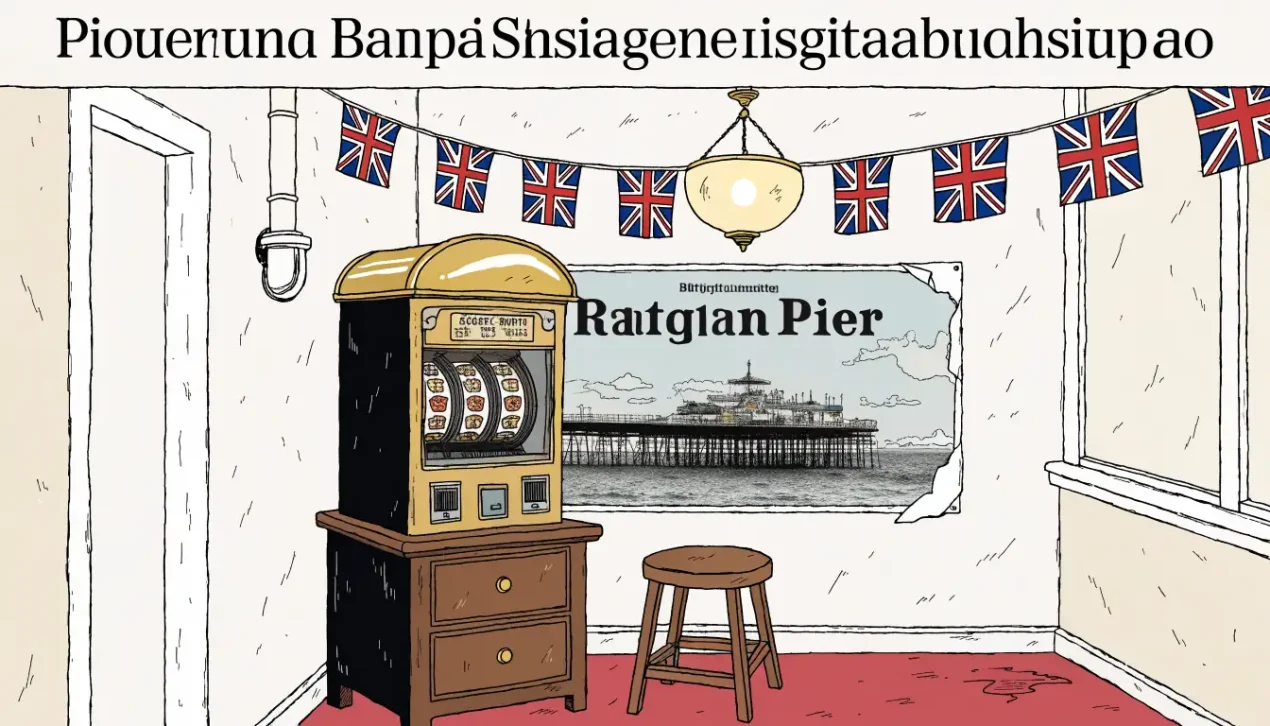
Explore how UK rules, traditional reel features and modern online play shape the experience of classic slots.
The Rules Behind Classic Slots in Britain
Classic slots online in the UK sit inside a system of gambling regulation, rather than outside it as a separate kind of entertainment. The UK Gambling Commission oversees gambling activity, including online casinos, and is the sole regulator for commercial gambling in Great Britain. Its reach follows the market being served: a remote operator offering gambling to consumers in Great Britain needs the relevant Commission licence even if its key equipment is located elsewhere.
That principle matters in a business whose services travel across borders more easily than its rules do. A website may be operated from another country, but location alone does not remove the licensing obligation when the service is offered to people in Great Britain. The regulator’s concern is not confined to the physical place where a server sits. It extends to the commercial activity directed at consumers in its jurisdiction.
The Commission issues operating licences to gambling businesses and personal licences to individuals working in relevant operating roles. These are distinct responsibilities: one authorises a business to provide gambling services, while the other applies to people who carry out specified functions within the industry. For online casino customers, the operating licence is the central marker of whether a business is authorised to serve the British market.
The legal framework also has a territorial shape. The Gambling Act 2005 applies in England, Wales and Scotland, while Northern Ireland is outside that Act’s scope. So “UK” is common shorthand in searches for classic slots, but the Commission’s regulatory remit described here is Great Britain. The distinction is not merely cartographic; it reflects the way gambling law is organised across the country.
Age and identity checks bring that framework into the ordinary process of opening an account. Online gambling is for adults aged 18 and over. Operators verify a customer’s age and identity when an account is created, rather than treating those details as optional information to be supplied later. Operators must also verify age before allowing a customer to deposit funds. The account is therefore not simply a doorway to a games menu. It is also the point at which the operator has to establish who is seeking access and whether they meet the legal age threshold.

This procedure can feel like the least atmospheric part of a classic slot experience. It is also one of the ways regulation becomes visible to the customer. The old image of a machine standing in a pub or arcade has been replaced online by an account relationship between a customer and a licensed business. The reels may evoke an earlier entertainment culture; access to them is governed by present-day obligations.
The stake cap is another rule that applies to the market rather than to a particular title’s theme or presentation. Online slots in Great Britain are subject to a maximum stake of £5 per game cycle for customers aged 25 and over. A specialist review also reports that figure in its account of the rules. It is a limit on the stake for a cycle of online slot play, not a statement about what every game costs to play or what a customer will spend over time.
The distinction between a game-cycle cap and a personal spending pattern is important. A regulatory ceiling defines what an operator may permit for an individual cycle; it does not describe the total amount a customer might choose to risk across a session. Nor does it establish that every classic slot is offered at the same stake. The law sets a boundary for the licensed market, while individual games and account choices exist within it.
There is a social idea embedded in such rules: gambling is permitted, but permission comes with conditions imposed on the businesses that make it possible. The state does not treat remote casino play as a private arrangement beyond oversight. It places responsibility on operators to hold the appropriate authorisation and to confirm the status of customers before gambling begins. That is less romantic than a row of bright cabinets. More consequential, too.
For a person comparing classic slots with other online entertainment, the regulatory setting is the first layer to understand. The Commission’s role, the operator’s licence, the age threshold and the stake cap all concern the terms under which the games are offered in Great Britain. They do not explain how a particular classic slot is arranged or what appears on its screen. Those are questions about the game itself; the rules here concern the market around it.
Top online casinos in the UK
- SpinFormulaBonus: 550% Up To £15,000 + 550 FS · Payout speed: 1-3 business days
- SlotoSportBonus: 500% up to £ 10 200+ 777 FS · Payout speed: 1-3 business days
- Revery PlayBonus: 100% up to€1,000+ 100 FS · Payout speed: 1-3 business days
- AmunbetBonus: Join now and get 450% up to 2,700 GBP + 450 FS · Payout speed: 1-3 business days
- BeOnBetBonus: 100% up to €500 + 100 FS · Payout speed: 1-3 business days
- JetsetspinsBonus: 200% Bonus + 100 Free Spins + Free Royal Wheel · Payout speed: 1-3 business days
- NightWinBonus: £900 + 400 free spins · Payout speed: 1-3 business days
- x3betBonus: Welcome Pack 100% Up to £1.000 + 200 Free Spins · Payout speed: 1-3 business days
- ZombillionBonus: Welcome Pack 250% up to £4000 + 200 FS · Payout speed: 1-3 business days
- BritsinoBonus: Welcome Package – Get your £2,200 + 2,000 FS · Payout speed: 1-3 business days
What Makes a Slot Machine Feel Classic
A classic slot machine is recognisable less by a particular promise than by its restraint. The screen gives its attention to the machine itself: a set of reels, a control area and a narrow frame around the play. There is little sense of travelling through a story or managing a complicated sequence of tasks. The action appears contained, almost domestic in scale, like a small mechanism set apart for a brief visit.
That simplicity is part of the appeal, but it can also be misleading. A spare layout does not mean that every title works in precisely the same way. Classic slot machine games may share a familiar visual grammar while differing in their controls and in how a player sets up a spin. The old-fashioned impression is an invitation to recognise a form, not evidence that the rules are interchangeable.

The reels provide the central structure. They are presented as vertical bands within a fixed window, and the player’s attention stays close to that arrangement. In a more elaborate game, the screen can compete with the central play area through animated scenes, layered menus or shifting objectives. A classic slot tends to leave more visual room around the machine’s basic operation. The result can feel direct: the controls seem to belong to the reels, rather than to a larger world built around them.
“Direct” is not the same as effortless or self-explanatory. A title still has its own instructions and settings, and the layout is best read as an interface rather than as decoration. The position of the controls, the way a stake is shown and the description of a playable line all help explain what the game is asking the player to do. The smaller the screen clutter, the more those details matter. A simple machine can still have choices.
Lines as part of the setup
One such choice concerns active lines. Some slots let players change manually how many lines are active before a spin. In those games, the setting is part of the playing arrangement: the machine is not merely a picture with a button attached, but a format that can ask for a decision about which lines are in play.
That option should not be mistaken for a universal feature of classic slots. Some titles offer it; others may present a more fixed setup. The difference is worth noticing because the word “classic” describes a broad style, not a single specification. A player moving between classic slots online may encounter familiar reel-based screens alongside controls that are arranged differently or that offer different degrees of adjustment.
An active line is a route through the reel display that the game recognises for the purposes of play. In a title with adjustable lines, changing the active-line setting changes the arrangement included in a spin. The control is practical rather than decorative: it affects what is selected before play begins. Reading the game’s own information is therefore part of understanding its setup, especially when the interface offers a choice that a different title does not.
The presence of adjustable lines also complicates the idea that simplicity means having nothing to decide. Classic machines often look spare because their main structure is easy to see, not because every part of play is identical or devoid of settings. A modest control can carry more weight precisely because the rest of the screen is quiet. There is nowhere for it to hide.
A familiar shape, not a promise
The phrase “classic slot machine” can evoke the compact machine found in arcades or pubs, but an online version is encountered through a screen and a designed interface. What persists is the sense of a bounded piece of play: reels at the centre, controls nearby, and a format that does not require a long introduction to its overall shape. The digital setting changes the surroundings; the machine-like arrangement remains the point.
This is why “classic” is better understood as a family resemblance than as a strict technical category. A title may look traditional without sharing every control choice with another title. A layout may feel familiar while the available settings differ. Even a game described as a classic slot can ask for a closer look before the first spin, because the label alone does not explain how its particular screen is organised.
For players seeking classic slots real money, that distinction matters without needing to turn the experience into a technical exercise. The essential question at this stage is simply what the interface makes adjustable and what it holds fixed. Where active lines can be changed manually, the setting belongs to the player’s initial arrangement. Where they cannot, the title has chosen another setup. Neither description, on its own, says anything about whether a game is suitable; it explains only how the machine is presented.
Free classic slot games can offer the same broad visual language, but the idea of “classic” still does not guarantee a shared control scheme. A free version may help make the layout legible, while the title’s own instructions remain the clearest account of its settings. The important distinction is between recognising the form and assuming that every machine within it behaves alike.
A classic slot feels classic when the machine stays visible: a central reel display, a limited field of controls and a playing arrangement that can be understood as a discrete object. Adjustability may be present, especially in the form of manually selected active lines, but it belongs to particular titles rather than to the whole tradition. Familiar, not uniform.
Finding a Suitable Casino Without a Best-of List
A list of the “best” classic slots casinos can look decisive while concealing the question that matters: best for whom, and on what evidence? A casino’s catalogue can change, and a title mentioned in a review is not necessarily available in its current lobby. Nor does a game appearing in a lobby mean that it is eligible for every offer. A credible comparison begins with what can be checked now, rather than a ranking that treats every site as if it were offering the same thing.
- Check the operator’s licence on the Commission’s public register
- Confirm the relevant games are currently listed in the lobby
- Ensure account-level financial limits are available
- Verify access to self-exclusion tools
- Check for a valid internal complaints process
For classic slots played for real money, the first distinction is between a polished presentation and a lawful service. Online gambling in the UK is legal at sites licensed and regulated by the UK Gambling Commission. A casino serving British players must hold a current operating licence; a familiar name, a professional-looking page or an attractive game catalogue cannot substitute for that status. The Commission’s public register is the place to check the operator’s licence before depositing. This is less glamorous than browsing reels. It is also more useful.
The catalogue deserves a closer look than a headline count. A broad selection can be valuable because online play brings together titles at different stakes, but sheer volume says little about whether a particular classic slot is currently offered or suits the kind of play being considered. The lobby itself is more relevant than a general promise about choice. Search or browse its categories, confirm that the titles of interest appear there, and note whether the information concerns the casino’s current offering rather than a page that may have been written earlier. Availability is a present-tense matter.
That caution applies equally to named games and promotional claims. A title may be listed without being included in a promotion, and an offer may come with conditions that are not apparent in its headline. Those details belong to the offer’s own terms, not to a general impression formed from the casino’s branding. A site can have a recognisable selection of classic-style games without every game being eligible for every deal. The distinction is plain, but marketing has never been obliged to make plainness its chief ornament.

The setting around the games matters too. Online casinos should provide account-level controls, including financial limits, and prompt new customers to set a financial limit before a first deposit. UK-licensed casinos must also offer self-exclusion tools. These features are part of how a service is organised, not decorative links at the foot of a page. Their visibility can tell something about whether the casino treats account controls as part of ordinary use or as an afterthought.
There are practical standards worth noticing in the playing environment. Online slot autoplay is banned in Britain, and online slot spins must last at least two and a half seconds. A site presenting autoplay for online slots as an ordinary option would therefore be a warning sign, not an extra convenience. Payment arrangements also have boundaries: UK-licensed casinos cannot accept credit cards for gambling, including credit-card funds routed through a money service business, and they cannot accept wallet payments where credit-card funds can be used for gambling. These are features of the regulated setting, not reasons to assume that every payment method shown elsewhere is suitable.
Support and recourse are part of the same picture. UKGC-licensed casinos must have an internal complaints process and provide access to an approved Alternative Dispute Resolution service. The point is not that complaints will arise, but that a regulated operator must have a route for handling them. A comparison that discusses only game names and visual style leaves out the less theatrical arrangements that matter when something goes wrong.
DO
- Use the Commission’s public register to verify licences
- Check current availability in the casino lobby
- Set financial limits before your first deposit
DON’T
- Rely on “best” lists or rankings as certainty
- Assume every game in a catalogue is eligible for every offer
- Mistake a professional look for a valid operating licence
The phrase “best classic slots casino UK” suggests a single winner, but the available evidence rarely supports such certainty. Preferences differ, catalogues change, and a title’s presence does not establish its terms or suitability. A more grounded assessment asks whether the operator’s licence is current, whether the relevant games are actually listed, whether account controls and complaint routes are accessible, and whether the site’s presentation matches the rules applying to British play. That is not a podium. It is a checklist with fewer confetti cannons.
Free classic slots without a download may also be part of the search for a suitable setting, but the format alone says little about the quality or status of a casino. A browser-based lobby can still require careful checking, while a downloadable product is not proof of legitimacy. The useful comparison is not between slogans such as “best online classic slots casino” and “top casino”; it is between verifiable details of the service and claims that cannot be confirmed in its current lobby or terms.
A sensible choice is therefore less like selecting a champion and more like reading the room. The games are one part of it. Licensing, account controls, payment rules and routes for resolving complaints are the surroundings in which real-money play takes place. No ranking can make those distinctions disappear.
From Old-School Reels to Modern Slot Games
A classic slot game can look as though it belongs to an earlier age of entertainment: a compact frame, a small number of reels and a familiar rhythm of play. Online, that surface can be preserved while the machinery beneath it is entirely different. The cabinet and its moving parts are no longer needed. What remains is a recognisable format, presented on a screen and operated by software.

That shift can be easy to overlook. The visible reels invite an old mechanical picture: a lever, a spinning drum, a result settling into place. Yet the online version is not a miniature physical machine. Its apparent reels are part of a digital display, and some slots use a random generator to determine the result. Familiarity, in this case, belongs to the presentation; it does not establish how the game is working internally.
The distinction matters because a convincing imitation of mechanical movement is still an imitation. Animation can show reels turning and stopping, but the animation itself should not be mistaken for the source of the result. In online play, the visual sequence is the part shown to the player. Behind it, software handles the game’s operation. A familiar appearance does not mean that a physical wheel is slowing down or that a button press has steered it towards a particular position.
Licensed sites use Random Number Generators, known as RNGs, for online games. An RNG is intended to make each spin independent and unpredictable. In practical terms, the current result is not a continuation of a visible sequence that can be read from earlier screens. Nor does the familiar pace of a classic casino slot game reveal what the software has selected. The display may look orderly; the selection process is not a story unfolding from one spin to the next.
- Random Number Generator (RNG)
-
Software used in licensed online games to make each spin independent and unpredictable.
There is a small cultural adjustment in that idea. Mechanical machines made chance visible through movement: a drum turned, then stopped. Digital games can retain that theatre without relying on the visible movement to produce the outcome. The screen gives chance a body, so to speak, but the body is made of animation. The old gesture survives; the old mechanism need not.
This does not make the format less recognisable. A classic fruit slot game can still be arranged to evoke a traditional machine, even when its operation is digital. The style is a language of its own, built from familiar proportions and a restrained presentation. Players can recognise the kind of game they are looking at without needing the online version to reproduce the machinery of an earlier cabinet. Continuity is aesthetic, not mechanical.
The software layer also changes what “a spin” means. On a physical machine, the reels and their movement are part of the device. Online, the game presents a result through the screen, while the RNG supplies the underlying selection on licensed sites. The interface can make that process feel immediate and tangible. It cannot turn a random result into a prediction. The screen is an interpreter, not a window into a sequence waiting to be solved.
There is no contradiction in a modern slot borrowing an old visual grammar while relying on a contemporary system. Classic slot games are often discussed as though they were defined by one unchanging piece of machinery. In practice, the term can describe a recognisable style of play, while the digital version operates through software. The past is present as design; the present is present in the mechanism.

That separation also helps explain why a game’s appearance says little about the way its random process is built. A polished interface may be elaborate or spare, but neither quality establishes how the result is selected. On a licensed site, the relevant point is the use of an RNG to keep spins independent and unpredictable. A smooth animation is not evidence of greater control, and an old-fashioned look is not evidence of a mechanical system.
The result is a curious kind of preservation. Online games can keep the visual shorthand of the classic machine while leaving behind the physical object that once gave it meaning. The reels remain as an image; the chance is handled by software. For a player, the two may feel joined in one experience. They are not the same thing.
A familiar face, a different engine.
Playing Online: Convenience, Timing and Chance
Online play changes the setting more than the nature of chance. Classic slots can be reached at different times, and the online market offers a wider selection of titles at different stakes than a single physical venue could hold. That makes it easier to move between games or return to one later, without travelling to a machine. The convenience is real; it is not a special influence over what happens on a spin.
The screen can make play feel intimate and immediate. A result appears, the next spin is available, and a short session can sit inside an otherwise ordinary day. Yet convenience can blur the distinction between access and control. Being able to play at a preferred hour does not make that hour more favourable. Nor does waiting for a machine to “warm up” have meaning in a regulated online game: earlier wins and losses do not alter the probability of the next spin.
Bet size belongs to the player’s choices, but not to the random process that determines the result. Raising or lowering a stake does not steer the symbols towards a win, and a previous loss does not make a win due. The same applies after a run of wins. Randomness keeps no account of what has just happened. The habit of reading a sequence as a signal is human; the sequence itself offers no promise.
This can be an awkward feature of online play. The interface is responsive to a tap, while the outcome is not responsive to a mood, a schedule or a change in stake. A game may be played quickly in the practical sense that access is close at hand, but speed of access is not an edge. Timing is not a strategy.
The useful distinction is between convenience and influence. Online access can make classic slots available across a broader range of titles, stakes and moments. It cannot make a random outcome answer to when a spin is made or how much is placed on it. The next result remains uncertain, even when the route to the game is effortless.
Chance has no clock.
Real-Money Play and the Small Print
Real-money classic slots sit inside a second set of rules, written not on the reels but in the terms attached to an offer. A bonus may look like extra playing time; its wagering requirement determines what must happen before that benefit can be treated as withdrawable money. The distinction is easy to miss when the headline is more inviting than the conditions beneath it.
The wording can be quite specific. A specialist review reports a 40x wagering requirement to receive 25 extra spins on the Sharkanade Slot. That is a report about a particular offer, not a standing feature of the game or a promise that the promotion is available now. Offers change, and the game’s name alone says nothing about whether it qualifies under any particular promotion’s rules.
A separate set of stated bonus conditions says the bonus must be wagered 30 times before withdrawal. That condition matters because a bonus balance and a withdrawable balance are not necessarily the same thing. The requirement attaches to the bonus, so its terms need to be read as a whole: what counts toward wagering, which games qualify, and what happens if the conditions are not completed. Those details can shape the practical value of an offer more than the extra spins do.
This is not a peculiarity of classic slots. Wagering requirements are part of some bonus offers across online gambling, while the exact conditions belong to the offer itself. A promotion should therefore be understood as a contract with moving parts, not as free credit waiting to be collected. The small print is not decorative.
Understanding Wagering Requirements
Before accepting a bonus, check the specific terms. A requirement might state that a bonus must be wagered a certain number of times, such as 30 or 40 times, before it becomes withdrawable money.
For anyone considering real-money classic slots in the UK, separating the game from the offer is a useful habit. A title may be familiar, but bonus eligibility is a different question, settled by the promotion’s current terms. An attractive headline does not answer it.
The UK Context for Classic Slots
Classic slots sit within a much larger online category, but market totals do not tell a story about any one style of game. The UK Gambling Commission’s operator data records £773 million in gross gambling yield from online slots for January to March 2026. That is a snapshot of the reported market over that period, not a measure of classic slots alone.
The distinction matters. A familiar reel layout may carry cultural weight quite apart from its share of commercial activity: fruit-machine imagery recalls a form of play that once belonged to pubs and amusement arcades, while the online market gathers many kinds of slot under one broad label. Aggregate figures smooth out those differences. They show the scale of the category, not what players chose within it or why.
Gross gambling yield is a market accounting measure, rather than a count of games played or a record of individual outcomes. The figure therefore offers context, not a verdict on the popularity or appeal of a classic slot UK players might encounter. Nor should a single quarter be mistaken for a permanent description of the market; activity and reporting periods have their own boundaries.

A market total can make online slots look like one uniform habit. It is not. The old visual language of reels now shares a digital space with many different formats, and the reported figure groups them together. Useful, but blunt.
Free Play as a Way to Learn a Game
A free-play version of a classic slot offers a chance to look around before money is involved. Its value is modest but clear: the layout becomes familiar, and the game’s features can be explored without wagering. A player can see where controls sit, how the screen presents information and what happens when a feature appears. That is orientation, not a forecast of future results.
The distinction matters. A demo can explain the shape of a game, but it cannot make a later paid spin more predictable. Familiarity may reduce the small friction of learning a new interface; it does not turn chance into a skill or promise that play will be profitable. Free play is best treated as a rehearsal of the interface, not a test of luck.
That makes a free classic slot useful to someone deciding whether its pace and presentation suit them. There is no need to rush through the trial or to treat it as a challenge to keep playing. If the game feels confusing or tedious, that is useful information too. A slot is allowed to be uninteresting.
Limits belong in the same conversation, even when no money is being wagered. Setting deposit or time limits is recommended, and account controls can give play a boundary before a session begins. Such limits do not alter a game’s features; they help keep the decision to play within a deliberate frame.
The point of a demo is not to remove uncertainty from gambling. It is to make the interface less unfamiliar before wagering starts. A small distinction, but a useful one.
Fruit Slots, Holds and Nudges
A classic fruit slot may borrow the familiar language of fruit machine games while giving each title its own set of small interventions. Holds and nudges are not universal features, nor do they necessarily appear on every spin. One game may offer more than one hold or nudge in a single spin; another may make them available only when particular conditions are met. The detail belongs to the title, not to a general rule about fruit slots.
That difference changes the texture of play. A hold lets a reel stay in place while the others move, while a nudge shifts a reel’s position. Both can make a spin feel less like a single, sealed event and more like a brief sequence of choices or possibilities. They do not make the outcome predictable. Their presence is a feature to understand, not a method of controlling what follows.
Other additions can sit alongside these familiar mechanics. Some titles include wild symbols or free spins; others may offer a pick-style mini-game, in which the player selects from displayed options. The combination varies, so two games with a similar fruit-machine appearance can still behave quite differently. A compact set of reels need not mean a bare set of features.
Descriptions may also mention autoplay or quick spin options, but those labels should not be mistaken for features available in Britain: online slot autoplay is prohibited, and spins must meet the required minimum duration. The distinction matters. Game design travels easily; the rules governing its use do not.

Presentation matters too. A title may be compatible with a responsive web version, making its controls usable on different screen sizes, but that says little about its holds, nudges or bonus features. The useful comparison is therefore specific: which mechanics are present, and under what conditions do they appear? A small detail can define the whole rhythm.
Reading the Symbols on the Reels
On a classic slot, the symbols are not decoration laid over the real game. They are the visible language of its outcomes. Winnings depend on which symbols are lined up, so the same reels can tell a different story with every arrangement.
A result is read as a combination, not as a tally of attractive pictures. The positions matter: symbols may form a winning pattern when they meet along a line recognised by that title’s rules. A familiar image appearing on a reel is not, by itself, a promise of a return. What counts is how it sits beside the others and whether the resulting arrangement qualifies.
That distinction gives the symbols their quiet authority. A player may recognise a set of classic slot machine symbols from one title and meet a different set in another, but familiarity does not make their values interchangeable. The game’s own paytable explains which combinations count and what each is worth. Without that guide, an image can be recognised while its significance remains unclear.
The reels also make chance unusually legible. A spin ends in a small tableau: symbols in particular places, some aligned and others not. It is tempting to read intention into a near match, as though one picture had nearly persuaded another to arrive. But the result is the arrangement shown, not the arrangement imagined a moment later.
This is why symbol reading is more precise than simply spotting a favourite image. The relevant question is not whether a symbol appeared, but whether the symbols lined up in a combination the game treats as a win. The pictures are plain enough. Their grammar belongs to each title.
Can I play fruit machine games for free?
Yes, demo versions let you explore a game’s layout and features before wagering.
Are online fruit machine games fair?
Licensed sites use random number generators, so each spin is independent and unpredictable. Previous results, timing and stake size do not change the odds of the next spin.
How do I know if a site is trustworthy?
Check that the operator holds a UK Gambling Commission operating licence to serve customers in Great Britain.
Are there age restrictions to play online fruit machines?
Yes. You must be at least 18, and operators verify your age and identity when you open an account.
What are the online slot stake limits in Great Britain?
For customers aged 25 and over, the maximum online slot stake is £5 per game cycle. This cap does not apply to roulette or blackjack.
What controls help manage my play?
Setting deposit or time limits can help you manage your play. You can also use demo versions to learn a game’s features before wagering.
Related posts

UK Casino Welcome Bonuses: How Offers Work

VPN-Friendly Casinos in the UK: How Access Works
